
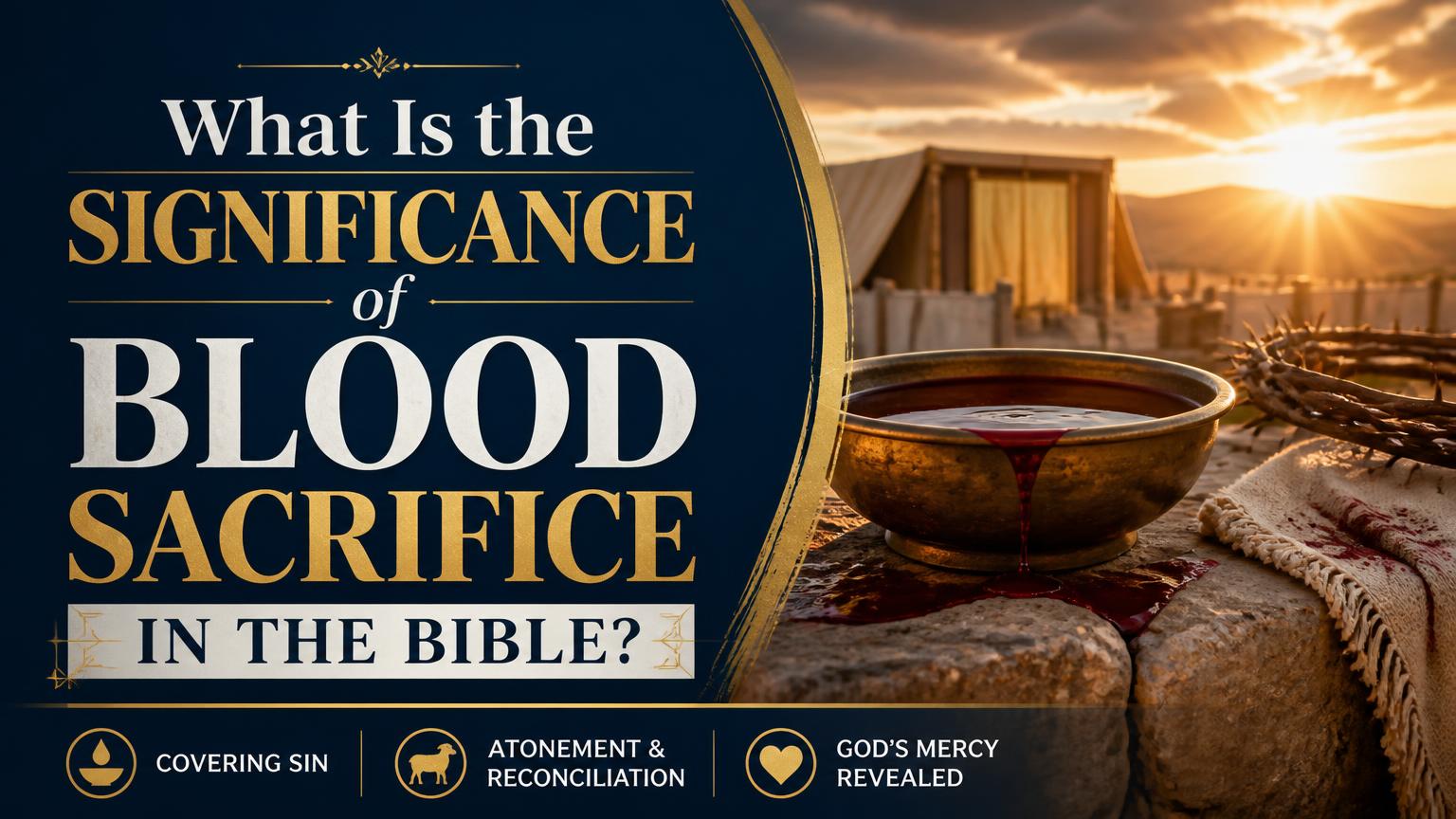
Blood sacrifice is significant in the Bible because blood represents life, and the offering of blood dramatizes the seriousness of sin, the need for cleansing, the making of covenants, and God’s provision for restored relationship with humanity. In the Old Testament, animal sacrifices formed part of Israel’s worship; in the New Testament, Jesus’ death is presented as the decisive fulfillment of that sacrificial pattern. The meaning is therefore not simply that God desires violence, but that reconciliation with a holy God involves life given, sin dealt with, and covenant relationship established.
What Is the Significance of Blood Sacrifice in the Bible?
Blood Represents Life Given to God
The foundational biblical statement is found in Leviticus 17:11: “For the life of the flesh is in the blood,” and God says that he has given blood on the altar “to make atonement” for the people. Blood is sacred because it represents life itself. Since life belongs to God, Israelites were forbidden to consume blood (Genesis 9:4; Leviticus 17:10–14).
When blood was placed on the altar, it symbolized life offered back to the Creator. The sacrifice acknowledged that human beings depend on God for life and that sin damages the relationship between the giver of life and those who have received it.
This symbolism also explains why biblical sacrifices were not merely symbolic gestures without cost. An animal’s death represented the loss of life. The worshiper brought something valuable, identified with the offering, and approached God through the means God had established.
Blood Addresses Sin and Makes Atonement
In Scripture, atonement refers broadly to dealing with sin so that fellowship with God can be restored. Blood sacrifice communicated that sin is not trivial. It creates guilt, defilement, and separation, and restoration requires God’s gracious provision.
Leviticus describes several kinds of offerings, and they did not all serve exactly the same purpose:
- Burnt offerings expressed complete surrender and were offered for accepted worship.
- Peace or fellowship offerings celebrated communion with God and included a shared meal.
- Sin offerings addressed ritual and moral impurity.
- Guilt offerings dealt with specific offenses and included restitution.
- Passover sacrifice commemorated deliverance from judgment and slavery.
The blood of the sacrifice did not function as a magical substance. The ritual mattered because God appointed it as a means of approaching him. Scripture repeatedly shows that sacrifice without repentance, justice, and faith was unacceptable. Samuel told Saul that obedience was better than sacrifice (1 Samuel 15:22), and David declared that God does not despise a broken and contrite heart (Psalm 51:16–17).
Thus, blood sacrifice addressed sin within a larger pattern of confession, repentance, obedience, and divine mercy. The ritual did not permit people to continue sinning while using offerings as a substitute for genuine faithfulness.
Blood Seals Covenants
Blood also appears in the Bible as a sign that establishes or confirms a covenant. After God gave Israel his covenant through Moses, Moses sprinkled blood on the people and declared, “This is the blood of the covenant” (Exodus 24:8). The blood marked the seriousness of the relationship: God had bound himself to his people, and they had pledged themselves to his commands.
The covenant context is important because sacrifice was not only about individual forgiveness. It concerned the formation of a people who would live under God’s rule. Blood signified that the covenant involved life, obligation, loyalty, and consequences.
Jesus uses this language at the Last Supper. He identifies the cup with “my blood of the covenant” (Matthew 26:28). The New Testament therefore presents Jesus’ death as the establishment of the new covenant promised in Jeremiah 31:31–34. His sacrifice does not merely provide private spiritual relief; it creates a renewed people whose sins are forgiven and whose relationship with God is transformed.
Blood Marks Deliverance From Judgment
The Passover provides one of the clearest examples of blood as a sign of deliverance. Israelite families placed the blood of a lamb on their doorposts, and the plague of judgment passed over those households (Exodus 12). The blood did not function as a protective charm. It marked the houses that trusted God’s instruction and participated in his appointed means of deliverance.
The Passover pattern becomes important in the New Testament’s interpretation of Jesus. Paul calls Christ “our Passover lamb” who has been sacrificed (1 Corinthians 5:7). John’s Gospel also connects Jesus with sacrificial-lamb imagery, and Revelation repeatedly speaks of the Lamb who redeems God’s people.
The central idea is deliverance: God provides a way through judgment and brings people out of bondage. Passover therefore connects blood sacrifice with redemption, rescue, and the creation of a new community.
Blood Purifies Sacred Space and Worshipers
Blood sacrifices also had a cleansing or purifying function. Leviticus 16 describes the Day of Atonement, when the high priest entered the Most Holy Place and applied sacrificial blood in connection with the sins and uncleanness of Israel. The ritual addressed not only individual wrongdoing but also the contamination of the sanctuary caused by the people’s sins.
This aspect is sometimes overlooked because modern readers tend to think of forgiveness only as the removal of personal guilt. In the biblical sacrificial system, sin affects people, relationships, the community, and the place where God dwells among his people. Atonement therefore includes cleansing and restoration, not merely a change in legal status.
Hebrews develops this imagery by describing Jesus as the greater high priest who enters the heavenly sanctuary with his own blood rather than the blood of animals (Hebrews 9:11–14). The argument is theological rather than a claim that physical blood operates independently of the person who gives it. Jesus’ self-offering is effective because he gives himself fully and obediently to God.
Jesus’ Blood Fulfills the Sacrificial Pattern
The New Testament presents Jesus’ death as the climactic fulfillment of the Old Testament sacrificial system. His blood signifies several connected realities:
- Atonement: Jesus bears the consequences of sin and provides reconciliation with God.
- Covenant: His blood establishes the promised new covenant.
- Cleansing: His sacrifice purifies the conscience and removes the defilement associated with sin.
- Redemption: His death liberates people from slavery to sin.
- Reconciliation: His sacrifice restores peace between God and those who trust him.
- Victory: Through the cross, Jesus defeats the powers of sin and death.
Hebrews emphasizes that animal sacrifices had to be repeated, whereas Jesus offers himself once for all (Hebrews 9:25–28; 10:1–14). The contrast is not that Old Testament worship was meaningless. Rather, those sacrifices were limited and anticipatory. They provided a temporary, covenantally appointed way for Israel to approach God while pointing beyond themselves to a more complete act of redemption.
The resurrection is also essential. Christianity does not teach that Jesus’ blood has significance apart from his living person. The crucifixion and resurrection together proclaim that Jesus truly entered death, dealt with sin, and was vindicated by God.
How Blood Sacrifices Functioned in the Old Testament
The Old Testament sacrificial system combined several ideas that should not be reduced to one explanation. Sacrifices expressed worship, thanksgiving, fellowship, cleansing, restitution, forgiveness, and dedication. Their meaning depended partly on the kind of offering and the situation in which it was presented.
The ritual often included the laying on of hands, slaughtering the animal, handling its blood, and burning or eating portions of the offering. These actions connected the worshiper with the sacrifice and demonstrated that approaching God was not casual. Yet the system always depended on God’s grace. The worshiper did not force God to forgive by performing a ritual; God provided the sacrificial system as a means through which his covenant mercy could be received.
The prophets criticized sacrifices when they were separated from justice and obedience. Isaiah condemned worshipers who brought offerings while oppressing others (Isaiah 1:11–17). Hosea recorded God’s statement, “I desire mercy, and not sacrifice” (Hosea 6:6). These passages do not necessarily abolish the sacrificial system in its original setting. They expose the false belief that ritual can compensate for rebellion.
What Blood Sacrifice Does Not Mean
It Does Not Mean God Is Like a Pagan Deity
Biblical sacrifice should not be understood as an attempt to feed God, manipulate him, or satisfy an unpredictable deity. Israel’s God does not depend on offerings for nourishment. Psalm 50 explicitly rejects that idea, declaring that every animal already belongs to God.
The biblical pattern is one of divine instruction and provision. God establishes the means of worship, accepts sacrifices as part of his covenant, and ultimately provides the sacrifice Christians understand to be fulfilled in Christ.
It Does Not Mean Every Sacrifice Had the Same Meaning
“Blood sacrifice” is a broad category. A Passover lamb, a sin offering, a guilt offering, and a covenant ceremony were related but not identical. Treating them as interchangeable can obscure the richness of the biblical text.
Some sacrifices emphasized forgiveness; others emphasized dedication, fellowship, thanksgiving, purification, or restitution. The common thread was that life, worship, and relationship with God were inseparable.
It Does Not Mean God Excuses Unrepentant Sin
The Bible never presents sacrifice as permission to persist in injustice. Genuine repentance includes turning from wrongdoing. The sacrificial system was part of covenant faithfulness, not a replacement for it.
This principle remains central in Christian interpretation. Trust in Christ is not merely reliance on a ritual event while refusing his authority. The New Testament connects Christ’s sacrifice with repentance, holiness, love, and a transformed life.
Why Christians No Longer Offer Animal Sacrifices
Christians generally understand animal sacrifices to have reached their intended fulfillment in Jesus. Hebrews argues that the repeated offerings of the old covenant could not provide the final cleansing of the conscience or complete removal of sin. Jesus’ once-for-all offering makes further animal sacrifices unnecessary for those who belong to the new covenant.
This does not mean that the Old Testament sacrifices were errors. They were appropriate to the covenant God made with Israel and served as teaching signs of holiness, guilt, cleansing, substitution, fellowship, and redemption. Their completion in Christ is why Christian worship centers on Jesus’ death and resurrection rather than on a continuing altar system.
The church’s central response is therefore not another blood offering but faith, thanksgiving, obedience, mercy, and self-giving love. Romans 12:1 describes believers presenting their bodies as “a living sacrifice,” meaning that Christ’s completed sacrifice produces a life devoted to God.
The Central Meaning of Blood Sacrifice
The significance of blood sacrifice in the Bible lies in the relationship between life, sin, covenant, and redemption. Blood represents life; sacrifice acknowledges the cost and seriousness of sin; covenant blood establishes belonging and obligation; and atoning blood signifies God’s provision for cleansing and restored fellowship.
For Christians, these themes converge in Jesus Christ. His blood represents the self-giving of the incarnate Son, establishes the new covenant, cleanses from sin, and accomplishes redemption once for all. Biblical blood sacrifice is therefore not best understood as divine appetite for violence, but as the Bible’s unfolding picture of how God deals with sin while extending mercy and bringing people into covenant relationship with him.