
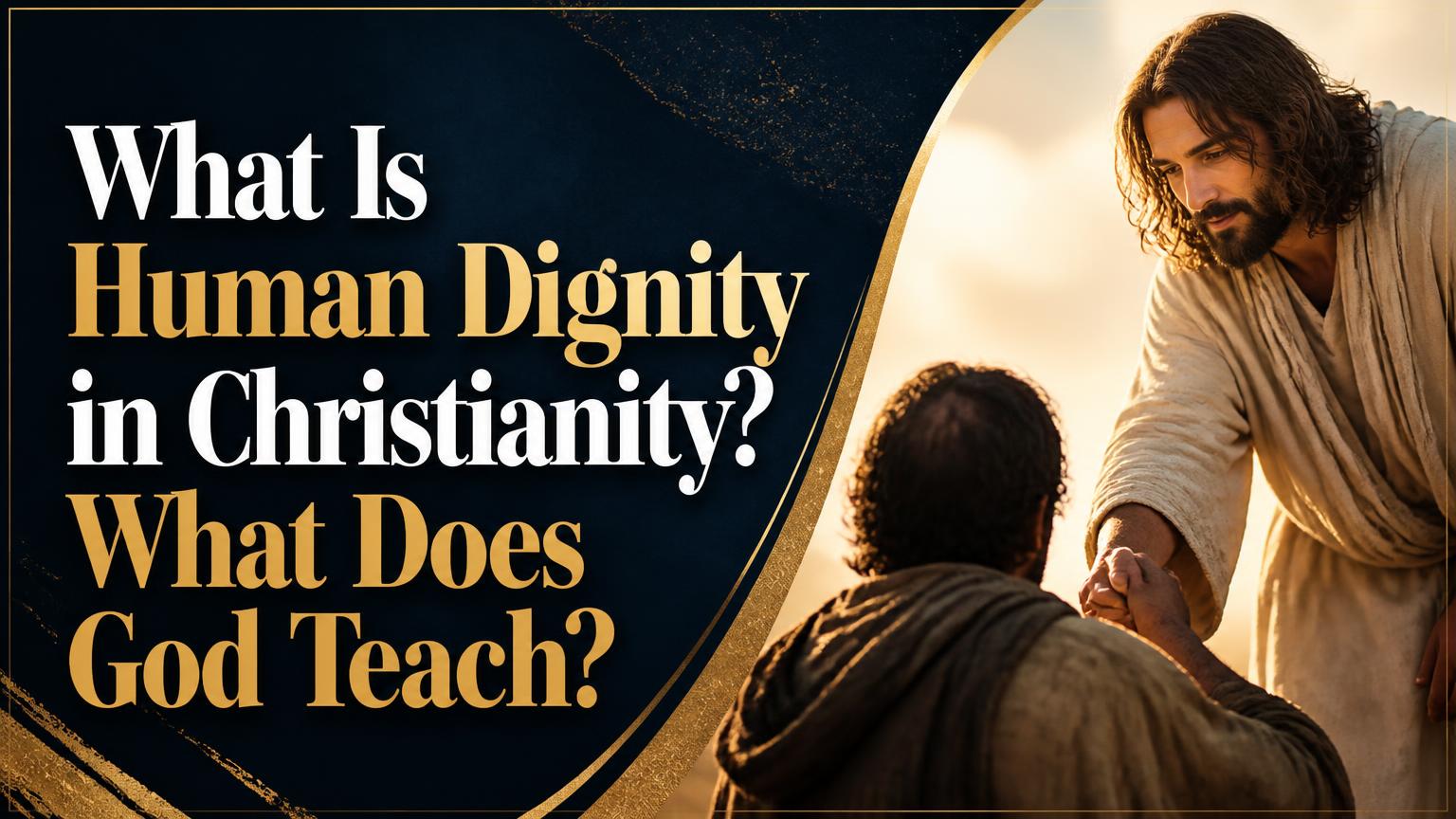
Human dignity in Christianity is the God-given worth of every human being. It does not depend on intelligence, health, age, wealth, social status, productivity, morality, or public approval. Christian teaching grounds this dignity in creation: human beings are made in God’s image. Sin damages human relationships and behavior, but it does not erase humanity’s value. Because God gives dignity, Christians are called to protect life, reject contempt and exploitation, practice justice, and treat every person as someone who matters before God.
What Is Human Dignity in Christianity?
Human Dignity Means Inherent God-Given Worth
In Christianity, human dignity is an objective moral reality rather than a feeling or social judgment. People possess worth because God created them, not because they have earned respect or successfully fulfilled a particular role. This applies equally to the strong and weak, the wealthy and poor, the healthy and disabled, the celebrated and forgotten.
The biblical foundation appears in the account of creation:
“God created man in his own image. In God’s image he created him; male and female he created them.” — Genesis 1:27 (WEBU)
Being made in God’s image gives human life a unique status within creation. It means that no person is merely a biological organism, economic unit, political tool, or means to someone else’s advantage. Every human being has a claim to moral consideration because every human being belongs to God’s creation.
The Image of God Grounds Human Equality
The phrase “image of God” does not mean that human beings physically resemble God. God is not limited to a human body. Rather, the concept describes humanity’s distinctive relationship with God and humanity’s vocation to reflect God’s character through responsible life, moral accountability, relationship, creativity, and care for creation.
The image applies to humanity as a whole and therefore prevents dignity from being restricted to one race, sex, nation, class, age group, or ability level. Individual abilities may differ greatly, but differing abilities do not create different levels of basic human worth. A person’s dependence on others can change, while that person’s dignity remains.
This also means that dignity should not be confused with independence. Infants, people with profound disabilities, and those weakened by illness may rely heavily on caregivers, but dependence does not make them less human. Christian dignity is received from God; it is not produced by self-sufficiency.
Sin Damages Human Life but Does Not Erase Dignity
Christianity takes human wrongdoing seriously. People can become violent, deceitful, unjust, and destructive. Sin distorts the way individuals use their freedom and harms relationships with God and other people. Yet the Bible continues to describe human beings as made in God’s image even after humanity’s fall into sin.
That continuing foundation appears in the prohibition against murder:
“Whoever sheds man's blood, his blood will be shed by man, for God made mankind in his own image.” — Genesis 9:6 (WEBU)
The passage connects the seriousness of killing with the divine image. Human dignity is therefore not granted only to morally admirable people. It remains relevant when Christians oppose wrongdoing, administer justice, or call someone to repentance. Condemning an action does not authorize contempt for the person who committed it.
James makes a similar point when he warns against praising God while cursing other people:
“With it we bless our God and Father, and with it we curse men, who are made in the image of God.” — James 3:9 (WEBU)
The practical implication is demanding: Christian speech and conduct must not treat other people as worthless, even when disagreement, correction, or accountability is necessary.
Christ Shows the Cost and Depth of Human Worth
The Christian understanding of dignity reaches its fullest expression in Jesus Christ. The Son of God’s coming as a real human being affirms the significance of embodied human life. Jesus also consistently gave attention to people who were overlooked, excluded, sick, poor, sinful, or socially disfavored.
Christ’s death does not imply that humans had no value until he paid for them. Instead, redemption reveals the depth of God’s love for people who could not restore themselves to God by their own merit. Paul describes that grace this way:
“But God commends his own love toward us, in that while we were yet sinners, Christ died for us.” — Romans 5:8 (WEBU)
Christian dignity therefore includes both creation and redemption. People are valuable because God made them, and God’s saving action displays his determination to reconcile fallen people to himself. Redemption also gives believers a new identity and calling, but it does not mean that unbelievers or morally broken people lack human worth.
How Christian Human Dignity Shapes Daily Life
It Requires Love of Neighbor
Human dignity turns love of neighbor from a vague ideal into a moral obligation. Jesus joined devotion to God with active concern for other people:
“He answered, ‘You shall love the Lord your God with all your heart, with all your soul, with all your strength, and with all your mind; and your neighbor as yourself.’” — Luke 10:27 (WEBU)
To honor dignity, Christians must see neighbors as persons rather than obstacles, competitors, customers, voters, enemies, or problems to manage. This affects ordinary behavior: listening carefully, speaking truthfully, refusing humiliation, keeping promises, and offering help when someone is vulnerable.
Love does not require agreement with every belief or approval of every action. It requires seeking another person’s good while remembering that the other person stands under God’s authority, not merely under one’s own judgment.
It Supports Justice and Protection of the Vulnerable
If dignity comes from God, the powerful may not define the value of the powerless. Christian ethics therefore gives special attention to people exposed to neglect, exploitation, violence, poverty, discrimination, or abandonment. The unborn, children, older adults, prisoners, refugees, people with disabilities, and those facing severe illness must not be valued only according to convenience or usefulness.
This principle does not produce a single political program in every society, and Christians may disagree about the best public policies. It does establish a moral boundary: no system should deliberately treat some people as disposable. Justice must protect persons from abuse and hold wrongdoers accountable, while mercy must resist reducing offenders to their worst actions.
It Includes Responsible Stewardship, Not Human Self-Exaltation
Being made in God’s image gives humans authority within creation, but Christian authority is accountable authority. People are not owners in an absolute sense; they are responsible before the Creator for how they use power, resources, bodies, institutions, and the natural world.
This distinction matters because a distorted view of dignity can become selfish domination. Christian dignity does not mean that each person may do whatever he or she wants without moral limits. Human beings have genuine agency, but that agency is meant to serve love, truth, justice, and faithful care rather than exploitation.
What Human Dignity Does Not Mean
It Does Not Mean That Humans Are Divine
To say that humans are made in God’s image is not to say that humans are gods or possess unlimited authority. Christianity maintains a clear distinction between Creator and creature. Human beings have remarkable value, but they remain dependent on God and accountable to him.
This guards against two opposite errors. One error degrades people as insignificant animals or instruments. The other elevates human preference above every moral truth. Biblical dignity rejects both views: people are honored because God made them, but they are not entitled to replace God.
It Does Not Depend on Perfect Behavior
Christian dignity is not the same as moral innocence. People can act unjustly and still remain human beings made in God’s image. That distinction makes repentance and justice possible at the same time. If wrongdoing erased a person’s dignity, there would be no basis for calling the wrongdoer to repentance rather than simply destroying or despising that person.
At the same time, dignity must not be used to excuse harm. Respecting a person means taking that person’s actions seriously, protecting victims, telling the truth, and pursuing appropriate accountability. Grace is not indifference to evil.
It Does Not Depend on Usefulness or Achievement
Modern societies often measure people by income, education, productivity, attractiveness, influence, or independence. Those measures may describe abilities or circumstances, but they cannot establish human worth. A person does not become more valuable by becoming richer, stronger, or more famous, nor less valuable through disability, unemployment, aging, or dependence.
This truth also challenges the way people evaluate themselves. Christian dignity is received before achievement. Work, success, and service can be meaningful expressions of a person’s calling, but they are not the foundation of that person’s existence. This protects both the ambitious person from pride and the struggling person from despair.
Human Dignity and Equality in Christ
Christian teaching affirms the equal spiritual standing of believers before God while recognizing that people may have different gifts, responsibilities, histories, and social circumstances. Paul expresses the unity created by faith in Christ:
“There is neither Jew nor Greek, there is neither slave nor free man, there is neither male nor female; for you are all one in Christ Jesus.” — Galatians 3:28 (WEBU)
In context, this statement emphasizes equal access to God’s promise through Christ and the unity of believers. It does not claim that every personal distinction disappears or that every Christian has the same function. Instead, it rejects the idea that ethnic background, social rank, or sex determines whether someone can belong to God’s people or receive salvation.
That unity has practical consequences for the church. Christian communities should not reproduce systems of contempt, favoritism, or exclusion. Differences can remain real without becoming reasons for superiority. The gospel calls believers to see one another as fellow recipients of grace and to use differing gifts for mutual service rather than personal domination.
Why Human Dignity Matters for Christian Ethics
Human dignity provides a framework for evaluating difficult moral questions. It asks whether a practice respects people as persons created by God or reduces them to objects, burdens, commodities, or instruments. This question is relevant to violence, human trafficking, racism, exploitation, degrading speech, medical decisions, poverty, imprisonment, sexuality, family life, and the treatment of those near death.
The principle must be applied carefully. Simply claiming to defend dignity does not settle every complex question automatically. Christians still need to consider Scripture’s broader teaching, the facts of a situation, the responsibilities of different people, and the likely effects of a proposed action. Dignity gives moral direction, but wise judgment also requires truth, compassion, justice, and humility.
A Christian view of dignity therefore holds several truths together: every person has real worth; human beings are morally accountable; sin is genuinely destructive; God offers grace; and love must take concrete form. Dignity is neither sentimental praise of humanity nor permission for unrestricted autonomy. It is a call to honor people because God created them and, in Christ, offers redemption to fallen humanity.
Conclusion
Human dignity in Christianity is the permanent, God-given worth of every human being. Its foundation is creation in God’s image, its seriousness is confirmed by biblical teaching about justice and human life, and its depth is displayed in God’s redeeming love through Jesus Christ. Sin can corrupt human behavior and relationships, but it cannot turn a human being into a worthless object.
This understanding calls Christians to protect vulnerable life, reject prejudice and exploitation, speak with restraint, pursue justice, practice mercy, and recognize value in people who cannot repay or impress them. Human dignity does not mean that every action is right or that human beings are divine. It means that every person must be treated as a creature accountable to God and worthy of love because God has made and knows that person.