
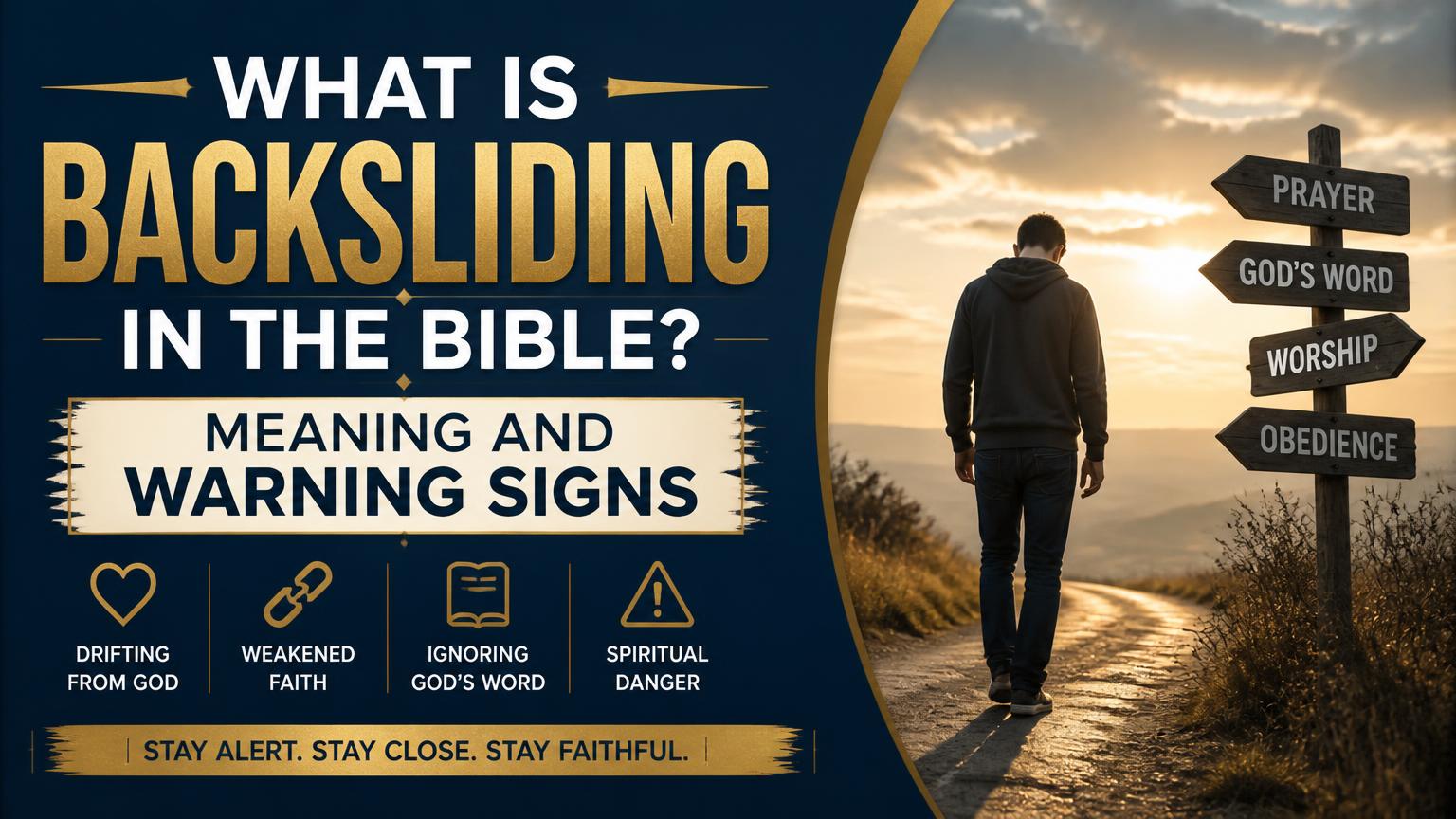
Backsliding in the Bible means turning away from faithful obedience to God after previously professing faith or walking in relationship with Him. It can involve persistent sin, spiritual indifference, abandoning Christian fellowship, rejecting biblical truth, or replacing devotion to God with other loyalties. The biblical response is serious warning, but also a call to repentance and restoration.
What Is Backsliding in the Bible?
The Meaning of Backsliding
“Backsliding” is an older biblical term for spiritual decline or turning away from God. In the Old Testament, it often describes Israel’s unfaithfulness to the Lord after receiving His covenant and instruction. Jeremiah repeatedly calls God’s people to return from their “backsliding” (Jeremiah 3:12–14, 22). Hosea 14:4 speaks of God healing His people’s backsliding, showing that restoration remains central to the message.
The basic idea is movement away from God—not merely a single failure, temptation, or season of weakness, but a direction of life characterized by resistance, neglect, or abandonment of faithfulness.
The New Testament more often uses expressions such as:
- Falling away
- Turning back
- Wandering from the truth
- Returning to former ways
- Denying the faith
- Failing to persevere
These expressions overlap with the modern idea of backsliding, although the word itself is not used equally in all Bible translations.
What Backsliding Looks Like
Backsliding is fundamentally a matter of the heart, but it becomes visible through choices and patterns. Biblical warning signs may include:
- Persistent, unrepentant sin rather than a sin followed by confession
- Growing indifference toward prayer, Scripture, worship, or Christian fellowship
- Deliberately rejecting convictions a person once accepted as true
- Loving wealth, status, pleasure, or approval more than obedience to God
- Excusing sin instead of confronting it
- Resisting correction from Scripture or mature believers
- Returning to destructive patterns without seeking help or repentance
- Professing faith outwardly while intentionally living in settled opposition to Christ
Proverbs 14:14 says that the backslider in heart will be filled with the consequences of his ways. The verse points to an inward source: spiritual decline is not simply a matter of external behavior but of what the person has come to love, trust, and pursue.
A Christian who struggles with sin is not automatically backsliding. The important distinction is the direction of the person’s response. A believer may fall seriously and still grieve over sin, confess it, seek forgiveness, and desire change. Backsliding involves hardening oneself against God and treating continued disobedience as acceptable.
Backsliding, Temptation, and Apostasy
These concepts should not be treated as identical.
Temptation is an invitation to sin. Being tempted does not mean that a person has turned away from God; Jesus Himself was tempted without sinning (Matthew 4:1–11).
A spiritual lapse is a serious failure or period of weakness. Scripture contains many examples of God’s people failing and later being restored. Peter denied Jesus, yet Christ restored him and entrusted him with service (John 21:15–19).
Backsliding generally describes a continuing pattern of spiritual retreat, disobedience, or indifference.
Apostasy usually refers to a more decisive repudiation or abandonment of the faith. The New Testament gives severe warnings about falling away, including Hebrews 6:4–6, Hebrews 10:26–31, and 2 Peter 2:20–22. Christians differ in how these passages relate to genuine believers, professing believers, and the possibility of final apostasy. However, all of these passages agree that rejecting Christ and treating grace as permission for rebellion is spiritually dangerous.
The distinction matters because a person should not interpret every struggle as proof that God has rejected them. At the same time, repeated unrepentant sin should not be dismissed as harmless weakness.
Can a Backslider Return to God?
Yes. The Bible repeatedly calls backsliders to return, and it presents God as willing to forgive the repentant.
God says through Jeremiah, “Return, backsliding Israel” (Jeremiah 3:12). Hosea 14:1 urges Israel, “Return unto the LORD thy God,” while Hosea 14:4 promises, “I will heal their backsliding.” These passages show both sides of the biblical message: backsliding is real and destructive, but it is not beyond God’s mercy when a person turns back to Him.
The parable of the prodigal son illustrates the same principle (Luke 15:11–32). The son deliberately leaves his father, wastes his inheritance, and reaches spiritual and personal ruin. His return begins when he recognizes his condition and goes back to his father. The father receives him with compassion rather than requiring him to earn his way home.
Repentance does not mean merely feeling guilty. It means changing one’s mind and direction before God. It includes honest confession, turning from known sin, receiving forgiveness, and taking practical steps toward renewed obedience.
Why Do People Backslide?
Backsliding usually develops through a combination of spiritual neglect, unchallenged desires, discouragement, and repeated choices. Scripture identifies several recurring pathways.
Neglecting Relationship With God
Jesus describes seed that begins to grow but is choked by “the cares of this world, and the deceitfulness of riches” (Matthew 13:22). Spiritual decline can occur gradually when prayer, Scripture, worship, and fellowship are consistently pushed aside.
Neglect weakens attentiveness to God. As a person stops listening to biblical correction, immediate desires and cultural pressures can become more persuasive. The problem is not that a single missed prayer or worship service causes backsliding. The danger lies in a settled pattern of treating communion with God as unnecessary.
Allowing Sin to Become Normal
Sin often gains influence through repetition and rationalization. A person may first recognize a behavior as wrong, then minimize it, defend it, and eventually organize life around it.
Hebrews 3:13 warns that people can be hardened by the deceitfulness of sin. Sin deceives by promising satisfaction while concealing its long-term effects. It can also isolate people from those who might offer loving correction.
Loving the World’s Values
The Bible contrasts devotion to God with love for “the world” understood as a system of values opposed to God (1 John 2:15–17). This does not mean Christians must withdraw from society or reject ordinary responsibilities and pleasures. It means that power, wealth, pleasure, reputation, or self-rule must not become a person’s highest loyalty.
A person may remain religious in appearance while gradually making career, romance, comfort, politics, or social approval more authoritative than Christ.
Failing to Persevere Through Suffering
Hardship can expose or deepen a person’s faith. Some grow discouraged when obedience does not produce immediate relief, or when God’s work does not match their expectations.
The Bible does not suggest that doubt or grief automatically represents backsliding. Faithful believers may experience confusion, lament, and spiritual dryness. The danger comes when suffering becomes a reason to permanently reject God rather than a circumstance brought honestly to Him.
What Warnings Does the Bible Give About Backsliding?
The Bible’s warnings are intended to awaken repentance, not encourage despair.
Jesus warns that some people receive the word with initial joy but have no deep root; when trouble comes, they fall away (Luke 8:13). This emphasizes that a promising beginning must develop into enduring faith.
Hebrews repeatedly urges believers to hold firmly to their confession and not drift away (Hebrews 2:1; 3:12–14; 10:23–25). The warning against deliberate, persistent sin in Hebrews 10:26–31 is not a statement that every Christian who commits a serious sin has lost salvation. Rather, it confronts defiant rejection of Christ’s sacrifice after receiving knowledge of the truth.
Second Peter 2:20–22 describes people who escape the world’s corruption through knowledge of Christ but become entangled again. The passage uses strong imagery to show that returning to former corruption is not a trivial matter. It also warns against confusing outward reform or religious knowledge with genuine inward transformation.
Christian traditions interpret these passages differently. Some understand them as warnings that true believers can finally abandon faith. Others understand them as warnings addressed to the visible church, including people who profess faith without genuine regeneration, or as means God uses to preserve believers in perseverance. Regardless of the theological position, the practical command is the same: do not presume upon grace; continue in faith, repentance, and obedience.
How Should Someone Respond to Backsliding?
A person who recognizes spiritual decline should respond directly rather than waiting for stronger feelings.
Confess Sin Honestly
First John 1:9 promises that God is faithful and just to forgive confessed sin and cleanse the repentant. Confession means agreeing with God about what is wrong instead of hiding, blaming, or redefining it.
Specific confession is usually more meaningful than vague regret. A person should identify the attitudes, actions, relationships, or habits that have contributed to the spiritual decline.
Return to God Through Christ
Repentance is not self-rehabilitation. Christians return to God because of His mercy and because Christ provides forgiveness and reconciliation. The appropriate response to failure is neither presumption nor hopelessness, but renewed trust in God’s grace.
Restore Practical Obedience
Spiritual restoration normally involves concrete changes:
- Reestablish regular prayer and Scripture reading
- Rejoin faithful Christian fellowship
- Seek counsel from a mature, trustworthy believer or pastor
- Remove avoidable access to recurring temptation
- Make restitution where sin has harmed others
- Accept accountability rather than relying on private intentions
- Practice obedience even before spiritual emotions become strong
These actions do not purchase forgiveness. They express repentance and help interrupt the patterns that sustained backsliding.
Receive Correction and Continue
Galatians 6:1 instructs spiritually mature believers to restore someone caught in sin with gentleness. Restoration is different from humiliation. It may include consequences, boundaries, or a gradual rebuilding of trust, but its goal is healing and renewed faithfulness.
A person should also continue returning to God after repeated failures. Genuine repentance may involve a long process of growth rather than instant perfection.
Does Backsliding Mean a Person Has Lost Salvation?
The Bible does not permit a simple answer based only on a person’s current emotional state or one period of failure. Scripture contains both serious warnings about falling away and strong promises concerning God’s preserving grace, such as John 10:27–29, Romans 8:38–39, and Philippians 1:6.
Christians therefore differ on how to explain the relationship between human perseverance, divine preservation, professed faith, and final apostasy. What can be said clearly is this:
- A period of spiritual weakness does not prove that a person is beyond forgiveness.
- Persistent, unrepentant rebellion should be taken seriously.
- Assurance should rest in Christ, not in a claim that sin does not matter.
- A person who desires to repent should respond to that desire by turning to God rather than concluding that repentance is impossible.
The Bible’s warnings are not meant to drive repentant people away from God. They are meant to expose danger and call people back before spiritual drift becomes settled rejection.
Backsliding in the Bible is best understood as a serious turning away from God expressed through persistent spiritual decline, disobedience, or abandonment of faithfulness. It is more than temptation or an isolated failure, yet Scripture consistently pairs its warnings with invitations to return. The right response is honest repentance, renewed trust in Christ, practical obedience, and support from a faithful Christian community.