
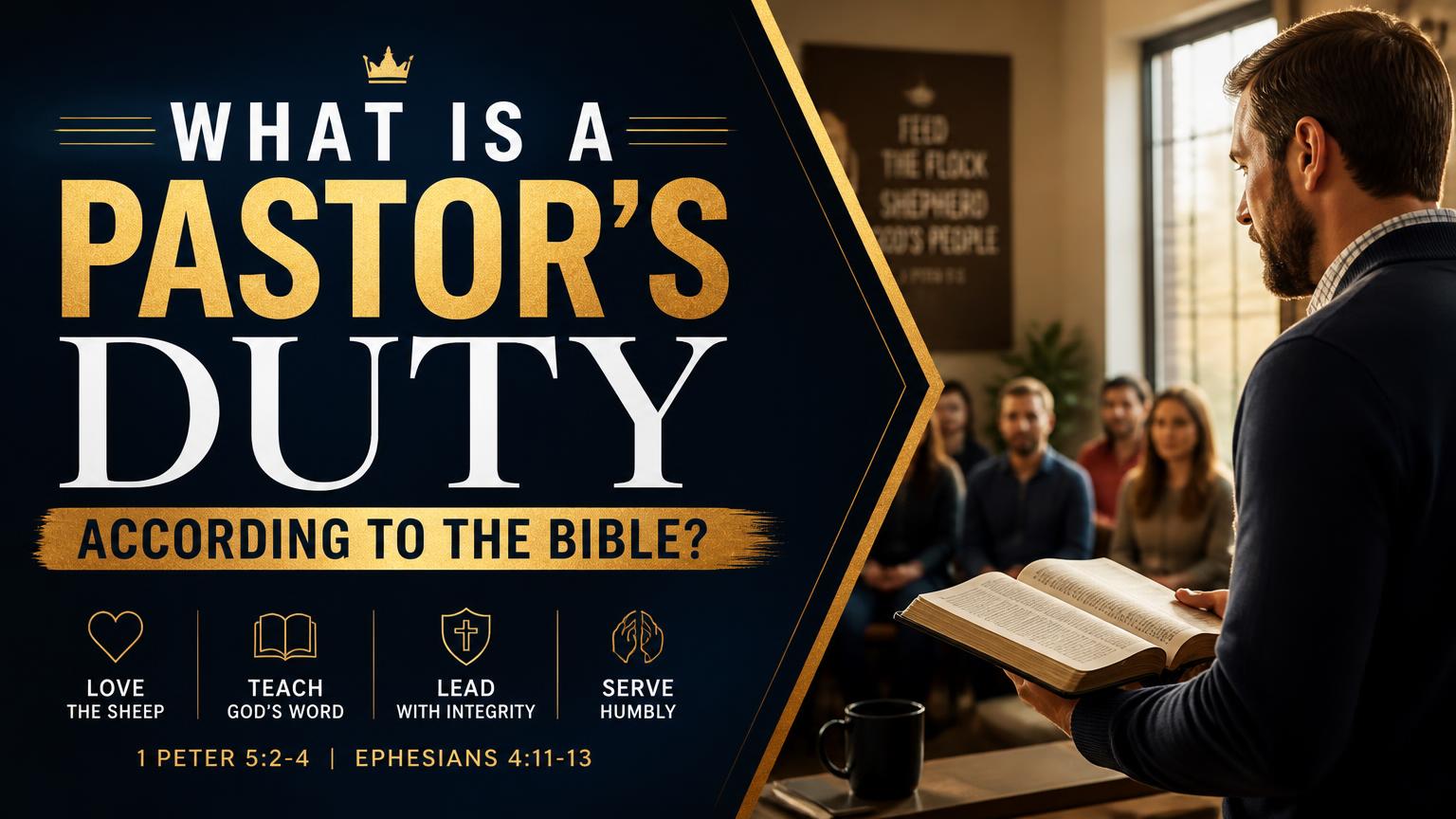
A pastor’s central duty according to the Bible is to shepherd God’s people under the authority of Jesus Christ. This includes teaching Scripture faithfully, guarding the church from false doctrine, caring for believers, leading by example, equipping Christians for ministry, and watching over their spiritual well-being. Pastoral leadership is therefore more than preaching or managing church programs; it is a responsibility of spiritual care and accountable service.
What Is a Pastor’s Duty According to the Bible?
The Bible describes pastoral ministry through the image of a shepherd. Jesus is the “chief Shepherd” (1 Peter 5:4), while pastors and other church leaders serve as His appointed under-shepherds. Their authority is real, but it is delegated authority that must remain faithful to Christ and His Word.
Shepherd Christ’s Flock
A pastor’s first responsibility is to care for the people belonging to Christ. Paul told the elders of the church in Ephesus to “shepherd the church of God” (Acts 20:28), and Peter instructed elders to shepherd God’s flock willingly and eagerly (1 Peter 5:1–4).
Shepherding includes:
- Caring for people in spiritual weakness or distress
- Encouraging believers toward faithfulness
- Correcting serious error and sinful behavior
- Seeking the restoration of those who wander
- Protecting vulnerable members from spiritual harm
- Helping the congregation grow in Christian maturity
This care is not merely emotional support. Biblical shepherding directs people toward God’s truth, repentance, holiness, endurance, and hope. A pastor does not replace Christ as the believer’s mediator or master. Instead, he helps people follow Christ more faithfully.
Teach and Guard God’s Word
Teaching Scripture is one of a pastor’s defining duties. An overseer must be “able to teach” (1 Timothy 3:2), and an elder must hold firmly to the trustworthy Word so that he can encourage believers with sound doctrine and refute those who contradict it (Titus 1:9).
Paul’s instruction to Timothy captures the seriousness of this responsibility: “Preach the word; be ready in season and out of season” (2 Timothy 4:2). The pastor must explain what the Bible says, show how it applies, and resist the temptation to reshape its message around popular opinion or personal preference.
This duty has two sides:
- Positive instruction: teaching the whole counsel of God, including the gospel, Christian doctrine, ethics, worship, suffering, relationships, and hope.
- Protective oversight: identifying teachings that distort the gospel or lead people away from faithful obedience.
Teaching is not simply the delivery of religious information. Its goal is that believers become mature, discerning, and equipped to live as followers of Jesus.
Equip Believers for Ministry
Pastors are not called to perform every ministry themselves. Ephesians 4:11–12 describes Christ giving pastors and teachers to equip the saints for the work of ministry and to build up the body of Christ.
This means a pastor’s effectiveness should not be measured only by how much he personally does. A healthy pastor helps the entire church recognize and use its gifts. He trains believers to pray, serve, teach, evangelize, encourage one another, care for those in need, and bear witness to Christ in daily life.
The distinction matters because a congregation can become spiritually passive when members expect the pastor to handle every responsibility. Biblical pastoral leadership develops mature disciples rather than creating dependence on one prominent individual.
Pray and Watch Over Souls
Pastors have a responsibility to bring the needs of the church before God and to remain attentive to the spiritual condition of those entrusted to their care. Hebrews 13:17 describes church leaders as people who “keep watch over your souls” and who will give an account to God.
Watching over souls involves spiritual attentiveness. A pastor should recognize discouragement, doctrinal confusion, destructive conflict, persistent sin, isolation, and other conditions that can damage a believer’s faith. This does not mean controlling every aspect of people’s lives. It means offering wise counsel, biblical correction, prayer, encouragement, and appropriate protection.
Prayer is also essential because pastoral ministry cannot produce spiritual life by human skill alone. The pastor may teach and guide, but God changes hearts and sustains His people. The pattern of Christian leaders giving themselves to prayer and the ministry of the Word appears in Acts 6:4.
Lead by Example and Serve Humbly
A pastor must embody the message he teaches. The qualifications in 1 Timothy 3 and Titus 1 emphasize character before accomplishments: self-control, faithfulness, hospitality, gentleness, a good reputation, and a disciplined life.
Peter specifically warns elders not to lead by “lording it over those entrusted to you” but by being examples to the flock (1 Peter 5:3). Biblical authority is therefore servant leadership. It does not depend on intimidation, celebrity, entitlement, or the demand for unquestioning loyalty.
Jesus provided the model when He taught that greatness among His followers is expressed through service (Mark 10:42–45). A pastor’s leadership should make Christ more visible, not make the pastor indispensable. Humility does not eliminate responsibility; it changes how responsibility is exercised.
Biblical Qualifications for a Pastor
The New Testament presents pastoral qualifications primarily in 1 Timothy 3:1–7 and Titus 1:5–9. These passages show that a pastor must be more than gifted, articulate, or successful. He must be spiritually and morally trustworthy.
Character Must Accompany Competence
A pastor may be an effective speaker and still be unqualified for pastoral office if his private life contradicts his public teaching. The biblical requirements emphasize integrity in marriage, family life, finances, relationships, temper, reputation, and self-control.
The phrase “husband of one wife” is understood in different ways among Christian traditions, but it clearly requires sexual and relational faithfulness rather than a pattern of marital unfaithfulness. The larger principle is that a pastor’s life must demonstrate the gospel he proclaims.
A Pastor Must Be Able to Teach
Good character does not remove the need for doctrinal competence. A pastor must understand Scripture accurately and communicate it clearly. He should be able to distinguish central Christian truth from secondary matters, answer serious questions, and recognize teaching that conflicts with the gospel.
Teaching ability includes more than academic knowledge. It requires wisdom about people, clarity of communication, patience, and the ability to apply biblical truth without distorting it.
Family and Reputation Matter
Paul asks how someone can care for God’s church if he cannot manage his own household well (1 Timothy 3:4–5). This does not require a pastor’s family to be flawless. It means his leadership at home should reveal responsibility, love, order, and spiritual seriousness.
A pastor must also have a good reputation with outsiders. Since pastoral ministry involves public witness, credibility can be seriously damaged by dishonesty, arrogance, abuse, financial misconduct, or repeated scandal. Public gifting cannot compensate for private unfaithfulness.
Pastor, Elder, and Overseer: Related Biblical Terms
The New Testament uses several terms for church leadership that overlap significantly:
- Pastor emphasizes shepherding and care.
- Elder emphasizes spiritual maturity and recognized leadership.
- Overseer emphasizes supervision and responsibility for the church.
In Acts 20, the same group of leaders is called elders, described as overseers, and commanded to shepherd the church. First Peter 5 likewise addresses elders and tells them to shepherd God’s flock and exercise oversight. These passages indicate that pastoral leadership includes care, doctrine, governance, and accountability rather than only public preaching.
Some Christian denominations distinguish a pastor from other elders by assigning specific responsibilities or titles. Those organizational differences can be legitimate matters of church order, but the essential biblical functions remain consistent: faithful teaching, spiritual oversight, shepherding, prayer, protection, and godly example.
What a Pastor’s Duty Does Not Mean
Biblical pastoral authority has clear limits.
A pastor is not the head of the church in the same ultimate sense as Christ. Jesus is the church’s chief Shepherd and Lord. A pastor cannot demand obedience to personal preferences as though they were divine commands.
A pastor is also not called to control the consciences of believers, isolate members from wise counsel, manipulate through fear, or treat the congregation as a personal possession. Peter’s prohibition against domineering leadership directly rejects that model.
Nor is a pastor’s duty limited to producing large attendance, maintaining programs, or meeting institutional goals. Administration may be necessary, but it serves the church’s spiritual mission. Numbers, visibility, and efficiency cannot substitute for truth, holiness, love, and faithful care.
How Biblical Pastoral Duty Looks in Practice
A pastor’s responsibilities may include preaching and teaching, counseling, visiting the sick, leading worship, training leaders, overseeing church life, confronting harmful doctrine, disciplining serious sin, praying with people, and helping the congregation serve its neighbors.
These tasks will vary according to the church’s size, tradition, and circumstances. A pastor in a small congregation may handle many practical responsibilities, while a larger church may distribute them among elders, deacons, staff members, and ministry leaders. The structure can differ without changing the biblical purpose.
The key question is whether the pastor’s work helps the church remain faithful to Christ, grounded in Scripture, spiritually cared for, and equipped for ministry. Practical duties are valuable when they support those aims rather than replacing them.
A pastor’s duty according to the Bible is to shepherd Christ’s people faithfully: teach and protect the Word, care for souls, equip believers, lead humbly, pray, and model godly character. Pastoral ministry is neither personal control nor religious performance. It is accountable service under the authority of Jesus, the chief Shepherd, for the maturity and faithfulness of His church.