
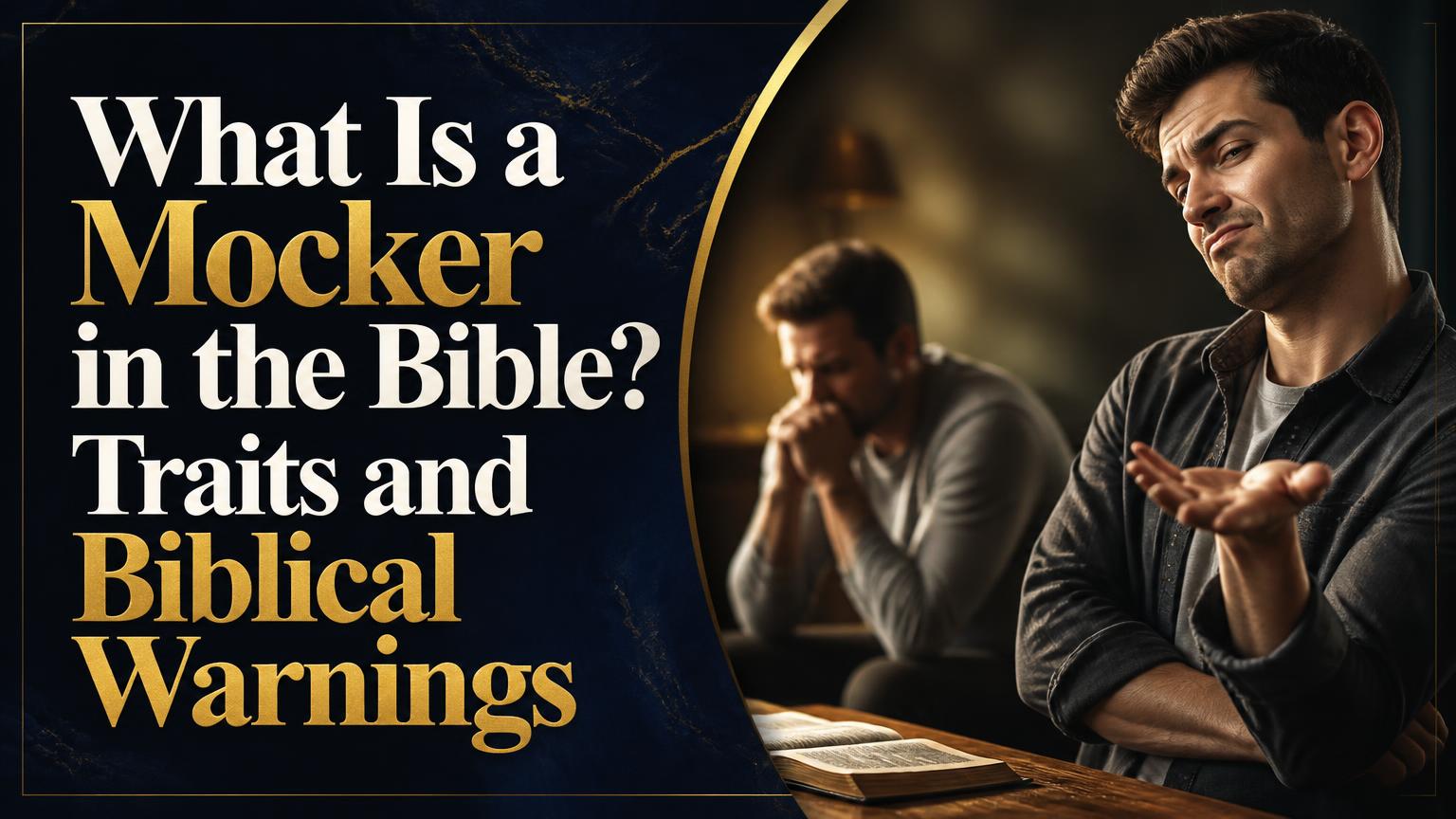
A mocker in the Bible is not merely someone who makes jokes or laughs at another person. Scripture uses the term for a person who treats God, wisdom, correction, or righteous conduct with arrogant contempt. A mocker refuses instruction, ridicules what is holy, and often attempts to influence others toward the same attitude. The biblical warnings address both the mocker’s heart and the responsibility of wise people to respond with discernment, truth, and appropriate boundaries.
What Is a Mocker in the Bible?
Biblical Meaning of a Mocker
In the Old Testament, “mocker,” “scoffer,” and “scorner” often translate forms of the Hebrew word luts. The word describes someone who derides or treats another person, idea, or authority with contempt. In Proverbs, the mocker is especially associated with rejecting wisdom and despising correction.
A mocker’s defining issue is not humor but posture. The person does not simply misunderstand, question, or struggle with belief. Instead, the mocker assumes a superior position and ridicules truth rather than considering it. Proverbs 21:24 connects the mocker with pride and arrogance, showing that mockery is an outward expression of an inward attitude.
The New Testament also warns about “scoffers” who follow their own desires and ridicule the promise of Christ’s return (2 Peter 3:3–4; Jude 18). In that setting, mockery becomes a way of dismissing divine judgment and justifying sinful living.
Traits Scripture Associates With Mockers
The Bible presents several recurring characteristics of a mocker:
- Pride: Proverbs 21:24 describes the mocker as proud and arrogant. Mockery often assumes that the person ridiculing others is intellectually, morally, or spiritually superior.
- Resistance to correction: Proverbs 9:7–8 says that correcting a mocker brings insult, while a wise person receives rebuke. The mocker interprets correction as an attack rather than an opportunity to grow.
- Contempt for wisdom: Proverbs 1:22 portrays scoffers as delighting in their scoffing. They do not merely lack wisdom; they take pleasure in rejecting it.
- Hostility toward righteous living: Mockers may ridicule obedience because it exposes their own choices or challenges their values.
- Negative influence: Psalm 1:1 warns against sitting in “the seat of scoffers.” The image suggests more than a brief encounter; it describes accepting their counsel and becoming comfortable in their community.
- Refusal to listen: Proverbs 13:1 contrasts the wise son who accepts instruction with the scoffer who does not listen to rebuke.
These traits help distinguish a mocker from someone who asks sincere questions. A person may doubt, struggle, or even speak rashly without being defined by contempt. The biblical mocker repeatedly turns away from truth and treats correction as something worthy of ridicule.
Why Mockery Is Spiritually Serious
Mockery is spiritually serious because it attacks the means by which people receive wisdom. God’s instruction often comes through Scripture, faithful correction, conscience, and the counsel of mature believers. When someone consistently ridicules all correction, that person closes the ordinary pathways through which repentance and growth occur.
Proverbs 9:10 teaches that the fear of the Lord is the beginning of wisdom. A mocker reverses that order by placing personal judgment above God’s authority. The result is not merely an unpleasant personality; it is a pattern that can produce moral blindness. Proverbs 14:6 says that a scoffer seeks wisdom and does not find it, while knowledge comes more readily to a person who approaches truth humbly.
Mockery also spreads. Proverbs 22:10 says that driving out the scoffer can bring an end to strife, suggesting that contemptuous behavior damages a wider community. Ridicule can silence wise voices, normalize rebellion, and pressure others to treat holy things as foolish. That is why Scripture addresses the influence of mockers as well as their personal character.
How a Mocker Differs From a Fool
The Bible uses several related terms for people who reject wisdom, but they are not identical in emphasis. A “fool” in Proverbs is someone who lacks moral and spiritual judgment and often makes destructive choices. A mocker goes further by openly ridiculing wisdom and resisting anyone who attempts to correct him or her.
This distinction matters because a fool may still be teachable. Proverbs repeatedly contrasts the fool with the wise person, but it also describes some fools as capable of learning through discipline. The mocker, by contrast, treats instruction itself as contemptible. Proverbs 15:12 says that a scoffer does not love the one who rebukes him and will not go to the wise.
The Bible also distinguishes mockery from honest disagreement. Faithful questioning can seek understanding; mockery seeks to humiliate, dismiss, or discredit. Jesus’ disciples sometimes asked difficult questions, and biblical writers expressed confusion, grief, and complaint. Those actions are not automatically scornful. The crucial issue is whether a person approaches truth with humility or uses ridicule to avoid it.
Examples of Mockery in Scripture
Mockery in the Old Testament
The book of Proverbs provides the clearest sustained portrait of the mocker. Proverbs 1:22 asks how long scoffers will delight in their scoffing, while Proverbs 3:34 says that God mocks the proud but gives grace to the humble. These passages connect mockery with pride and place it in opposition to humility.
Several narratives illustrate the same pattern. Goliath despised David and Israel’s God because he judged them according to visible strength rather than divine authority (1 Samuel 17). The people who ridiculed Nehemiah’s work tried to weaken a God-given task through contempt and intimidation (Nehemiah 4:1–3). In each case, mockery functioned as more than speech: it attempted to discourage faithfulness and make obedience appear foolish.
The prophets also described people who dismissed God’s warnings. Isaiah 28:14 addresses rulers who treated prophetic instruction with contempt. Their mockery did not protect them from judgment; it revealed their refusal to face reality.
Mockery in the New Testament
During Jesus’ trial and crucifixion, soldiers and others mocked Him by pretending to honor Him while humiliating Him (Matthew 27:27–31, 39–43). This episode shows how mockery can combine public shame, abuse of power, and rejection of the truth. Jesus did not retaliate with the same spirit. He endured unjust ridicule while entrusting Himself to God.
The early church also faced mockery. On the day of Pentecost, some observers accused the disciples of being drunk rather than considering the significance of what they had witnessed (Acts 2:13). Paul encountered ridicule in Athens when he proclaimed the resurrection (Acts 17:32). Second Peter 3:3–7 warns that later scoffers would dismiss Christ’s promised return because judgment had not yet occurred.
These passages do not teach that every critic is a mocker. They show that the gospel has often been rejected through ridicule, especially when its claims challenge human pride, moral independence, or confidence in visible circumstances.
When the Bible Uses Strong or Figurative Mockery
Some biblical passages use irony, taunt, or sharp public speech. Elijah mocked the prophets of Baal during the contest on Mount Carmel (1 Kings 18:27), and Jesus pronounced severe denunciations against hypocritical religious leaders (Matthew 23). These examples should not be used to justify personal cruelty or sarcastic behavior.
The difference lies in purpose, authority, and moral setting. Biblical prophetic mockery exposes idolatry, hypocrisy, or false claims in order to defend God’s truth and call people to repentance. Personal mockery usually seeks superiority, entertainment, revenge, or humiliation. A Christian cannot simply imitate the tone of a biblical passage while ignoring its purpose and context.
How Should Christians Respond to a Mocker?
Do Not Imitate the Mocker’s Spirit
Believers should not answer contempt with contempt. Proverbs 26:4 says not to answer a fool according to his folly, meaning that a wise person should not descend into the same sinful pattern. Insults rarely produce repentance; they more often intensify the conflict and confirm the other person’s hostility.
This does not require silence in every situation. A calm, truthful answer may correct a false claim or protect others from deception. The principle is to avoid adopting the mocker’s arrogance, exaggeration, and desire to provoke. A response should serve truth rather than the need to win an exchange.
Use Discernment About When to Speak
Proverbs 26:5 immediately adds that sometimes a fool should be answered according to his folly, so that he does not become wise in his own eyes. Together, verses 4 and 5 require judgment. There is no mechanical rule that says either “always respond” or “never respond.”
A public falsehood may need a clear correction, especially when others could be misled. A private insult may deserve no answer at all. Christians should consider the person’s attitude, the audience, the seriousness of the error, and whether continued discussion is likely to produce understanding. Jesus’ instruction not to cast pearls before swine (Matthew 7:6) also supports the need for wise limits when someone persistently treats valuable truth with contempt.
Set Boundaries While Remaining Ready to Forgive
Scripture permits separation from destructive influence. Proverbs 22:10 describes removing a scoffer as a way of ending strife, and Titus 3:10–11 instructs believers to warn a divisive person and then refuse continued participation after repeated rejection.
Boundaries are not the same as hatred. A Christian may limit a mocker’s access to a group, decline an abusive conversation, or stop providing a platform for destructive ridicule while still praying for the person’s repentance. When correction is appropriate, it should be offered with gentleness. Second Timothy 2:24–25 calls the Lord’s servant to correct opponents patiently, because God may grant them repentance and lead them to truth.
Can a Mocker Change?
Yes. The Bible’s warnings are severe, but they are also invitations to repentance. Proverbs 9:7–9 contrasts the mocker with the wise person who can grow through instruction. The point is not that every mocker is beyond hope, but that pride makes change unlikely unless the person becomes willing to listen.
The gospel offers forgiveness to people who have resisted God, ridiculed righteousness, or harmed others through contempt. Paul himself once opposed the church and later described his former conduct as ignorant unbelief, saying that he received mercy through Christ (1 Timothy 1:12–16). Change begins when a person stops defending the posture of superiority, acknowledges sin, and receives God’s correction through repentance and faith.
“God is not mocked” (Galatians 6:7) does not mean that every act of ridicule receives an immediate visible punishment. It means that no one can treat God’s moral order as irrelevant and permanently escape its consequences. A person may mock for a time, but actions still produce results. At the same time, divine judgment and divine mercy remain together: God exposes persistent contempt, yet He welcomes those who turn from it.
Conclusion
A mocker in the Bible is a person marked by proud contempt for God, wisdom, correction, or righteous conduct. Mockery is more than humor, skepticism, or a single careless remark; it is a settled posture that rejects truth and often influences others to do the same. Scripture warns believers not to absorb that attitude, while also instructing them to respond with discernment rather than retaliation. Wise Christians speak when truth or others’ welfare requires it, remain humble, establish boundaries when necessary, and leave room for repentance and transformation.