
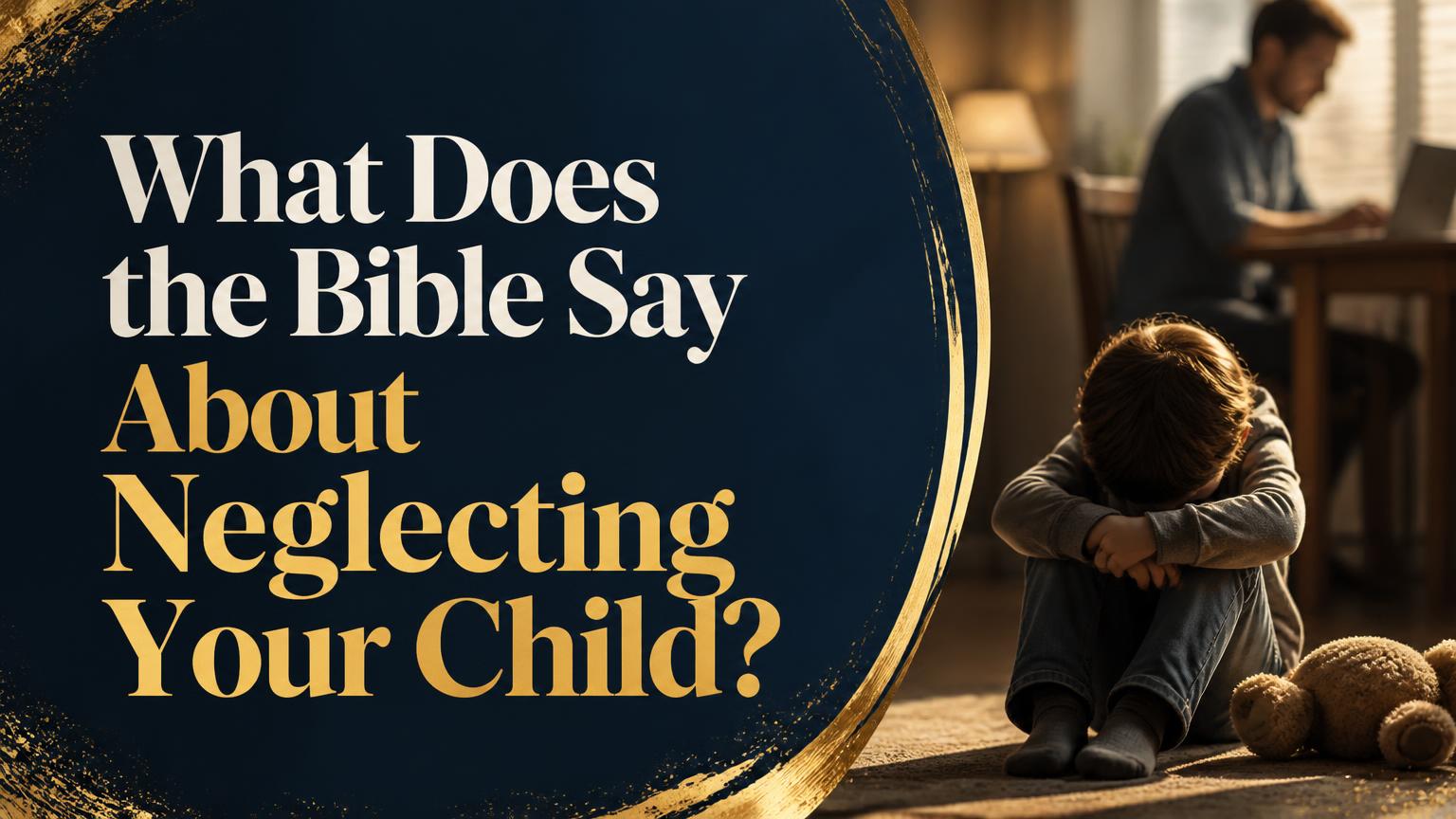
A biblical view of child neglect begins with a clear principle: children are dependent people entrusted to a parent’s care, not burdens to be ignored or possessions to be controlled. Scripture addresses neglect through commands to provide for one’s household, nurture children with patience, protect the vulnerable, and treat children with dignity. It also recognizes that neglect may involve more than food and shelter; persistent absence, emotional abandonment, destructive discipline, and refusal to guide a child can all violate these responsibilities.
What Does the Bible Say About Neglecting Your Child?
The Bible does not use modern child-welfare terminology or provide a statutory definition of neglect. It does, however, establish principles that directly address it. Parents are responsible for the welfare and formation of their children, while the wider community is called to notice suffering and respond to vulnerable people.
God Entrusts Parents With Basic Care
First Timothy 5:8 teaches that a person who refuses to provide for members of the household has denied the faith and acted worse than an unbeliever. The immediate context concerns family responsibility, especially care for relatives in need, but the principle clearly applies to dependent children. Providing care includes reasonable attention to food, clothing, shelter, medical needs, protection from danger, and other necessities.
This command does not mean that faithful parents must provide wealth, perfect conditions, or everything a child requests. Families may experience poverty, illness, disability, exhaustion, or circumstances beyond their control. Neglect is more accurately associated with a persistent refusal or failure to meet necessary needs when a caregiver has responsibility and reasonable ability to respond. The issue is not whether a parent has limitations, but whether the child is knowingly and repeatedly left without essential care.
Biblical Nurture Includes Presence, Protection, and Instruction
Ephesians 6:4 tells fathers not to provoke their children to anger but to bring them up in the discipline and instruction of the Lord. Colossians 3:21 similarly warns parents not to discourage their children. These passages present parenting as an active relationship, not merely the delivery of physical supplies.
A child may be materially provided for yet suffer serious relational neglect through chronic indifference, humiliation, abandonment, or a parent’s refusal to listen and offer guidance. Biblical nurture includes correction, but correction must serve the child’s growth rather than the adult’s anger or desire for control. Deuteronomy 6:6–7 describes instruction as woven into ordinary life, showing that spiritual formation involves consistent presence, conversation, example, and teaching. Parents can guide a child toward faith, though they cannot force genuine belief or guarantee a child’s future decisions.
Jesus Gives Children Dignity and Protection
Jesus welcomed children when others tried to keep them away. In Mark 10:13–16, he received, blessed, and valued them rather than treating them as interruptions. That action challenges any attitude that considers children unimportant, inconvenient, or unworthy of attention.
Jesus also spoke severely about causing “little ones” to stumble in Matthew 18:5–6. The immediate context includes vulnerable disciples, so the passage should not be reduced to a simple legal definition of child neglect. Nevertheless, it reveals how seriously Jesus regards the mistreatment of the vulnerable. Matthew 18:10 further emphasizes that these “little ones” are not invisible to God. Neglect may be hidden from neighbors, churches, or institutions, but it is not hidden from God.
Scripture Calls Believers to Notice and Respond to Need
James 1:27 defines pure and undefiled religion partly in terms of caring for orphans in their distress. James 2:15–16 condemns offering kind words to a person who lacks clothing or food while providing no practical help. These passages do not transfer every parental duty to the church, but they do reject passive concern that never becomes action.
The church, extended family, and other responsible adults may need to support an overwhelmed parent, provide practical assistance, or protect a child from harm. That support should not become an excuse for a caregiver’s ongoing refusal to change. Compassion for a struggling parent and protection of a vulnerable child belong together. Helping the adult matters, but the child’s safety and well-being cannot be postponed indefinitely.
What Counts as Neglect, and What Does Not?
Biblically, neglect is not the same as imperfect parenting. A parent may miss a conversation, lose patience, make a poor decision, or struggle temporarily without creating a settled pattern of neglect. Children also have different needs at different ages, and responsible care will not look identical in every family. Poverty or disability alone does not prove moral failure; the relevant question is whether available help is being sought and the child’s needs are being addressed as faithfully as possible.
Neglect becomes more serious when essential needs are repeatedly ignored or when a parent’s choices expose a child to preventable harm. Physical neglect can involve inadequate food, unsafe housing, lack of necessary medical care, or failure to supervise. Emotional neglect may involve sustained rejection, indifference, isolation, or refusal to respond to a child’s distress. Spiritual neglect can involve refusing all moral guidance or deliberately modeling destructive behavior, although it should not be confused with a child’s freedom to make personal decisions about faith.
Neglect must also be distinguished from biblical discipline. Ephesians 6:4 places discipline beside instruction but prohibits provocation and discouragement. Discipline aims at wisdom, self-control, and restoration; abuse, intimidation, humiliation, and violence use power to injure or dominate. Invoking parental authority does not make harmful conduct righteous.
How Should Christians Respond to Child Neglect?
Protect the Child From Immediate Danger
When a child faces immediate danger, protection takes priority over preserving appearances, avoiding embarrassment, or keeping a family secret. Contact emergency services when necessary. If neglect or abuse is suspected, report it to the appropriate child-protection or law-enforcement authority in the relevant location; reporting requirements differ by jurisdiction, and some adults are legally mandated to report concerns.
A person who receives a disclosure should listen calmly, affirm that the child is not responsible for the harm, and avoid promising absolute secrecy. Do not conduct an amateur investigation or pressure the child to repeat details. Record what was observed or said as accurately as possible and involve qualified professionals. Romans 13:1–4 describes civil authorities as having a legitimate role in restraining wrongdoing, so seeking lawful protection is not contrary to Christian faith.
Help Without Excusing the Caregiver
Some neglect results from deliberate indifference; other situations involve addiction, mental illness, domestic violence, severe poverty, disability, or a parent who has never learned healthy caregiving. Understanding these factors may help determine an effective response, but explanation does not erase the child’s needs or the seriousness of the harm.
Galatians 6:2 calls believers to bear one another’s burdens, which may mean arranging meals, transportation, childcare, counseling, housing support, or treatment. Yet support should reduce danger rather than conceal it. A church or relative should not keep supplying temporary fixes while refusing to confront a pattern that leaves a child unsafe. Wise assistance combines compassion, accountability, professional help, and clear boundaries.
Understand That Repentance Requires Changed Behavior
Biblical repentance is more than feeling guilty or making an emotional apology. It involves turning from wrongdoing and producing conduct consistent with that change. A neglectful parent may need to admit what happened without blaming the child, accept legal or family consequences, obtain treatment, learn parenting skills, and demonstrate reliable care over time.
Forgiveness may be offered without pretending that trust has already been restored. A child may need distance, supervision, counseling, or protection while change is being tested. Luke 3:8 speaks of fruit consistent with repentance, and 1 John 3:18 emphasizes love expressed in action rather than words alone. In a neglect situation, changed routines and dependable protection matter more than promises made under pressure.
Do Not Place the Adult’s Responsibility on the Child
Children are not responsible for managing a parent’s emotions, concealing family wrongdoing, or rescuing an adult from the consequences of neglect. The command to honor parents in Exodus 20:12 and Ephesians 6:1–3 does not require a child to submit to abuse, remain in immediate danger, or lie to protect a caregiver. Honoring a parent can include truthful speech, appropriate respect, and a refusal to answer evil with evil; it does not mean enabling sin.
Psalm 27:10 acknowledges the painful possibility of parental abandonment while affirming God’s care for the forsaken. That promise does not make neglect acceptable, but it gives language to those who have been harmed. Children and adult survivors may need safe relationships, pastoral care, trauma-informed counseling, and practical protection. Seeking help is not a failure of faith.
The Bible’s Central Message About Parental Neglect
The Bible treats children as vulnerable people deserving care, instruction, protection, and respect. Its teaching condemns the refusal to provide for one’s household, warns parents against discouraging or provoking their children, and shows Jesus receiving children with deliberate dignity. Neglect therefore involves more than occasional parental mistakes; it is a persistent failure to meet a child’s essential physical, emotional, relational, or protective needs.
The appropriate Christian response holds two truths together: struggling families deserve compassion, and children must not be sacrificed to preserve an adult’s comfort or reputation. Where neglect exists, responsible action may include reporting danger, seeking outside help, setting boundaries, supporting genuine repentance, and ensuring consistent care. God’s concern for the neglected child means that silence, secrecy, and religious language must never be used to excuse harm.