
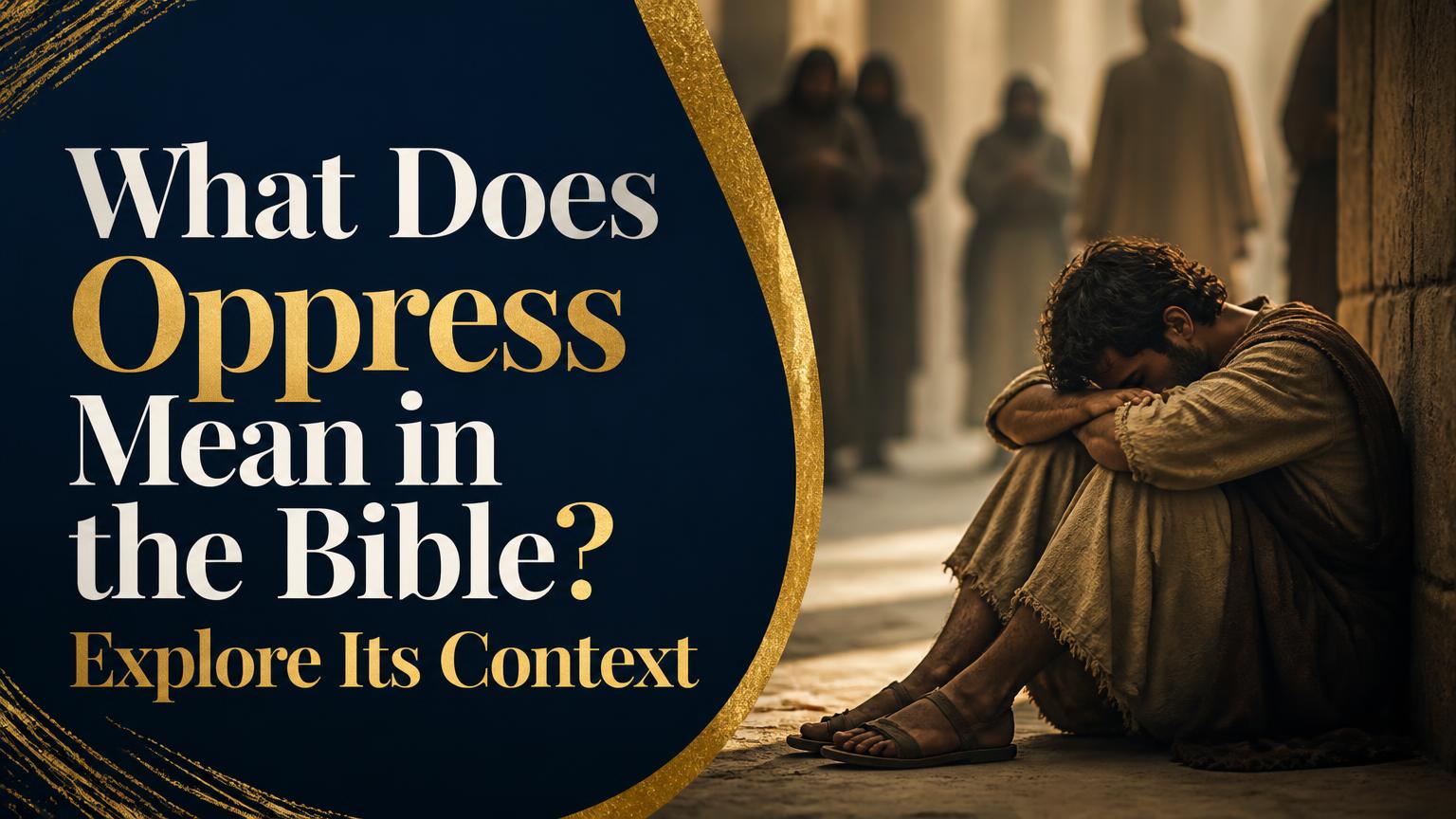
The Bible uses oppression to describe the unjust treatment of people through cruelty, exploitation, violence, deception, or the misuse of power. It especially highlights the abuse of the poor, widows, orphans, foreigners, workers, and other vulnerable people. Biblical oppression is more than ordinary hardship: it involves someone or some system unjustly burdening, controlling, defrauding, or denying justice to another person. Scripture consistently presents God as one who sees oppression, judges oppressors, and calls his people to defend those being mistreated.
What Does Oppress Mean in the Bible?
Biblical Meaning of Oppression
To oppress someone in the Bible means to treat that person unjustly, harshly, or abusively, usually by taking advantage of a position of strength. Oppression can involve forced labor, withheld wages, dishonest business practices, unfair legal decisions, violence, political domination, or refusing justice to someone who lacks influence.
Several Hebrew and Greek words are translated as “oppress,” “oppressed,” or “oppression,” and they do not all emphasize exactly the same aspect. Some refer to exploiting or defrauding another person. Others describe crushing, mistreating, dominating, or subjecting someone to severe pressure. The common idea is the abuse of power that causes unjust harm.
The Bible therefore does not define every difficulty as oppression. A person may suffer because of illness, persecution, poverty, disaster, or personal loss without being oppressed by a particular human agent. Oppression specifically points toward wrongful treatment, especially when a stronger person, group, ruler, employer, or institution harms someone with less power.
Who Are the Most Common Targets?
Scripture repeatedly identifies people who were especially vulnerable to oppression: the poor, widows, orphans, resident foreigners, servants, laborers, and those without political or legal influence. God’s concern for these groups appears in laws such as Deuteronomy 24:14–15, which forbids withholding a poor worker’s wages, and Exodus 22:21–24, which warns Israel not to mistreat foreigners, widows, or orphans.
This emphasis does not mean that oppression can happen only to members of these categories. Anyone can be oppressed. However, people with limited resources or social protection are more easily exploited because they may be unable to resist, obtain legal help, or recover from financial and physical harm. Biblical commands protect them precisely because power tends to expose them to greater risk.
How Oppression Happens
Biblical oppression takes several forms. Pharaoh oppressed the Israelites through forced labor and harsh control, commanding taskmasters to make their work increasingly severe (Exodus 1:11–14). Wealthy landowners could oppress workers by withholding wages or taking advantage of their dependence. Rulers and judges could oppress people by passing unjust laws, accepting bribes, or denying a poor person a fair hearing.
The prophets often exposed oppression hidden behind respectable institutions. Isaiah condemned those who issued unjust decrees that deprived the needy of justice (Isaiah 10:1–2). Amos confronted wealthy people who exploited the poor and corrupted the courts (Amos 5:11–12). These passages show that oppression is not limited to obvious physical violence. It can operate through economic systems, legal decisions, dishonest contracts, discrimination, and policies that protect the powerful while burdening the weak.
God’s Response to Oppression
The Bible presents God as attentive to the cries of oppressed people. When Israel suffered under Egypt, God told Moses, “I have surely seen the affliction of my people” and heard their cries (Exodus 3:7–9). This does not mean that God immediately removes every instance of suffering. It means oppression is never invisible or morally insignificant to him.
God’s response includes judgment against oppressors, rescue of the afflicted, and commands requiring his people to practice justice. Psalm 10 describes the arrogance of the wicked who pursue the helpless, then appeals to God to defend the oppressed and break the power of wrongdoing. The biblical message is therefore both comforting and morally serious: God cares about victims, and he holds those who exploit others accountable.
Important Biblical Contexts for Oppression
Oppression in Israel’s History
Israel’s experience in Egypt became a permanent reminder of what oppression looks like. The Israelites were not merely uncomfortable or economically disadvantaged; they were compelled to labor under a system designed to control and weaken them. Pharaoh treated them as a threat and used forced labor as a means of domination.
Because Israel had experienced this suffering, God repeatedly commanded the nation not to oppress foreigners living among them. Leviticus 19:33–34 tells Israel to treat the foreigner as a native and to love him as themselves. The command connects moral memory with ethical responsibility: those who know what oppression feels like must not reproduce it against others.
Oppression Through Economic and Legal Power
Many biblical warnings concern ordinary economic relationships. Deuteronomy 24:14–15 forbids employers from delaying the wages of poor laborers because their livelihood depends on prompt payment. James 5:4 similarly condemns wealthy people who retain the wages of workers. The wrongdoing is not simply inefficiency; it is using control over money to endanger another person’s ability to live.
Oppression can also occur through courts and government. Proverbs 31:8–9 calls God’s people to speak for those unable to speak for themselves and to defend the rights of the poor and needy. Isaiah 1:17 commands people to seek justice, correct oppression, and defend the fatherless. These passages show that biblical justice includes active protection, not merely private kindness.
Oppression in the Ministry of Jesus
Jesus announced that his mission included bringing good news to the poor and proclaiming liberty to the oppressed (Luke 4:18). Drawing from Isaiah, he presented liberation as part of God’s saving work. In Acts 10:38, Peter summarized Jesus’ ministry by saying that he healed those oppressed by the devil. The New Testament therefore uses oppression both for social suffering and for forms of bondage associated with evil and spiritual affliction.
Jesus also challenged religious leaders who burdened people while neglecting mercy and justice. His criticism was not a rejection of moral instruction itself; it was a condemnation of leaders who imposed burdens on others without compassion and used religious authority for status or control. Christian concern for oppression must therefore include both public conduct and the way authority is exercised within religious communities.
What Oppression Is—and Is Not
Oppression and Ordinary Suffering
Oppression is a form of suffering, but not all suffering is oppression. A person may suffer from sickness, aging, grief, natural disaster, or an accident without another person intentionally or unjustly causing the harm. The word “oppression” becomes appropriate when suffering is connected to exploitation, domination, cruelty, or the denial of rightful treatment.
This distinction matters because it prevents the term from becoming so broad that it loses meaning. At the same time, oppression does not always require obvious malicious intent. A person may participate in an unjust arrangement carelessly or benefit from practices that harm others without personally committing physical violence. Biblical wisdom examines both actions and structures that produce unjust burdens.
Oppression and Persecution
Persecution is a specific type of hostile treatment directed against someone because of faith, identity, convictions, or allegiance. Oppression is broader. A person may be oppressed because of poverty, ethnicity, social status, legal vulnerability, or economic dependence without being persecuted for religious belief.
The two can overlap. A ruler may oppress a religious minority, or a believer may be persecuted through imprisonment, forced labor, confiscation, or violence. However, calling every difficult experience “persecution” can obscure the actual issue. Biblical language encourages careful attention to the cause, the power relationship, and the type of harm involved.
Oppression and Biblical Submission
Biblical teaching about humility, patience, obedience, and submission does not authorize people to exploit others. Scripture calls servants, citizens, and church members to live responsibly, but it also condemns rulers, employers, parents, and religious leaders who misuse authority. Jesus’ teaching on leadership makes greatness depend on serving rather than dominating (Mark 10:42–45).
Enduring hardship faithfully is different from declaring injustice acceptable. The Bible contains examples of faithful people who prayed under oppression, appealed to authorities, fled danger, or publicly confronted wrongdoing. Christians should not use passages about endurance to silence victims or protect abusers. Submission to God never requires agreement with oppression.
How Christians Should Respond to Oppression
Defend People Who Lack Power
Scripture repeatedly calls God’s people to defend those whose voices are easily ignored. Proverbs 31:8–9 describes this responsibility as speaking up for the voiceless and judging righteously. Isaiah 1:17 connects learning to do good with seeking justice and correcting oppression. These commands involve more than feeling sympathy; they require attention, advocacy, and concrete efforts to prevent harm.
A wise response may include listening carefully to victims, documenting wrongdoing, supporting fair processes, providing practical help, and challenging unjust decisions. The method will depend on the situation, but the principle remains consistent: biblical faith does not permit indifference toward people being exploited.
Practice Justice Without Partiality
James 2:1–9 warns Christians against favoring the rich while dishonoring the poor. The church must not reproduce the same status-based judgments that Scripture condemns in society. Fair treatment includes honesty in business, prompt payment, impartial leadership, protection of vulnerable people, and accountability for those who exercise authority.
Justice also requires discernment. Helping someone does not mean accepting every accusation without examination, and confronting oppression should not become an excuse for revenge or false testimony. Biblical justice seeks truth, protects the vulnerable, and refuses both favoritism toward the powerful and careless condemnation of the accused.
Reject Exploitation in Personal and Institutional Life
Oppression can appear in a home, workplace, church, government, or community. It may involve coercive control, financial abuse, threats, humiliation, discriminatory treatment, or spiritual manipulation. Christians should examine whether their decisions place unreasonable burdens on people who cannot safely object.
James 1:27 describes pure religion as caring for orphans and widows in their distress while pursuing personal holiness. That combination is significant: biblical compassion is neither activism without character nor private spirituality without mercy. Followers of Christ are called to use authority responsibly, meet real needs, repent of exploitative behavior, and establish practices that make abuse harder to conceal.
Conclusion
In the Bible, to oppress means to use power unjustly to crush, exploit, control, or deny justice to another person. The term applies to forced labor, withheld wages, dishonest trade, corrupt courts, abusive leadership, mistreatment of foreigners, and other forms of domination. Scripture gives special attention to vulnerable people because they are least able to resist or recover from injustice. God hears their cries and condemns those who profit from their weakness. Understanding oppression biblically therefore requires both compassion for those who suffer and honest examination of the actions and systems that cause their suffering.