
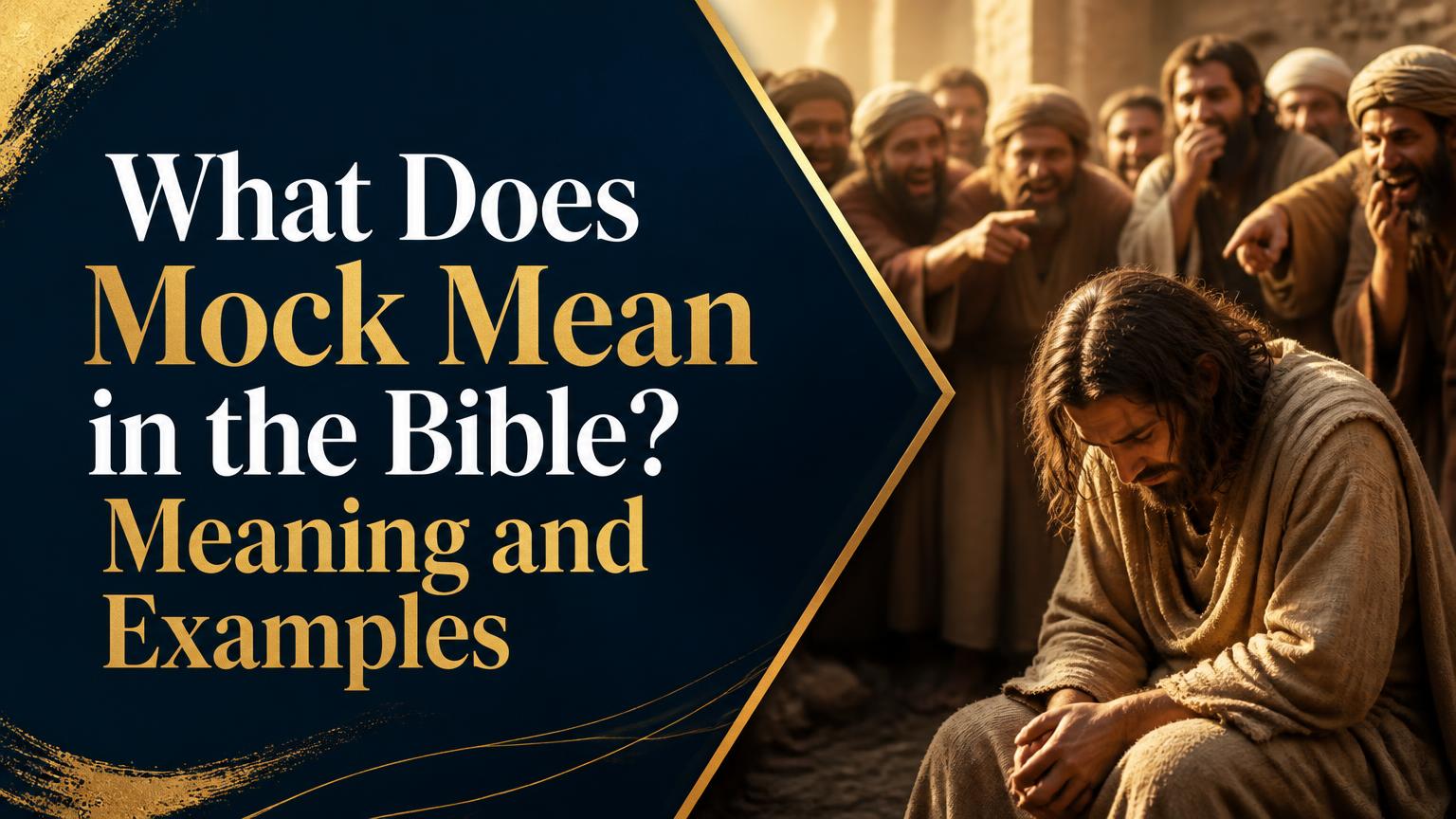
The word mock in the Bible generally means to ridicule, scorn, insult, or treat someone with contempt. Biblical mockery can appear through words, laughter, gestures, imitation, deception, or deliberate rejection of authority. Scripture uses the term for people who mock other people, mock God’s messengers, mock Jesus, and attempt to live as though God’s moral order has no consequences. Understanding the context matters because biblical mockery is more serious than ordinary joking or honest questioning.
What Does Mock Mean in the Bible?
Mocking Means Treating Someone With Contempt
To mock someone is to make that person appear foolish, weak, dishonorable, or unworthy of respect. Mockery may involve ridicule, sarcastic insults, derisive laughter, or actions designed to humiliate. In biblical passages, the mocker is often not merely making a joke; he or she is expressing contempt and refusing to recognize the other person’s dignity or authority.
The Bible frequently connects mockery with pride. Proverbs describes the “scoffer” or “mocker” as someone who rejects correction and treats wisdom as foolishness. This person does not simply lack knowledge. The deeper problem is an attitude that refuses instruction, despises accountability, and assumes that correction applies to others but not to oneself.
Mocking God Means Defying His Authority
When Scripture says, “God is not mocked” (Galatians 6:7), it does not mean that human beings can physically injure God’s honor or make Him lose control. It means that people cannot treat God with contempt, ignore His revealed will, and ultimately escape the consequences of their choices.
The statement appears in Paul’s teaching about sowing and reaping. A person who sows to the flesh should not expect to reap the results associated with the Spirit. In this context, mocking God involves acting as though His moral order can be dismissed or manipulated. Someone may claim to honor God while persistently choosing evil, but outward religious language does not cancel the reality of those choices.
This principle does not mean that every sinful act produces an immediate visible consequence. Scripture itself recognizes that the wicked may prosper temporarily and that judgment may appear delayed. “God is not mocked” means that God’s justice cannot finally be evaded, not that every consequence arrives quickly or in an obvious form.
Mockery of Jesus Reveals Rejection and Irony
The Gospels repeatedly describe people mocking Jesus during His arrest and crucifixion. Soldiers dressed Him in royal clothing, placed a crown of thorns on Him, struck Him, and pretended to honor Him as king (Matthew 27:27–31; Mark 15:16–20). Their actions were designed to ridicule His claim to kingship.
The mockery was deeply ironic. The soldiers intended to deny Jesus’ authority, yet the Christian understanding of the crucifixion is that Jesus truly is King. Their false royal ceremony exposed their contempt, while the narrative simultaneously presented His kingship in a way they did not understand. Luke 23:36 similarly describes soldiers mocking Jesus by offering Him sour wine while challenging Him to save Himself.
Jesus’ experience also fulfills His own predictions that He would be mocked, mistreated, and killed (Mark 10:33–34). Biblical mockery therefore appears both as a form of human cruelty and as part of the rejection Jesus endured.
Biblical Examples Show Different Forms of Mockery
Scripture presents several related forms of mockery:
- Mocking God’s people: Sanballat and Tobiah ridiculed the Jews as they rebuilt Jerusalem’s walls (Nehemiah 4:1–3). Their insults were intended to weaken courage and stop the work.
- Mocking a family member: Ishmael’s treatment of Isaac is described with language commonly translated as “mocking” (Genesis 21:9). The incident involved hostility and contempt, not harmless play.
- Mocking a prophet or messenger: People sometimes ridiculed those who spoke God’s word because they rejected the message itself.
- Mocking false worship: Elijah’s challenge to the prophets of Baal included taunting language (1 Kings 18:27). This was a prophetic confrontation exposing the impotence of Baal, not a general permission for believers to humiliate people for entertainment.
- Mocking through imitation: In some contexts, mockery takes the form of pretending to honor someone while actually degrading that person, as the soldiers did to Jesus.
These examples show that mockery may target a person’s identity, authority, faith, weakness, or message. Its common feature is contempt expressed through words or behavior.
How the Bible Distinguishes Mockery From Honest Questions
Not every difficult statement, disagreement, or emotional reaction in Scripture is mockery. The Bible contains sincere questions, laments, protests, and requests for explanation. Job questioned God’s purposes, many psalms express confusion, and the disciples repeatedly asked Jesus to clarify His teaching. Their words could be emotionally intense without being contemptuous.
The difference usually involves posture and purpose. A sincere question seeks understanding, even when it is confused or distressed. Mockery seeks to belittle, dismiss, or challenge legitimate authority through contempt. A person may disagree with a Christian belief without mocking it; mockery begins when disagreement is expressed through derision or deliberate humiliation.
This distinction also helps prevent an unhealthy use of the word. Christians should not label every criticism as persecution or every question as rebellion. Scripture calls believers to answer honestly, listen carefully, and correct with gentleness. At the same time, recognizing mockery helps identify speech intended to shame people, destroy faith, or make obedience appear ridiculous.
What Does the Bible Teach About Mockers?
Mockers Commonly Reject Correction
Proverbs presents mockers as people who resist wisdom because they resent correction. Proverbs 9:7–8 contrasts the response of a scoffer with that of a wise person: rebuking a mocker may produce hatred, while a wise person receives correction. The issue is not that mockers have never been informed. They often reject instruction because accepting it would require humility.
This makes mockery a spiritual and moral issue, not merely a communication style. A person may use humor skillfully while remaining teachable, whereas another may use jokes to avoid accountability. The biblical concern is the proud refusal to learn.
Mockery Can Spread Harm
Ridicule can damage individuals and communities because it pressures people to abandon what they believe or to hide their weaknesses. Nehemiah 4 shows mockery being used strategically against a vulnerable community. The goal was not simply to express an opinion; it was to undermine morale and prevent constructive work.
For this reason, biblical teaching about speech includes more than avoiding false statements. Words can also wound, shame, provoke, or corrupt relationships. James warns about the destructive power of the tongue, while Ephesians 4:29 calls believers to use speech that builds others up. A technically humorous comment may still function as mockery if it humiliates rather than serves.
Mockery Does Not Always Indicate That the Target Is Wrong
The mocking of Jesus demonstrates that ridicule is not a reliable test of truth. Jesus was mocked precisely because His identity and authority were rejected, yet the mockery did not disprove His claims. Similarly, God’s servants may be ridiculed because their message challenges popular values or exposes wrongdoing.
This does not mean that every ridiculed person is correct. People can also be mocked for foolish or harmful behavior. The point is that mockery itself proves neither truth nor error. It reveals the attitude of the mocker more clearly than it establishes the validity of the target.
How Should Christians Respond to Mockery?
Respond Without Becoming Mockers
The Bible does not encourage believers to answer every insult with another insult. Jesus endured mockery without adopting the same contemptuous spirit toward His enemies. First Peter 2:23 describes Him as entrusting Himself to God while suffering unjustly. That response does not require passivity in every situation, but it rejects revenge and personal humiliation as the normal answer.
A Christian response may include calm explanation, a clear defense of the truth, appropriate boundaries, or silence when further discussion would only create more hostility. The goal is faithfulness rather than winning a verbal contest.
Correct Error With Humility and Truth
When mockery concerns false teaching or destructive conduct, Christians may need to speak plainly. Elijah’s confrontation with Baal’s prophets was public and forceful because it addressed national apostasy and a direct challenge to the worship of Israel’s God. That extraordinary prophetic setting should not be used to justify constant sarcasm or personal attacks.
The New Testament more commonly emphasizes gentleness, patience, and self-control. Second Timothy 2:24–25 instructs the Lord’s servant to correct opponents with kindness, recognizing that repentance and understanding are ultimately matters God must bring about.
Examine the Heart Behind Humor
The biblical question is not simply whether something was intended as a joke. It is also whether the humor expresses love, truth, and respect. A joke that exposes hypocrisy or challenges idolatry may serve a serious purpose, but humor that repeatedly humiliates the weak can become mockery even when the speaker calls it entertainment.
Believers should therefore examine both intent and effect. Are they trying to clarify truth, or make another person appear beneath contempt? Are they correcting sin, or enjoying someone’s embarrassment? These questions help distinguish courageous speech from prideful ridicule.
Does “Mock” Always Have the Same Meaning in Bible Translations?
No. English translations may use mock, scoff, scorn, deride, ridicule, insult, or deceive for related Hebrew and Greek expressions. The exact wording depends on the original term and the context. Some passages emphasize verbal ridicule; others emphasize contemptuous gestures, humiliating treatment, or acting deceptively toward someone.
For example, the Greek expression translated “God is not mocked” in Galatians 6:7 conveys the idea of treating God with contempt or figuratively turning up one’s nose at Him. It does not mean that God can be tricked by clever behavior. In passages about Jesus’ suffering, the emphasis falls on public humiliation and derision. Comparing several translations can therefore clarify the shade of meaning, but the surrounding passage remains the most important guide.
Conclusion
In the Bible, mock generally means to ridicule, scorn, insult, or treat someone with contempt. Biblical mockery can attack a person, undermine God’s messenger, oppose true worship, or pretend to honor someone while actually humiliating them. “God is not mocked” means that no one can dismiss God’s authority and escape the moral reality of what he or she chooses to sow. Scripture also distinguishes mockery from sincere questions and teaches believers to respond to ridicule with truth, humility, self-control, and trust in God’s justice.