
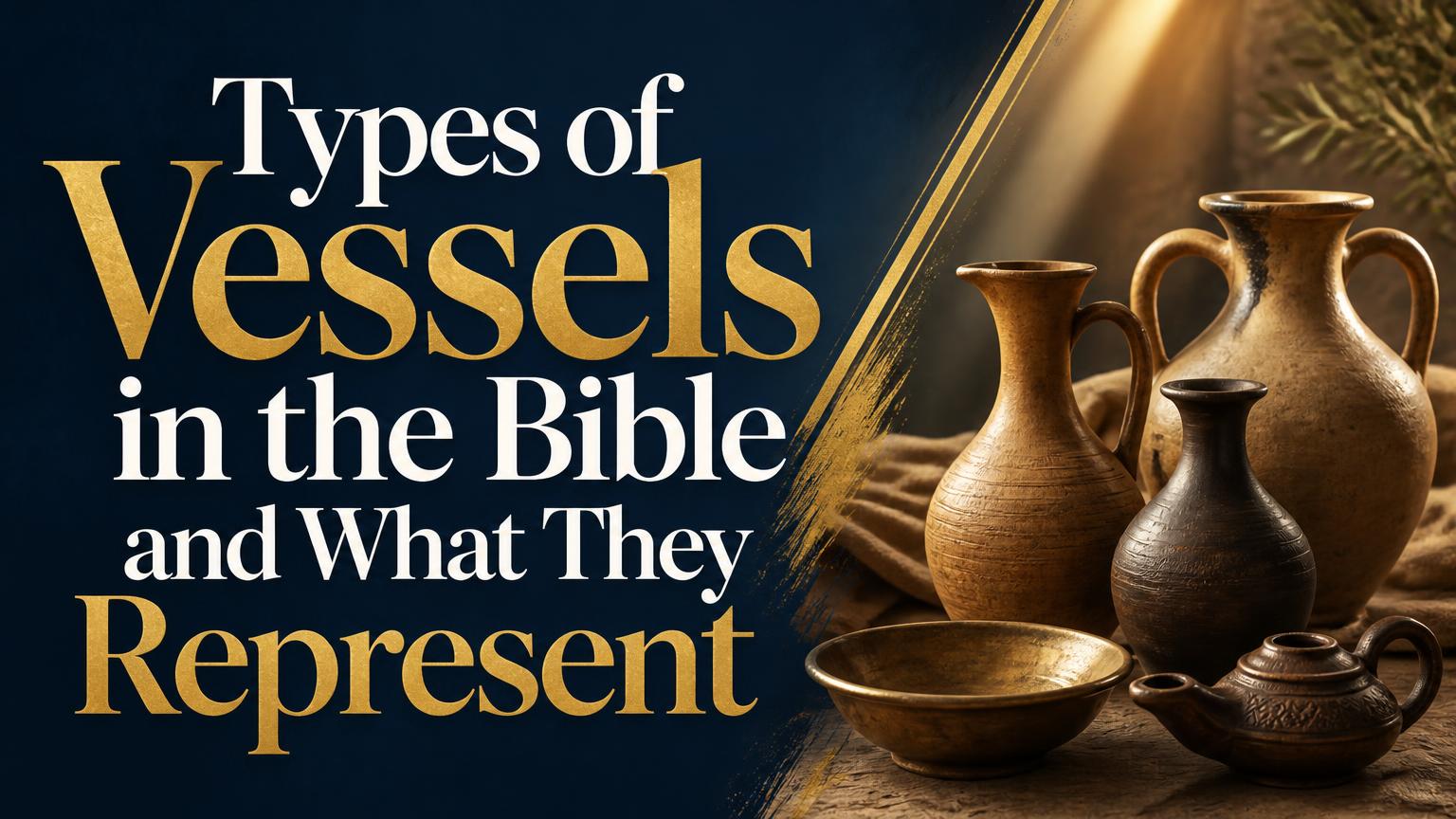
The Bible mentions vessels in ordinary homes, tabernacles, temples, marketplaces, journeys, meals, and prophetic visions. A vessel may be a jar, bowl, cup, basin, pot, flask, wineskin, utensil, or another container. These objects often had practical functions, but biblical writers also used them to communicate ideas about human weakness, holiness, cleansing, judgment, service, and God’s use of ordinary people. Their meaning comes from context rather than from a universal symbolic code assigned to every material.
Types of Vessels in the Bible
Biblical vessels can be classified by their material, function, and setting. Some were ordinary household objects, while others were dedicated to worship. The same material could serve both common and sacred purposes, so its spiritual meaning must be interpreted carefully.
Earthenware and Clay Vessels
Clay vessels were among the most common containers in the ancient world. People used them for water, oil, grain, cooking, storage, and household tasks. Because pottery was inexpensive and relatively fragile, the Law sometimes required a clay vessel to be broken after it became ceremonially unclean rather than cleansed for reuse (Leviticus 11:33; 15:12).
Clay also became a powerful image of human frailty. Isaiah compares people to clay in the hands of a potter (Isaiah 64:8), emphasizing God’s authority as Creator and humanity’s dependence on Him. Paul similarly writes that believers have “treasure in jars of clay” (2 Corinthians 4:7). The point is not that human beings are worthless, but that the surpassing power of the gospel comes from God rather than from the apparent strength of His messengers.
Gideon’s army carried torches inside clay jars, then broke the jars so the light became visible (Judges 7:16–20). In that event, the fragile vessels helped illustrate how God can display His power through weakness and unlikely instruments.
Gold and Silver Vessels
Gold and silver vessels appear especially in royal, wealthy, and worship settings. The tabernacle and temple used vessels made from precious metals, including bowls, cups, dishes, firepans, and other utensils (Exodus 25:29; 1 Kings 7:45–50). Their value reflected the honor associated with the place and purpose for which they were used.
In 2 Timothy 2:20–21, Paul describes a large house containing vessels of gold and silver as well as vessels of wood and clay. In that illustration, the central distinction is not merely material wealth. Paul contrasts vessels associated with honor and dishonor, then explains that a person who turns away from unrighteousness becomes “a vessel for honorable use,” useful to the Master and prepared for good work.
Gold and silver can therefore suggest value, honor, or consecration in particular contexts. They do not automatically represent spiritual superiority. A precious vessel used irreverently could still be subject to judgment, as shown when Belshazzar profaned the vessels taken from the Jerusalem temple (Daniel 5).
Bronze Vessels
Bronze, sometimes translated as brass or copper depending on the translation and historical context, was widely used for durable equipment. The tabernacle included a bronze altar, bronze utensils, and a bronze basin for washing (Exodus 27:1–8; 30:18). Solomon’s temple also contained many large bronze objects and vessels, including the great basin known as the Sea (1 Kings 7:23–47).
Bronze was practical because it resisted heat and wear. It was therefore suitable for sacrificial implements, fire-related utensils, and objects used outside the most sacred interior areas. Some passages also associate bronze imagery with strength, resistance, or judgment, but the Bible does not establish bronze as a fixed symbol with one meaning in every passage.
The bronze censers connected with Korah’s rebellion were hammered into a covering for the altar (Numbers 16:36–40). Their history gave them a warning function: they became a memorial that unauthorized approach to God was not a trivial matter.
Wooden Vessels and Utensils
Wood served as a common material for containers, tools, poles, furniture, and implements. The ark of the covenant, for example, was made from acacia wood and overlaid with gold (Exodus 25:10–11). This shows why it can be misleading to assign a simple spiritual meaning to a material. Wood could belong to ordinary life, or it could be incorporated into something sacred through God’s appointment and consecration.
Paul’s reference to wooden vessels in 2 Timothy 2:20 forms part of a contrast between honorable and dishonorable use. The passage focuses on moral readiness, not on a general claim that wood is spiritually inferior. A wooden object could be valuable, useful, and carefully made, while a gold object could be misused.
The broader biblical principle is that purpose and condition matter. A vessel’s usefulness depends not only on what it is made of but also on whether it is set apart, clean, and available for the task assigned to it.
Stone and Alabaster Vessels
Stone jars were durable and were sometimes used for water storage. At the wedding in Cana, six stone water jars stood nearby for Jewish purification rites (John 2:6). Jesus’ transformation of water into wine in those jars connects the miracle with a setting shaped by ritual washing, while also showing the abundance and unexpected character of His ministry.
Alabaster was a soft stone commonly carved into containers for perfume or ointment. A woman poured expensive ointment from an alabaster flask on Jesus in an act of costly devotion (Mark 14:3; Luke 7:37). The container itself is not the primary symbol; the emphasis falls on the value of the perfume, the woman’s sacrifice, and the response of love and honor.
Many English Bibles call such an object an “alabaster box,” but “flask” or “jar” better communicates that it was a container. This example also illustrates why biblical vessel imagery should be read through the action surrounding the vessel rather than through the material alone.
Jars, Pots, Pitchers, and Wineskins
The Bible frequently names vessels according to their everyday function. Rebekah carried a water jar (Genesis 24:15), the widow in 2 Kings 4 possessed a small jar of oil, and the Samaritan woman carried a water jar when she met Jesus (John 4:7–28). These objects reveal how ordinary containers were woven into work, hospitality, survival, and encounters with God.
Jesus used wineskins in a parable about old and new cloth and old and new wineskins (Matthew 9:16–17; Mark 2:21–22; Luke 5:36–39). New wine could expand during fermentation, so it required flexible new skins. Jesus’ point concerns the incompatibility between His kingdom mission and attempts to contain it within rigid expectations. The image is not a blanket condemnation of everything old; it explains that new realities may require forms capable of receiving them.
Pots and jars can also appear in stories of provision, concealment, judgment, and restoration. Their significance depends on what they contain, who uses them, and what happens to them.
Vessels Used in Worship and the Temple
Vessels connected with worship were not merely decorative objects. They supported sacrifice, incense, washing, lighting, offerings, and the handling of holy materials. Their consecration distinguished them from ordinary household equipment. When Jerusalem fell, Babylon carried away temple vessels; when the exiles returned, many of those vessels were restored for worship (Ezra 1:7–11).
Bowls, Cups, and Sacrificial Utensils
The tabernacle and temple used bowls, basins, cups, dishes, forks, shovels, and firepans in connection with offerings and priestly service (Exodus 25:29; 27:3; Numbers 4:7–14). These objects made worship orderly and possible. They also demonstrated that sacred service involved concrete responsibilities rather than vague religious emotion.
Some vessels held blood, grain, oil, or incense; others assisted priests as they prepared or transported offerings. Their meaning came from dedication to God’s worship. The biblical concern was not that the objects possessed magical power, but that holy things were to be treated according to God’s command.
Basins and Washing Vessels
The bronze basin in the tabernacle was used by priests for washing before entering the tent of meeting or approaching the altar (Exodus 30:17–21). Solomon’s temple had large washing facilities for the sacrificial system as well (2 Chronicles 4:6).
These vessels supported ceremonial cleansing, which taught that approach to God was not casual. The rituals did not imply that water alone changed the heart. The prophets and later biblical writers repeatedly insisted that external washing must be joined with repentance and faithful obedience. Thus, washing vessels can point to preparation and purity, but the larger biblical message moves from outward ritual toward inward transformation.
Censers and Incense Vessels
A censer was a vessel used to carry burning coals and incense. Incense in Israel’s worship represented a fragrant offering associated with prayer and priestly ministry (Exodus 30:7–8; Psalm 141:2). Revelation also uses bowls of incense as an image of the prayers of God’s people (Revelation 5:8).
Censers could also become associated with judgment when people used them in unauthorized worship. In Numbers 16, the censers of Korah and his followers were reshaped as a covering for the altar after the rebellion. The object therefore became a lasting warning that worship must be governed by God’s holiness rather than human ambition.
What Vessels Represent in Biblical Imagery
The Bible uses vessel language flexibly. A vessel can represent a person, a community, a role, a condition, or an instrument through which something is carried or displayed. The surrounding passage determines which idea is intended.
Human Frailty and Divine Power
The clearest New Testament example is Paul’s statement that believers possess heavenly treasure in “jars of clay” (2 Corinthians 4:7). Paul follows this image with descriptions of affliction, perplexity, persecution, and bodily weakness. The fragile vessel represents the apostle’s vulnerable human condition, while the treasure represents the gospel and the life of Jesus manifested through his servants.
This does not glorify weakness for its own sake or suggest that suffering is always good. It means that weakness can prevent human messengers from claiming credit for power that belongs to God. The contrast directs attention away from impressive appearance and toward divine strength.
Honor, Holiness, and Readiness for Service
Paul’s “vessel for honorable use” in 2 Timothy 2:20–21 connects vessel imagery with moral purification and usefulness. The person who cleanses himself from dishonorable conduct is prepared for good work. In this passage, being a vessel is not passive. The image calls for separation from destructive behavior, disciplined character, and readiness to serve.
Acts 9:15 describes Paul as a “chosen instrument” or “chosen vessel” to carry Jesus’ name before the nations. Here the vessel emphasizes vocation: Paul is appointed to carry and communicate a message that originates with Christ. The image does not make Paul the source of the message; it identifies him as its commissioned bearer.
Cleansing, Restoration, and Consecration
Vessel imagery can communicate the need for cleansing or restoration. A container used for unclean purposes might be discarded, washed, or set apart depending on the law governing it. This physical system helped Israel think about boundaries, holiness, and preparation for worship.
The spiritual application requires care. Biblical purity is not merely external maintenance. Jesus criticized religious practices that preserved outward appearance while neglecting the heart (Matthew 23:25–28). The vessel image is therefore most complete when outward conduct and inward character agree. A person prepared for honorable service is not simply ceremonially clean but increasingly shaped by repentance, faith, and obedience.
Judgment, Brokenness, and Accountability
A broken vessel can symbolize ruin, grief, or judgment. The psalmist describes himself as “like a broken vessel” in a poetic expression of abandonment and weakness (Psalm 31:12). Jeremiah was instructed to break a potter’s vessel as a sign of coming judgment against Jerusalem (Jeremiah 19:1–13). In these passages, brokenness represents more than inconvenience; it signals loss, vulnerability, or irreversible consequence.
Romans 9 also uses potter-and-clay language, including references to vessels of mercy and vessels of wrath. Christians interpret this passage differently in relation to divine sovereignty and human responsibility. It should not be reduced to a claim that certain physical materials or social classes are inherently favored or condemned. The passage addresses God’s authority, patience, judgment, and mercy within Paul’s larger argument about His purposes.
How to Interpret Vessel Imagery Correctly
The most reliable approach is to ask what the vessel is doing in its passage. Is it carrying water, holding oil, receiving treasure, supporting worship, being broken as a sign, or representing a person’s calling? Function often matters more than material. A clay jar in 2 Corinthians 4 emphasizes weakness, while stone jars in John 2 belong to a setting of purification, and an alabaster flask in Mark 14 highlights costly devotion.
Readers should also distinguish biblical symbolism from later religious traditions. Scripture does not say that every gold vessel represents faith, every wooden vessel represents sin, or every clay vessel represents failure. Sometimes a vessel is simply an object needed for the story. Symbolic meaning should be established by the passage’s language, context, and theological purpose rather than by an assumed code.
Finally, “vessel” itself is a translation category. Hebrew and Greek terms translated as vessel may refer broadly to an implement, container, utensil, article, or instrument. Comparing the immediate context and recognizing translation differences prevents overly narrow conclusions. The Bible’s central emphasis is usually the relationship between the vessel and its contents, owner, purpose, or condition.
Conclusion
The types of vessels in the Bible include clay jars, gold and silver utensils, bronze basins and censers, wooden implements, stone water jars, alabaster flasks, pitchers, pots, and wineskins. These objects served ordinary and sacred purposes, and their spiritual significance varied by passage. Biblical vessel imagery most often addresses human frailty, divine power, holiness, cleansing, calling, service, judgment, and restoration. The essential principle is that material alone does not determine meaning. A vessel becomes meaningful through what it carries, how it is used, whether it is set apart, and what God communicates through it.