
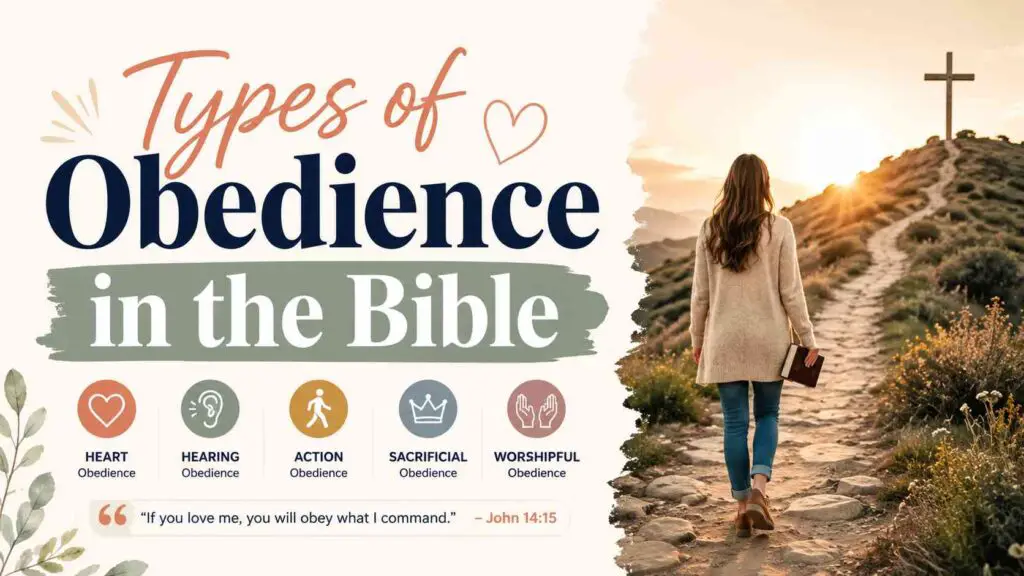
Obedience is one of the most important themes in the Bible. Throughout Scripture, God calls His people to trust Him and follow His commands. As a Christian leader who has spent many years studying God’s Word, I have learned that biblical obedience is not merely about following rules. It is about developing a relationship with God that transforms the heart and influences daily decisions. Different situations require different expressions of obedience. Some require courage, while others demand patience, humility, or sacrifice. Understanding the various types of obedience found in the Bible can help believers grow spiritually and walk more faithfully with Christ every day.
Types of Obedience in the Bible
#1. Immediate Obedience
Immediate obedience means responding to God’s instructions without unnecessary delay. One of the clearest examples is Abraham, who left his homeland when God called him without knowing where he was going (Genesis 12:1-4). He did not demand a complete explanation before taking action. He trusted God’s direction and moved forward in faith.
Many Christians struggle in this area because they want certainty before obeying. They may delay forgiveness, postpone ministry opportunities, or ignore God’s prompting to share their faith. In my experience, delayed obedience often leads to missed blessings and spiritual stagnation. Immediate obedience demonstrates trust in God’s wisdom. When believers respond promptly to God’s leading, they develop greater sensitivity to His voice and experience deeper spiritual growth.
#2. Faith-Based Obedience
Faith-based obedience occurs when believers obey God even when they cannot see the outcome. Noah provides an excellent example. God instructed him to build an ark long before rain became a reality. Despite likely criticism and confusion from others, Noah obeyed because he trusted God’s word (Genesis 6:22).
Christians regularly face situations that require faith-based obedience. A believer may feel called to give generously despite financial uncertainty or pursue ministry despite limited resources. I have learned that faith grows when it is exercised. Waiting until every detail becomes clear is not faith. Genuine faith-based obedience trusts God’s character when circumstances seem uncertain. It allows believers to move forward confidently because they know God remains faithful to His promises.
#3. Complete Obedience
Complete obedience involves following God’s instructions fully rather than partially. Joshua demonstrated this during the conquest of Jericho. Israel followed God’s unusual battle plan exactly as instructed and witnessed a miraculous victory (Joshua 6).
Partial obedience often appears acceptable on the surface but can still be disobedience. Many believers obey the commands they find comfortable while neglecting those that challenge them. Over the years, I have seen how selective obedience limits spiritual maturity. Complete obedience requires surrendering personal preferences to God’s will. It means embracing all of Scripture rather than choosing only the portions that fit personal desires. This type of obedience produces lasting spiritual fruit and strengthens one’s relationship with God.
#4. Loving Obedience
Loving obedience flows from a genuine love for God. Jesus said, “If you love Me, keep My commandments” (John 14:15). This kind of obedience is motivated by devotion rather than fear, pressure, or obligation.
Many Christians focus on outward actions while neglecting the heart behind them. However, God desires willing obedience motivated by love. In my devotional life, I have discovered that obedience becomes easier when rooted in gratitude for God’s grace. Believers who truly appreciate Christ’s sacrifice naturally desire to honor Him. Loving obedience transforms spiritual disciplines from burdens into privileges. Prayer, worship, and service become joyful responses to God’s goodness rather than religious duties performed merely out of obligation.
#5. Sacrificial Obedience
Sacrificial obedience requires giving up something valuable to follow God’s will. Moses chose to identify with God’s people rather than enjoy the temporary privileges of Pharaoh’s palace (Hebrews 11:24-26). His decision involved significant personal sacrifice.
Many believers encounter moments when obedience costs time, comfort, money, relationships, or career opportunities. I have witnessed Christians leave secure positions to pursue God’s calling or make difficult choices to maintain biblical convictions. Sacrificial obedience reveals the true priorities of the heart. While such decisions may be painful initially, they often produce long-term spiritual rewards. God honors those who place His will above personal convenience and trust Him with the consequences of their obedience.
#6. Humble Obedience
Humble obedience involves submitting to God’s authority without pride or resistance. Mary demonstrated this when she accepted God’s plan to become the mother of Jesus, responding, “Let it be to me according to your word” (Luke 1:38).
Pride often becomes one of the greatest obstacles to obedience. People naturally want control over their lives and circumstances. Through years of ministry, I have learned that humility opens the door to God’s guidance. Humble believers acknowledge that God’s wisdom exceeds their own understanding. They are teachable, willing to accept correction, and eager to align their lives with Scripture. Humble obedience allows God to work powerfully because it removes self-reliance and encourages dependence upon Him.
#7. Courageous Obedience
Courageous obedience means doing what God commands despite fear, opposition, or potential consequences. Daniel displayed this type of obedience when he continued praying even after a law prohibited it (Daniel 6:10).
Modern believers often face social pressure, criticism, or rejection for living according to biblical principles. I have seen Christians stand firm in workplaces, schools, and communities despite intense opposition. Courageous obedience does not eliminate fear; it chooses faith over fear. It prioritizes God’s approval above human acceptance. When believers act courageously, they become powerful testimonies to God’s faithfulness. Their example encourages others to remain steadfast and demonstrates the reality of genuine faith.
#8. Persistent Obedience
Persistent obedience involves remaining faithful over long periods, even when results are not immediately visible. Joseph endured betrayal, slavery, and imprisonment before witnessing God’s plan unfold in his life (Genesis 37-50).
Many Christians start strong but struggle with consistency. Spiritual growth often requires years of faithful obedience before visible fruit appears. In ministry, I have learned that persistence matters greatly. Daily prayer, Bible study, and faithful service may seem ordinary, but they build strong spiritual foundations over time. Persistent obedience develops endurance and character. It demonstrates trust in God’s timing and allows believers to remain faithful regardless of circumstances. God often uses long seasons of obedience to prepare His people for future responsibilities.
#9. Obedience Through Suffering
Obedience through suffering means remaining faithful to God during difficult trials. Job exemplified this type of obedience by maintaining his faith despite profound loss and hardship (Job 1-2).
Suffering tests the authenticity of faith. Many believers find it easy to obey during seasons of blessing but struggle when facing pain. Through pastoral ministry, I have observed that trials often reveal the depth of a person’s relationship with God. Obedience through suffering involves continuing to pray, worship, and trust God when answers seem absent. While suffering is never pleasant, it often strengthens faith and produces spiritual maturity. Believers who remain faithful during hardships frequently develop a deeper understanding of God’s grace and faithfulness.
#10. Servant Obedience
Servant obedience focuses on serving others as an expression of obedience to God. Jesus modeled this perfectly when He washed His disciples’ feet despite being their Lord and Master (John 13:1-17).
Many people seek positions of recognition, but biblical leadership emphasizes service. Throughout my years of ministry, I have discovered that some of the most meaningful acts of obedience occur behind the scenes. Visiting the sick, encouraging struggling believers, helping those in need, and supporting church ministries reflect servant obedience. These actions may not receive public attention, but they honor God. Servant obedience demonstrates Christ-like humility and allows believers to impact lives in practical and meaningful ways.
#11. Repentant Obedience
Repentant obedience occurs when someone returns to God after disobedience. Jonah initially resisted God’s command to preach in Nineveh but eventually obeyed after experiencing God’s discipline and mercy (Jonah 3).
Every believer makes mistakes and falls short at times. The key is responding properly when convicted by God. I have counseled many Christians who believed their failures disqualified them from serving God. However, Scripture repeatedly shows that God welcomes repentant hearts. Repentant obedience involves acknowledging sin, seeking forgiveness, and taking corrective action. It restores fellowship with God and provides opportunities for renewed spiritual growth. God’s grace enables believers to move forward rather than remain trapped by past failures.
#12. Obedience to God’s Word
Obedience to God’s Word means applying Scripture to daily life rather than merely reading or hearing it. James encouraged believers to be doers of the Word and not hearers only (James 1:22).
Bible knowledge alone does not produce transformation. Over many years of teaching and preaching, I have observed that spiritual growth occurs when people apply biblical truth consistently. Obedience to God’s Word affects decisions about relationships, finances, work, speech, and personal conduct. It requires regular study, meditation, and practical application. Believers who live according to Scripture build strong spiritual foundations and develop wisdom for life’s challenges. Consistent obedience to God’s Word produces lasting fruit and reflects genuine discipleship.
#13. Obedience to Spiritual Authority
Obedience to spiritual authority involves respecting and cooperating with godly leaders who provide biblical guidance and oversight. Hebrews 13:17 encourages believers to submit to spiritual leaders who watch over their souls.
Healthy spiritual authority protects, teaches, and equips believers for growth. Throughout church leadership, I have seen how teachable believers often mature more quickly than those who resist all guidance. This does not mean following leaders blindly. Rather, it means respecting biblically sound leadership and remaining open to correction. Obedience to spiritual authority promotes unity, accountability, and spiritual development. It creates an environment where believers can receive wisdom, encouragement, and support as they pursue God’s purpose for their lives.
#14. Obedience in Worship
Obedience in worship means honoring God according to His instructions rather than personal preferences. King David demonstrated a deep desire to worship God in ways that reflected reverence and devotion (1 Chronicles 15).
Worship extends beyond singing songs during church services. It includes attitudes, actions, priorities, and daily choices that glorify God. I have learned that true worship requires both sincerity and obedience. Believers worship God when they honor Him through holy living, generous giving, faithful service, and genuine devotion. Obedience in worship focuses attention on God’s greatness rather than personal desires. It cultivates gratitude, reverence, and intimacy with the Lord. As believers worship obediently, their hearts become increasingly aligned with God’s purposes.
#15. Christ-Like Obedience
Christ-like obedience represents the highest example of obedience in Scripture. Jesus obeyed the Father completely, even to the point of death on the cross (Philippians 2:8). His obedience secured salvation for humanity.
Every form of biblical obedience ultimately points believers toward becoming more like Christ. In my walk with God, I have found that studying Jesus’ life provides the clearest model for faithful living. Christ-like obedience combines humility, love, sacrifice, courage, and perseverance. It seeks God’s will above personal comfort and remains faithful regardless of cost. While believers will never achieve perfection in this life, they can continually grow in Christ-likeness. Following His example leads to spiritual maturity and a deeper relationship with God.
Closing Thoughts
The Bible presents obedience as a vital part of the Christian life. From immediate obedience and faith-based obedience to servant obedience and Christ-like obedience, each type reveals a unique aspect of faithful living. These examples demonstrate that obedience is not simply about following rules but about trusting God and honoring Him in every area of life. As believers grow in their relationship with Christ, obedience becomes a natural response to His love and grace. By studying and applying these biblical principles, Christians can develop stronger faith, deeper spiritual maturity, and a more effective witness to those around them.