
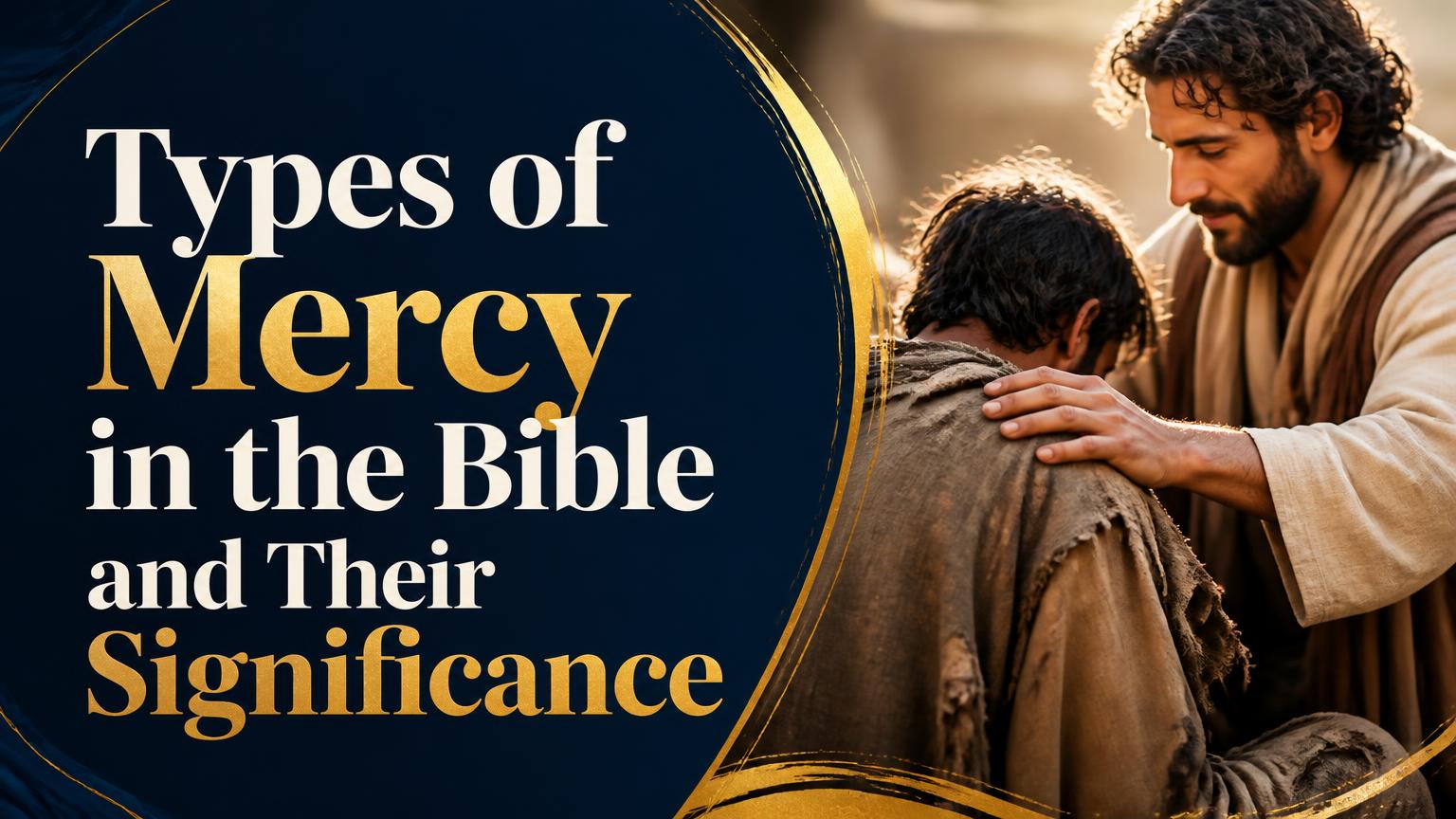
Mercy in the Bible is God’s compassionate response to human misery, guilt, weakness, and need. It includes forgiveness, patience, covenant faithfulness, rescue, restoration, and practical compassion toward others. Scripture does not present one formal list called “the seven types of mercy,” so the categories below are interpretive ways of organizing the Bible’s teaching. They overlap because the same merciful God forgives sinners, sustains the suffering, restrains judgment, and commands His people to show compassion.
Types of Mercy in the Bible
The Bible presents mercy as both something God gives and something His people must practice. Divine mercy is not merely an emotion or reluctance to punish. It produces concrete action: God forgives, delivers, provides, bears with sinners, and restores those who turn to Him. Human mercy follows the same pattern by responding to suffering and wrongdoing with compassion, wisdom, forgiveness, and practical help.
God’s Covenant Mercy
God’s covenant mercy is His steadfast faithfulness toward the people with whom He has established a relationship. In Exodus 34:6–7, God describes Himself as “merciful and gracious,” slow to anger, and abundant in steadfast love. The Hebrew concept often associated with this steadfast love is hesed, which includes loyalty, kindness, and enduring commitment.
This mercy does not mean that God ignores sin or treats covenant responsibilities as irrelevant. The same passage refers to justice and accountability. Instead, covenant mercy means that God remains faithful to His promises and repeatedly calls His people back to Himself. Psalm 103:17 connects God’s steadfast love with those who fear Him, emphasizing that His mercy is dependable across generations.
Saving and Forgiving Mercy
Saving mercy is God’s compassionate intervention to rescue people from sin and its consequences. Ephesians 2:4–5 says that God, “being rich in mercy,” made believers alive with Christ even when they were dead in trespasses. Titus 3:5 likewise teaches that salvation comes according to God’s mercy, not because of righteous works performed by human beings.
Forgiving mercy does not deny the seriousness of sin. It addresses sin through God’s gracious provision and calls people to repentance and faith. The tax collector’s prayer, “God, be merciful to me, a sinner” (Luke 18:13), expresses dependence rather than self-defense. Biblical mercy therefore includes both pardon for the guilty and a changed relationship with God.
Mercy Revealed Through Jesus Christ
Jesus’ ministry makes God’s mercy visible in human history. He healed the sick, welcomed the socially excluded, fed the hungry, forgave sins, and responded to crowds with compassion. The Gospels repeatedly connect His works with mercy, as when He restores sight, heals disease, and raises the suffering from despair.
Hebrews 4:15–16 presents Christ as a sympathetic High Priest who understands human weakness. Because of Him, believers may approach God’s throne to receive mercy and find grace in times of need. The cross stands at the center of this mercy: God does not simply overlook evil but provides redemption through Christ. Jesus is therefore both the revealer of divine mercy and the means through which saving mercy is offered.
Mercy That Sustains People in Suffering
The Bible also describes mercy as God’s continuing care for people who remain in pain, grief, weakness, or uncertainty. Lamentations 3:22–23 speaks of God’s mercies being new every morning, even in the aftermath of Jerusalem’s devastation. The passage does not pretend that suffering is insignificant; it declares that suffering does not exhaust God’s faithfulness.
Paul calls God “the Father of mercies and God of all comfort” in 2 Corinthians 1:3–4. Divine mercy may bring deliverance, but it may also provide endurance, comfort, wisdom, and the strength to continue. This distinction matters because biblical faith does not promise that every hardship will immediately disappear. Mercy can be experienced through God’s presence and sustaining grace during an ongoing trial.
Patient Mercy and Restraint in Judgment
God’s mercy is also seen in His patience. Psalm 103:8–10 says that God does not treat people according to the full measure of their sins. Romans 2:4 describes His kindness, forbearance, and patience as intended to lead people toward repentance. His delay in judgment is therefore an opportunity for moral transformation, not evidence that wrongdoing is acceptable.
Second Peter 3:9 similarly explains the delay of final judgment in relation to God’s patience and His desire that people come to repentance. This patience should not be confused with permanent approval or indifference. Scripture maintains that God judges evil, while also teaching that He often gives sinners time to turn from it. Mercy restrains judgment for a purpose: repentance, restoration, and life.
Mercy Toward the Vulnerable and Needy
A major biblical type of mercy is practical compassion toward people who are poor, sick, displaced, oppressed, lonely, or otherwise vulnerable. The Old Testament repeatedly commands Israel to protect widows, orphans, foreigners, and the poor. These commands show that mercy is not limited to private feelings; it affects laws, economic practices, hospitality, and community responsibilities.
Jesus illustrates this principle in the parable of the Good Samaritan (Luke 10:25–37). The Samaritan shows mercy by noticing an injured stranger, interrupting his own plans, providing immediate care, and paying for continued assistance. His compassion crosses social and ethnic boundaries. Biblical mercy therefore sees a person’s need and accepts reasonable responsibility to help rather than using distance, prejudice, or inconvenience as an excuse for inaction.
Mercy That Restores Without Denying Justice
Mercy can lead to restoration, but restoration does not always remove every consequence of wrongdoing. God’s forgiveness of David after his sin with Bathsheba did not eliminate all the damage caused by that sin (2 Samuel 12). This distinction protects biblical mercy from becoming either harsh vengeance or careless permissiveness.
Micah 7:18–19 celebrates God’s delight in mercy and His willingness to cast sins into the depths of the sea. James 2:13 says that mercy triumphs over judgment in a context condemning favoritism and calling believers to treat others generously. The verse does not authorize people to abolish justice or protect abusers from accountability. It teaches that those who have received mercy must not approach others with merciless condemnation.
How Mercy Differs From Grace, Compassion, and Justice
Mercy, grace, compassion, and justice are closely related biblical ideas, but they are not identical. Compassion describes a deep concern for another person’s suffering. Mercy is compassion expressed by relieving suffering, forgiving wrongdoing, or withholding deserved punishment. Grace emphasizes undeserved favor and generous blessing. Justice gives what is right and addresses wrongdoing fairly. A single act may involve all four: God compassionately sees human sin, mercifully forgives, graciously gives new life, and remains just in dealing with evil.
These distinctions should not be treated as rigid formulas. Biblical words overlap, and English translations may use “mercy,” “compassion,” “lovingkindness,” or “steadfast love” for related ideas. The important point is that mercy is active and morally serious. It is not weakness, denial, or the refusal to establish boundaries. Christian mercy can include forgiveness, truthful confrontation, protection of victims, restitution, and wise accountability.
How Believers Practice Biblical Mercy
Show Mercy Through Concrete Help
Jesus’ teaching requires believers to move beyond sympathy toward appropriate action. James 2:15–17 describes a person who offers words to someone lacking clothing and food but provides no practical assistance. Such words are inadequate when help is reasonably possible.
Concrete mercy may include sharing resources, visiting the sick, welcoming the stranger, supporting someone in crisis, advocating for the vulnerable, or offering patient assistance to a person who cannot immediately repay the favor. Wisdom still matters: effective help should respect dignity, avoid creating dependency where better support is available, and protect people from exploitation.
Extend Forgiveness With Wisdom
Christians are commanded to forgive, but biblical forgiveness does not mean pretending that harm did not happen or restoring trust without evidence of change. Forgiveness releases personal vengeance to God and refuses to let hatred govern the heart. Reconciliation, however, may require confession, repentance, restitution, boundaries, and time.
This is especially important in cases involving abuse, manipulation, crime, or repeated betrayal. Mercy toward a wrongdoer must not become cruelty toward the person harmed. Protecting the vulnerable and reporting serious wrongdoing can be consistent with mercy because justice can prevent further suffering and create conditions for genuine repentance.
Practice Mercy Without Seeking Recognition
Jesus warned against performing religious acts primarily to receive public praise (Matthew 6:1–4). Mercy is most faithful when it seeks the good of the person helped rather than the reputation of the helper. Quiet generosity, patient listening, and private assistance may reflect God’s character more clearly than highly visible acts designed to attract admiration.
Mercy also requires humility. A person who has received forgiveness should not treat others as though he or she has never needed compassion. Jesus’ parable of the unforgiving servant in Matthew 18:21–35 connects the experience of receiving mercy with the responsibility to extend it. Remembering personal dependence on God guards mercy from becoming condescension.
Why the Bible’s Teaching on Mercy Matters
The Bible’s many portrayals of mercy reveal a consistent pattern: God responds to human guilt and suffering with faithful compassion, while still taking truth, justice, and moral responsibility seriously. His mercy saves sinners, sustains the afflicted, delays judgment, and restores the repentant. It is therefore neither mere sentiment nor a suspension of righteousness.
For believers, receiving mercy creates an obligation to become merciful people. That means forgiving without denying harm, helping without humiliating, correcting without cruelty, and defending the vulnerable without abandoning justice. The types of mercy in the Bible are best understood not as isolated categories but as connected expressions of God’s character—received through Christ and practiced in daily relationships.