
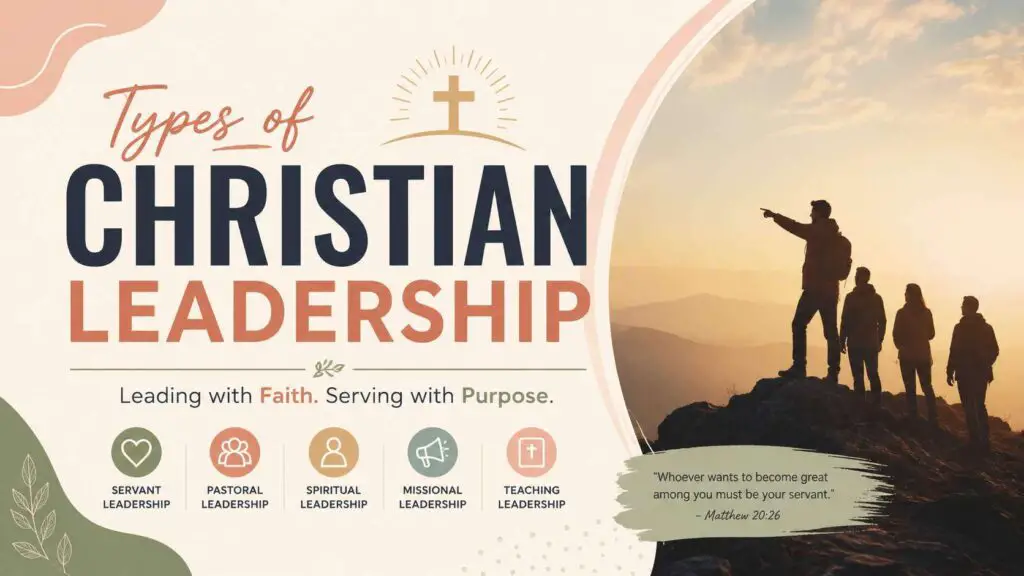
The Bible presents many examples of leadership, and each leader served God in a unique way. Some led through humility and service, while others guided God’s people through teaching, vision, courage, administration, or evangelism. Studying these leadership styles helps modern Christians understand how God equips different people for different responsibilities within His kingdom.
As someone who has spent years studying Scripture, praying, and serving in ministry, I have learned that leadership is not about position but about stewardship. God raises leaders to accomplish specific purposes, and the Bible provides practical examples we can follow today. Understanding the different types of Christian leadership can help believers discover their calling and develop the qualities needed to serve God faithfully.
Types of Christian Leadership
#1. Servant Leadership – Jesus Christ
Jesus is the greatest example of servant leadership in the Bible. Although He is the Son of God, He chose to serve rather than be served. He washed His disciples’ feet, spent time with the poor and outcasts, and ultimately sacrificed His life for humanity. His leadership demonstrated that true greatness comes through humility and selfless service.
Christian leaders today can apply this example by putting people before personal recognition. This may involve counseling church members after hours, helping with practical ministry tasks, or supporting others without seeking praise. Leaders who embrace servant leadership earn trust because people see genuine care rather than a desire for authority. Jesus showed that leadership begins with serving others faithfully.
#2. Pastoral Leadership – Peter
Peter became one of the primary shepherds of the early church after Christ’s resurrection. He cared for believers, taught God’s Word, encouraged Christians during persecution, and helped strengthen the growing church. His ministry reflected the heart of a shepherd who genuinely cared for God’s people.
Pastoral leaders today often experience similar responsibilities. They visit the sick, conduct counseling sessions, preach weekly sermons, and help believers navigate difficult seasons. Peter’s example reminds church leaders that effective pastoral ministry requires compassion, patience, and a commitment to caring for people beyond the church service.
#3. Spiritual Leadership – Moses
Moses led Israel through one of the most challenging periods in biblical history. His leadership flowed from his relationship with God. He regularly sought God’s direction, spent time in prayer, and relied on divine wisdom rather than personal ability. His spiritual authority came from his obedience to God.
Modern Christian leaders can learn from Moses by prioritizing their relationship with God above ministry activity. Spending time in prayer, studying Scripture, and seeking God’s guidance before making decisions helps leaders avoid relying solely on human wisdom. Spiritual leadership begins with personal surrender to God’s will.
#4. Transformational Leadership – Paul
Paul transformed countless lives through his ministry. He planted churches, discipled believers, trained future leaders, and encouraged Christians to grow spiritually. Everywhere he traveled, he challenged people to become more like Christ and pursue God’s purpose for their lives.
Transformational leaders today inspire others to move beyond spiritual complacency. They encourage church members to discover their gifts, serve actively, and grow in maturity. Paul’s ministry demonstrates how leadership can create lasting change when leaders invest intentionally in the spiritual development of others.
#5. Biblical Leadership – Ezra
Ezra was a priest and scribe who devoted himself to studying, obeying, and teaching God’s Word. He led Israel back to biblical truth after a period of spiritual decline. His leadership centered on Scripture rather than personal opinions or cultural trends.
Christian leaders face many pressures to compromise biblical principles. Ezra’s example teaches leaders to remain committed to God’s Word regardless of changing circumstances. Whether preaching, counseling, or making ministry decisions, biblical leaders consistently use Scripture as their foundation and guide.
#6. Visionary Leadership – Nehemiah
Nehemiah demonstrated visionary leadership when he organized the rebuilding of Jerusalem’s walls. He recognized a problem, sought God’s direction, developed a plan, and motivated people to work together toward a common goal despite significant opposition.
Many churches today need leaders who can see future opportunities for ministry and growth. Visionary leaders identify needs, create practical strategies, and inspire others to participate. Nehemiah’s story shows that vision must be accompanied by prayer, planning, and perseverance to become reality.
#7. Discipleship Leadership – Barnabas
Barnabas excelled at encouraging and developing other believers. He mentored Paul when many Christians were hesitant to trust him and later invested heavily in the spiritual growth of younger leaders. His ministry focused on helping others succeed.
Discipleship leaders today intentionally spend time teaching, mentoring, and encouraging believers. They understand that spiritual growth often happens through relationships rather than programs alone. Barnabas demonstrates how investing in people can multiply ministry impact for generations.
#8. Teaching Leadership – Apollos
Apollos was known for his knowledge of Scripture and ability to teach effectively. He explained biblical truths clearly and helped believers deepen their understanding of God’s Word. His ministry strengthened churches through sound doctrine and careful instruction.
Teaching leaders today help believers understand how Scripture applies to daily life. They prepare lessons carefully, answer difficult questions, and provide biblical guidance for modern challenges. Apollos reminds Christian leaders that effective teaching requires both knowledge and spiritual maturity.
#9. Evangelistic Leadership – Philip
Philip played a significant role in spreading the gospel beyond Jerusalem. He preached boldly, shared Christ with the Ethiopian official, and helped introduce many people to faith in Jesus. His passion for evangelism expanded the reach of the early church.
Evangelistic leaders today encourage believers to share their faith and engage their communities. They organize outreach efforts, support missions, and model personal evangelism. Philip’s example reminds Christians that leadership includes helping others encounter the saving message of Christ.
#10. Administrative Leadership – Joseph
Joseph demonstrated remarkable administrative leadership while serving in Egypt. He managed resources wisely, developed strategic plans during years of abundance, and prepared the nation for a devastating famine. His organizational skills saved countless lives.
Churches also require strong administration to function effectively. Administrative leaders oversee budgets, schedules, volunteers, and ministry operations. Joseph’s example shows that organizational ability is a valuable gift that God can use to accomplish His purposes.
#11. Mentorship Leadership – Elijah
Elijah invested deeply in Elisha, preparing him to continue God’s work after his ministry ended. He shared experiences, offered guidance, and provided opportunities for growth. Through mentorship, Elijah ensured leadership continuity for the future.
Experienced Christian leaders often discover that mentoring others becomes one of their most important responsibilities. By sharing wisdom gained through years of ministry, they help younger leaders avoid mistakes and develop confidence in their calling. Elijah’s example highlights the value of intentional leadership development.
#12. Team-Oriented Leadership – The Apostle Paul
Although Paul was a strong leader, he rarely worked alone. He partnered with Barnabas, Timothy, Silas, Luke, Titus, and many others. He recognized the importance of teamwork and encouraged believers to use their spiritual gifts together.
Team-oriented leaders understand that ministry flourishes when people work collaboratively. They delegate responsibilities, empower volunteers, and create opportunities for others to contribute. Paul’s ministry demonstrates that effective leadership involves building teams rather than trying to accomplish everything independently.
#13. Stewardship Leadership – Abraham
Abraham managed his household, possessions, and responsibilities faithfully while following God’s direction. He understood that everything he possessed ultimately belonged to God and should be used according to God’s purposes.
Stewardship leaders today encourage wise management of finances, facilities, time, and talents. Churches benefit greatly from leaders who practice accountability and responsible decision-making. Abraham’s example teaches believers to view every resource as a gift entrusted by God.
#14. Prophetic Leadership – John the Baptist
John the Baptist boldly proclaimed God’s truth regardless of public opinion. He called people to repentance, confronted sin, and prepared the way for Christ’s ministry. His leadership required courage, conviction, and unwavering commitment to God’s message.
Prophetic leaders today must balance truth with love. They address spiritual issues, encourage repentance, and challenge believers to remain faithful to God’s Word. John the Baptist demonstrates the importance of speaking truth even when doing so is unpopular or difficult.
#15. Mission-Focused Leadership – Timothy
Timothy dedicated his life to advancing the gospel and strengthening churches. Under Paul’s mentorship, he traveled extensively, served congregations, and carried out important ministry assignments. His focus remained on fulfilling God’s mission rather than pursuing personal comfort.
Mission-focused leaders keep the church centered on reaching people for Christ. They encourage outreach, support missionaries, and create opportunities for service. Timothy’s example reminds believers that Christian leadership should always contribute to the spread of the gospel and the growth of God’s kingdom.
Closing Thoughts
The Bible provides a rich collection of leadership examples that demonstrate God’s diverse ways of working through His people. Leaders such as Jesus, Moses, Nehemiah, Paul, Peter, and many others reveal that effective leadership takes many forms, yet all godly leadership is rooted in obedience to God and service to others.
As you study these biblical leaders, look beyond their positions and focus on their character, faith, and dependence on God. Whether God calls you to teach, mentor, shepherd, evangelize, or lead through service, your effectiveness will ultimately depend on your relationship with Him. The strongest Christian leaders are not those with the most influence but those who faithfully follow Christ and help others do the same.