
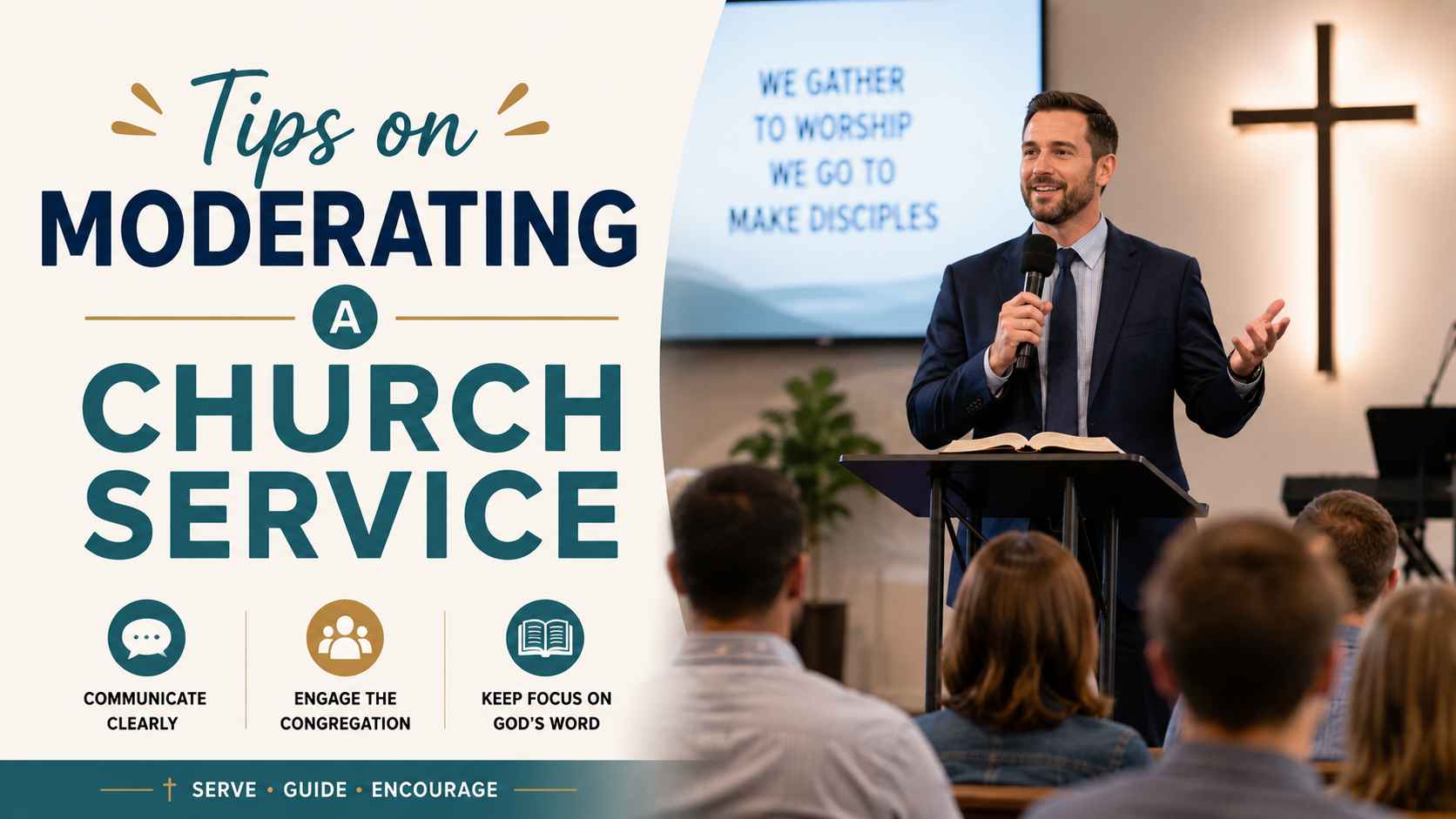
Church service moderation plays an important role in creating a smooth, organized, and spiritually uplifting worship experience. A moderator helps guide the congregation through each part of the service while maintaining focus, order, and engagement. Whether leading a Sunday worship service, prayer meeting, youth gathering, or special church event, effective moderation helps everything flow naturally and keeps attention centered on God.
Strong moderation is not about being the center of attention. Instead, it is about serving the congregation with humility, clarity, and spiritual sensitivity. A great moderator knows how to welcome people warmly, transition smoothly between segments, and create an atmosphere where worship and ministry can flourish.
In this guide, we will explore practical and actionable tips on moderating a church service effectively and confidently.
Tips on Moderating a Church Service
#1. Begin With Spiritual Preparation
Before stepping onto the platform, spend time in prayer and personal reflection. A church moderator should be spiritually prepared and connected to the purpose of the service. Ask God for wisdom, calmness, and guidance throughout the gathering.
Preparation should also include reviewing the service schedule, understanding the theme of the sermon, and knowing the order of events. When moderators are prepared spiritually and practically, they can serve with confidence and peace.
Ways to prepare effectively include:
- Praying before the service begins
- Reviewing names and announcements ahead of time
- Understanding the timing of each segment
- Coordinating with worship leaders and pastors
- Preparing Scripture verses for transitions
Preparation reduces confusion and helps the service flow smoothly.
#2. Welcome the Congregation Warmly
The opening moments of a church service matter greatly. A warm and genuine welcome helps people feel included and comfortable, especially first-time visitors.
Smile naturally and speak with enthusiasm without sounding forced. Keep the welcome brief but meaningful. Introduce the service in a way that encourages worship and participation.
For example, a moderator might welcome the congregation by saying:
“Welcome to today’s service. We are grateful to gather together in worship and fellowship as we seek God’s presence.”
A welcoming tone creates a positive atmosphere from the beginning of the service.
#3. Keep the Focus on Christ
One of the most important responsibilities of a church moderator is keeping attention centered on Christ rather than on personal performance or entertainment.
Every introduction, announcement, and transition should support the spiritual purpose of the service. Avoid excessive storytelling, unnecessary jokes, or comments that distract from worship.
A moderator serves best when they:
- Speak with humility
- Point people toward worship and Scripture
- Support the message of the service
- Avoid drawing unnecessary attention to themselves
The congregation should leave remembering the presence of God, not the personality of the moderator.
#4. Speak Clearly and Confidently
Clear communication is essential when moderating a church service. The congregation should easily understand every instruction, announcement, and transition.
Good speaking habits include:
- Speaking slowly and clearly
- Using a moderate volume
- Avoiding filler words like “um” or “okay”
- Maintaining good posture
- Making eye contact with the congregation
Confidence grows through preparation and experience. Even if nervousness exists, calm and steady communication helps create trust and order during the service.
#5. Create Smooth Transitions Between Segments
Church services often include worship, prayer, announcements, offerings, testimonies, Scripture readings, and preaching. The moderator connects these elements together.
Awkward transitions can disrupt the atmosphere of worship. Smooth transitions help maintain flow and unity throughout the service.
For example:
- Transition from worship into prayer with a brief reflection
- Introduce the preacher respectfully and concisely
- Lead naturally into announcements without changing the tone abruptly
Simple and thoughtful words often work best. Avoid overexplaining or speaking too long between segments.
#6. Manage Time Wisely
A moderator should help the service remain organized and timely without making it feel rushed. Respecting time demonstrates consideration for both the congregation and ministry team.
Good time management includes:
- Starting the service on schedule
- Keeping announcements concise
- Monitoring how long transitions take
- Adjusting calmly if delays occur
At the same time, moderators should remain flexible enough to allow meaningful spiritual moments to develop naturally when appropriate.
Balance is important. Services should feel organized but not mechanical.
#7. Use Scripture Purposefully
Scripture can strengthen the spiritual atmosphere of a church service when used wisely. Short Bible passages can encourage worship, prayer, and reflection during transitions.
Choose verses that connect naturally with the service theme or current moment. Avoid reading long passages unnecessarily during short transitions.
Examples of effective Scripture usage include:
- A verse about praise before worship
- A verse about giving before the offering
- A verse about faith before prayer
God’s Word adds depth and purpose to moderation when used thoughtfully.
#8. Remain Calm During Unexpected Situations
Unexpected moments can happen during any church service. Technical difficulties, schedule changes, or unplanned ministry moments may require quick adjustments.
A strong moderator remains calm, flexible, and composed under pressure.
Helpful ways to handle unexpected situations include:
- Avoid showing panic or frustration
- Communicate calmly and respectfully
- Use brief prayer or Scripture if extra time is needed
- Stay attentive to leadership instructions
The congregation often follows the emotional tone of the moderator. Calm leadership helps maintain peace and order.
#9. Dress and Conduct Yourself Appropriately
Moderators represent the church publicly during the service. Appearance and conduct should reflect respect for the worship environment and church culture.
Dress modestly, neatly, and appropriately for the occasion. Body language should communicate attentiveness and reverence.
Professional conduct includes:
- Arriving early
- Avoiding distracting mannerisms
- Staying attentive during the entire service
- Treating all participants respectfully
A respectful presence strengthens the credibility and effectiveness of the moderator.
#10. Encourage Congregational Participation
Church services become more meaningful when people actively participate rather than simply observe.
A moderator can encourage engagement by inviting the congregation to:
- Worship together
- Pray together
- Greet one another
- Respond to Scripture
- Participate enthusiastically during songs and readings
Participation creates energy, unity, and connection within the church community.
Encouragement should feel natural and sincere rather than forced or repetitive.
Closing Thoughts
Moderating a church service is both a responsibility and a ministry opportunity. A skilled moderator helps create an atmosphere where worship flows smoothly, the congregation feels connected, and attention remains focused on God.
Effective church moderation requires preparation, humility, communication skills, spiritual sensitivity, and flexibility. By welcoming people warmly, managing transitions carefully, speaking clearly, and remaining calm under pressure, moderators can help make each service organized and spiritually impactful.
As moderators continue to grow in experience and faith, they become valuable servants who help support the mission and worship life of the church.