
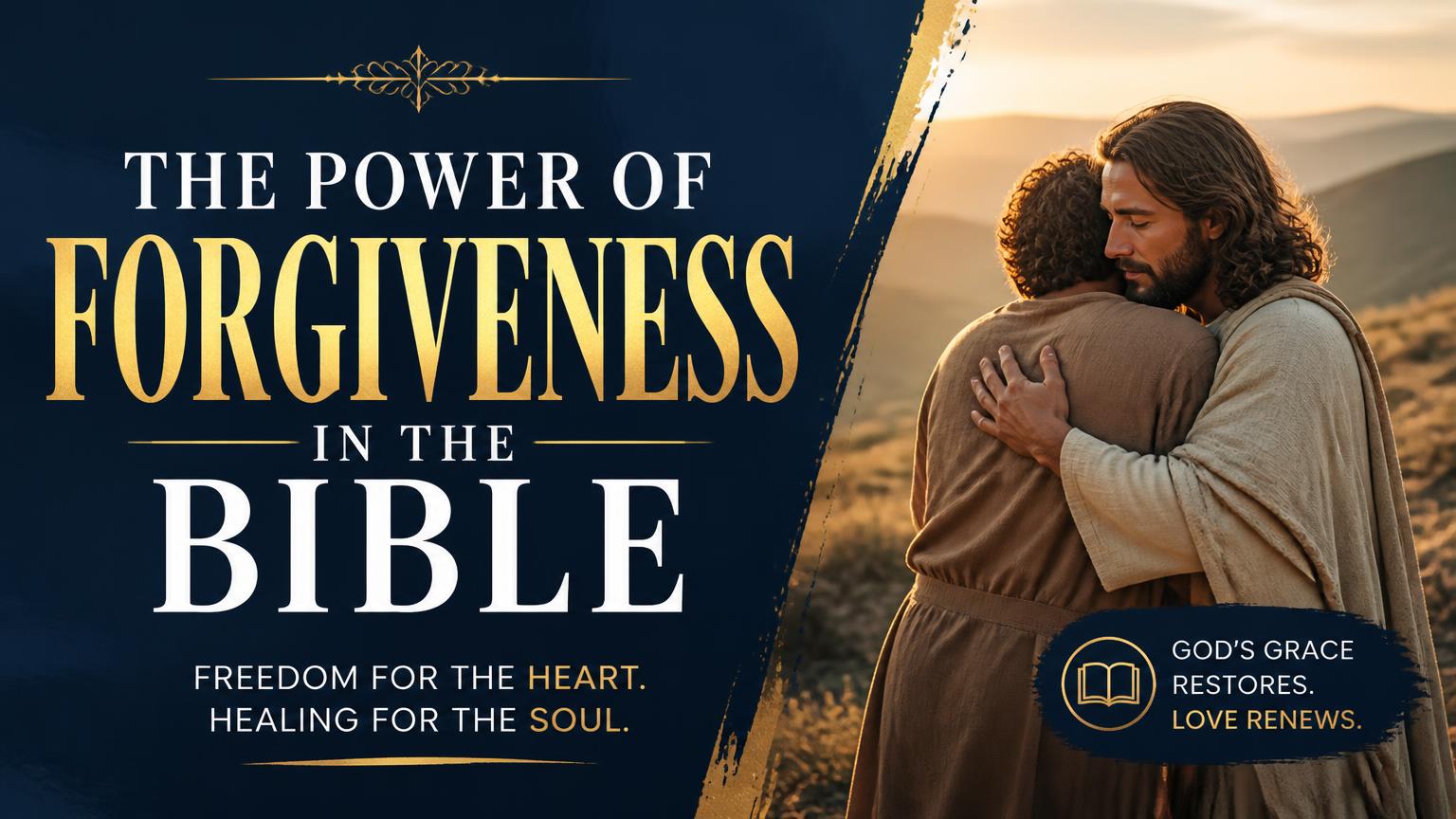
Forgiveness is central to the Bible’s understanding of God, salvation, human relationships, and spiritual maturity. Scripture presents forgiveness as God’s gracious release of sinners from guilt, and as a difficult but transformative practice believers extend to others. Its power does not come from pretending that evil is harmless. It comes from confronting sin truthfully while refusing to let resentment, retaliation, or shame have the final word.
The Power of Forgiveness in the Bible
Biblical forgiveness has two closely related dimensions: God forgives human sin, and people are called to forgive one another. The first provides the foundation for the second. Because God is merciful, Christians are commanded to show mercy; because believers have received forgiveness in Christ, they are called to release others from personal vengeance.
Forgiveness Restores Fellowship With God
The Bible describes sin as more than a mistake. It disrupts relationship with God and creates guilt that human effort cannot remove. Forgiveness addresses that breach by removing the offender’s liability before God and restoring fellowship.
Psalm 103:10–12 portrays God’s forgiveness as an act of compassion: He does not treat people according to their sins and removes transgressions “as far as the east is from the west.” The image emphasizes both the completeness of God’s mercy and the distance He creates between the forgiven person and the former offense.
In the New Testament, forgiveness is closely connected with Jesus Christ. Ephesians 1:7 teaches that believers have redemption and the forgiveness of sins through Christ. This means biblical forgiveness is not merely God overlooking wrongdoing. It is grace that takes sin seriously while providing a basis for reconciliation through Christ’s saving work.
Forgiveness therefore brings more than emotional relief. It changes a person’s standing before God. The forgiven person is no longer defined exclusively by guilt and does not need to live as though condemnation is the final truth.
Forgiveness Breaks the Cycle of Revenge
Forgiveness also has social and personal power because it interrupts retaliation. Unforgiven injury often produces a pattern: one person harms another, the injured person retaliates, and the conflict expands. Biblical forgiveness refuses to continue that pattern.
Romans 12:19–21 tells believers not to repay evil for evil or take personal revenge. Instead, they are to overcome evil with good. This does not mean that evil should be ignored or that victims must remain exposed to danger. It means that final judgment belongs to God rather than to the injured person’s desire for payback.
Joseph’s response to his brothers illustrates this principle. They sold him into slavery, but after gaining power in Egypt, Joseph did not use his position to retaliate. In Genesis 50:20, he acknowledges the seriousness of what they intended while also recognizing that God brought good from the situation. His forgiveness did not make their betrayal acceptable; it prevented the betrayal from controlling his future.
Forgiveness releases the offended person from the demand to personally balance the scales. It can reduce the power an offender’s actions continue to exert over the victim, even when the damage cannot be erased.
Forgiveness Reflects God’s Character
The Bible treats forgiveness as a defining expression of God’s character. God is described as compassionate, gracious, patient, and rich in steadfast love (Exodus 34:6–7). His mercy is not weakness or indifference. It is a deliberate expression of holy love toward people who have genuinely done wrong.
Jesus made this character the pattern for His followers. In Matthew 18:21–35, He tells the parable of a servant whose enormous debt is canceled but who refuses to forgive a much smaller debt owed to him. The point is not that every offense is insignificant. Rather, those who have received immeasurable mercy should not treat mercy as something they may permanently withhold from others.
Ephesians 4:32 connects forgiveness with the character of Christ: believers are to be kind, compassionate, and forgiving “as God in Christ forgave” them. Christian forgiveness is therefore more than a technique for reducing stress. It is an act of imitation. It displays what the forgiver believes about God’s mercy.
Forgiveness Changes the Person Who Forgives
Forgiveness can free a person from bitterness, persistent anger, and an identity organized around injury. This transformation may happen gradually, especially after severe betrayal or abuse. The Bible does not require instant emotional recovery. It calls people toward a continuing decision to surrender vengeance and entrust justice to God.
Colossians 3:12–13 places forgiveness within a larger pattern of Christian character: compassion, kindness, humility, gentleness, and patience. These qualities help explain how forgiveness works. It is not merely saying, “The offense did not matter.” It is choosing a different response to the offense—one shaped by truth, patience, and mercy rather than hatred.
Forgiveness also changes how a person remembers. Biblical forgiveness does not necessarily remove memory. Instead, it changes the meaning and authority of the memory. The offense remains part of the story, but it no longer has to dictate every future response.
This process may involve grief, honest prayer, wise counsel, boundaries, and time. Forgiving someone does not require denying the emotional or practical consequences of what happened.
Forgiveness Makes Reconciliation Possible
Forgiveness removes personal vengeance; reconciliation rebuilds a relationship. The two are related but not identical.
Reconciliation generally requires repentance, honesty, changed behavior, and restored trust. A person may forgive an unrepentant offender while maintaining distance and refusing to restore the same level of access. This distinction is especially important in situations involving abuse, manipulation, violence, or repeated betrayal.
Jesus teaches in Luke 17:3–4 to confront wrongdoing and forgive the repentant person. The passage holds accountability and mercy together. Forgiveness does not eliminate the need to name harm or seek change.
Where repentance and safety are present, forgiveness can open the way to restored fellowship. But reconciliation cannot be forced by the injured person alone. Trust is rebuilt through consistent conduct, and some relationships may remain limited even when genuine forgiveness has been extended.
Forgiveness Requires a Willingness to Release the Debt
The language of debt helps explain biblical forgiveness. In the Lord’s Prayer, Jesus teaches His disciples to ask for forgiveness of their debts and to forgive their debtors (Matthew 6:12). The metaphor points to a real moral obligation: someone has wronged another and owes what cannot simply be dismissed as nonexistent.
To forgive is to relinquish the personal claim to revenge and to place ultimate judgment in God’s hands. It is not necessarily to declare that no consequences should follow. A criminal offense may still require legal accountability; an employee may still lose a position; a harmful person may still need restrictions.
Forgiveness changes the purpose of consequences. They need not be driven by hatred or personal vengeance. Justice can protect others and recognize the seriousness of wrongdoing without becoming an attempt to destroy the offender.
What Biblical Forgiveness Does and Does Not Mean
Several common misunderstandings can make forgiveness either shallow or harmful.
- Forgiveness does not call evil good. Scripture condemns injustice, oppression, violence, deceit, and abuse. Mercy does not require false moral equivalence.
- Forgiveness does not always remove consequences. David was forgiven after his sin with Bathsheba, yet serious consequences remained in his household and kingdom (2 Samuel 12).
- Forgiveness does not require immediate trust. Trust depends on reliability over time. Forgiveness may be granted before trust is restored.
- Forgiveness does not always mean reconciliation. Reconciliation requires conditions that forgiveness alone cannot create.
- Forgiveness does not depend on the offender’s apology in every circumstance. A person may release vengeance before an offender repents, while still recognizing that full relational restoration requires accountability.
- Forgiveness is not the suppression of pain. Honest biblical prayer includes lament, complaint, and appeals for justice, as seen throughout the Psalms.
These distinctions protect forgiveness from being used to pressure victims into unsafe situations or to excuse continuing harm.
How Christians Practice Forgiveness
Biblical forgiveness is both a spiritual commitment and a practical process.
Name the Wrong Honestly
Forgiveness begins with truth. The injured person should identify what happened, how it caused harm, and what was lost. Minimizing the offense may produce silence, but it does not produce genuine forgiveness.
The Psalms show that believers can bring anger, grief, and confusion directly to God. Honest prayer is not evidence of unforgiveness; it can be part of learning to surrender the matter without denying its seriousness.
Bring the Offense to God
Prayer moves the issue from private retaliation toward God’s judgment and care. This does not mean refusing appropriate help or accountability. It means asking God for wisdom, protection, justice, and freedom from hatred.
Jesus’ command to pray for enemies (Matthew 5:44) is particularly demanding. It does not mean approving their actions. It means refusing to define them solely by the desire for their destruction and asking God to act righteously in the situation.
Choose Mercy Repeatedly
Peter asks Jesus how often he must forgive a brother, suggesting a limit of seven times. Jesus answers with “seventy-seven times,” or “seventy times seven,” depending on the translation (Matthew 18:21–22). The point is not to calculate a maximum. It is that forgiveness should not be governed by a bookkeeping mentality.
Repeated forgiveness does not mean tolerating repeated abuse without boundaries. It means that every new decision about anger and vengeance should be made in light of God’s mercy rather than an expanding record of personal debts.
Pursue Wisdom, Boundaries, and Accountability
Forgiveness should be joined to wisdom. A person may forgive while ending contact, seeking legal protection, involving church leaders, or requiring evidence of change. These actions can protect the vulnerable and create conditions in which repentance becomes meaningful.
Christian forgiveness is strongest when it combines a merciful heart with truthful judgment. Sentimentality that ignores danger is not the same as biblical compassion.
Why Forgiveness Matters in Christian Life
Forgiveness is central to Christian identity because it expresses the gospel in relationships. Jesus connects receiving and extending forgiveness in the Lord’s Prayer (Matthew 6:12, 14–15), while the cross demonstrates the costliness of mercy rather than presenting forgiveness as morally cheap.
The power of forgiveness is therefore not that it erases history, guarantees reconciliation, or prevents all future pain. Its power is that it restores fellowship with God, breaks the authority of revenge, reshapes the character of the person who forgives, and makes peace possible where repentance and wisdom allow it.
Biblical forgiveness tells the truth about wrongdoing while refusing to let wrongdoing dictate the final response. It is mercy grounded in God’s justice, shaped by Christ’s example, and practiced with both compassion and discernment.