
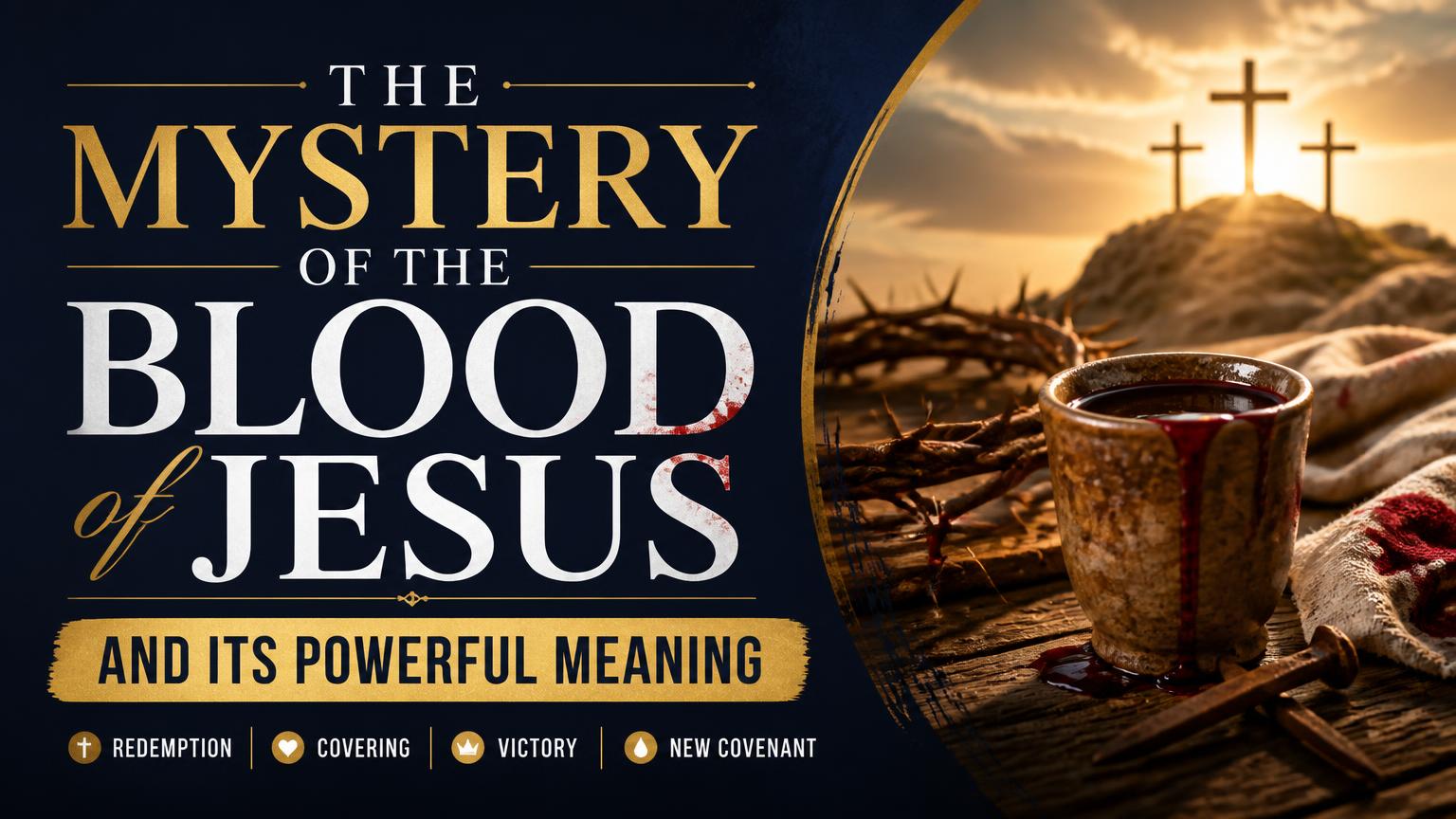
The blood of Jesus refers to His sacrificial death on the cross and everything that death accomplishes for humanity: forgiveness, reconciliation with God, cleansing from sin, covenant relationship, spiritual freedom, and access to God. In Scripture, blood represents life given in sacrifice. Jesus’ blood is therefore not a magical substance or a phrase detached from His person; its power comes from who Jesus is and from His willing obedience to God.
The Mystery of the Blood of Jesus
The Bible presents Jesus’ blood as a mystery because the cross reveals how God’s holiness, justice, mercy, and love meet in one event. The meaning is deeper than the physical fact that Jesus bled. His blood signifies His life offered for sinners and His complete self-giving on their behalf.
Blood Represents Life Given for Others
Scripture connects blood with life: “the life of the flesh is in the blood” (Leviticus 17:11). In the Old Testament sacrificial system, an animal’s blood symbolized life surrendered because of sin. The sacrifice did not suggest that blood possessed independent supernatural power. Rather, it represented a life offered to God.
Jesus fulfills this pattern in a unique and final way. He does not offer an animal’s life; He offers His own. His blood represents the life of the sinless Son of God willingly given for the guilty. This is why the New Testament describes believers as redeemed “with the precious blood of Christ” (1 Peter 1:18–19).
The central mystery is that the One who deserved no judgment takes the place of those who do. The cross is not merely an example of suffering or courage. It is Christ’s deliberate self-offering for the salvation of others.
Jesus’ Blood Establishes the New Covenant
At the Last Supper, Jesus identified the cup with “my blood of the covenant, which is poured out for many for the forgiveness of sins” (Matthew 26:28). This language recalls the covenant established with Israel through Moses, when sacrificial blood marked the people’s relationship with God (Exodus 24:6–8).
Jesus announces a new covenant based on His own death. Under this covenant, forgiveness does not depend on repeatedly bringing animal sacrifices. Christ’s once-for-all offering provides the foundation for a restored relationship with God. Hebrews explains that Jesus entered the true heavenly sanctuary “by means of his own blood,” obtaining eternal redemption (Hebrews 9:11–12).
The covenant significance also means that Christianity is not simply a system of moral instruction. Through Christ’s blood, God promises forgiveness, writes His law on the heart, and brings people into fellowship with Him. The believer’s relationship with God rests on God’s grace secured by Christ, not on personal performance.
His Blood Provides Forgiveness and Atonement
The New Testament repeatedly connects Jesus’ blood with forgiveness. “In him we have redemption through his blood, the forgiveness of our trespasses” (Ephesians 1:7). Redemption means release from bondage through the payment of a price. In biblical theology, sin creates guilt, corruption, alienation, and slavery. Jesus addresses these consequences through His sacrificial death.
Romans 3:25 describes Christ as a “propitiation” or atoning sacrifice. The term points to God’s righteous dealing with sin while also emphasizing His mercy toward sinners. The cross does not mean that God ignores evil. It means that God judges sin and provides the sacrifice through which guilty people can be reconciled to Him.
Different Christian traditions explain aspects of atonement with different emphases. Some stress substitution—Christ bears the judgment sinners deserve. Others emphasize Christ’s victory over sin, death, and the powers of evil; still others highlight reconciliation, moral transformation, or the demonstration of God’s love. These themes are not necessarily competitors. The New Testament presents the cross as simultaneously sacrificial, victorious, reconciling, and revelatory.
His Blood Cleanses the Conscience
Hebrews says that Christ’s blood cleanses the conscience from “dead works” so that people may serve the living God (Hebrews 9:14). This addresses more than a legal status. Sin damages the inner life through guilt, shame, fear, and alienation. Forgiveness changes a person’s standing before God, while cleansing brings freedom to approach Him without remaining trapped in condemnation.
This does not mean Christians never experience regret or conviction. The conscience may still need instruction, healing, and honest repentance. The point is that past sin no longer has the final authority over those who trust in Christ. The answer to guilt is not self-punishment or religious achievement but confession and reliance on the completed work of Jesus (1 John 1:7–9).
His Blood Brings Peace and Access to God
Jesus’ blood also creates peace between God and humanity. Colossians 1:20 speaks of God reconciling all things through Christ, “making peace by the blood of his cross.” Reconciliation means that hostility and separation are overcome. Through Christ, those who were far from God are brought near.
Hebrews 10:19–22 uses the image of entering the holy places “by the blood of Jesus.” Under the old covenant, access to the innermost sanctuary was restricted. Jesus’ death removes the barrier represented by the temple curtain and opens direct access to God.
This access is not permission to treat God casually. It is confident approach grounded in Christ’s priestly work rather than human worthiness. Prayer, worship, repentance, and communion with God are possible because Jesus has made the way open.
His Blood Proclaims Victory
The blood of Jesus is also associated with victory. Revelation 12:11 says that believers conquer “by the blood of the Lamb and by the word of their testimony.” The victory is not a formula used to manipulate spiritual forces. It is the triumph of Christ’s completed work over accusation, sin, and death.
Satan is portrayed as an accuser, but Christ’s sacrifice provides the decisive answer to accusation. Believers do not overcome by claiming personal perfection. They overcome by relying on the Lamb who died and rose again, confessing their allegiance to Him even at great cost.
The cross may look like defeat from a human perspective, but the resurrection reveals its true meaning. Jesus’ death was not the end of His mission. His risen life confirms that sin and death did not defeat Him.
Why Is Blood So Important in the Bible?
Blood carries several connected meanings throughout Scripture. These meanings help explain why the New Testament uses the phrase “the blood of Jesus” so often.
Blood Signifies Life and Sacrifice
Because blood represents life, the pouring out of blood signifies life given up. In Jesus’ case, this points to His death as a deliberate sacrifice rather than an accidental tragedy.
Blood Marks Covenant Relationship
Blood seals or confirms covenant commitments. Jesus’ blood establishes the new covenant, showing that forgiveness and fellowship with God rest on His sacrifice.
Blood Addresses the Defilement of Sin
Old Testament sacrifices used blood in rituals of purification. The imagery communicates that sin is not merely a mistake; it corrupts and separates. Christ’s blood provides the decisive cleansing to which those rituals pointed.
Blood Brings Near Those Who Were Far Away
Ephesians 2:13 says that those who were once far away have been brought near “by the blood of Christ.” The phrase describes restored relationship with God and, in context, the breaking down of hostility between peoples. The cross creates a reconciled community, not merely isolated forgiven individuals.
What Does It Mean to Be “Covered by the Blood”?
Christians sometimes say that they are “covered by the blood of Jesus.” This expression is intended to describe forgiveness, protection from condemnation, and dependence on Christ’s saving work. It is not a direct biblical formula in every use of the phrase, and it should not be treated as a magical declaration.
The biblical foundation is that God sees believers in relation to Christ’s sacrifice. Romans 8:1 says there is no condemnation for those who are in Christ Jesus. The believer’s security rests on Christ’s death and resurrection, not on repeating particular words.
Likewise, “pleading the blood” should mean appealing to what Jesus has accomplished—His atonement, covenant, righteousness, and victory. It should not imply that the blood is an impersonal spiritual force that can be used to guarantee a particular outcome or prevent every earthly hardship.
Is the Blood of Jesus Literal or Symbolic?
It is both a literal reality and a theological symbol. Jesus truly bled and truly died on the cross. The New Testament does not reduce the blood to a metaphor detached from the historical crucifixion.
At the same time, “the blood of Jesus” often functions as a theological expression for the whole saving significance of His death. When Scripture speaks of redemption through His blood, it means redemption through His sacrificial death and all that God accomplished through it.
The phrase should therefore not be separated from Jesus’ incarnation, obedient life, crucifixion, resurrection, and continuing priestly ministry. The power is not in blood considered apart from Christ. The power belongs to the crucified and risen Christ.
How Should Christians Respond to the Blood of Jesus?
The biblical response is faith expressed through repentance, worship, obedience, and love.
- Trust in Christ rather than personal merit. Salvation rests on His sacrifice, not on moral achievements.
- Confess sin honestly. The promise of cleansing encourages repentance instead of concealment.
- Approach God confidently. Christ’s blood provides access to God for prayer and worship.
- Extend forgiveness and reconciliation. Those reconciled to God are called to pursue peace with others.
- Remember the cost of grace. Communion continually directs attention to Jesus’ body and blood given for His people (1 Corinthians 11:23–26).
- Live as someone redeemed. Grace does not make sin irrelevant; it creates a new allegiance and a desire for holiness.
The Lord’s Supper is especially important because it keeps the cross central to Christian faith. Christian traditions differ in how they understand Christ’s presence in Communion, but all historic Christian practice treats the meal as a serious remembrance and proclamation of His sacrificial death.
The Central Meaning of Jesus’ Blood
The mystery of the blood of Jesus is ultimately the mystery of divine love accomplishing salvation through sacrificial self-giving. His blood represents His life poured out in obedience to the Father, for the forgiveness and reconciliation of sinners.
It does not promise a life free from suffering, nor does it operate as a magical phrase. It promises something deeper: forgiveness before God, cleansing from guilt, a new covenant relationship, access to God, victory over accusation, and hope beyond death. The blood has power because it is the blood of Jesus Christ—the sinless Son who died, rose again, and remains the foundation of Christian salvation.