
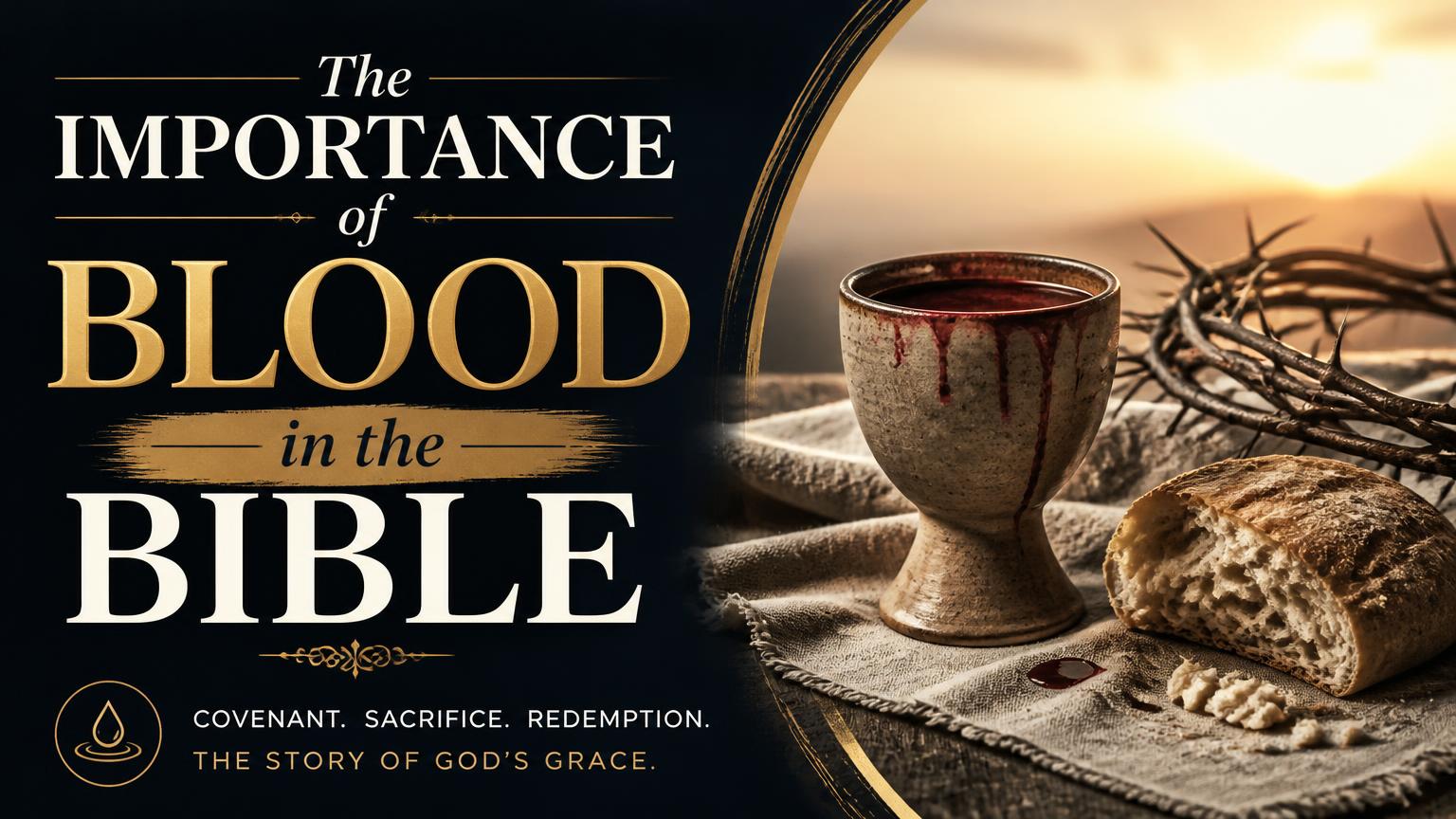
Blood is one of the Bible’s most significant theological symbols. It represents life, because life is in the blood; the life offered in sacrifice; the seriousness of sin; covenant relationship; cleansing and forgiveness; and, in the New Testament, the sacrificial death of Jesus Christ. Its meaning develops across Scripture rather than remaining a single isolated symbol.
The Importance of Blood in the Bible
Blood Represents Life Given by God
The Bible’s foundational statement about blood appears in Leviticus 17:11: “For the life of the flesh is in the blood.” Blood is important because it represents the life of a living creature, and life belongs ultimately to God.
This principle explains why Israelites were forbidden to consume blood (Leviticus 17:10–14). The prohibition was not merely dietary. It taught Israel to recognize life as sacred and accountable to its Creator. When an animal was offered, its blood was treated with reverence because it represented the life being given.
The Bible therefore does not treat blood as an ordinary bodily substance. It connects blood with life, death, responsibility, and worship. To shed innocent blood was a serious moral offense because it meant taking a life made by God (Genesis 9:5–6; Deuteronomy 19:10).
Blood Is Central to Sacrifice and Atonement
Under the Old Testament sacrificial system, blood was associated with atonement—the covering or removal of sin through an appointed sacrifice. Leviticus 17:11 says that God gave blood “to make atonement for your souls.” The animal’s blood did not function as magic. Rather, it represented the life of an innocent substitute offered in place of the guilty person.
This explains the repeated connection between sacrifice, death, and forgiveness. Sin produces guilt and separates people from God; sacrifice dramatized the cost of restoring fellowship. The worshiper could not treat sin as insignificant, because atonement involved the giving of life.
The sacrifices of the Old Testament were also limited. They provided ceremonial cleansing and maintained Israel’s covenant worship, but they pointed beyond themselves. Hebrews 10:4 states that the blood of bulls and goats could not ultimately take away sins. Their purpose was anticipatory: they established patterns that the New Testament identifies as fulfilled in Jesus.
Blood Seals Covenants With God
Blood also appears in the Bible as a sign that a covenant has been established. At Mount Sinai, Moses sprinkled blood on the people after reading the covenant law, saying, “Behold the blood of the covenant” (Exodus 24:8). The blood signified that the covenant involved life-and-death seriousness. Israel was not entering a casual agreement but a binding relationship with God.
The Passover provides another major example. Israelite families placed the blood of a lamb on their doorposts, and judgment passed over those covered by the sign (Exodus 12). The blood did not mean that the Israelites were morally superior to the Egyptians. It marked their trustful obedience to God’s appointed means of deliverance.
Passover became a lasting memorial and later shaped the New Testament understanding of Christ. Jesus is described as the Passover Lamb whose death brings deliverance from sin (1 Corinthians 5:7; 1 Peter 1:18–19).
The Blood of Jesus Establishes the New Covenant
Jesus gave blood its central New Testament meaning. At the Last Supper, He identified the cup with “my blood of the covenant” and connected it with the forgiveness of sins (Matthew 26:28; Luke 22:20). His blood refers to His life willingly given in death, not merely to a physical substance considered independently from His sacrifice.
Jesus’ death fulfills the patterns of the Old Testament:
- Like the Passover lamb, He brings deliverance from judgment.
- Like the sacrificial victim, He gives His life for others.
- Like the covenant sacrifice, His blood establishes a new relationship between God and His people.
- Unlike repeated animal sacrifices, His offering is presented as decisive and sufficient.
Hebrews 9:11–15 describes Christ as the mediator of a better covenant whose sacrifice brings lasting redemption. His blood cleanses the conscience, not merely the external ceremonial condition of the worshiper. This means that Christ’s sacrifice addresses the inner problem of guilt and alienation from God.
Blood Provides Forgiveness and Cleansing
The New Testament repeatedly connects Christ’s blood with forgiveness, redemption, justification, reconciliation, and cleansing. These terms describe related aspects of what Jesus accomplishes through His death.
- Redemption: People are released from slavery to sin at a cost (Ephesians 1:7; 1 Peter 1:18–19).
- Justification: Sinners are counted righteous before God through Christ’s sacrifice (Romans 5:9).
- Reconciliation: Hostility between God and humanity is overcome through Christ’s death (Colossians 1:19–22).
- Cleansing: Guilt and defilement are removed so that believers may approach God with a clean conscience (1 John 1:7; Hebrews 9:14).
- Peace: Christ’s blood makes peace between God and those who trust in Him (Colossians 1:20).
These passages do not present forgiveness as God simply ignoring evil. They show forgiveness as something accomplished through a costly act of divine mercy and justice. The cross reveals both the seriousness of sin and God’s willingness to provide salvation.
Blood Gives Believers Access to God
The book of Hebrews emphasizes that Christ’s blood opens the way into God’s presence. Under the old covenant, access to the inner sanctuary was restricted, and the high priest entered only under carefully defined conditions. Through Jesus, believers are invited to draw near to God with confidence (Hebrews 10:19–22).
The significance is relational, not merely ceremonial. Christ’s blood does not only cancel a record of guilt; it restores access to God. Those who are cleansed by Christ may worship, pray, and live in fellowship with Him.
How Blood’s Meaning Develops Throughout Scripture
Blood carries several connected meanings across the Bible, but one does not replace the others.
Blood Can Signify Guilt and Judgment
The Bible often speaks of “bloodguilt” when someone is responsible for wrongful death. Abel’s blood cries out from the ground after Cain kills him (Genesis 4:10), expressing the truth that God sees injustice even when human beings attempt to hide it.
“Blood” can also refer to violent wrongdoing more broadly. Prophets condemn Jerusalem for shedding innocent blood because violence corrupts both society and worship. This usage reminds readers that biblical blood imagery is not always positive. Blood can signify life violated, guilt incurred, and judgment deserved.
Blood Can Mark Protection and Deliverance
In the Passover account, blood marks the homes protected from judgment. This does not mean the mark operates as an independent charm. Its significance comes from God’s promise and the obedient faith of those who place it there.
The same pattern appears in the New Testament: salvation is grounded in Christ’s completed work and received through faith, not through treating the phrase “the blood” as a formula. Revelation describes believers overcoming through “the blood of the Lamb” and their faithful testimony (Revelation 12:11). The emphasis is on Christ’s victory and the believers’ allegiance to Him.
Blood Expresses Sacrificial Love
The New Testament presents Jesus’ death as an act of love. He lays down His life for His friends (John 15:13), and God demonstrates His love through Christ’s death for sinners (Romans 5:6–8).
Consequently, blood in Christian theology is not simply a symbol of violence. It represents life voluntarily surrendered for the good of others. The cross joins sacrifice and love: Christ does not merely suffer; He gives Himself.
What Christians Should Understand About “The Blood of Christ”
“The blood of Christ” is biblical language for the saving significance of Jesus’ sacrificial death. It includes His physical death, but its meaning is larger than the material substance of blood. The phrase points to the whole self-offering by which Jesus bears sin, establishes the new covenant, defeats death, and reconciles believers to God.
This distinction corrects two opposite misunderstandings:
- Reducing the blood to a metaphor: The New Testament refers to a real death, not an abstract lesson about kindness. Jesus truly suffered and died.
- Treating blood as a magical substance: Scripture does not teach that invoking the words “the blood” mechanically produces protection or forgiveness. Its power belongs to God’s saving action through Christ.
Christian traditions differ in how they explain the Lord’s Supper, but all major traditions connect the bread and cup with Jesus’ body and blood and with the new covenant (1 Corinthians 11:23–26). The observance proclaims Christ’s death and calls believers to remember, receive, and live in light of His sacrifice.
Common Misunderstandings About Blood in the Bible
Blood Does Not Mean That God Desires Violence for Its Own Sake
Biblical sacrifice must be understood within the framework of sin, justice, covenant, and substitution. The Bible does not portray God as taking pleasure in suffering. God repeatedly condemns empty ritual when it is separated from repentance and obedience (Isaiah 1:11–17; Hosea 6:6).
The sacrifice of Christ is presented as the purposeful self-giving of the Son in unity with the Father and the Spirit. It is not an arbitrary act of violence but the means by which God deals with sin while extending mercy.
Blood Is Not a Substitute for Faith and Obedience
The presence of sacrificial rituals never gave Israel permission to continue sinning without repentance. The prophets insisted that God rejects sacrifices offered alongside injustice and rebellion.
Likewise, the New Testament connects Christ’s blood with a transformed life. Those cleansed by Christ are called to abandon sin, love other believers, practice holiness, and approach God with sincere faith. The sacrifice provides forgiveness, but it also creates a people who belong to God.
The Bible’s Blood Imagery Is Not Limited to Forgiveness
Forgiveness is central, but blood also concerns covenant identity, worship, justice, deliverance, access to God, and faithful endurance. A complete reading of the subject must hold these themes together rather than reducing every reference to one simple definition.
Why the Importance of Blood Matters
The Bible’s teaching about blood gives a unified view of salvation. Life is sacred because it comes from God. Sin is serious because it damages life and fellowship with God. Atonement requires a God-appointed answer to guilt. Covenants involve committed relationship. Jesus’ death fulfills the sacrificial and covenant patterns of the Old Testament, providing lasting forgiveness and access to God.
Therefore, the importance of blood in the Bible ultimately centers on the blood of Jesus Christ. It signifies His life freely given, His covenant established, His sacrifice accepted, and His people cleansed and reconciled. Biblical blood imagery is not a collection of disconnected rituals; it traces one developing message: God provides redemption through the life and death of an appointed substitute, fulfilled in Christ.