
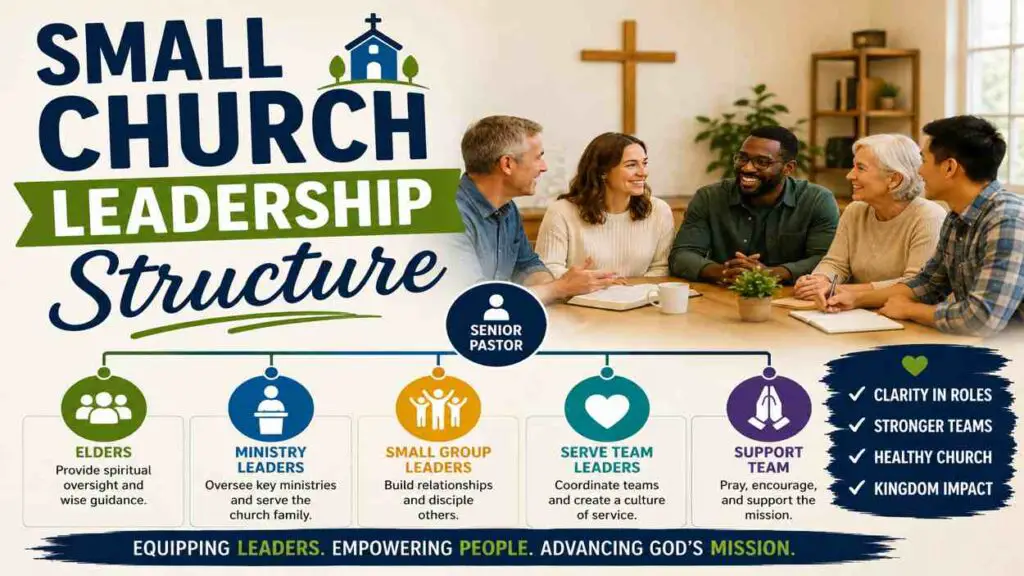
A healthy church rarely happens by accident. Behind every thriving congregation is a leadership structure that brings clarity, accountability, and spiritual direction. This is especially important in small churches, where limited resources and smaller volunteer pools can easily place too much pressure on a few individuals.
Many churches struggle not because the people lack passion, but because the leadership structure is weak, confusing, or unsustainable. Some small churches try to imitate megachurch systems that are far too complex for their size. Others depend almost entirely on one pastor to carry every responsibility. Over time, this creates exhaustion, frustration, and stagnation.
The good news is that small churches do not need massive staffs or complicated organizational systems to thrive. What they need is a simple, biblical, and practical leadership structure that fits their unique situation.
This guide explores a small church leadership structure that actually works, along with biblical principles, practical leadership models, and solutions to common challenges many churches face today.
What Is a Small Church Leadership Structure?
A small church leadership structure is the framework that defines how leadership responsibilities are organized within a church. It explains who leads, who supports ministry efforts, who makes decisions, and how the church functions on a weekly basis.
In many small churches, leadership often includes:
- A pastor or shepherd
- A small leadership team
- Ministry leaders
- Deacons or support leaders
- Volunteers serving in different ministries
The purpose of a leadership structure is not to create hierarchy for the sake of control. Its purpose is to help the church function in an organized, biblical, and healthy way.
An effective structure helps:
- Prevent confusion
- Share responsibilities
- Develop future leaders
- Support the pastor
- Strengthen accountability
- Improve ministry effectiveness
Without structure, even faithful churches can struggle with burnout, conflict, and lack of direction.
Why Many Small Church Leadership Structures Fail
Too Much Dependence on One Person
One of the biggest mistakes small churches make is expecting the pastor to do everything. In many congregations, the pastor preaches, counsels, visits members, manages finances, leads meetings, organizes events, and handles administration.
While pastors are called to shepherd the flock, they were never meant to carry the entire ministry alone.
This unhealthy dependence creates:
- Pastor burnout
- Leadership bottlenecks
- Slow ministry growth
- Discouragement within the church
Healthy churches distribute responsibility among multiple faithful leaders.
Copying Large Church Models
Many small churches attempt to imitate the structure of large churches with multiple departments, layers of leadership, and complex systems.
What works in a church of 5,000 members may not work in a church of 50.
Small churches need simplicity. Overcomplicated systems often:
- Create unnecessary confusion
- Burden volunteers
- Slow decision-making
- Produce frustration
The best leadership structures fit the actual size and needs of the congregation.
Lack of Clear Roles
Confusion grows quickly when nobody knows who is responsible for what.
Without clearly defined responsibilities:
- Tasks get neglected
- Leaders overlap each other
- Conflict increases
- Accountability disappears
Even in small churches, every leader should understand:
- Their responsibilities
- Their authority
- Their limitations
- Who they report to
Clarity creates stability.
No Leadership Development
Some churches fail because they never raise up new leaders. The same few individuals carry leadership responsibilities year after year without mentoring others.
This creates long-term problems:
- Leadership gaps
- Volunteer exhaustion
- Lack of younger leaders
- Ministry stagnation
Healthy churches intentionally train and disciple future leaders.
Biblical Foundations for Church Leadership
Shared Leadership in the Early Church
The early church was built around shared leadership rather than one person carrying every responsibility.
In the book of Acts, the apostles appointed additional leaders to help meet practical needs so they could focus on prayer and teaching. Churches also recognized elders, deacons, and ministry workers who supported the mission of the church.
Biblical leadership was collaborative rather than isolated.
Servant Leadership
Christian leadership is fundamentally different from worldly leadership. Jesus taught leaders to serve rather than dominate.
True church leaders:
- Serve humbly
- Care for people
- Lead by example
- Put spiritual growth above personal power
A healthy leadership structure reflects the servant heart of Christ.
Spiritual Qualifications Matter
Skill alone is not enough for church leadership. The Bible emphasizes character, spiritual maturity, integrity, and faithfulness.
Leaders should demonstrate:
- Godly character
- Wisdom
- Humility
- Faithfulness
- Emotional maturity
- Biblical understanding
Strong spiritual foundations protect the church from unhealthy leadership.
Small Church Leadership Structure That Actually Works
Lead Pastor or Shepherd
The lead pastor serves as the primary spiritual leader of the church. This person typically focuses on:
- Preaching and teaching
- Spiritual direction
- Vision and guidance
- Pastoral care
- Discipleship
However, the pastor should not function as the entire leadership structure alone.
Healthy pastors delegate responsibilities and empower others to lead.
Core Leadership Team
The core leadership team supports the pastor and helps guide the church. This group may include:
- Elders
- Trusted ministry leaders
- Associate pastors
- Deacons
The leadership team helps:
- Make important decisions
- Provide accountability
- Offer spiritual wisdom
- Share ministry responsibilities
A strong leadership team creates stability within the church.
Ministry Leaders
Ministry leaders oversee specific areas of church life, such as:
- Worship ministry
- Children’s ministry
- Youth ministry
- Outreach ministry
- Hospitality ministry
- Prayer ministry
These leaders help organize volunteers and keep ministries functioning effectively.
Deacons or Support Leaders
Deacons often handle practical and operational needs within the church. Depending on the church, this may include:
- Facility management
- Benevolence
- Financial assistance
- Member care
- Event support
Practical support frees spiritual leaders to focus on shepherding and teaching.
Volunteers and Ministry Teams
Volunteers form the foundation of most small churches. Healthy churches create organized ministry teams rather than relying on random last-minute help.
Strong volunteer systems:
- Reduce burnout
- Encourage ownership
- Increase participation
- Strengthen church community
Every member can contribute meaningfully to the mission of the church.
Simple Organizational Chart for a Small Church
A simple structure often works best for small congregations.
Example structure:
- Lead Pastor
- Leadership Team
- Ministry Leaders
- Volunteer Teams
- Ministry Leaders
- Leadership Team
This type of structure keeps communication clear while avoiding unnecessary complexity.
Best Leadership Models for Small Churches
Pastor-Led Structure
In this model, the pastor serves as the primary decision-maker while receiving support from ministry leaders and volunteers.
Advantages:
- Clear direction
- Faster decisions
- Simplicity
Challenges:
- Risk of burnout
- Too much dependence on one leader
This model works best when the pastor intentionally shares responsibilities.
Elder-Led Structure
An elder-led model places spiritual oversight in a group of qualified elders rather than one individual.
Advantages:
- Shared accountability
- Collective wisdom
- Stronger leadership balance
Challenges:
- Slower decision-making
- Potential disagreements
Many churches find this model highly biblical and sustainable.
Team-Based Leadership
This model emphasizes collaboration among several leaders who share responsibilities equally.
Advantages:
- Shared workload
- Greater creativity
- Healthy collaboration
Challenges:
- Requires strong communication
- Can become unclear without defined roles
Team-based leadership works well in churches with strong relational unity.
Hybrid Structure
Many small churches use a hybrid approach that combines several models together.
For example:
- A lead pastor provides vision
- Elders offer accountability
- Ministry leaders oversee departments
- Volunteers support ministry efforts
Hybrid systems often provide the flexibility small churches need.
How to Build an Effective Leadership Team
Choose Faithful People
Character matters more than charisma. Churches should select leaders who demonstrate spiritual maturity, consistency, humility, and faithfulness.
Faithful leaders create healthy ministry environments.
Define Roles Clearly
Every leader should understand:
- Their responsibilities
- Their authority
- Their expectations
- Their reporting structure
Written role descriptions can prevent confusion later.
Meet Consistently
Regular leadership meetings improve communication and unity.
Healthy meetings focus on:
- Prayer
- Ministry updates
- Problem-solving
- Planning
- Encouragement
Consistency strengthens teamwork.
Train New Leaders Regularly
Leadership development should never stop.
Churches can develop leaders through:
- Mentorship
- Bible studies
- Leadership training
- Ministry apprenticeships
- Hands-on experience
A church that trains leaders creates long-term stability.
Avoid Overcomplication
Simple systems usually work best in small churches.
Avoid creating:
- Too many committees
- Unnecessary departments
- Excessive meetings
- Confusing layers of authority
Simplicity allows ministry to remain flexible and effective.
Common Challenges in Small Church Leadership
Volunteer Burnout
Many small churches rely on the same people repeatedly.
Prevent burnout by:
- Rotating responsibilities
- Recruiting new volunteers
- Encouraging rest
- Appreciating volunteers regularly
Healthy churches care for their workers.
Conflict Between Leaders
Leadership disagreements are inevitable.
Healthy churches address conflict through:
- Honest communication
- Prayer
- Humility
- Biblical reconciliation
Unresolved conflict damages ministry effectiveness.
Resistance to Change
Some churches struggle with adapting to new ideas or leadership approaches.
Wise leaders:
- Communicate clearly
- Introduce change gradually
- Explain the purpose behind decisions
- Listen to concerns respectfully
Patience helps churches navigate change successfully.
Lack of Young Leaders
Many churches struggle to involve younger generations in leadership.
Churches can develop younger leaders by:
- Giving meaningful responsibilities
- Providing mentorship
- Encouraging participation
- Creating leadership opportunities
Young leaders bring energy and long-term sustainability.
Financial Limitations
Small churches often operate with limited budgets.
Because of this, leaders must:
- Prioritize essential ministries
- Use volunteers wisely
- Avoid unnecessary expenses
- Focus on sustainable growth
Strong leadership matters more than expensive programs.
Conclusion
An effective small church leadership structure does not need to be complicated. In fact, simplicity is often one of the greatest strengths of a healthy small church.
The most successful churches build leadership systems that are:
- Biblical
- Clear
- Collaborative
- Sustainable
- Focused on discipleship
When responsibilities are shared, leaders are developed, and ministry remains centered on Christ, small churches can become incredibly strong and impactful communities.
A healthy structure supports both the church and the people serving within it.
Small churches possess unique strengths that larger churches sometimes struggle to maintain. They often foster deeper relationships, stronger community connections, and greater personal care among members.
But these strengths flourish best under healthy leadership.
Rather than chasing complicated systems or trying to imitate large ministries, small churches should focus on building simple, faithful, and servant-hearted leadership structures that fit their congregation.
When leadership is healthy, the entire church becomes healthier. And when leaders work together with humility, wisdom, and shared responsibility, small churches can thrive spiritually for generations to come.