
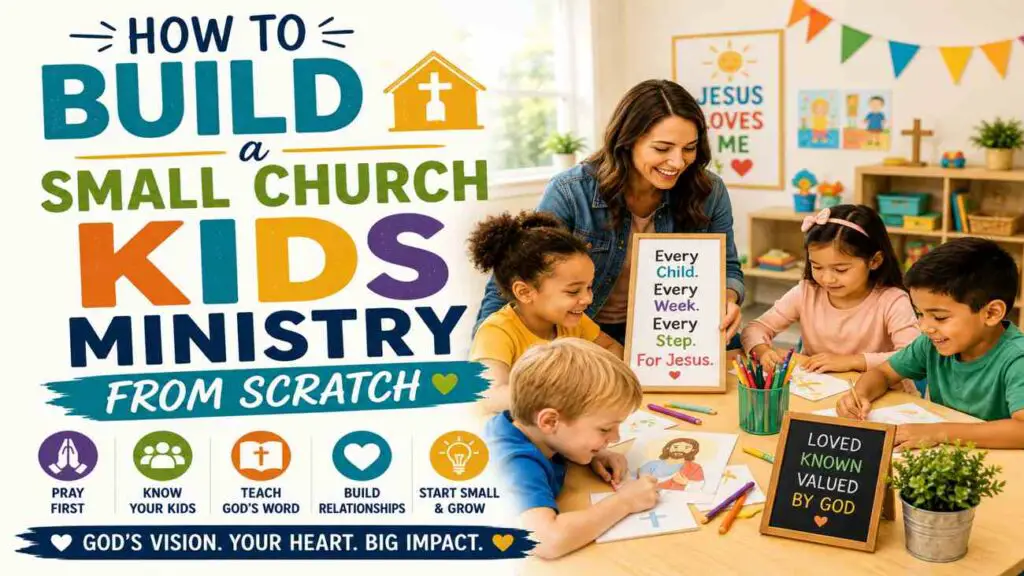
Building a church kids ministry from scratch can feel overwhelming at first, especially for a small church with limited volunteers, budget, or space. However, a strong children’s ministry does not begin with expensive programs or large classrooms. It begins with a clear vision, faithful leadership, and a commitment to helping children grow in their relationship with God.
A healthy kids ministry creates a safe and welcoming environment where children can learn Scripture, build friendships, worship God, and feel connected to the church community. Even the smallest church can develop a meaningful ministry that impacts children and families for years to come.
The key is to start simple, stay organized, and build slowly over time. By focusing on safety, consistency, biblical teaching, and volunteer support, a small church can establish a thriving ministry that becomes an important part of church life.
How to Build a Small Church Kids Ministry
Step 1. Define the Purpose of the Ministry
Start by deciding why the kids ministry exists.
A strong purpose could be:
To help children know Jesus, love God’s Word, build healthy friendships, and feel safe and valued in the church.
Keep the vision simple and biblical. A children’s ministry should focus on discipleship, not just entertainment.
Step 2. Get Pastoral and Leadership Support
Meet with the pastor or church leaders before launching the ministry.
Discuss:
- The vision for the ministry
- The age groups to serve
- Available space
- Budget expectations
- Volunteer needs
- Safety policies
- How the ministry supports the church’s mission
Leadership support helps the ministry grow with unity and direction.
Step 3. Decide Which Age Groups to Serve First
Avoid trying to serve every age group immediately.
Common age groups include:
- Nursery: 0–2 years
- Preschool: 3–5 years
- Early elementary: 6–8 years
- Older children: 9–12 years
A small church may begin by combining groups together until attendance increases.
Step 4. Create a Simple Ministry Structure
Choose when the ministry will take place.
Most small churches begin during:
- Sunday worship service
- Midweek Bible study
- Prayer meetings
- Monthly children’s gatherings
A simple weekly format could include:
- Welcome and check-in
- Opening prayer
- Worship song
- Bible lesson
- Discussion questions
- Activity or craft
- Snack
- Closing prayer
- Parent pickup
Consistency helps children feel comfortable and engaged.
Step 5. Set Up Basic Safety Policies
Safety should always be a top priority.
Create clear policies for:
- Child check-in and pickup
- Bathroom procedures
- Emergency contacts
- Volunteer screening
- Allergy information
- First aid
- Incident reporting
- Parent communication
Use the two-adult rule whenever possible and avoid situations where one adult is alone with one child.
Step 6. Recruit the First Volunteers
Begin with a small and dependable volunteer team.
Look for volunteers who are:
- Patient
- Faithful
- Responsible
- Teachable
- Good with children
- Willing to follow safety procedures
A small ministry may only need:
- One ministry leader
- Two teachers
- Two helpers
- One check-in volunteer
Focus on quality and commitment rather than large numbers.
Step 7. Train the Volunteers
Provide basic training before volunteers begin serving.
Training topics should include:
- Ministry vision
- Child safety rules
- Classroom management
- Teaching Bible lessons
- Communication with parents
- Emergency procedures
- Praying with children
Ongoing training helps volunteers feel prepared and confident.
Step 8. Choose a Simple Curriculum
Select a Bible-based curriculum that is easy to teach.
Good beginning topics include:
- Creation
- Noah’s Ark
- Moses
- David and Goliath
- The life of Jesus
- Prayer
- Forgiveness
- Obedience
- Love
- The resurrection of Jesus
Each lesson should include:
- A Bible passage
- Main lesson point
- Memory verse
- Discussion questions
- Simple activity
- Prayer time
Keep lessons practical and age-appropriate.
Step 9. Prepare the Space
Create a welcoming environment for children.
Basic supplies may include:
- Chairs or floor mats
- Bibles
- Craft supplies
- Paper and crayons
- Name tags
- Toys for younger children
- Hand sanitizer
- First aid kit
- Storage bins
- Snacks if permitted
The room does not need to be expensive. Cleanliness, safety, and warmth matter most.
Step 10. Create a Check-In and Pickup System
Develop a basic check-in process for every child.
Collect:
- Child’s name
- Parent or guardian name
- Phone number
- Allergy information
- Emergency contact
- Approved pickup person
Only release children to approved adults.
A good system builds trust with parents.
Step 11. Start with a Pilot Program
Run the ministry for a few weeks before the official launch.
During the pilot phase, evaluate:
- Attendance numbers
- Volunteer readiness
- Classroom setup
- Lesson timing
- Parent feedback
- Safety procedures
Use this time to make adjustments before fully launching.
Step 12. Communicate with Parents
Strong communication encourages parent involvement.
Share:
- Weekly lesson topics
- Memory verses
- Important announcements
- Safety information
- Upcoming events
Even a short weekly message helps parents stay connected to the ministry.
Step 13. Build a Volunteer Rotation
Prevent burnout by creating a volunteer schedule.
For example:
- Team A serves the 1st Sunday
- Team B serves the 2nd Sunday
- Team C serves the 3rd Sunday
- Team D serves the 4th Sunday
Volunteers who receive regular breaks are more likely to serve long-term.
Step 14. Establish Classroom Rules
Simple rules help create order and respect.
Examples include:
- Listen when someone is speaking
- Keep hands and feet to yourself
- Use kind words
- Respect the classroom
- Participate with a positive attitude
Consistency is important when enforcing rules.
Step 15. Use a Consistent Weekly Format
Children respond well to routines.
A repeatable structure could include:
- Welcome
- Prayer
- Worship
- Bible story
- Memory verse
- Questions and discussion
- Activity or craft
- Snack
- Closing prayer
Using the same structure weekly creates stability.
Step 16. Create a Small Budget
A small budget can support the ministry effectively.
Budget categories may include:
- Curriculum
- Printing
- Craft materials
- Snacks
- Cleaning supplies
- Volunteer resources
- Toys and storage items
Even a modest monthly budget can make a significant difference.
Step 17. Plan Ahead with a Ministry Calendar
Create a calendar for the next few months.
Include:
- Lesson topics
- Volunteer schedules
- Training meetings
- Holiday events
- Special children’s programs
- Family activities
Planning ahead reduces stress and confusion.
Step 18. Officially Launch the Ministry
Promote the ministry within the church and community.
Announcements can be made through:
- Sunday services
- Church bulletins
- Social media
- WhatsApp groups
- Church websites
- Personal invitations
Present the ministry as an opportunity for children to grow spiritually and build relationships.
Step 19. Evaluate the Ministry Regularly
Meet with volunteers regularly to review the ministry.
Discuss:
- What is working well
- Areas needing improvement
- Volunteer concerns
- Parent feedback
- Attendance trends
- Classroom challenges
Healthy ministries continue learning and improving.
Step 20. Grow Slowly and Wisely
As the ministry develops, consider adding:
- Separate age classrooms
- Vacation Bible School
- Scripture memory programs
- Family worship nights
- Children’s outreach events
- Kids worship teams
- Parent discipleship resources
Avoid growing faster than the ministry can support responsibly.
Closing Thoughts
A successful church kids ministry is not built overnight. It grows through faithful leadership, consistent teaching, prayer, and genuine care for children and families. Small churches should never underestimate the impact they can have on young lives, even with limited resources.
Starting small allows the ministry to develop healthy systems, strong volunteer relationships, and a solid biblical foundation. Over time, the ministry can become one of the most meaningful parts of the church community, helping children develop lasting faith and spiritual confidence.
The most important goal is not creating a perfect program, but creating a safe and loving environment where children can encounter God, learn Scripture, and feel valued within the church family.