
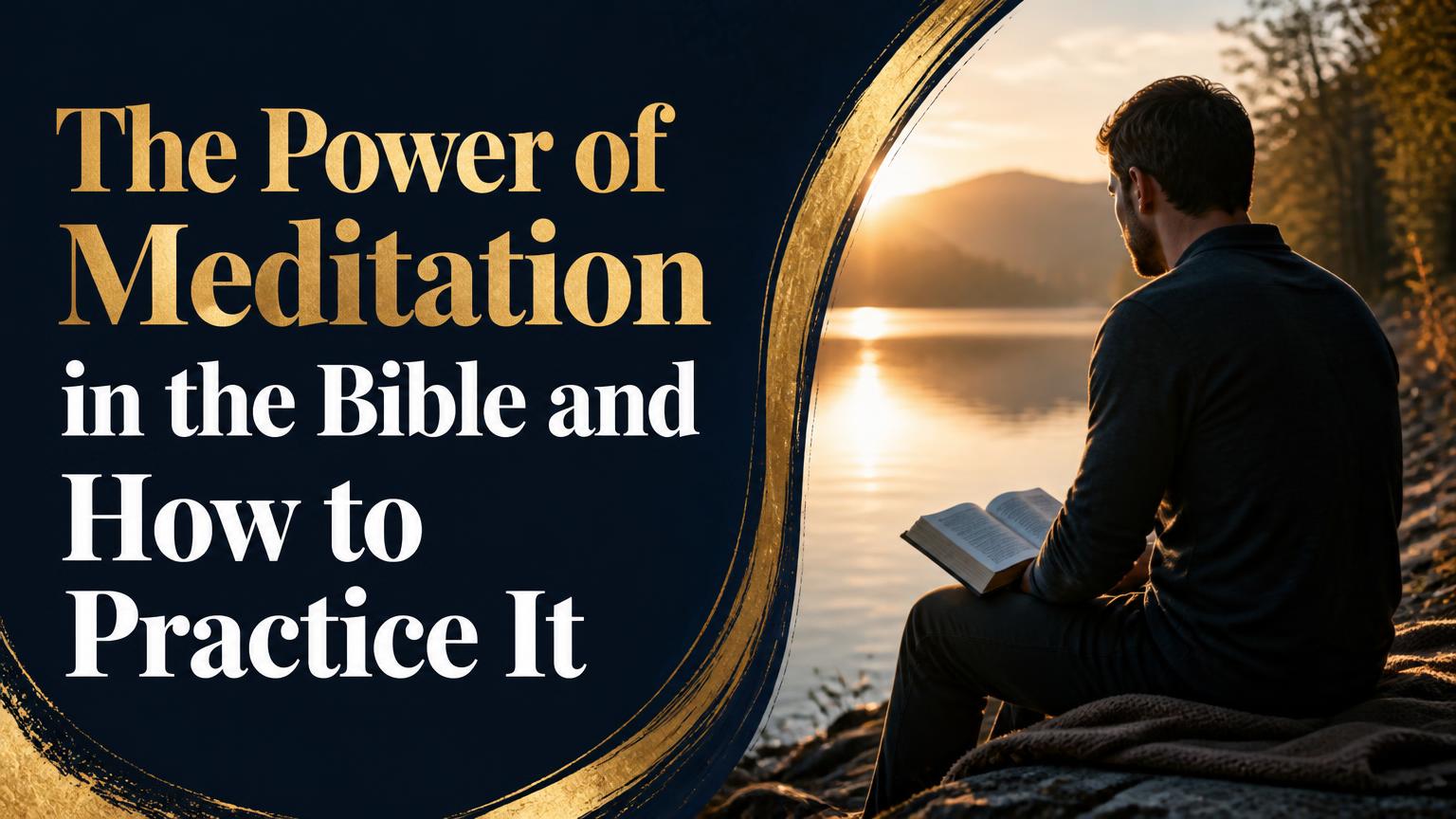
Meditation in the Bible is the deliberate, repeated reflection on God, his character, his works, and his Word so that truth shapes a person’s worship, thinking, decisions, and conduct. Its power does not come from a technique, mantra, or ability to control circumstances. It comes from turning the mind and heart toward God and responding to what he has revealed. Biblical meditation therefore joins reflection with prayer, trust, obedience, and remembrance.
What Is the Power of Meditation in the Bible?
The power of meditation in the Bible lies in its ability to move divine truth from simple awareness to faithful practice. Scripture repeatedly connects meditation with remembering God’s works, understanding his instruction, gaining wisdom, resisting fear, and living with greater consistency. Meditation is not passive daydreaming; it is sustained attention directed toward a truthful and worthy object.
Biblical Meditation Fills the Mind With God’s Truth
Several biblical words translated as “meditate” include ideas such as pondering, speaking quietly, rehearsing, considering, and giving careful attention. Joshua 1:8 tells Joshua to meditate on the Book of the Law “day and night” so that he may be careful to do everything written in it. The passage connects meditation directly with obedience, not merely intellectual interest.
Psalm 1 presents a similar pattern. The person who meditates on the law of the Lord is compared to a tree planted by streams of water. The image describes stability, nourishment, fruitfulness, and endurance. The psalm does not promise a trouble-free life; it shows how a person rooted in God’s instruction can develop spiritual resilience rather than being carried away by every influence.
Biblical meditation may include reflecting on Scripture, God’s creation, his faithfulness, his judgments, his mercy, and his past acts of redemption. Psalm 145:5, for example, describes meditating on the glorious splendor of God’s majesty. The focus remains God-centered rather than self-generated.
Meditation Turns Truth Into Character and Action
The Bible’s goal for meditation is transformation. A person may know a command without loving it, quote a promise without trusting it, or understand a doctrine without practicing it. Meditation slows the movement from hearing to acting so that the meaning, implications, and demands of God’s truth become personally clear.
For example, reflecting on God’s instruction to forgive involves more than repeating the word “forgiveness.” It may require considering God’s mercy, recognizing the damage caused by resentment, examining one’s desire for revenge, and asking what a faithful response should look like. Reflection becomes spiritually productive when it leads to confession, changed attitudes, wise boundaries, reconciliation where appropriate, or patient endurance.
This is why Joshua 1:8 joins meditation with careful obedience. The biblical pattern is not “think deeply and trust your feelings.” It is “attend carefully to God’s Word, understand it in context, and allow it to direct your conduct.”
Meditation Strengthens Remembrance, Courage, and Trust
Biblical writers often meditate on what God has done. Psalm 77 describes a distressed person who deliberately remembers God’s deeds, wonders, and holiness. That remembrance does not deny present pain. Instead, it gives suffering a larger theological context: the God who acted faithfully in the past has not ceased to be faithful simply because the present is difficult.
This kind of meditation can strengthen courage because fear often narrows attention to immediate threats. Reflecting on God’s promises, character, and previous faithfulness broadens that attention. It does not guarantee that anxiety will disappear instantly, nor does it replace practical help or wise counsel. It does provide a disciplined way to challenge despair with truths that remain stable when emotions fluctuate.
Philippians 4:8 gives a related instruction by directing believers to consider what is true, honorable, just, pure, lovely, commendable, excellent, and worthy of praise. Paul is not recommending positive thinking detached from reality. He is teaching believers to give sustained attention to things consistent with God’s truth.
Meditation Is Relational Rather Than Merely Mental
Christian meditation is response to a Person, not concentration on an impersonal force. Scripture may direct attention toward God’s law, works, wisdom, presence, and promises, but these are not treated as detached concepts. They reveal who God is and how people are to relate to him.
Consequently, biblical meditation naturally leads to prayer. A reader may begin with a passage, consider what it reveals about God, confess a related sin, express gratitude, ask for help, and identify a concrete act of obedience. Psalm 119 repeatedly combines reflection on God’s testimonies with love, prayer, dependence, and commitment.
This relational focus also protects meditation from becoming a method of self-mastery. The purpose is not to achieve spiritual power through concentration. It is to receive, remember, and respond to God’s truth with humility.
Key Biblical Passages About Meditation
The Bible does not present meditation in one isolated command. Its teaching emerges through passages that connect careful reflection with wisdom, worship, spiritual stability, and obedience.
Joshua 1:8 and Meditation That Leads to Obedience
Joshua 1:8 is one of the clearest biblical statements about meditation. Joshua is instructed to keep the Book of the Law continually before him, speaking of it and reflecting on it so that he will do what it commands. The context concerns leadership, covenant faithfulness, courage, and responsibility after Moses’ death.
The verse should not be reduced to a formula promising automatic success in every undertaking. In context, “prosper” or “succeed” refers to faithfully carrying out the mission God gave Joshua. The passage teaches that meditation prepares a leader to act according to God’s revealed will rather than impulse or fear.
Psalm 1 and the Rooted Life
Psalm 1 contrasts the person who delights in the Lord’s instruction with the person shaped by wicked counsel. Meditation is described as a regular orientation of life, not an occasional religious exercise. The person returns to God’s instruction repeatedly, allowing it to influence judgment, desire, and conduct.
The tree metaphor emphasizes process. Trees grow through continued access to nourishment, and spiritual maturity likewise develops through repeated exposure, reflection, and obedience. The “fruit” of such a life may include wisdom, integrity, patience, and faithfulness, but the psalm does not imply instant perfection.
Psalm 119 and Meditation on God’s Word
Psalm 119 uses several related expressions for reflecting on God’s statutes, testimonies, precepts, promises, and judgments. The psalmist meditates because God’s Word gives direction, revives the soul, exposes false ways, and provides counsel.
The passage also shows that meditation can occur in difficulty. The psalmist is not detached from grief, opposition, or temptation. Reflection on Scripture takes place in the middle of real pressures. That makes biblical meditation more than a quiet-time preference; it becomes a way of interpreting life through God’s covenant faithfulness.
New Testament Patterns of Thoughtful Reflection
The New Testament does not use the language of meditation as frequently as the Psalms, but it strongly teaches disciplined attention. Romans 12:2 calls believers to be transformed by the renewal of their minds. Colossians 3:16 urges the word of Christ to dwell richly among believers. Philippians 4:8 directs attention toward what is true and morally excellent.
Mary’s response to events surrounding Jesus also provides an example of reflective faith: she treasured and pondered them in her heart (Luke 2:19; see also Luke 2:51). These passages portray reflection as a way of receiving God’s work with patience rather than demanding immediate understanding.
How to Practice Meditation According to the Bible
Biblical meditation can be practiced without elaborate rituals. A short passage read attentively and revisited prayerfully may be more fruitful than reading many chapters without reflection. The essential movement is from Scripture to understanding, prayer, and faithful response.
Choose a Passage and Read It in Context
Begin with a manageable passage rather than an isolated sentence chosen only because it sounds encouraging. Read the surrounding paragraphs and identify the speaker, audience, situation, repeated words, commands, promises, warnings, and main idea. Context prevents meditation from turning into the use of Scripture as a collection of disconnected slogans.
A psalm, a section of a Gospel, a paragraph from an epistle, or a short biblical command can all provide suitable material. The aim is not to find a hidden message in every phrase but to understand what the text communicates and why it matters.
Ask What the Passage Reveals About God and People
After reading, consider questions such as: What does this passage reveal about God’s character? What does it expose about human motives or behavior? What promise, warning, command, or example appears here? How does it fit with the larger message of Scripture?
These questions move meditation beyond repetition. For instance, reflecting on Psalm 23 may involve considering God as shepherd, the nature of dependence, the meaning of guidance, and the difference between confidence in God’s presence and a promise of easy circumstances.
Respond Through Prayer and Specific Obedience
Turn the reflection into prayer. Thank God for what the passage reveals, confess where it challenges you, ask for wisdom, and pray for the ability to obey. Then identify one practical response. It might involve speaking truthfully, refusing gossip, extending mercy, seeking reconciliation, accepting correction, or trusting God in a decision.
Specific application matters because biblical meditation aims at a changed life. The response should remain faithful to the passage rather than becoming an excuse to impose a personal preference on the text.
Repeat the Truth Throughout the Day
Many biblical references suggest ongoing reflection rather than a single devotional moment. A person may return to a verse during work, travel, conflict, or prayer. Repetition helps important truth become available when it is needed, but repetition alone is not the goal. The words should continue to be understood, connected to reality, and applied wisely.
Writing a brief sentence, memorizing a verse, praying its meaning, or discussing it with another believer can help sustain attention. Meditation becomes deeper when it shapes reactions in ordinary situations rather than remaining confined to a quiet setting.
What Biblical Meditation Does Not Mean
Biblical meditation is not the same as every practice called meditation today. Some traditions emphasize emptying the mind, achieving an altered state, repeating a mantra, or accessing spiritual power through a technique. Christian meditation generally moves in the opposite direction: it fills attention with God’s revealed truth and seeks communion with him through prayerful reflection. The distinction is about purpose, object, and authority, not merely posture or silence.
Meditation also does not mean that every thought or inner impression comes from God. Scripture must be interpreted responsibly, tested against its context and the broader teaching of the Bible, and held with humility. Nor does meditation replace Bible study, corporate worship, wise counsel, medical or psychological care, or practical action. A person who meditates on peace while refusing necessary reconciliation has not followed the full direction of biblical truth.
The Lasting Significance of Biblical Meditation
The power of meditation in the Bible is the power of rightly directed attention. What people repeatedly remember, value, and rehearse tends to influence their desires and decisions. Scripture calls believers to direct that formative process toward God’s character, works, promises, and commands. As truth is understood and revisited, it can expose distorted thinking, strengthen trust, deepen worship, and guide conduct.
Biblical meditation is therefore neither an empty mental exercise nor a spiritual shortcut. It is a patient practice of receiving God’s Word, considering its meaning, responding in prayer, and living its implications. Its fruit usually develops over time: greater rootedness, wiser judgment, steadier hope, and more faithful obedience. The central question is not how intensely a person meditates, but whether meditation is bringing the person into truthful, humble, and active dependence on God.