
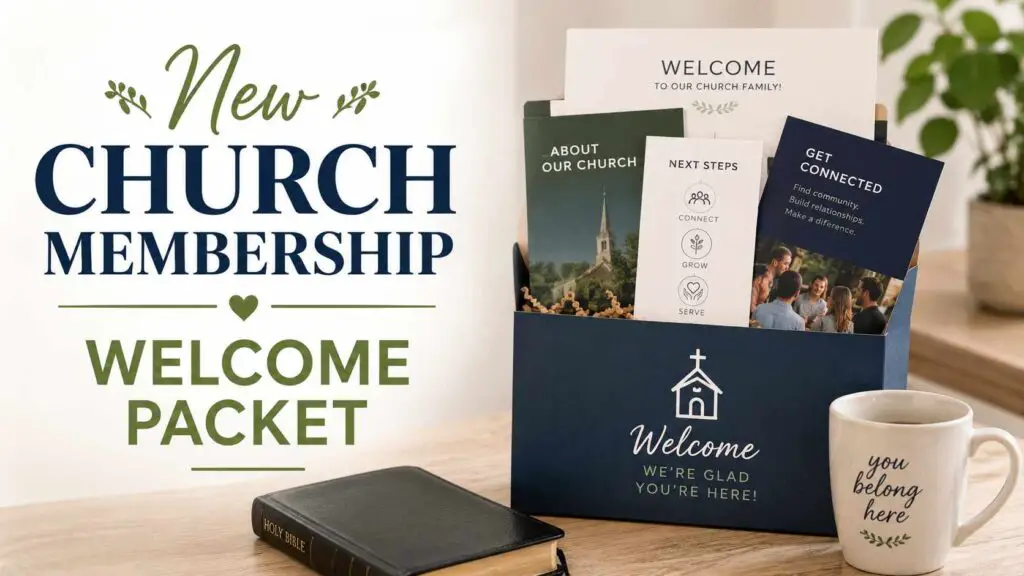
Joining a church is more than simply attending services. It is about becoming part of a spiritual family, building relationships, and growing in faith together. A thoughtful church membership welcome packet can make a lasting first impression and help new members feel informed, valued, and connected from the very beginning.
A well-designed welcome packet also reflects the heart of the church. It communicates the church’s mission, introduces important ministries, and gives newcomers practical information that helps them confidently take their next steps. Whether the church is large or small, creating a meaningful welcome packet can strengthen member engagement and encourage long-term involvement.
In this guide, we will explore the essential items every church should include in a new member welcome packet and why each one matters.
New Church Membership Welcome Packet: What to Include
#1. Welcome Letter From the Pastor
A welcome letter from the pastor is one of the most important parts of the packet because it creates a personal connection immediately. This letter should warmly greet the new member, express gratitude for their decision to join the church, and briefly explain the church’s mission and vision.
The tone should feel encouraging and authentic rather than formal or distant. Many churches also include a short prayer or blessing for the new member and their family. A pastor’s letter helps people feel seen and valued, especially if they are joining a church for the first time or returning to church after many years.
#2. Church Mission and Vision Statement
New members need to understand what the church stands for and where it is heading. Including the church’s mission and vision statement gives clarity about the church’s purpose, priorities, and spiritual direction.
This section should explain:
- The church’s core purpose
- The values that guide ministry decisions
- The type of impact the church hopes to have in the community
- The church’s commitment to biblical teaching and discipleship
When members understand the vision, they are more likely to become active participants rather than passive attendees.
#3. Statement of Faith
A statement of faith outlines the church’s biblical beliefs and doctrinal foundations. This section is especially important because it helps new members know what the church teaches about essential Christian beliefs.
Topics commonly included are:
- The authority of Scripture
- Salvation through Jesus Christ
- Baptism and communion
- The Trinity
- Prayer and worship
- Eternal life
Keeping this section clear and easy to understand helps prevent confusion and builds trust with new members.
#4. Church History Overview
People often feel more connected when they know the story behind a church. A short history overview can highlight how the church began, major milestones, and how God has guided the ministry over the years.
This section may include:
- Founding date
- Key pastors or leaders
- Growth milestones
- Community outreach efforts
- Expansion projects or missions work
Church history reminds new members that they are joining something larger than themselves.
#5. Meet the Leadership Team
Introducing pastors, elders, ministry directors, and church staff helps make the church feel approachable and relational. Including photos and short biographies helps new members recognize leaders and understand their roles within the church.
Each bio can include:
- Name and role
- Ministry responsibilities
- Family information
- Personal testimony or ministry passion
This section helps reduce intimidation and encourages members to engage with leadership more comfortably.
#6. Membership Expectations Guide
Church membership involves commitment and participation. Including a membership expectations guide helps clarify what the church encourages from its members.
This may include expectations related to:
- Worship attendance
- Serving in ministry
- Financial stewardship
- Small group participation
- Prayer and spiritual growth
- Supporting the church community
Clear expectations help create a healthy church culture and prevent misunderstandings later.
#7. Weekly Service Schedule
New members need practical information about church activities and gatherings. A weekly schedule should clearly list:
- Sunday worship services
- Midweek Bible studies
- Prayer meetings
- Youth and children’s programs
- Small groups
- Special seasonal events
Providing this information upfront makes it easier for newcomers to get involved quickly.
#8. Ministry Directory
A ministry directory introduces the different ways members can connect and serve within the church. This section is valuable because people often want to participate but simply do not know where to begin.
Examples of ministries include:
- Worship ministry
- Outreach ministry
- Men’s ministry
- Women’s ministry
- Marriage ministry
- Children’s ministry
- Youth ministry
- Hospitality ministry
Including contact information for ministry leaders can encourage immediate involvement.
#9. Volunteer Opportunities Sheet
Many people want to serve shortly after joining a church. A volunteer opportunities sheet provides clear pathways for involvement and helps members discover where their gifts can be used.
This section can explain:
- Available serving roles
- Volunteer requirements
- Training opportunities
- How to sign up
Churches that encourage serving early often experience stronger member retention and deeper community engagement.
#10. Small Group Information
Small groups help transform a large church into a close-knit spiritual family. Including information about available groups can encourage members to build meaningful relationships outside of Sunday services.
Helpful details include:
- Group types
- Meeting times
- Locations
- Age or life-stage focus
- Group leaders
This section should emphasize the importance of discipleship, accountability, and Christian fellowship.
#11. New Member Checklist
A checklist gives newcomers practical next steps and helps them feel organized during the transition into church membership.
Items on the checklist may include:
- Attend membership class
- Meet a ministry leader
- Join a small group
- Download the church app
- Volunteer in a ministry
- Attend a church event
Checklists make the process feel simple and manageable.
#12. Church Contact Information
Every welcome packet should clearly display important contact details so members know how to reach the church when needed.
This section should include:
- Church address
- Office phone number
- Email address
- Website
- Office hours
- Emergency pastoral care contacts
Easy access to communication helps members feel supported and connected.
#13. Social Media and Online Resources
Modern churches often communicate through digital platforms. Including social media links and online resources allows members to stay informed and spiritually encouraged throughout the week.
Helpful resources include:
- Church website
- Sermon archive
- Podcast
- YouTube channel
- Livestream links
- Church app
Digital engagement helps strengthen ongoing communication with members.
#14. Frequently Asked Questions
New members often have practical questions they may hesitate to ask. A FAQ section can address common concerns and help newcomers feel more comfortable.
Questions may cover:
- Dress code expectations
- Childcare availability
- Parking information
- Communion practices
- Baptism procedures
- Membership classes
Answering these questions proactively creates a welcoming experience.
#15. Giving Information
Financial stewardship is an important part of church life. Including giving information helps members understand how the church approaches generosity and ministry support.
This section may explain:
- Online giving options
- Tithes and offerings
- Missions support
- Building funds
- Financial accountability practices
The focus should remain biblical and encouraging rather than pressured.
#16. Upcoming Events Calendar
An events calendar helps new members become active participants in church life. Highlighting upcoming opportunities allows newcomers to connect more quickly with the church community.
Events may include:
- Conferences
- Retreats
- Outreach events
- Fellowship gatherings
- Prayer nights
- Holiday services
Active participation often leads to stronger long-term relationships within the church.
#17. Prayer Request Card
Prayer is central to church life. Including a prayer request card shows new members that the church genuinely cares about their spiritual and personal needs.
Prayer request cards may allow members to submit:
- Personal prayer needs
- Family concerns
- Health requests
- Spiritual struggles
- Praise reports
This simple addition can help build trust and spiritual connection.
#18. Spiritual Growth Resources
A welcome packet should encourage spiritual growth beyond Sunday services. Including discipleship resources can help members strengthen their relationship with God during the week.
Helpful resources include:
- Bible reading plans
- Devotional recommendations
- Prayer guides
- Scripture memory tools
- Christian book recommendations
Providing practical tools encourages consistent spiritual development.
#19. Church Covenant or Membership Commitment
Many churches include a church covenant outlining the commitments members make to one another and to the church community.
This may include commitments related to:
- Unity
- Prayer
- Service
- Biblical living
- Encouragement
- Faithfulness
A covenant reinforces the spiritual significance of church membership.
#20. Testimonies From Church Members
Personal testimonies help new members see how God is working within the church community. Including stories from current members creates warmth and authenticity.
Testimonies may share:
- Salvation stories
- Healing experiences
- Family restoration
- Spiritual growth journeys
- Community impact stories
Real-life experiences often make new members feel hopeful and inspired.
#21. Map of the Church Campus
Larger churches especially benefit from including a campus map. This helps newcomers feel less overwhelmed and more confident navigating the property.
The map can identify:
- Sanctuary
- Children’s areas
- Fellowship hall
- Restrooms
- Parking areas
- Welcome center
Simple practical details can significantly improve the visitor experience.
#22. Emergency and Safety Information
Families appreciate knowing the church takes safety seriously. Including basic safety information reassures parents and demonstrates organizational care.
This section may include:
- Child check-in procedures
- Emergency exits
- Medical response protocols
- Security team information
Providing this information helps create peace of mind for members and guests.
#23. Next Steps Guide
A next steps guide gives new members a clear roadmap for becoming fully connected within the church community.
The guide may outline:
- First 30 days
- First 60 days
- First 90 days
It can recommend milestones such as joining a group, serving in ministry, attending classes, and building relationships.
#24. Welcome Gift Information
Small welcome gifts can leave a powerful impression and help newcomers feel appreciated. Churches often include:
- Devotional books
- Journals
- Church mugs
- Pens
- T-shirts
- Scripture cards
Thoughtful gifts communicate hospitality and generosity.
#25. Membership Certificate or Welcome Certificate
A membership certificate may seem simple, but it can make the moment feel meaningful and memorable. It acknowledges the member’s commitment and celebrates their decision to become part of the church family.
This addition works especially well for churches that hold formal membership ceremonies or welcome services.
Closing Thoughts
A well-prepared church membership welcome packet does much more than provide information. It creates connection, builds trust, and helps new members feel like they truly belong. The best welcome packets combine practical guidance with spiritual encouragement, helping people confidently begin their journey within the church community.
By including thoughtful resources, clear next steps, and opportunities for involvement, churches can create a welcoming environment that encourages long-term engagement and spiritual growth. Whether a church is large or small, investing time into a meaningful welcome packet can leave a lasting impact on every new member who walks through the doors.