
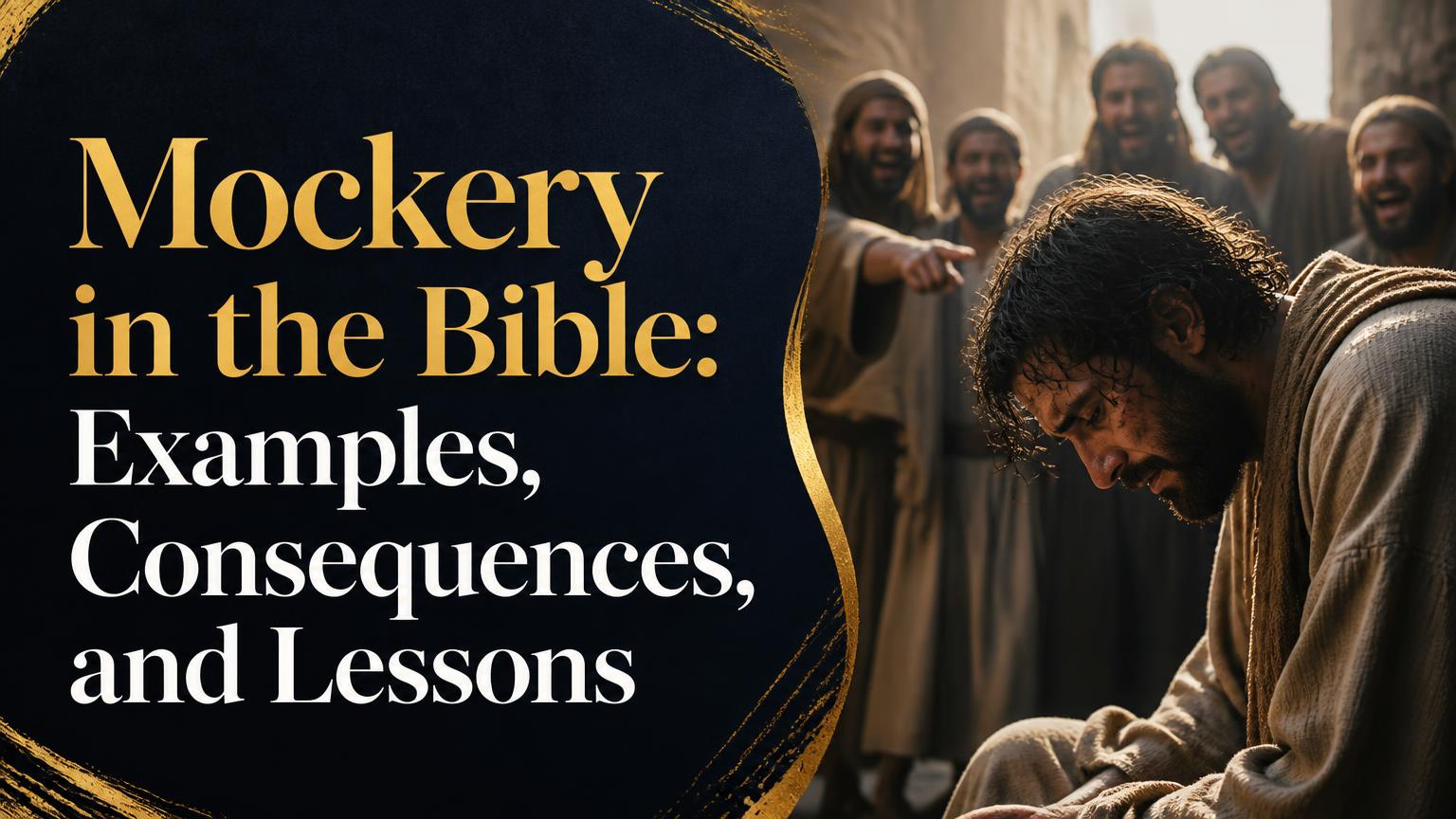
Mockery in the Bible refers to contemptuous speech or behavior that ridicules, humiliates, rejects, or defies another person—often because of faith, obedience, weakness, or truth. Scripture treats mockery seriously because words can reveal pride, damage relationships, oppose God’s purposes, and intensify persecution. At the same time, the Bible distinguishes sinful mockery from wise correction, prophetic exposure of evil, ordinary humor, and honest lament. Its examples therefore offer both warnings about how people speak and guidance for responding when others use contempt against us.
What Mockery in the Bible Means
Mockery as Contempt Rather Than Mere Humor
Biblical mockery is not simply laughter or playful teasing. It involves contempt: treating someone as foolish, worthless, ridiculous, or beneath respect. Mockery may appear through insults, sarcastic gestures, derisive laughter, humiliating imitation, or public challenges intended to shame another person.
The target may be an individual, a family, a nation, God’s people, or God himself. Mockery often seeks more than amusement; it attempts to weaken confidence, discredit truth, or establish the mocker’s superiority. This is why Scripture frequently connects mockery with pride, arrogance, stubbornness, and hostility.
The Bible does not condemn every form of humor. Its concern is the heart and purpose behind the words. A joke shared in affection differs morally from speech designed to humiliate someone, especially when the speaker exploits a person’s vulnerability or ridicules faithful obedience.
The Mocker in Proverbs and Psalms
In wisdom literature, “the mocker” is often a settled type of person rather than someone who makes an occasional foolish comment. Proverbs describes mockers as resistant to correction. “Whoever corrects a mocker invites insults” (Proverbs 9:7–8), because the mocker does not merely lack information; he rejects wisdom and resents accountability.
Proverbs 21:24 associates mockery with pride and arrogance, while Proverbs 22:10 describes the removal of a mocker as a way to end strife. These passages show that mockery can become a pattern that poisons a community. The person who constantly ridicules others makes honest conversation, correction, and reconciliation difficult.
The Psalms also portray mockery as a painful experience for the faithful. Psalm 22 describes enemies who sneer at the suffering righteous person, and Psalm 69 speaks of reproach and humiliation. These prayers do not approve of the mockers; they give victims permission to bring the injustice honestly before God.
Examples from Israel’s History
Several biblical narratives show mockery directed against God’s people and God’s work. Goliath ridiculed Israel’s army and challenged the Lord’s honor in 1 Samuel 17. His mockery was a form of intimidation: he wanted Israel to believe that resistance was hopeless before the battle even began.
During the rebuilding of Jerusalem’s walls, Sanballat and Tobiah used ridicule to discourage Nehemiah and the workers (Nehemiah 4:1–3). Their insults were strategic. Mockery can function as social pressure, making obedience appear foolish so that people abandon a difficult task before it is completed.
Second Chronicles 36:16 says that God’s people mocked his messengers, despised his words, and scoffed at the prophets until judgment came. This passage presents mockery as the outward expression of prolonged rejection. In 2 Kings 2:23–24, youths jeered at Elisha, and severe judgment followed. The account is sobering, but it should not be used to claim that every insult receives an immediate supernatural punishment. Biblical narratives describe particular acts in particular contexts; they do not authorize personal retaliation.
Genesis 21:9 also describes Ishmael mocking Isaac. The precise nature of the incident is debated, but the context shows that the behavior contributed to serious family conflict. Paul later connects the episode with persecution in Galatians 4:29, showing that mockery can sometimes become a form of hostility toward those associated with God’s promise.
Jesus Endured Mockery at the Cross
Jesus experienced mockery throughout his final suffering. Soldiers dressed him in a robe, placed a crown of thorns on him, struck him, and mocked his claim to kingship (Matthew 27:27–31). Religious leaders, passersby, and the criminals crucified beside him also ridiculed him (Matthew 27:39–44; Luke 23:35–39).
The mockery was especially revealing because Jesus was mocked as a false king while he was actually the Messiah. The crowd interpreted weakness, pain, and apparent defeat as proof that he could not be God’s chosen servant. The cross exposes a recurring error: people often judge truth by visible power and immediate success.
Jesus’ response also matters. He did not answer every insult with a counterinsult. He entrusted himself to God and accepted suffering without surrendering to hatred. First Peter 2:23 summarizes this pattern by saying that when Jesus was reviled, he did not revile in return, but continued entrusting himself to the one who judges justly.
God Is Not Mocked
Galatians 6:7 states, “God is not mocked,” in a context about moral choices, generosity, and reaping what one sows. The point is not that people cannot verbally insult God; Scripture records many such acts. Rather, God cannot be deceived or treated as though his moral order can be manipulated without consequence.
A person may appear to evade accountability for a time, but outward religious language cannot conceal persistent disobedience. The principle is similar to Proverbs 3:34: God opposes the proud but gives grace to the humble, a truth repeated in James 4:6 and 1 Peter 5:5. Divine judgment may not be immediate, and believers should not presume to predict exactly how it will occur. Yet mockery does not nullify God’s authority.
Consequences of Mockery in the Bible
Mockery Reveals and Deepens Pride
Mockery often begins with an attitude of superiority. The speaker assumes the right to sit in judgment over another person and treats correction as an attack. Because ridicule protects pride, it can prevent repentance. A person who laughs at wisdom may avoid considering whether the mocked message is true.
This is why Proverbs presents the mocker as more difficult to correct than the inexperienced person. Lack of knowledge can be addressed through teaching; contempt rejects the teacher and the process of learning. Mockery therefore has a spiritual consequence: it can harden a person against wisdom.
Mockery Damages People and Communities
Ridicule can silence people who need help, discourage faithful work, and turn disagreements into personal humiliation. Nehemiah’s opponents used mockery to weaken a community’s resolve, while the psalmists describe the emotional pain caused by public contempt. Mockery does not remain confined to the moment of speech; it can produce fear, shame, resentment, and withdrawal.
In families, churches, workplaces, and schools, repeated ridicule creates an environment in which people conceal mistakes rather than seek correction. A community may appear peaceful because no one speaks honestly, while underlying distrust grows. Biblical warnings about corrupting speech therefore apply not only to dramatic insults but also to habitual sarcasm and contempt disguised as humor.
Mockery Can Precede Judgment Without Predicting Every Outcome
Scripture sometimes places mockery immediately before judgment. The prophets were ridiculed before Jerusalem’s destruction, and Goliath’s contempt preceded his defeat. These accounts show that apparent confidence does not equal moral or ultimate victory.
However, the Bible also shows righteous people being mocked for extended periods. Jesus was mocked at the cross, and many servants of God suffered without immediate vindication. Consequently, believers should not conclude that someone who suffers ridicule must have done something wrong, nor should they promise that every mocker will soon experience visible punishment. The larger biblical assurance is that God sees, judges rightly, and will finally bring hidden motives and injustices into the light.
How Should Christians Respond to Mockery?
Refuse to Answer Contempt With Contempt
Christians are repeatedly instructed not to repay evil with evil. Romans 12:14 calls believers to bless those who persecute them, and 1 Peter 3:9 rejects retaliation and insulting speech. This does not mean pretending that mockery is harmless. It means refusing to let another person’s contempt determine one’s own character.
Jesus’ conduct during his trial provides the clearest example. He did not need to win every verbal exchange because his identity and mission did not depend on the approval of his accusers. In practice, this may mean pausing before responding, declining to repeat an insult, praying for wisdom, and entrusting ultimate justice to God.
Discern When to Speak and When to Remain Silent
Proverbs 26:4–5 gives two instructions that appear opposite: do not answer a fool according to his folly, and answer a fool according to his folly. Together, they teach discernment. A person should not imitate foolishness by entering an endless exchange of insults, but there are times when silence would allow deception or injustice to stand unchallenged.
A wise response addresses the substance of an accusation without adopting the mocker’s tone. It may correct a false claim, establish a boundary, defend someone being targeted, or end an unproductive conversation. Jesus sometimes remained silent before hostile accusations, yet he also exposed hypocrisy and answered sincere questions. Faithfulness requires judgment about purpose, audience, timing, and likely effect.
Protect Dignity Without Seeking Revenge
Rejecting retaliation does not require remaining in a situation where humiliation or harassment continues unchecked. Christians may seek help from responsible leaders, report abuse, separate from destructive interactions, or use lawful means of protection. Scripture’s concern for justice includes the defense of vulnerable people, not merely the endurance of mistreatment.
The goal is not revenge or personal domination. It is truthful, proportionate action that protects people and makes repentance possible. A response can be firm without being cruel, and compassionate without being permissive. The Christian standard is speech that is truthful, self-controlled, and aimed at what is good rather than at another person’s destruction.
Mockery Is Not the Same as Every Form of Criticism
Biblical rebuke seeks to expose wrong and call a person or community back to truth. Mockery seeks to disgrace. The difference may be seen in purpose, tone, and treatment of the other person. Nathan confronted David’s sin in 2 Samuel 12, but his goal was repentance and restoration, not entertainment or humiliation.
The prophets sometimes used irony or dramatic language to expose idolatry. Elijah’s challenge to the prophets of Baal on Mount Carmel (1 Kings 18:27) was a public confrontation of false worship, not permission for believers to ridicule anyone they dislike. Similarly, a lament may report that enemies mocked the faithful without endorsing their behavior. Accurate criticism, prophetic warning, and moral protest must not be confused with contemptuous speech.
Conclusion
Mockery in the Bible is a serious form of contempt that can express pride, resist correction, intimidate the faithful, and dishonor God. Scripture shows it directed against individuals, prophets, Israel, and Jesus himself. It also teaches that mockery does not prove the victim is wrong or the mocker is strong; Jesus was ridiculed at the moment when God’s redemptive purpose was being fulfilled.
The biblical response is neither passive acceptance nor personal revenge. Believers are called to reject contemptuous speech, answer wisely when truth or justice requires it, protect the vulnerable, and entrust final judgment to God. The central lesson is to speak and act with humility, remembering that apparent weakness does not defeat truth and that God cannot ultimately be deceived or mocked.