
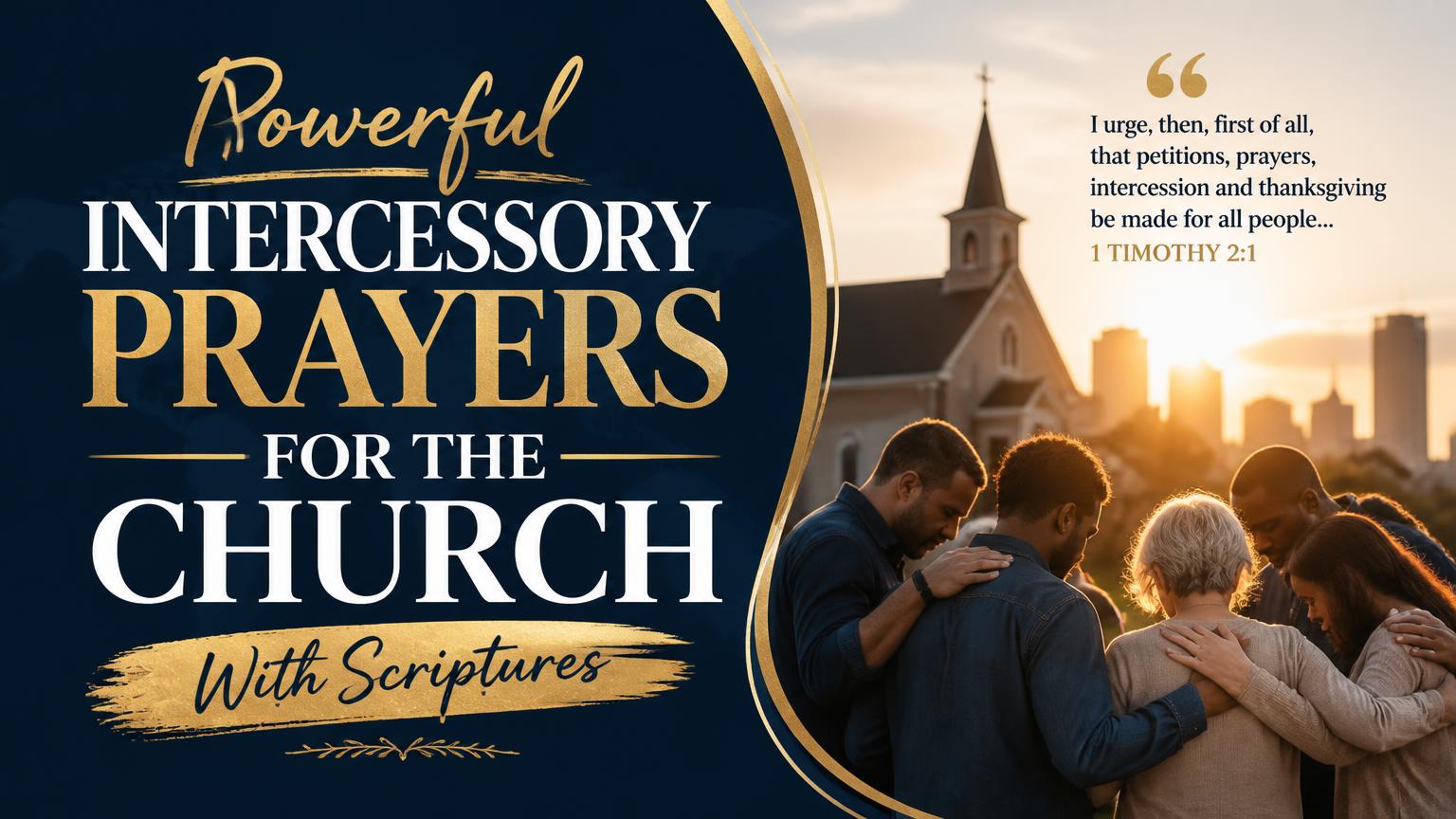
Intercessory prayer for the church is prayer offered on behalf of God’s people so that the church will grow in holiness, unity, wisdom, strength, and faithful witness. Scripture presents this ministry as a responsibility for every believer, not only pastors or prayer leaders. Christians are told to make “supplications, prayers, intercessions, and thanksgivings” for others (1 Timothy 2:1) and to pray “at all times” for all the saints (Ephesians 6:18).
The prayers below are grounded in biblical themes and can be used for a local congregation, church leaders, missionaries, persecuted Christians, or the worldwide body of Christ.
Intercessory Prayer for the Church With Scriptures
Intercession begins with God’s revealed will. Rather than attempting to control outcomes, Christians bring the church’s needs before God with humility, faith, persistence, and submission to His purposes. The following prayers can be prayed as written or adapted to particular people and circumstances.
Pray for Spiritual Growth and Maturity
The church needs more than activity, attendance, or outward success. It needs deeper knowledge of God, spiritual discernment, endurance, and a life that produces righteousness.
Paul prayed that believers would be filled with “the knowledge of his will in all spiritual wisdom and understanding,” walk in a manner worthy of the Lord, bear fruit, and grow in their knowledge of God (Colossians 1:9–11). Ephesians 3:16–19 also focuses on inner strength, Christ’s presence, and being rooted in love.
Prayer:
Father, strengthen Your church through Your Holy Spirit in the inner person. Help believers grow in the knowledge of Your will and apply Your truth with wisdom. Root and establish the church in the love of Christ so that its members may understand His love more deeply and reflect it to others. Produce spiritual fruit in every congregation, and help Your people grow in faith, obedience, endurance, and joy. Amen.
Spiritual maturity includes both understanding and practice. A church may possess sound teaching yet remain spiritually immature if its members do not show humility, love, repentance, and perseverance.
Pray for Holiness and Faithfulness
The church is called to reflect God’s character. Intercession for holiness should include prayer for repentance from sin, integrity in leadership, purity in relationships, and faithfulness to Scripture.
Jesus prayed, “Sanctify them in the truth; your word is truth” (John 17:17). Sanctification is God’s work in His people, but believers are also called to reject sin and pursue obedience. Prayer for holiness, therefore, is not a request for the church to appear morally superior. It is a request that Christians receive grace to confess sin, turn from it, and live consistently with the gospel.
Prayer:
Holy God, purify Your church through Your truth. Expose hidden sin, correct compromise, and give believers sincere repentance. Help pastors, teachers, families, and individual Christians live with integrity when they are seen and when they are not seen. Guard the church from hypocrisy, sexual immorality, greed, pride, and bitterness. Make Your people compassionate, self-controlled, truthful, and faithful so that their lives honor Christ. Amen.
This prayer should be joined with self-examination. Interceding for the church does not mean criticizing other Christians while ignoring personal disobedience.
Pray for Unity and Love
Biblical unity is not uniformity or the denial of legitimate differences. It is the shared life of believers who belong to Christ and are committed to truth, humility, forgiveness, and love.
Jesus prayed that His followers would be one so that the world might recognize His mission (John 17:20–23). Ephesians 4:1–6 connects unity with humility, patience, gentleness, bearing with one another in love, and preserving “the unity of the Spirit in the bond of peace.”
Prayer:
Lord Jesus, unite Your church in truth and love. Remove unnecessary suspicion, pride, rivalry, and resentment. Give believers humility to listen, courage to address conflict honestly, and grace to forgive as they have been forgiven. Help churches honor essential biblical truth while showing patience in matters where faithful Christians may differ. Make congregations communities where people from different backgrounds serve one another and display the reconciliation found in Christ. Amen.
Unity does not require ignoring false teaching, abuse, injustice, or serious misconduct. Genuine Christian unity is built on truth and righteousness rather than pressure to remain silent.
Pray for Pastors and Church Leaders
Church leaders need wisdom, spiritual endurance, moral integrity, protection from temptation, and the support of the people they serve. Scripture repeatedly connects the health of a congregation with faithful leadership.
Paul asked others to pray that he would speak the gospel boldly and clearly (Ephesians 6:19–20; Colossians 4:3–4). The New Testament also instructs believers to respect, encourage, and pray for those who labor among them (1 Thessalonians 5:12–13).
Prayer:
Father, strengthen pastors, elders, ministry leaders, missionaries, and teachers. Give them wisdom to shepherd people patiently and courage to proclaim Your Word faithfully. Protect them from pride, discouragement, isolation, financial temptation, sexual sin, and abuse of authority. Give them trustworthy friends and honest accountability. Help them lead by serving rather than controlling, and grant them rest, physical strength, and time to care for their families. Encourage the church to support its leaders with respect, prayer, generosity, and appropriate accountability. Amen.
Praying for leaders does not mean treating them as beyond correction. Healthy churches combine honor with biblical accountability and clear protection for those who may be vulnerable.
Pray for the Church’s Witness and Mission
Jesus told His disciples to ask the Lord of the harvest to send workers into His harvest (Matthew 9:38). The early church also prayed for boldness to speak about Christ, and God enabled them to continue their witness despite opposition (Acts 4:29–31).
Mission includes evangelism, discipleship, mercy, justice, hospitality, and service. The church’s witness becomes more credible when its proclamation is accompanied by sacrificial love and visible concern for real human needs.
Prayer:
Lord of the harvest, send faithful workers into every place where the gospel needs to be proclaimed. Give Your church courage, wisdom, and compassion. Open doors for clear communication of the gospel, and prepare people to hear and respond. Help believers represent Christ with integrity at work, in their neighborhoods, online, and in their families. Strengthen missionaries and local congregations, and make the church attentive to the poor, the lonely, the oppressed, immigrants, children, and those who have been overlooked. Amen.
The goal of mission is not merely to increase an organization’s size. It is to make disciples who trust Christ, obey His teaching, and participate in God’s work.
Pray for Protection and Perseverance
The New Testament asks Christians to pray for protection, but it does not promise that faithful believers will avoid every hardship. Protection may include deliverance from evil, wisdom in danger, courage under pressure, preservation from spiritual deception, or endurance through suffering.
Paul asked for prayer that the gospel would spread and that he would be delivered from unreasonable and evil people (2 Thessalonians 3:1–3). Ephesians 6:10–18 describes spiritual warfare and calls believers to stand firm in God’s armor.
Prayer:
God of peace, guard Your church from spiritual deception, false teaching, division, persecution, and evil. Give believers discernment to recognize what is untrue and courage to resist it. Protect congregations from leaders who misuse power and from patterns that harm the vulnerable. Strengthen Christians who face hostility because of their faith. When suffering cannot be removed, provide endurance, wisdom, and the assurance of Your presence. Keep Your people faithful until the end. Amen.
This prayer avoids two extremes: assuming Christians are helpless against spiritual opposition, or assuming that faith guarantees a life without danger.
Pray for the Suffering, Weak, and Persecuted
Intercession should pay particular attention to Christians who are sick, grieving, imprisoned, displaced, persecuted, or overwhelmed. Hebrews 13:3 tells believers to remember prisoners and those being mistreated as though they were suffering with them. James 5:14–16 describes the church’s responsibility to pray for the sick and to care for one another honestly.
Prayer:
Merciful Father, remember believers who are sick, grieving, imprisoned, displaced, persecuted, or exhausted. Provide medical care, daily necessities, wise advocates, safe community, and emotional strength. Comfort those who mourn and sustain those whose prayers seem unanswered. Give persecuted Christians courage without bitterness and provide opportunities for justice and peace. Make local churches attentive to suffering rather than indifferent to it, and teach us to carry one another’s burdens in practical ways. Amen.
Praying for suffering Christians should lead to action where action is possible. Intercession may reveal opportunities to visit, give, defend, encourage, or provide tangible help.
Pray for Provision and Faithful Service
Churches need resources to care for people and fulfill their mission, but biblical prayer for provision is not a demand for wealth or prestige. It asks God to supply what is needed for faithful obedience and to form generous people.
The believers in Acts 4:32–35 shared their possessions so that people in need were cared for. Paul also described God’s provision as enabling generosity and good work (2 Corinthians 9:8).
Prayer:
Provider of all good things, supply what Your church needs to serve faithfully. Give congregations wisdom in budgeting, honesty in handling money, and courage to prioritize people over appearances. Provide food, shelter, counseling, education, and practical care for those in need. Raise up generous members, skilled volunteers, trustworthy administrators, and leaders who use resources responsibly. Keep the church from greed and show us how to receive help humbly and give help wisely. Amen.
Provision includes more than finances. Time, wisdom, buildings, trained workers, emotional support, and practical skills can all become instruments of service.
How to Pray for the Church With Biblical Wisdom
Effective intercessory prayer is not a technique for forcing God to grant a desired result. It is participation in a relationship with God through which believers seek His will and ask Him to act according to His character.
Several biblical principles can guide prayer:
- Pray according to God’s will. First John 5:14 gives confidence that God hears requests made according to His will. Scripture helps shape those requests.
- Pray specifically. Instead of asking only for “blessings,” pray for repentance, courage, wisdom, reconciliation, provision, or strength in a known situation.
- Pray persistently. Jesus taught His disciples to pray continually and not lose heart (Luke 18:1). Persistence expresses dependence; it is not an attempt to wear God down.
- Pray with thanksgiving. Philippians 4:6 joins petition with thanksgiving. Gratitude remembers God’s past faithfulness while presenting current needs.
- Pray corporately and privately. Acts 2:42 shows the early church devoted to shared prayer, while Jesus also taught His disciples to pray privately (Matthew 6:6).
- Pray and act responsibly. A prayer for the hungry should make the church more willing to feed people. A prayer for unity should encourage peacemaking. A prayer for leaders should include practical support and accountability.
- Leave outcomes with God. Faith trusts God’s wisdom without pretending to know exactly how or when He will answer.
A useful pattern is to begin with God’s character, identify the church’s need, connect the request to Scripture, ask for specific help, and submit the outcome to God.
Biblical Models for Interceding for the Church
The New Testament contains several prayers that can shape Christian intercession. Paul prayed for believers’ love, discernment, righteousness, strength, endurance, and hope (Philippians 1:9–11; Colossians 1:9–12; Ephesians 3:14–21). Jesus prayed for His disciples’ protection, joy, holiness, unity, and mission (John 17). The early church prayed for boldness, deliverance, and continued gospel witness (Acts 4:23–31).
These prayers show that biblical intercession is broader than asking for immediate relief. It seeks transformed character, faithful endurance, reconciled relationships, wise leadership, effective witness, and deeper knowledge of God. Those priorities can keep church prayer from becoming focused only on programs, buildings, attendance, or short-term success.
Intercessory prayer for the church is therefore both a privilege and a responsibility. It brings the needs of God’s people before Him while shaping the people who pray into more attentive, compassionate, and obedient servants.
The strongest intercessory prayers for the church are Scripture-shaped, Christ-centered, and specific. They ask God to grow His people in holiness, unity, courage, love, wisdom, and endurance while recognizing that answers remain in His hands. When prayer is joined with truthful teaching, practical service, repentance, and perseverance, it becomes a faithful way for the church to seek God’s work in its own life and witness.