
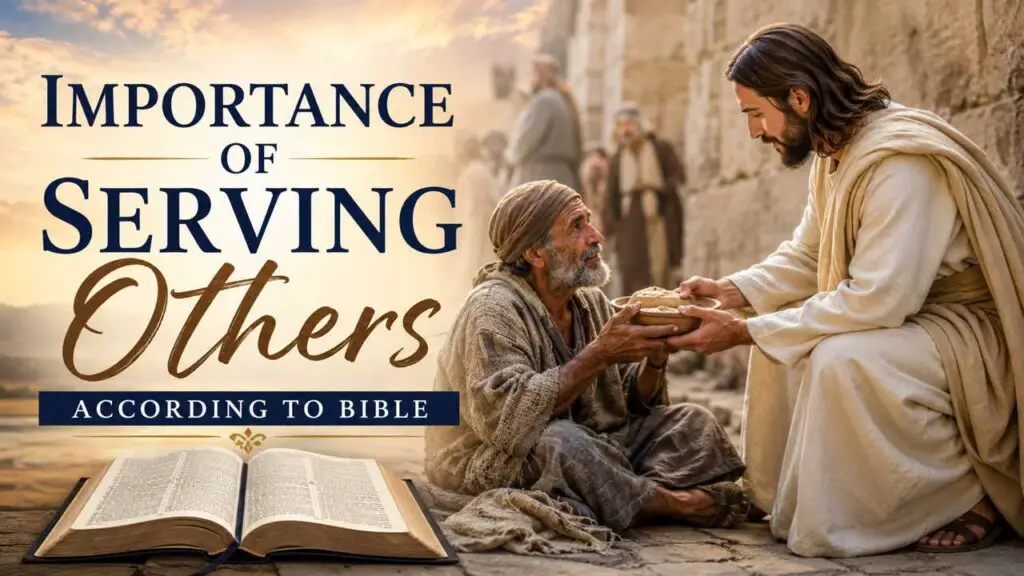
Serving others is one of the central teachings of the Bible. From the Old Testament to the teachings of Jesus Christ in the New Testament, Scripture consistently emphasizes humility, compassion, generosity, and selfless love. Christians are called not only to believe in God but also to demonstrate their faith through acts of service toward others.
The Bible teaches that serving others reflects God’s character, strengthens communities, and fulfills the commandment to love one another. Whether through helping the poor, encouraging fellow believers, or showing kindness to strangers, serving others is presented as a powerful expression of faith in action.
In this article, we will explore the importance of serving others according to the Bible and how biblical service transforms both individuals and communities.
Importance of Serving Others According to the Bible
#1. Serving Others Reflects the Character of God
One of the main reasons serving others is important in the Bible is that it reflects God’s own nature. God is loving, merciful, compassionate, and generous. When believers serve others, they imitate His character and become examples of His love in the world.
Jesus Himself demonstrated servant-hearted living throughout His ministry by healing the sick, feeding the hungry, and caring for the brokenhearted.
“Now that I, your Lord and Teacher, have washed your feet, you also should wash one another’s feet.” — John 13:14
This verse shows that serving others is not beneath anyone. Instead, it is a divine example set by Christ Himself.
#2. Jesus Taught That True Greatness Comes Through Service
The Bible challenges worldly ideas about success and power. According to Jesus, true greatness is found in humility and service rather than authority or status.
“For even the Son of Man came not to be served, but to serve, and to give his life as a ransom for many.” — Mark 10:45
Jesus, despite being the Son of God, chose the role of a servant. His life teaches believers that serving others is a mark of spiritual maturity and godly leadership.
#3. Serving Others Demonstrates Genuine Love
Biblical love is more than words or emotions—it requires action. The Bible repeatedly teaches that loving others means caring for their needs and supporting them in practical ways.
“Serve one another humbly in love.” — Galatians 5:13
Serving others through kindness, generosity, and compassion reveals authentic Christian love. It allows believers to put their faith into practice daily.
#4. Serving Others Is Considered Serving Christ
One of the most powerful biblical teachings about service is that helping others is viewed as serving Jesus Himself.
“Truly I tell you, whatever you did for one of the least of these brothers and sisters of mine, you did for me.” — Matthew 25:40
This teaching emphasizes the spiritual significance of caring for the poor, needy, sick, and vulnerable. Every act of kindness becomes an act of worship unto God.
#5. Service Strengthens Christian Community
The Bible describes believers as members of one body working together in unity. Serving one another strengthens relationships, encourages fellowship, and builds healthy communities.
“There should be no division in the body, but that its parts should have equal concern for each other.” — 1 Corinthians 12:25
Acts of service create stronger bonds among people and encourage mutual support during difficult times.
#6. Serving Others Develops Humility
Humility is a foundational biblical virtue, and serving others helps cultivate it. Serving requires people to place the needs of others before their own desires and personal recognition.
“Do nothing out of selfish ambition or vain conceit. Rather, in humility value others above yourselves.” — Philippians 2:3
The act of serving teaches selflessness and helps believers grow spiritually by becoming more Christlike.
#7. Faith Must Be Accompanied by Action
The Bible makes it clear that faith should produce visible actions. Genuine faith is demonstrated through obedience, compassion, and service.
“Faith by itself, if it is not accompanied by action, is dead.” — James 2:17
Serving others is evidence of a living faith that actively seeks to honor God through good works and practical love.
#8. God Rewards Faithful Service
Scripture encourages believers by reminding them that God sees and values every act of service, even those that go unnoticed by others.
“God is not unjust; he will not forget your work and the love you have shown him as you have helped his people.” — Hebrews 6:10
Serving others may not always bring earthly recognition, but the Bible promises that God remembers and rewards faithful service.
#9. Serving Others Uses God-Given Gifts Wisely
Every person has unique talents, abilities, and spiritual gifts that can benefit others. The Bible teaches that these gifts are meant to serve the community rather than promote selfish ambition.
“Each of you should use whatever gift you have received to serve others.” — 1 Peter 4:10
Whether through teaching, encouraging, giving, or helping, believers honor God by using their gifts to bless others.
#10. Serving Others Becomes a Powerful Witness
Acts of service can inspire others and point them toward God. A life marked by kindness and compassion becomes a testimony of faith.
“Let your light shine before others, that they may see your good deeds and glorify your Father in heaven.” — Matthew 5:16
Serving others allows Christians to demonstrate God’s love in practical and meaningful ways that positively impact the world around them.
Biblical Examples of Serving Others
The Bible contains many examples of individuals who faithfully served others:
- Moses led and cared for the Israelites despite many hardships.
- Ruth showed loyalty and service to Naomi.
- The Apostle Paul dedicated his life to spreading the Gospel and helping churches grow.
- Jesus Christ remains the ultimate example of sacrificial service.
These biblical examples continue to inspire believers to live lives centered on compassion and service.
Practical Ways to Serve Others Today
Serving others does not always require grand gestures. Small acts of kindness can make a significant impact. Some practical ways to serve include:
- Helping those in need
- Encouraging friends and family
- Volunteering in local communities
- Supporting the elderly or sick
- Sharing resources with those experiencing hardship
- Offering prayer and emotional support
The Bible teaches that every act of service, no matter how small, has value when done with love and sincerity.
Closing Thoughts
The importance of serving others according to the Bible cannot be overstated. Scripture teaches that service reflects God’s character, demonstrates love, strengthens faith, and brings glory to God. Jesus Christ modeled a life of humility and compassion, calling His followers to do the same.
Serving others is not simply a religious duty—it is a powerful expression of faith and love in action. Through serving, believers grow spiritually, strengthen communities, and become living examples of God’s grace in the world.
By following biblical teachings on service, Christians can positively impact the lives of others while deepening their relationship with God.