
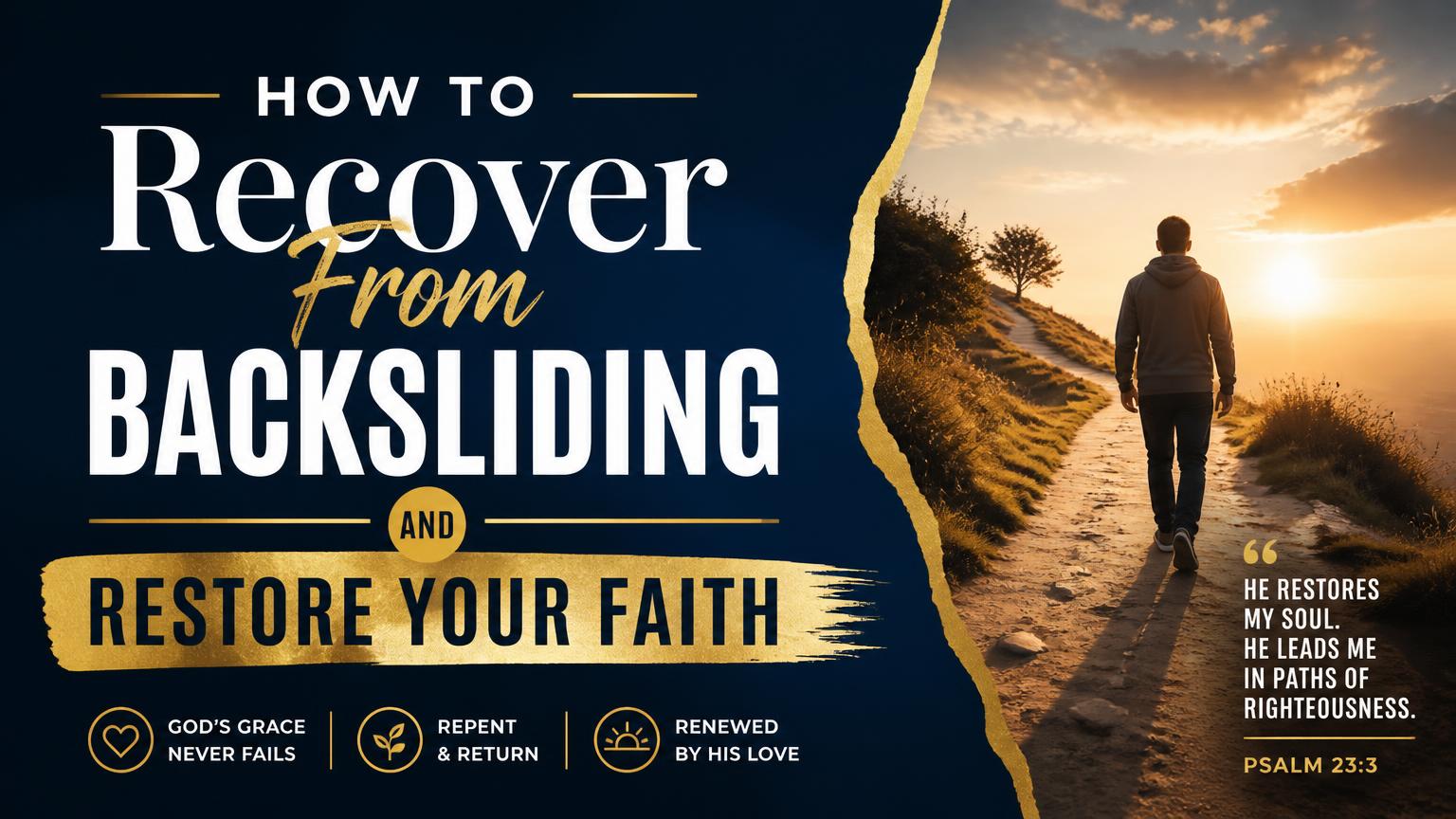
Backsliding is a period of spiritual decline in which a person turns away from faithful obedience to God, often through persistent sin, neglect of prayer and Scripture, isolation from Christian community, or loss of trust. Recovery begins—not with earning God’s acceptance—but with honestly turning back to Him through repentance, faith, and renewed obedience. Scripture presents restoration as possible because God is “merciful and gracious” (Psalm 103:8) and welcomes those who return to Him.
How to Recover From Backsliding
Recovering from backsliding involves more than feeling guilty or resuming religious activities. It means restoring your relationship with God, dealing honestly with the causes of your spiritual decline, and taking practical steps toward faithful living.
Return to God Through Honest Confession
The first step is to stop hiding. Tell God plainly what has happened: the sins you have committed, the attitudes you have cultivated, the disciplines you have neglected, and the areas in which you have resisted Him.
First John 1:9 says, “If we confess our sins, he is faithful and just to forgive us our sins and to cleanse us from all unrighteousness.” Confession is not informing God of something He does not know. It is agreeing with Him about the truth and abandoning the pretense that everything is acceptable.
Biblical confession is specific rather than vague. Instead of saying only, “Forgive my mistakes,” acknowledge the actual problem: dishonesty, sexual sin, bitterness, pride, substance abuse, greed, resentment, or spiritual indifference. Specific confession helps expose the pattern that needs to change.
Confession should lead to repentance. Repentance includes a change of mind, direction, and conduct. It may involve ending a relationship that consistently draws you into sin, deleting access to destructive material, returning what was stolen, apologizing to someone you harmed, or seeking help for an addiction.
Receive God’s Grace Instead of Punishing Yourself
Many people remain spiritually distant because they believe they must suffer long enough to prove that they are sorry. But self-punishment is not the same as repentance. It can become another form of self-focus: the person remains absorbed in personal shame rather than trusting God’s mercy.
Romans 8:1 declares, “There is therefore now no condemnation for those who are in Christ Jesus.” This does not minimize sin or remove its consequences. It means that those who belong to Christ do not need to live under the verdict that they are permanently rejected by God.
Jesus’ parable of the prodigal son in Luke 15 illustrates this restoration. The son returns after seriously dishonoring his father, but the father receives him with compassion. The welcome does not make the son’s rebellion unimportant; it shows that genuine repentance can be met with mercy.
Grace also does not mean avoiding accountability. God’s forgiveness and the repair of earthly consequences are related but distinct. A person may be forgiven while still needing to rebuild trust, accept legal or financial consequences, or participate in a long process of healing.
Identify How the Spiritual Decline Began
Backsliding usually develops through a pattern rather than a single moment. A person may gradually stop praying, avoid Christian fellowship, justify a recurring sin, become resentful toward God, or allow disappointment to harden into unbelief.
Ask questions such as:
- What was happening in my life before I began drifting?
- Which habits, relationships, wounds, or temptations contributed to it?
- What beliefs did I begin accepting about God, myself, or sin?
- What warning signs did I repeatedly ignore?
- What situations make relapse more likely?
Hebrews 2:1 warns believers to pay close attention so that they do not drift away. The image of drifting is useful because it shows how spiritual decline can occur gradually through neglect. A person does not always decide to abandon faith; sometimes the person stops resisting small compromises until those compromises reshape the entire direction of life.
Understanding the pattern does not excuse sin. It helps you address the mechanism behind it. If loneliness contributed to destructive behavior, healthier community may be necessary. If exhaustion weakened your judgment, rest and structure may matter. If unresolved pain led to anger toward God, prayer, pastoral care, or professional counseling may help you process that pain honestly.
Rebuild Prayer and Scripture as Relationship, Not Performance
After backsliding, spiritual practices can feel difficult or artificial. Begin simply. Pray honestly, even if the prayer is brief: “God, I have wandered. I need Your mercy and help me return.” Read a manageable portion of Scripture and reflect on what it reveals about God, sin, grace, and faithful living.
Prayer and Bible reading do not purchase forgiveness. They help restore attentiveness to God and reshape the desires that have been formed by other influences. Jesus described this ongoing dependence with the image of abiding in Him in John 15. Fruit comes from remaining connected to the vine; it is not manufactured by frantic effort.
A practical pattern might include:
- Set aside a consistent, realistic time for prayer.
- Read a Gospel, a psalm, or a short New Testament letter.
- Ask what the passage teaches about God and what response it calls for.
- Turn that response into prayer.
- Obey one clear truth rather than collecting information without acting.
Do not measure recovery only by emotional intensity. Some people expect an immediate spiritual feeling and become discouraged when it does not come. Faithfulness often begins before strong feelings return. The Psalms repeatedly show believers praying through confusion, dryness, fear, and sorrow rather than pretending those experiences do not exist.
Rejoin Christian Community With Wisdom
Isolation often strengthens backsliding. Christian community provides encouragement, correction, prayer, worship, and practical support. Hebrews 10:24–25 connects gathering with the mutual encouragement believers need to persevere.
Returning to church may feel embarrassing, especially if others know about your failure. You do not need to make a public performance of your repentance, but you should not allow shame to keep you permanently isolated. Begin with a trustworthy pastor, mature Christian, small group, or friend who can respond with both truth and compassion.
James 5:16 teaches believers to confess sins to one another and pray for one another. This does not require telling everyone everything. Wise disclosure involves a safe, spiritually mature person who will not exploit your vulnerability, spread confidential information, or replace appropriate professional care.
Community should include accountability, but accountability is more than asking someone, “Did you do better this week?” It may involve identifying triggers, making concrete boundaries, reviewing progress, and responding honestly after failure. The goal is restoration and growth, not surveillance or humiliation.
Repair Harm and Accept the Work of Restoration
Repentance becomes visible in changed behavior. If your backsliding harmed other people, consider what responsible repair requires. That may include an honest apology without excuses, repayment, correction of false information, changed conduct, or a willingness to give someone time before trust is restored.
Zacchaeus demonstrated this kind of response after encountering Jesus. His repentance included financial restitution to people he had defrauded (Luke 19:8). His actions did not buy salvation; they revealed that his encounter with grace was changing his relationship to money and other people.
Restitution must be carried out wisely. An apology should not pressure a victim to forgive immediately or require renewed contact that could be unsafe. In cases involving abuse, coercion, criminal conduct, or serious addiction, seek guidance from qualified pastoral, legal, or professional authorities rather than attempting an informal solution that could cause further harm.
Establish Boundaries Against Repeated Sin
If a specific behavior repeatedly leads you away from God, repentance should include practical boundaries. Jesus’ strong language about removing what causes a person to sin in Matthew 5:29–30 emphasizes the seriousness of taking decisive action. The passage is not a command to harm the body; it is a warning against treating destructive influences casually.
Depending on the situation, boundaries might include:
- Removing access to tempting websites, substances, or financial accounts
- Avoiding high-risk places or situations
- Ending secretive communication
- Installing accountability safeguards
- Changing daily routines
- Seeking treatment for addiction or compulsive behavior
- Refusing to keep a recurring sin private
Boundaries are not a substitute for inward transformation, but they reduce unnecessary exposure while character and judgment are being rebuilt. A person recovering from alcohol dependence, for example, should not rely only on willpower in environments that repeatedly lead to relapse.
What Backsliding Means—and What It Does Not
“Backsliding” is a common Christian term, but traditions use it somewhat differently. Some use it for any period of spiritual coldness or disobedience. Others reserve it for a serious and sustained turning away from Christian faith. It should not be used carelessly to label every struggle, doubt, unanswered prayer, or season of grief.
Backsliding is also distinct from struggling with temptation. A Christian may experience temptation, weakness, or recurring failure while still resisting sin and seeking God. The central issue is not whether a person has ever failed, but whether the person is turning toward repentance or deliberately settling into rebellion.
Nor does backsliding automatically answer every theological question about salvation or apostasy. Christian traditions differ in how they interpret passages concerning perseverance, falling away, and assurance. A wise response is neither to offer false certainty nor to declare someone hopeless. The practical biblical response is to call the person back to Christ, repentance, faith, and faithful obedience.
Why Recovery May Take Time
Returning to God can begin in a moment, but rebuilding a life of trust and stability often takes longer. Forgiveness may be immediate, while emotional healing, damaged relationships, financial repair, and freedom from entrenched habits develop gradually.
This distinction prevents two opposite mistakes. Some people assume that one emotional prayer has solved every consequence and become discouraged when difficulties remain. Others believe that slow progress proves God has not forgiven them. Neither conclusion follows. Growth is often demonstrated through repeated choices over time.
If you fall again, do not use the relapse as proof that repentance was false or that restoration is impossible. Confess it promptly, examine what happened, strengthen the relevant boundaries, and seek help. Persistent relapse may indicate the need for medical treatment, addiction recovery, trauma counseling, or mental-health support alongside pastoral care. Seeking such help is not a failure of faith.
How to Know Whether You Are Moving Forward
Recovery is not measured only by how spiritual you feel. Useful signs of restoration include:
- Greater honesty before God and other people
- A growing willingness to obey even without strong emotion
- Less secrecy and rationalization
- Increasing concern for people you previously harmed or ignored
- Practical separation from destructive patterns
- Renewed participation in Christian community
- Greater readiness to receive correction
- A developing desire for holiness rather than merely relief from guilt
These signs may appear unevenly. Christian maturity is not sinless perfection; it is a continuing return to God, dependence on grace, and increasing conformity to the character of Christ.
Recovering from backsliding begins by turning toward God rather than waiting until you feel worthy to return. Confess sin honestly, trust Christ’s mercy, address the causes of your drift, reconnect with wise Christian community, repair harm where possible, and establish concrete boundaries. God’s grace does not make repentance unnecessary; it makes repentance possible. The aim is not merely to resume religious routines but to live again in truthful dependence, obedient faith, and restored fellowship with God.