
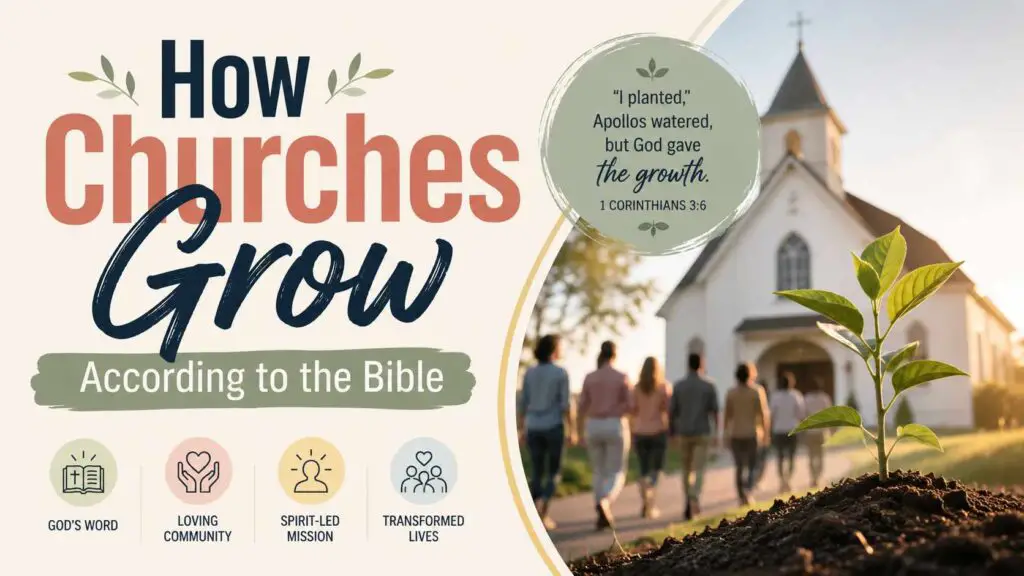
Every church leader wants to see their congregation grow, but biblical church growth is about more than increasing attendance. The Bible teaches that healthy growth happens when people come to Christ, mature in their faith, and become active disciples who serve others. Throughout Scripture, God provides clear principles that help churches flourish spiritually and numerically. From faithful preaching and prayer to discipleship and outreach, these principles remain effective today. As leaders who have spent years studying God’s Word and serving His people, we can confidently say that churches grow best when they follow God’s methods rather than relying solely on human strategies.
How Churches Grow According to the Bible
#1. Preach the Gospel Faithfully
The foundation of church growth is the faithful proclamation of the gospel. The early church grew because believers consistently preached the message of Jesus Christ’s death and resurrection. Acts 2:41 records that after Peter preached, about three thousand people were added to the church. People cannot respond to a message they never hear.
Church leaders should ensure that every sermon points people toward Christ. This does not mean every message must be an evangelistic sermon, but the gospel should remain central. Practical ways to do this include explaining salvation clearly, sharing testimonies of transformed lives, and regularly inviting people to trust Christ. As Paul wrote:
“For I am not ashamed of the gospel, because it is the power of God that brings salvation to everyone who believes.” (Romans 1:16)
#2. Make Disciples, Not Just Attendees
Growing churches focus on making disciples rather than merely filling seats. Jesus commanded His followers:
“Therefore go and make disciples of all nations.” (Matthew 28:19)
A disciple is someone who follows Christ, obeys His teachings, and helps others do the same.
Church leaders should create clear discipleship pathways. New believers need guidance in prayer, Bible reading, worship, and Christian living. Mature believers need opportunities to mentor others. Effective discipleship often includes small groups, one-on-one mentoring, Bible studies, and ministry involvement. Churches that intentionally develop disciples create members who remain faithful and help others grow.
#3. Depend on the Power of the Holy Spirit
The early church did not grow because of superior programs. It grew because believers relied on the Holy Spirit. Before beginning ministry, Jesus instructed His disciples to wait for the Spirit’s empowerment.
“You will receive power when the Holy Spirit comes on you.” (Acts 1:8)
Churches today must avoid depending entirely on marketing, technology, or leadership skills. Leaders should seek God’s guidance through prayer, sensitivity to the Spirit, and obedience to Scripture. When the Holy Spirit works, hearts are convicted, lives are transformed, and people are drawn to Christ. Spiritual growth cannot be manufactured through human effort alone.
#4. Prioritize Prayer in Every Ministry
Prayer has always been a defining characteristic of growing churches. The believers in Acts devoted themselves to prayer, and God repeatedly responded by adding new people to their fellowship.
“They all joined together constantly in prayer.” (Acts 1:14)
Church leaders should establish prayer as a core ministry rather than an afterthought. This includes prayer meetings, leadership prayer gatherings, prayer teams, and encouraging personal prayer habits among members. When churches pray consistently for salvation, discipleship, outreach, and community needs, they position themselves to experience God’s blessing and direction. Prayer aligns the church with God’s purposes and invites His power into every area of ministry.
#5. Teach Sound Biblical Doctrine
Healthy churches grow through biblical teaching. Believers need more than inspiration; they need truth that helps them understand and apply God’s Word.
“They devoted themselves to the apostles’ teaching.” (Acts 2:42)
Leaders should teach Scripture systematically and clearly. Members need guidance on salvation, Christian living, relationships, stewardship, spiritual gifts, and doctrine. Churches that neglect biblical teaching often struggle with confusion and spiritual immaturity. Strong doctrinal foundations help believers recognize false teachings and remain faithful. Consistent Bible teaching also equips members to share their faith confidently and answer questions from unbelievers.
#6. Cultivate Genuine Christian Fellowship
People are drawn to communities where they experience authentic relationships. The early church shared life together, supported one another, and demonstrated genuine love.
“All the believers were together and had everything in common.” (Acts 2:44)
Church leaders can encourage fellowship through small groups, shared meals, ministry teams, and church events. Members should feel known, valued, and cared for. New visitors are more likely to return when they build meaningful relationships. Fellowship also strengthens believers during difficult seasons. Churches that create a welcoming environment often experience growth because people naturally invite others into a healthy spiritual family.
#7. Develop Servant Leaders
Growing churches intentionally develop leaders who serve rather than seek personal recognition. Jesus modeled servant leadership throughout His ministry.
“Whoever wants to become great among you must be your servant.” (Mark 10:43)
Church leaders should identify faithful members and invest in their development. Training future leaders involves teaching biblical principles, providing ministry opportunities, and offering mentorship. Healthy leadership multiplication prevents burnout and allows the church to expand its ministry reach. When servant leaders are developed at every level, the church becomes stronger, more organized, and better equipped to care for people effectively.
#8. Equip Every Member for Ministry
Church growth accelerates when every believer understands that ministry is not limited to pastors and staff. Scripture teaches that church leaders should equip believers for service.
“To equip his people for works of service.” (Ephesians 4:12)
Leaders should help members discover their spiritual gifts and find places to serve. This may include children’s ministry, hospitality, worship, outreach, prayer teams, administration, or discipleship. People who actively serve often experience greater spiritual growth and commitment. A church where many members serve can accomplish far more than a church where ministry responsibilities are concentrated among a few individuals.
#9. Practice Love and Unity
Jesus taught that love would be one of the strongest testimonies of His followers.
“By this everyone will know that you are my disciples, if you love one another.” (John 13:35)
Church leaders must actively promote unity and address conflicts biblically. Gossip, division, and unresolved disputes can hinder growth significantly. Leaders should model humility, forgiveness, and reconciliation. Practical steps include conflict resolution training, open communication, and encouraging members to support one another. When outsiders observe genuine love within a church, they often become interested in learning more about Christ and the gospel.
#10. Reach the Community Through Outreach
Churches grow when they intentionally engage their communities with the love of Christ. Jesus consistently ministered to people where they lived, worked, and struggled.
“Go into all the world and preach the gospel to all creation.” (Mark 16:15)
Effective outreach may include community service projects, evangelism events, neighborhood prayer walks, food distributions, and partnerships with local organizations. Leaders should encourage members to build relationships with unbelievers and share their faith naturally. Churches that remain inward-focused often stagnate, while churches that actively reach people outside their walls position themselves for ongoing growth.
#11. Encourage Spiritual Growth and Maturity
Numerical growth without spiritual maturity creates unhealthy churches. Leaders must help believers grow deeper in their relationship with Christ.
“Grow in the grace and knowledge of our Lord and Savior Jesus Christ.” (2 Peter 3:18)
Spiritual maturity develops through Bible study, prayer, obedience, worship, and service. Church leaders should regularly challenge members to take the next step in their faith journey. This may include joining a small group, serving in ministry, sharing their testimony, or mentoring others. Mature believers become strong contributors to church health and often help attract and disciple new believers.
#12. Live as a Witness to the World
A church’s reputation in the community can either support or hinder growth. The early believers gained favor with people because their lives reflected Christ.
“Enjoying the favor of all the people.” (Acts 2:47)
Church members should demonstrate integrity, kindness, generosity, and godly character in daily life. Leaders can encourage this by teaching practical Christian living and providing accountability. When members consistently represent Christ well at work, school, and home, they create opportunities for gospel conversations. Many people first become interested in church because they observe authentic faith in someone’s life.
#13. Care for New Believers
Church growth is not complete when someone makes a profession of faith. New believers require ongoing support and guidance.
“Like newborn babies, crave pure spiritual milk.” (1 Peter 2:2)
Church leaders should establish follow-up systems that connect new believers with mentors, classes, and small groups. Early discipleship helps answer questions, address challenges, and build strong spiritual habits. Without intentional care, many new believers struggle to remain connected. Churches that prioritize assimilation and discipleship often retain more people and develop stronger long-term members.
#14. Use Spiritual Gifts Effectively
God has given every believer spiritual gifts to strengthen the church. Churches grow when members use these gifts faithfully.
“Each of you should use whatever gift you have received to serve others.” (1 Peter 4:10)
Leaders should teach about spiritual gifts and help members identify areas where they can contribute. Some believers excel in teaching, while others are gifted in encouragement, hospitality, leadership, administration, or mercy. When people serve according to their God-given abilities, ministry becomes more effective and fulfilling. Churches function best when every member contributes to the mission God has given them.
#15. Trust God to Give the Increase
While church leaders must work diligently, ultimate growth comes from God. Paul reminded the Corinthian church that human efforts alone cannot produce spiritual growth.
“I planted the seed, Apollos watered it, but God has been making it grow.” (1 Corinthians 3:6)
Leaders should remain faithful in preaching, discipling, praying, and serving while trusting God with the results. This perspective prevents pride when growth occurs and discouragement when progress seems slow. Churches that depend on God’s timing and provision maintain a healthy focus on faithfulness rather than merely chasing numbers. True church growth always reflects God’s blessing and power at work among His people.
Closing Thoughts
The Bible provides a clear blueprint for church growth that remains relevant today. Churches grow when they faithfully preach the gospel, make disciples, prioritize prayer, teach sound doctrine, and depend on the Holy Spirit. Healthy growth involves both spiritual maturity and reaching new people for Christ. While strategies and methods may change over time, God’s principles never change. Church leaders who consistently apply these biblical truths position their congregations for lasting impact. Rather than focusing solely on attendance numbers, pursue the kind of growth that transforms lives, strengthens believers, and brings glory to God through a thriving and faithful church.