
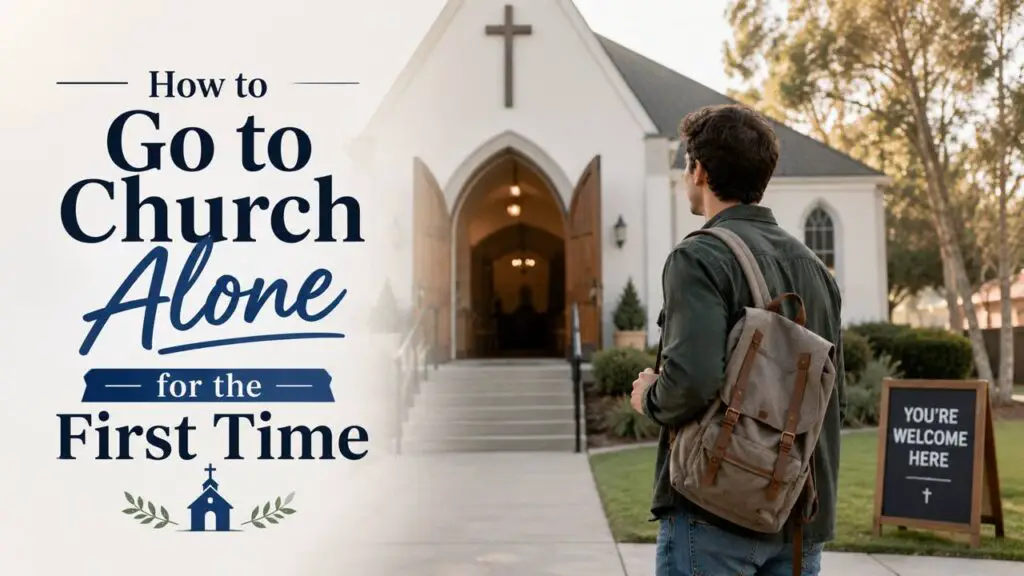
Going to church alone for the first time can feel overwhelming. Many people worry about being judged, not knowing what to do, or feeling out of place. Questions about what to wear, where to sit, and how the service works can create anxiety before even stepping through the door.
The truth is that countless people attend church alone every week. Some are exploring faith for the first time. Others are returning after years away. Many are searching for peace, community, healing, or spiritual direction. Churches are often filled with people who once felt the exact same nervousness.
Going to church alone does not require perfect knowledge, confidence, or preparation. It simply requires the courage to take the first step. With the right mindset and preparation, the experience can become far less intimidating and much more meaningful.
How to Go to Church Alone for the First Time
Research Churches Before Attending
One of the best ways to reduce anxiety is to learn about a church before visiting. Most churches have websites and social media pages that give insight into what to expect.
Look for information such as:
- Service times
- Worship style
- Dress code
- Church beliefs
- Parking information
- Visitor resources
- Livestream recordings of services
Watching a sermon online beforehand can help make the environment feel familiar. It also allows time to determine whether the church’s teaching and atmosphere align with personal preferences.
Different churches have very different environments. Some are formal and traditional, while others are casual and modern. Knowing this ahead of time helps eliminate surprises.
Choose a Comfortable Service Time
Not every church service has the same atmosphere. Some are crowded and energetic, while others are quieter and more intimate.
For a first visit, many people feel more comfortable attending:
- A regular Sunday morning service
- A mid-morning service with more attendees
- A newcomer-friendly gathering
Larger services can sometimes feel easier because visitors blend into the crowd more naturally. Smaller services may provide more personal interaction and support.
Choose a time that feels manageable rather than forcing an uncomfortable experience.
Plan What to Wear Ahead of Time
Worrying about clothing is one of the most common fears people have before attending church alone.
The good news is that most churches today are flexible when it comes to attire. While some traditional churches may lean toward formal clothing, many churches welcome people dressed casually.
A safe choice usually includes:
- Clean clothes
- Comfortable shoes
- Simple and modest outfits
- Business casual or neat casual wear
Avoid overthinking clothing choices. Most people are focused on worship and fellowship rather than examining what visitors are wearing.
Feeling physically comfortable can also help reduce nervousness during the service.
Arrive Early to Reduce Stress
Arriving 10 to 15 minutes early can make the experience much easier.
Getting there early allows time to:
- Find parking without rushing
- Locate the entrance calmly
- Use the restroom if needed
- Find a comfortable seat
- Speak with greeters if questions arise
Walking into a crowded sanctuary after the service has already started can increase anxiety. Arriving early helps create a smoother and more relaxed transition into the environment.
Many churches have volunteers specifically assigned to welcome visitors and answer questions.
Sit in a Place That Feels Comfortable
There is no rule about where visitors should sit.
For someone attending alone, it often helps to:
- Sit near the back
- Choose an aisle seat
- Sit toward the middle for easier observation
- Avoid feeling trapped in crowded rows
Some people prefer blending into the background during the first visit, while others feel more comfortable closer to the front where engagement is easier.
Choose a location that helps create a sense of ease and security.
Understand What Typically Happens During a Church Service
Knowing what to expect can significantly reduce nervousness.
While every church is different, many services include:
- Worship music or singing
- Prayer
- Announcements
- Scripture reading
- A sermon or teaching message
- Closing prayer or worship
Some churches may also include:
- Communion
- Responsive readings
- Baptisms
- Offering collections
Visitors are generally not expected to participate in every activity. It is completely acceptable to observe quietly until feeling more comfortable.
Most churches understand that newcomers may not know the traditions or order of service.
Give Yourself Permission to Observe
A first church visit does not have to involve full participation.
There is no pressure to:
- Sing every song
- Raise hands during worship
- Speak publicly
- Join groups immediately
- Participate in every ritual
Simply listening and observing is perfectly acceptable.
Taking the pressure off personal performance allows more mental space to focus on the experience itself. Many people feel much more comfortable during their second or third visit once the environment becomes familiar.
Prepare for Social Interaction Without Pressure
Some churches are highly social, while others are more reserved. It helps to mentally prepare for some level of interaction.
Common interactions may include:
- Greeters welcoming visitors
- Handshakes during greetings
- Friendly conversations after service
- Questions about being new
Simple responses are enough:
- “This is the first visit.”
- “Just checking things out.”
- “Glad to be here.”
There is no obligation to share personal details or commit to anything immediately.
If social anxiety is strong, leaving shortly after the service is completely fine.
Manage Anxiety Before Walking In
Feeling nervous before entering a church alone is extremely common.
Helpful ways to manage anxiety include:
- Taking slow breaths before entering
- Praying beforehand
- Listening to calming music during the drive
- Reminding yourself that everyone was new once
- Focusing on curiosity instead of fear
Many fears about attending church alone are far worse in anticipation than in reality.
The first few minutes are often the hardest part. Once seated and settled, anxiety usually decreases naturally.
Avoid Expecting Perfection From the First Visit
Not every church will feel like the right fit immediately.
Some churches may:
- Feel too formal
- Feel too casual
- Have a teaching style that does not connect
- Lack the sense of community being sought
That is normal.
Finding the right church sometimes takes multiple visits and experiences. One uncomfortable visit does not mean church is not worthwhile altogether.
Approach the experience as a process rather than a one-time decision.
Consider Attending Again Before Making a Judgment
First impressions can sometimes be shaped by nervousness more than reality.
Attending a church a second or third time often provides:
- Greater familiarity
- Reduced anxiety
- More comfort with the service structure
- Better opportunities to connect with people
The first visit is often about overcoming uncertainty. Later visits are where deeper experiences and relationships can begin developing.
Focus on the Purpose of Going
It helps to remember why the decision to attend church was made in the first place.
People attend church for many reasons:
- Spiritual growth
- Healing
- Guidance
- Community
- Worship
- Hope
- Faith exploration
- Personal renewal
Keeping the deeper purpose in mind can make temporary nervousness feel less significant.
The goal is not to impress others or perform perfectly. The goal is simply to take a meaningful step forward.
Closing Thoughts
Going to church alone for the first time takes courage. It pushes people outside their comfort zones and into unfamiliar territory. Yet many who take that step discover encouragement, peace, friendship, and spiritual growth waiting on the other side of their fear.
Nobody walks into church knowing everything. Every longtime church member was once a nervous first-time visitor too. The important thing is not having perfect confidence but being willing to show up despite uncertainty.
The first visit may feel awkward at moments, but that does not mean it was unsuccessful. Growth often begins with uncomfortable first steps. By preparing ahead of time, managing expectations, and allowing room for gradual adjustment, attending church alone can become a meaningful and life-giving experience.