
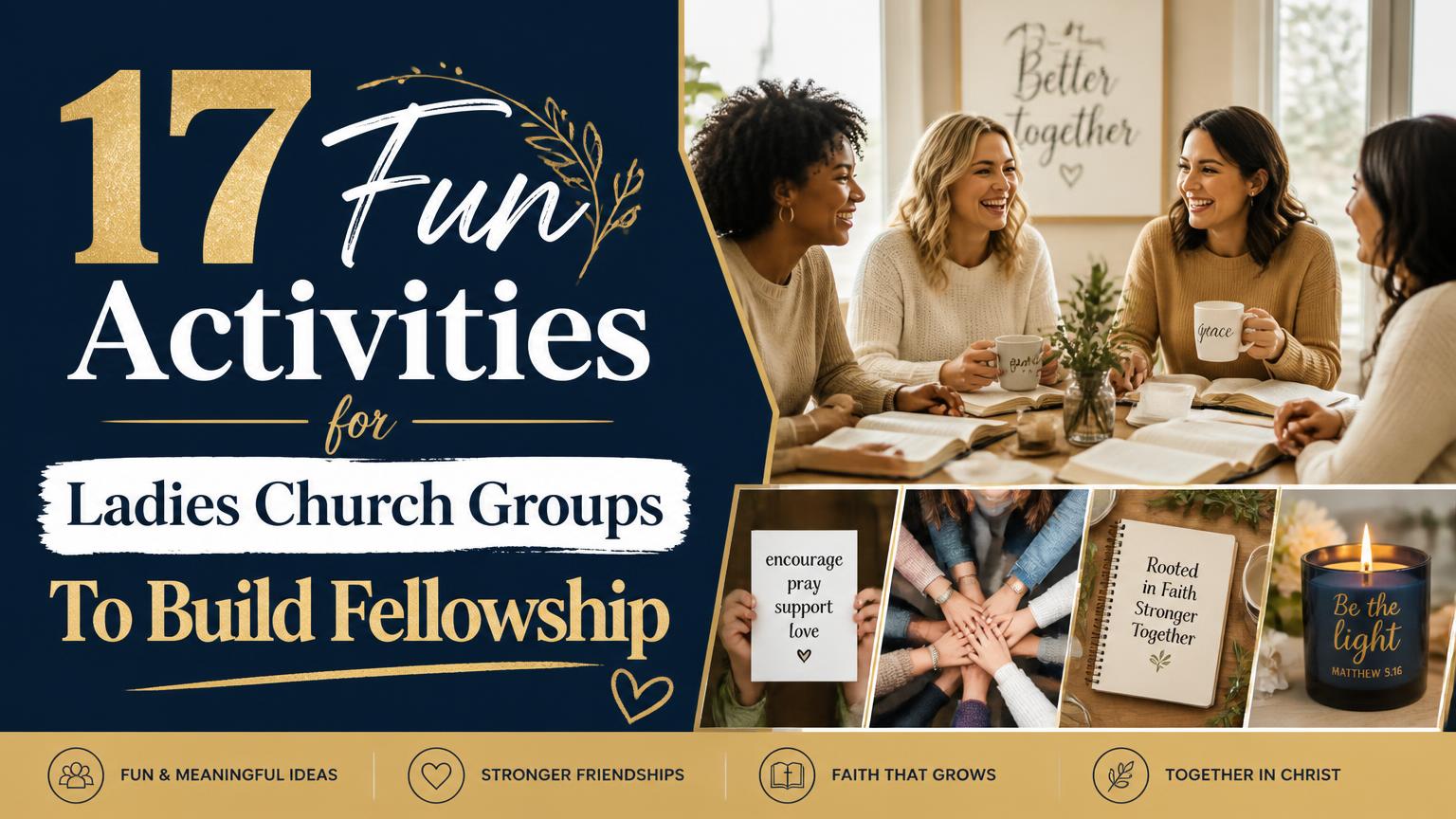
Church gatherings become more memorable when women have opportunities to laugh, create, serve, and talk naturally—not only sit through organized programming. The best fun activities for ladies church groups are simple enough to join without special skills, flexible for different ages and abilities, and connected to the group’s purpose of building Christian fellowship.
17 Fun Activities for Ladies Church Groups
1. Themed Potluck and Recipe Exchange
Choose a theme such as “foods from our childhood,” international dishes, breakfast for dinner, or favorite family recipes. Ask each participant to bring a dish and a short written recipe or story explaining its significance.
This activity creates natural conversation because food provides an easy starting point. To include women with dietary restrictions, label dishes clearly and provide several allergy-conscious options. A recipe exchange can also become a small keepsake booklet for the group.
2. Bible-Themed Scavenger Hunt
Create clues based on biblical people, places, objects, or themes. Teams might locate Scripture passages, solve riddles about Bible events, or find everyday objects that symbolize ideas such as hospitality, courage, wisdom, or service.
The activity can take place inside the church, outdoors, or through a neighborhood walk. Keep the clues accessible rather than making the game depend entirely on advanced Bible knowledge. The goal is shared discovery, not competition between experienced and newer believers.
3. Creative Craft Night
Plan an evening of painting, wreath-making, flower arranging, calligraphy, journaling, or simple seasonal crafts. A short devotional can connect the project to creativity, patience, gratitude, or the beauty of God’s creation.
Choose crafts that can be completed in one sitting and provide basic supplies so participants do not feel pressured to be artistic. A craft night works especially well for women who find conversation easier while their hands are occupied.
4. Game Night With a Variety of Options
Set up several tables with different types of games, such as Bible trivia, word games, card games, puzzles, or familiar party games. Offering choices is more welcoming than requiring everyone to participate in one high-energy activity.
Avoid games that embarrass individuals or depend on aggressive competition. A cooperative puzzle or team-based trivia round can create connection without making less outgoing participants feel exposed.
5. Community Service Project
Work together on a practical project, such as assembling care packages, preparing meals for a family in need, sorting donations, writing encouragement cards, or supporting a local ministry. Service reflects the biblical call to care for others, including the instruction to “encourage one another and build each other up” (1 Thessalonians 5:11).
Service should be organized around a real need rather than treated as a photo opportunity. Allow time afterward for participants to share what they learned and pray for the people or community served.
6. Outdoor Picnic or Church-Yard Gathering
A picnic provides relaxed fellowship without the formality of a meeting. Add lawn games, conversation cards, a short nature walk, or a simple group prayer. For a smaller church property, blankets, folding chairs, and boxed meals may be all that is needed.
Plan an indoor alternative for poor weather and consider shade, seating, restroom access, transportation, and mobility needs. Outdoor events should make participation easier, not create barriers for older women or those with health limitations.
7. Testimony and Dessert Evening
Invite women to share a brief story about God’s faithfulness, a lesson learned through difficulty, a meaningful answered prayer, or a person who influenced their faith. Serve desserts or refreshments to keep the atmosphere informal.
Because personal stories can become deeply emotional, participation should always be voluntary. Establish respectful guidelines: listen without interrupting, do not pressure anyone to disclose private details, and keep confidential matters within the group.
8. Cooking or Baking Workshop
A skilled member, local baker, or volunteer team can demonstrate a recipe while participants work in small groups. Options include bread, freezer meals, decorated cookies, healthy snacks, or dishes connected to a holiday.
Cooking naturally encourages cooperation because participants must measure, prepare, and share tasks. The finished food can be taken home, shared at church, or donated to someone who needs practical support.
9. Prayer Walk
Organize a short walk around the church, a school, or a neighborhood, stopping at designated points to pray for families, teachers, local leaders, churches, and community needs. Women who cannot walk can pray from a seated indoor station using the same themes.
A prayer walk is more meaningful when participants receive clear guidance rather than simply being told to walk and pray. Scripture passages, printed prompts, or small groups of two or three can help maintain focus.
10. Book, Podcast, or Film Discussion
Choose a Christian book, biography, podcast episode, or suitable film that raises questions about faith, relationships, resilience, service, or forgiveness. Provide several discussion questions so the conversation moves beyond whether participants liked the material.
The selection should match the group’s maturity, age range, and theological setting. Explain the content in advance, particularly if the film or book includes grief, trauma, family conflict, or other sensitive subjects.
11. “Minute to Win It” Team Challenges
Use short, low-cost challenges involving cups, balloons, paper, household objects, or puzzles. Participants can compete in teams rather than individually, which reduces pressure and encourages women who do not usually enjoy games.
Keep the activities safe and adaptable. A challenge should reward communication and creativity—not physical speed alone—so that women with different abilities can contribute meaningfully.
12. Seasonal Celebration
Build an event around a season or church-calendar moment: an autumn harvest gathering, Christmas ornament exchange, Easter breakfast, spring tea, or summer dessert night. Include music, decorations, a short biblical reflection, and one interactive activity.
Seasonal events work well because they provide an obvious theme without requiring an elaborate program. Be sensitive to women who may experience holidays with grief, loneliness, financial pressure, or difficult family circumstances.
13. Photo or Video Memory Challenge
Give teams a list of harmless, creative prompts such as “something that represents hospitality,” “a joyful color,” or “a group showing teamwork.” Teams can take photos around the church or event space and present their favorites afterward.
Obtain permission before photographing people, and never require anyone to appear in pictures or videos. If the activity is shared online, secure separate consent for public posting.
14. Talent and Variety Evening
Invite participants to contribute a song, poem, testimony, craft demonstration, comedy sketch, musical performance, or brief presentation. A “variety” format allows different gifts to be valued rather than defining talent only as singing or public speaking.
Keep contributions short and avoid turning the event into an audition. Women may participate by decorating, hosting, playing music, preparing refreshments, or supporting performers behind the scenes.
15. Intergenerational Mentoring Circles
Mix women from different generations into small groups and provide conversation prompts about faith, work, family, decision-making, friendship, and lessons learned. This should be mutual sharing rather than an arrangement in which older women are expected to lecture and younger women are expected only to listen.
Titus 2:3–5 describes older and younger women learning from one another in the life of faith. The principle involves modeling and relationship, not assigning worth or wisdom solely according to age.
16. Local Field Trip
Visit a museum, botanical garden, historic site, farmers’ market, Christian ministry, or local small business. A field trip changes the setting and often helps women who rarely attend traditional meetings feel more comfortable joining.
Before choosing the destination, check admission costs, parking, walking distance, restrooms, weather exposure, and transportation. A short reflection or shared meal afterward can turn an outing into more than simple entertainment.
17. One-Day Retreat or Half-Day Recharge
Plan a compact retreat with worship, quiet reflection, creative activities, discussion groups, prayer, and a shared meal. It does not need to be expensive or held at a distant venue; a church building, park shelter, or member’s home may work well.
Give the schedule both structure and breathing room. A retreat becomes tiring when every minute is programmed, but it loses direction when participants do not know what to expect. Include optional quiet time for prayer or journaling.
How to Plan Activities That Strengthen Fellowship
A successful women’s church activity depends less on novelty than on thoughtful design. Before choosing an event, consider the group’s size, ages, budget, transportation, physical abilities, childcare needs, and familiarity with one another.
A useful plan usually includes:
- A clear purpose: Decide whether the event is mainly for welcoming newcomers, deepening relationships, serving others, learning, or celebrating.
- A manageable format: Simple events are often better attended than elaborate programs requiring extensive preparation.
- Multiple ways to participate: Provide roles for conversation, organization, creativity, food preparation, prayer, and behind-the-scenes assistance.
- A welcoming cost structure: Use church funds, donations, or free alternatives when possible. Do not make financial ability a test of commitment.
- A realistic schedule: Allow time for arrivals, informal conversation, the main activity, and closing prayer.
- A follow-up plan: Thank volunteers, check on guests, share future dates, and invite feedback while the experience is still fresh.
The leader should also explain what participants need to bring, what the activity involves, how long it will last, and whether children or guests are welcome. Clear information lowers anxiety, particularly for women attending for the first time.
Making Church Group Activities Welcoming
Fellowship is stronger when participation is voluntary and dignity is protected. Avoid activities that force women to reveal personal information, perform in front of the group, hold hands, or compete publicly if they are uncomfortable. Offer alternatives without drawing attention to anyone who declines.
Accessibility should be considered from the beginning. Use rooms with easy access, provide adequate seating, reduce unnecessary background noise, and offer nonalcoholic refreshments that account for allergies and dietary needs. If the activity involves travel, ask whether participants need transportation rather than assuming everyone can drive.
Spiritual content can be included without making every gathering feel like another formal class. A short Scripture reading, prayer prompt, testimony, or reflection may be enough. The purpose is to connect enjoyment with genuine Christian community, where women are known, encouraged, and equipped to serve.
What Makes an Activity More Than Just Entertainment?
Fun supports fellowship when it creates repeated opportunities for people to listen, cooperate, and share meaningful experiences. An elaborate event may be memorable, but a simple recipe exchange or neighborhood prayer walk can build stronger relationships if participants have time to talk.
The most effective activities balance three elements:
- Enjoyment: People should look forward to attending.
- Participation: Everyone should have a realistic way to contribute.
- Meaning: The event should reflect Christian hospitality, encouragement, service, or spiritual growth.
That balance prevents two common problems: gatherings that feel like entertainment with no relational depth and meetings so serious that women never relax enough to form friendships.
Conclusion
The best fun activities for ladies church groups are not necessarily expensive or elaborate. Potlucks, games, creative projects, service opportunities, outdoor gatherings, prayer walks, and retreats can all strengthen fellowship when they are welcoming, purposeful, and adaptable. Choose an activity that fits the women in your church, make participation accessible, and leave enough room for genuine conversation. When enjoyment and Christian care work together, a single gathering can become the beginning of lasting community.