
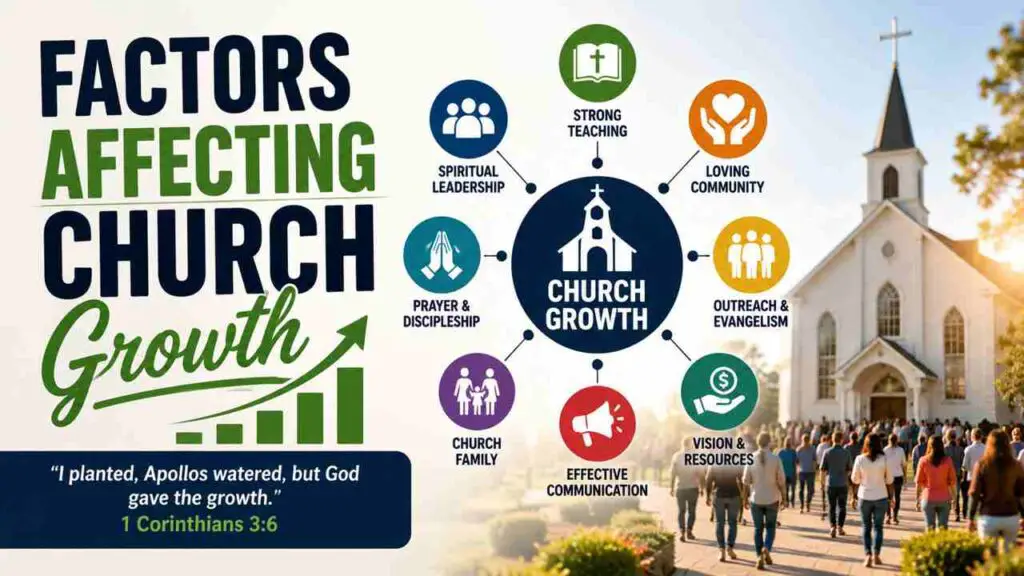
Church growth is one of the most discussed topics in Christian ministry. Churches around the world desire to see more people come to faith, grow spiritually, and become active members of the body of Christ. While some churches experience steady growth and vibrant ministry, others struggle with declining attendance, low engagement, and limited outreach.
Understanding the factors affecting church growth can help pastors, ministry leaders, and congregations build healthier churches that fulfill their mission effectively. Church growth is not simply about increasing attendance numbers. True growth involves spiritual maturity, discipleship, community impact, and the transformation of lives through the gospel.
Many elements contribute to whether a church thrives or stagnates. Some factors are spiritual, while others are organizational, relational, or practical. When these factors work together, churches are better positioned to reach people and sustain long-term growth.
Key Factors Affecting Church Growth
#1. Strong Biblical Teaching
One of the most important factors affecting church growth is strong biblical teaching. People are drawn to churches where Scripture is taught clearly, faithfully, and practically. Sermons that are deeply rooted in the Bible help believers grow spiritually and develop a stronger understanding of their faith.
Effective preaching should:
- Explain biblical truths clearly
- Apply Scripture to daily life
- Encourage spiritual transformation
- Inspire faith and obedience
- Address real-life struggles and questions
Church members often remain committed when they feel spiritually nourished through sound teaching. Weak or shallow teaching, on the other hand, can lead to spiritual stagnation and disengagement.
Strong biblical teaching also builds trust in church leadership. Members are more likely to invite others when they believe the church offers meaningful spiritual guidance.
#2. Effective Church Leadership
Leadership plays a central role in determining the health and direction of a church. Pastors, elders, ministry leaders, and volunteers all contribute to shaping church culture and vision.
Healthy church leadership typically demonstrates:
- Clear vision and direction
- Integrity and accountability
- Compassion and humility
- Strong communication skills
- Wise decision-making
- A commitment to discipleship
Churches often struggle when leadership lacks unity or direction. Poor leadership can create confusion, conflict, burnout, and mistrust among members.
Effective leaders also empower others instead of trying to do everything themselves. Delegating responsibilities and developing future leaders strengthens the church and creates long-term stability.
#3. Genuine Fellowship and Community
People desire meaningful relationships and authentic community. Churches that create a welcoming and caring environment often experience stronger growth and retention.
Healthy fellowship includes:
- Small groups and Bible studies
- Support during difficult times
- Opportunities for friendship
- Hospitality toward visitors
- Encouragement and accountability
Many individuals initially visit a church because of curiosity, but they remain because of relationships. A church where people feel connected and valued creates a strong sense of belonging.
Isolation and cliques can negatively affect church growth. Visitors who feel ignored or unwelcome are unlikely to return.
#4. Evangelism and Outreach
Churches that actively reach people outside their congregation are more likely to grow consistently. Evangelism remains a foundational part of the church’s mission.
Outreach can include:
- Personal witnessing
- Community service projects
- Missions and missionary support
- Social media evangelism
- Youth outreach programs
- Local events and initiatives
A church focused only on internal activities may eventually plateau or decline. Healthy churches maintain an outward focus and continually seek opportunities to share the gospel.
Effective outreach also helps churches remain connected to the needs of their surrounding community.
#5. Prayer and Spiritual Vitality
Prayer is essential to church health and spiritual growth. Throughout Christian history, many periods of church growth and revival were closely connected to prayer and spiritual renewal.
Churches with strong spiritual vitality often emphasize:
- Corporate prayer meetings
- Personal devotion and holiness
- Dependence on God
- Worship and repentance
- Spiritual discipleship
Programs and strategies alone cannot produce genuine spiritual growth. Churches flourish spiritually when members seek God sincerely and prioritize spiritual disciplines.
A spiritually vibrant church often creates an atmosphere where people experience encouragement, conviction, healing, and transformation.
#6. Worship Experience
Worship is a major aspect of church life and strongly influences member engagement. A meaningful worship experience can help people connect with God and participate actively in church life.
Important aspects of worship include:
- Authenticity
- Congregational participation
- Musical quality
- Organization and preparation
- Reverence and joy
Different churches may prefer different worship styles, but authenticity is often more important than style itself. Worship that feels forced or disconnected may hinder engagement.
Churches that create worship environments where people can genuinely encounter God often experience stronger participation and commitment.
#7. Clear Vision and Mission
Churches grow more effectively when they understand their mission and communicate it clearly. Members are more motivated when they know the church’s purpose and direction.
A clear vision helps:
- Align ministry efforts
- Guide decision-making
- Inspire volunteers
- Maintain focus
- Create unity among members
Without clear direction, churches may become disorganized or lose momentum. Ministries may compete for attention instead of working together toward common goals.
A compelling mission also encourages members to become active participants rather than passive attendees.
#8. Ministry to Children and Youth
Investing in children and youth is critical for long-term church growth. Younger generations represent both the present and future of the church.
Strong youth ministries often provide:
- Biblical teaching for young people
- Mentorship and discipleship
- Safe and engaging environments
- Opportunities for service
- Support for families and parents
Churches that neglect younger generations may struggle to sustain growth over time. Families often choose churches based on the quality of children’s and youth programs.
Youth ministry also creates opportunities to reach entire families through younger members.
#9. Adaptation to Cultural and Technological Change
Churches must find ways to communicate timeless biblical truth within changing cultural and technological environments.
Modern churches often benefit from:
- Active social media presence
- Livestreamed services
- Updated websites
- Digital communication tools
- Online teaching resources
Adaptation does not require compromising biblical convictions. Instead, it involves using effective methods to reach people where they are.
Churches that resist every form of change may struggle to connect with younger generations or modern communities.
#10. Effective Assimilation of Visitors
Attracting visitors is important, but helping them become connected members is equally essential. Churches that fail to assimilate newcomers often experience high visitor turnover.
Effective assimilation strategies include:
- Greeting and welcoming guests
- Follow-up communication
- Membership classes
- Small group integration
- Volunteer opportunities
People are more likely to remain in a church when they quickly develop relationships and find meaningful ways to participate.
Assimilation helps transform first-time visitors into committed members of the church community.
#11. Church Unity and Conflict Management
Conflict is inevitable in any organization, but unmanaged conflict can seriously damage church growth.
Common sources of church conflict include:
- Leadership disagreements
- Doctrinal disputes
- Personality clashes
- Financial concerns
- Miscommunication
Healthy churches address conflict biblically and constructively. Leaders who encourage transparency, forgiveness, and reconciliation help maintain unity.
Churches marked by constant division often struggle to retain members or attract new visitors.
#12. Community Reputation and Public Trust
A church’s reputation within the community significantly affects its ability to grow. Churches known for compassion, integrity, and service often gain greater trust and influence.
Positive community reputation can result from:
- Charitable outreach
- Ethical leadership
- Community involvement
- Transparency and accountability
- Genuine care for people
Negative publicity or scandals can severely damage church credibility. Rebuilding trust after public controversy can take years.
Churches that consistently serve their communities often become respected and valued institutions.
#13. Opportunities for Service and Involvement
People become more committed when they actively participate in ministry. Churches that encourage involvement create stronger engagement and ownership among members.
Service opportunities may include:
- Teaching
- Hospitality
- Worship ministry
- Outreach programs
- Volunteer teams
- Mentorship roles
Members who use their gifts and talents often develop deeper connections to the church and stronger spiritual maturity.
A church where only a few individuals handle all responsibilities may experience burnout and limited growth.
#14. Location and Demographics
Practical factors such as location and demographics also influence church growth. Even spiritually healthy churches may face challenges depending on their environment.
Important demographic factors include:
- Population growth or decline
- Economic conditions
- Age distribution
- Cultural diversity
- Accessibility and transportation
Churches located in growing communities may naturally experience more opportunities for outreach. Conversely, churches in declining areas may need to adjust ministry strategies.
Understanding community demographics helps churches respond more effectively to local needs.
#15. Consistency and Long-Term Faithfulness
Sustainable church growth rarely happens overnight. Many healthy churches grow steadily over time through consistent ministry and faithful leadership.
Long-term growth requires:
- Patience
- Stability
- Ongoing discipleship
- Leadership development
- Commitment to the church’s mission
Churches that constantly shift direction may struggle to build momentum. Faithfulness and consistency often produce lasting results over many years.
Strong churches are usually built through steady investment in people, relationships, and spiritual development.
Closing Thoughts
Church growth is influenced by many interconnected factors. While attendance numbers are often used to measure success, true church growth involves spiritual maturity, discipleship, community impact, and faithful ministry.
Strong biblical teaching, effective leadership, genuine fellowship, evangelism, prayer, and community engagement all contribute to building a healthy church. At the same time, practical considerations such as organization, technology, demographics, and visitor assimilation also play important roles.
No church is perfect, and every congregation faces unique challenges. However, churches that remain faithful to their mission while investing in spiritual health and meaningful relationships are often better positioned for long-term growth and impact.
Ultimately, healthy church growth happens when churches faithfully serve God, care for people, and continually seek to fulfill the mission of sharing the gospel and making disciples.