
Serving others in the Bible is more than performing helpful tasks. It involves using one’s time, resources, abilities, influence, and compassion for another person’s good. Biblical service may look like meeting a physical need, offering protection, encouraging someone who feels excluded, forgiving an offender, or sacrificing personal comfort. These examples also show that genuine service is rooted in love and humility rather than a desire for praise. Together, they provide a practical pattern for Christian character and daily discipleship.
Examples of Serving Others in the Bible
The Bible presents service as both an attitude and an action. Some people serve through dramatic sacrifice, while others faithfully meet ordinary needs over many years. The following examples show the variety of ways believers can reflect God’s love.
Jesus Serves Through Humility and Sacrifice
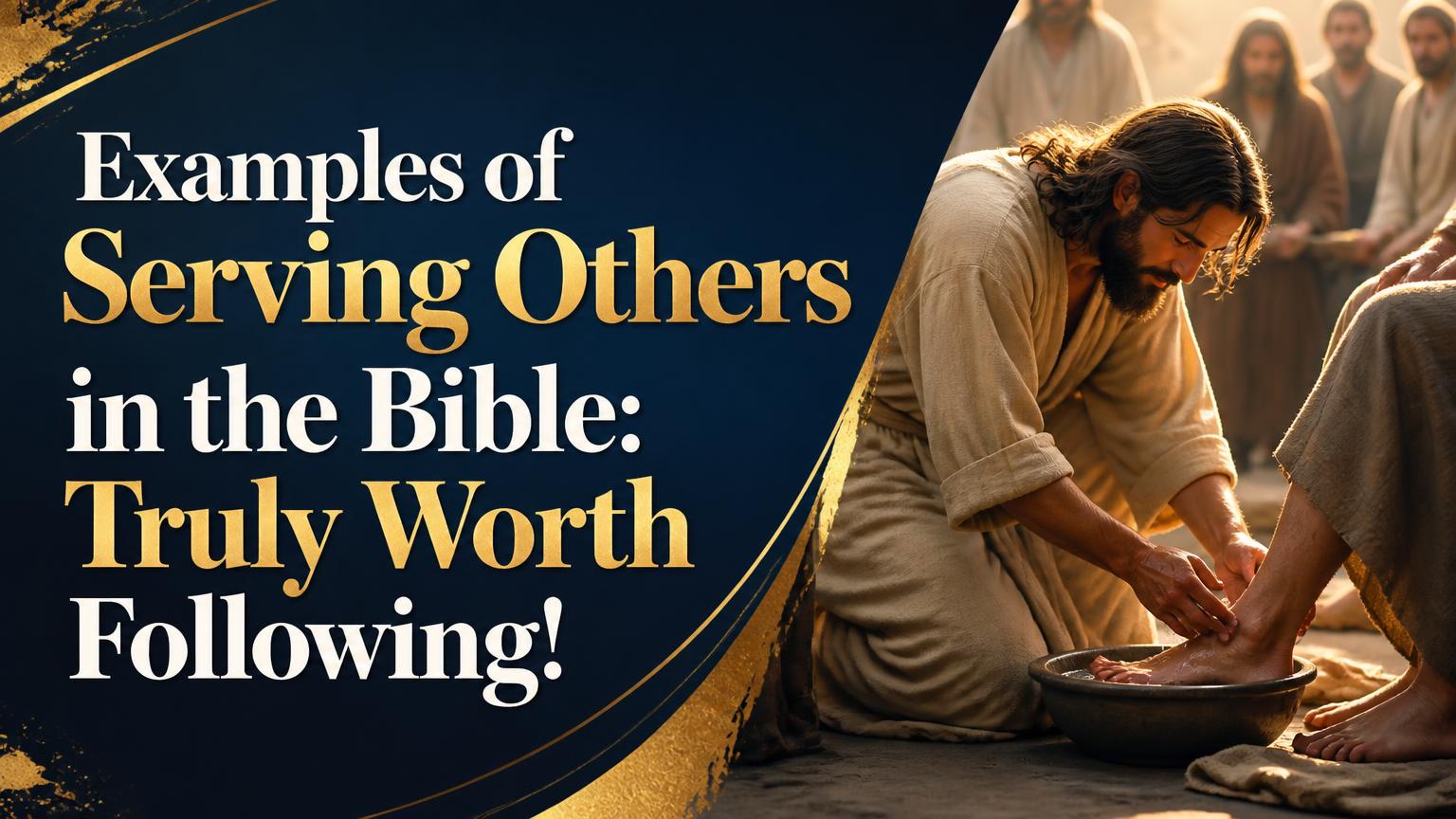
Jesus gave the clearest example of serving others. In John 13:1–17, He washed His disciples’ feet, taking the position of a household servant even though He was their teacher and Lord. He then told them to follow His example by serving one another. The act was not merely about cleaning feet; it demonstrated that authority in God’s kingdom should produce humility rather than entitlement.
Jesus also described His larger mission in Mark 10:45: He came “not to be served but to serve, and to give his life as a ransom for many.” His service included teaching, healing, welcoming outsiders, correcting the proud, and ultimately giving His life. Christian service therefore begins with receiving Christ’s self-giving love and allowing that love to shape how we treat other people.
The Good Samaritan Crosses Social Boundaries
In Luke 10:25–37, a Samaritan finds an injured man beside the road, treats his wounds, transports him to an inn, pays for his care, and promises to cover additional expenses. The Samaritan does not simply feel sympathy; he accepts personal inconvenience and financial cost to meet a stranger’s urgent need.
The example is especially significant because Jews and Samaritans generally experienced deep religious and cultural hostility. Jesus shows that serving others cannot be limited to people who share our background, beliefs, politics, or social circle. Love of neighbor requires recognizing another person’s humanity and acting compassionately, even when social divisions make that uncomfortable.
Ruth Remains Faithful to Naomi
After both women become widows, Ruth refuses to abandon her mother-in-law Naomi. In Ruth 1:16–18, she commits herself to Naomi’s people, land, and God. Ruth then works by gleaning in the fields so that the two women can obtain food. Her service is costly because it involves leaving her homeland and accepting an uncertain future as a foreign widow.
Ruth’s example shows that service may involve long-term loyalty rather than a single impressive act. She does not solve Naomi’s grief immediately, but she stays present and works faithfully within difficult circumstances. Her story also demonstrates that caring for family and vulnerable people can be holy work, even when it receives little public recognition.
Boaz Protects and Provides for the Vulnerable
Boaz serves Ruth by using his position and resources responsibly. In Ruth 2:8–16, he tells her to remain in his fields, instructs his workers not to harass her, provides access to water, and orders them to leave extra grain for her to gather. His actions protect Ruth’s dignity while meeting her practical needs.
Boaz does not treat generosity as an opportunity to control or embarrass her. He creates a safe way for Ruth to work and receive provision. This offers an important model for serving people in vulnerable situations: effective help should include wisdom, protection, respect, and dignity rather than merely giving something that leaves the recipient powerless.
Dorcas Serves Through Practical Compassion
Acts 9:36–39 describes a disciple named Tabitha, also called Dorcas, as someone “full of good works and acts of charity.” When she dies, widows show Peter the garments she had made for them. These items provide concrete evidence of her sustained care for people who were especially vulnerable in the early Christian community.
Dorcas illustrates that service does not need to be dramatic to be spiritually significant. Sewing clothing, visiting people, preparing meals, offering transportation, or helping with ordinary responsibilities can express genuine love. Her example also shows that consistent service often becomes most visible when a community feels its absence.
Barnabas Encourages and Advocates for Others
Barnabas serves through generosity, encouragement, and courageous advocacy. Acts 4:36–37 records that he sold a field and gave the money to support the believing community. Later, when other disciples were suspicious of Saul after his conversion, Barnabas brought Saul to the apostles and testified on his behalf (Acts 9:26–27).
Barnabas also traveled to Tarsus to find Saul and brought him to Antioch, where they taught the church together (Acts 11:22–26). His service was not limited to donating money. He recognized potential in someone others feared and used his credibility to help that person gain a place to serve. Encouragement can therefore involve opening doors, defending someone fairly, and helping another person grow into faithful responsibility.
Joseph Uses Power to Preserve Life
Joseph’s position in Egypt enables him to manage food supplies during a severe famine. In Genesis 45:1–11, he provides for his family despite the fact that his brothers had previously sold him into slavery. In Genesis 50:19–21, Joseph acknowledges the evil they committed but refuses to repay them with vengeance.
Joseph’s service combines stewardship with forgiveness. He does not pretend that the betrayal was harmless, but he chooses to use his authority to preserve life rather than settle a personal score. His example does not mean that every abuse should be ignored or that reconciliation requires abandoning wise boundaries. It shows that power and influence should be directed toward protection, provision, and restoration rather than retaliation.
The Macedonian Churches Give Generously
The churches in Macedonia provide another example in 2 Corinthians 8:1–5. Though they were experiencing severe affliction and poverty, they gave generously to help other believers. Paul explains that they first gave themselves to the Lord and then offered their resources willingly.
This passage emphasizes both generosity and voluntary participation. Christian service is not a competition to see who can suffer most, nor does it require irresponsible giving that neglects legitimate obligations. The Macedonians demonstrate that even limited resources can become meaningful when offered freely and guided by love. Their service grew from devotion to God and concern for people facing hardship.
What These Biblical Examples Teach About Serving Others
The stories above differ in setting and action, but they reveal consistent principles. Biblical service is not defined by one particular job, personality, or social position. It is measured by faithful love expressed wisely for the good of others.
Biblical Service Begins With Love, Not Recognition
Jesus warned against performing religious acts merely to be seen by other people (Matthew 6:1–4). Genuine service may be public, but it does not depend on applause. Ruth, Dorcas, and the Good Samaritan acted because another person needed help, not because recognition was guaranteed.
This does not mean appreciation is wrong. Gratitude can strengthen a community and honor faithful work. The issue is motivation: service becomes distorted when praise, influence, control, or personal importance becomes the main reward. Love keeps attention focused on the person being helped rather than on the servant’s reputation.
Service Takes Many Forms
The Bible includes physical labor, financial generosity, hospitality, protection, advocacy, forgiveness, teaching, encouragement, and sacrificial care. This variety prevents a narrow definition of ministry. Someone may serve through professional skills, household responsibilities, emotional support, practical assistance, or faithful presence during a crisis.
Paul’s teaching in 1 Corinthians 12 presents the church as one body with different members and gifts. No single form of service meets every need. A person who cannot preach may still encourage, organize, cook, repair, visit, give, listen, or defend someone who is being overlooked. Faithfulness matters more than visibility.
Wise Service Respects Dignity and Limits
Serving others does not require ignoring wisdom, consent, safety, or personal limits. Jesus sometimes withdrew to quiet places to pray, and the apostles made decisions about how to distribute responsibilities in the early church (Luke 5:16; Acts 6:1–6). Rest and shared responsibility help prevent service from becoming unhealthy exhaustion or personal control.
Galatians 6:2 calls believers to bear one another’s burdens, while Galatians 6:5 also speaks of each person carrying his or her own load. These principles belong together. Compassion helps people in genuine difficulty, but wise service also encourages responsibility rather than creating dependence or enabling destructive behavior.
Practicing Biblical Service Today
Biblical examples become useful when they shape ordinary decisions. A person does not need wealth, a formal ministry title, or unusual talent to begin serving. The essential question is what love requires in the situation immediately in front of them.
Notice Specific Needs
The Good Samaritan saw the injured man and responded instead of passing by. Similarly, effective service begins with attention. Look for practical needs in a household, church, workplace, neighborhood, or friendship. Someone may need a meal, transportation, a recommendation, patient listening, protection from mistreatment, or help understanding an unfamiliar process.
General concern is less useful than specific action. Asking, “What would genuinely help this person?” leads to better service than assuming that every need can be solved with the same response.
Use Available Gifts and Resources
Dorcas used a practical skill. Barnabas used money, credibility, and encouragement. Boaz used land and authority. These examples show that service often grows from what a person already possesses. Time, knowledge, hospitality, professional ability, emotional steadiness, material resources, and connections can all become ways to help others.
The goal is not to imitate someone else’s calling exactly. It is to offer what God has entrusted to you with humility and responsibility. A small act performed consistently may accomplish more than a dramatic gesture attempted once.
Serve Consistently and With Humility
Ruth stayed faithful through an extended season, and Jesus taught His disciples to serve without seeking status. Consistency matters because people often need dependable care rather than occasional enthusiasm. Humble service also leaves room for others to contribute, receive dignity, and make responsible choices.
A healthy servant does not need to control every outcome or solve every problem. Faithful service offers appropriate help, works cooperatively, and recognizes that God—not one individual—sustains people and communities.
Conclusion
The examples of serving others in the Bible show that service is love made visible. Jesus demonstrates humility and sacrifice; the Good Samaritan shows compassionate action across social boundaries; Ruth models loyal care; Dorcas demonstrates practical generosity; Barnabas uses encouragement and advocacy; Joseph uses power for preservation rather than revenge; and the Macedonian churches give willingly despite limited means.
Together, these accounts broaden the meaning of service. It may be public or hidden, costly or ordinary, personal or communal. What unites it is a willingness to seek another person’s good with wisdom, dignity, and humility. Christians serve not to earn God’s favor, but because God’s grace has already taught them to love.