
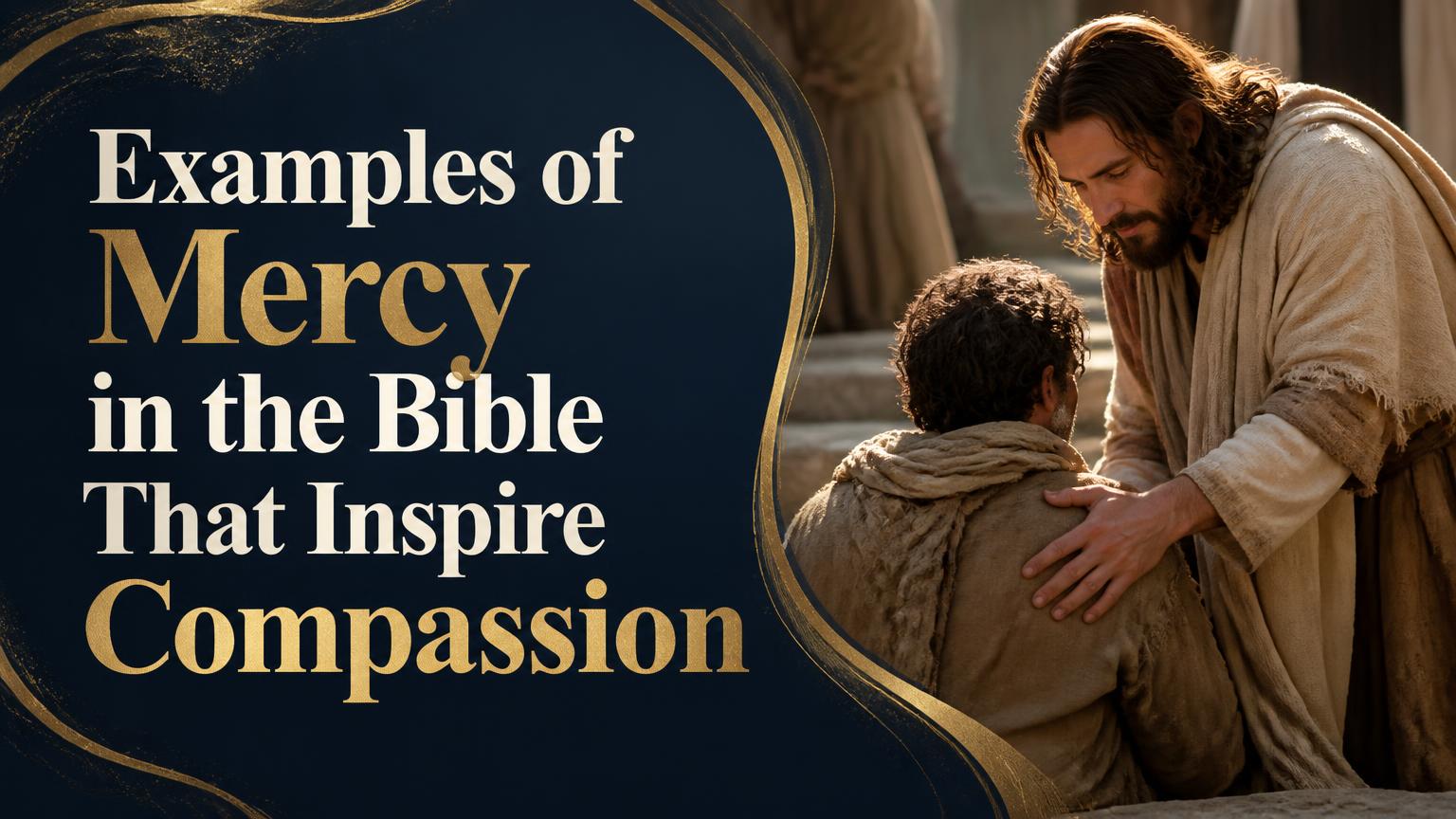
Mercy in the Bible is compassion expressed toward people who suffer, fail, or face consequences they cannot escape on their own. It appears in God’s patience with sinners, the forgiveness of enemies, practical care for the vulnerable, and the restoration of people who return in repentance. The following examples show that biblical mercy is more than an emotion: it moves a person to forgive, protect, serve, restore, or withhold deserved punishment while still treating truth and justice seriously.
Examples of Mercy in the Bible
God Shows Mercy to Israel After the Golden Calf
After Israel worshiped the golden calf, the nation violated its covenant with God and deserved judgment. Moses interceded for the people, and God revealed His character as “merciful and gracious, longsuffering, and abounding in goodness and truth” (Exodus 34:6–7). God continued His relationship with Israel rather than destroying the nation.
This mercy did not mean that sin was insignificant. Israel still faced consequences, and God did not simply declare rebellion harmless. The account shows that biblical mercy can coexist with accountability. God restrains judgment, provides forgiveness, and preserves a relationship while continuing to address wrongdoing. Mercy therefore reflects both compassion and moral seriousness.
Joseph Forgives His Brothers and Preserves Their Lives
Joseph’s brothers sold him into slavery because of jealousy, causing years of suffering and separation from his family. When Joseph later gained authority in Egypt, he had the power to punish them. Instead, he provided food, revealed his identity, and eventually brought the whole family to safety during the famine (Genesis 45; 50:15–21).
Joseph did not pretend that their actions were acceptable. He named the evil they had intended, but he refused to repay it with revenge. His statement that God had used the circumstances to preserve lives does not excuse the brothers’ sin; it shows Joseph’s willingness to release personal vengeance and pursue reconciliation. His mercy protected people who had once harmed him.
Ruth and Boaz Practice Faithful Kindness
The book of Ruth presents mercy through loyal, practical care. Ruth remained with her widowed mother-in-law Naomi even though she could have returned to her own people. She worked to provide food, while Boaz protected her, supplied her needs, and ultimately accepted responsibility for preserving her family’s future (Ruth 1:16–17; 2:8–16; 3:10–13).
This example reflects the Hebrew idea of hesed, often translated as steadfast love, kindness, or covenant faithfulness. Mercy is not always a dramatic act of pardon. Sometimes it appears as consistent loyalty toward someone who is vulnerable, poor, widowed, displaced, or socially unprotected. Ruth and Boaz demonstrate that mercy creates security through dependable action.
David Spares Saul Instead of Taking Revenge
King Saul pursued David in order to kill him, yet David refused to exploit opportunities to assassinate Saul. In the cave at En Gedi, David cut off part of Saul’s robe but would not harm him, explaining that he would not attack the Lord’s anointed (1 Samuel 24:4–12).
David’s restraint illustrates mercy toward an enemy. He did not deny Saul’s injustice or place himself needlessly in danger; instead, he refused to become an agent of personal vengeance. Mercy sometimes means surrendering the right to retaliate, even when retaliation appears justified. David still left the matter of judgment with God and maintained appropriate distance from Saul.
The Good Samaritan Helps a Wounded Stranger
In Jesus’ parable, a man traveling from Jerusalem to Jericho is attacked, robbed, and left near death. Several religious figures pass by, but a Samaritan stops, treats the man’s wounds, transports him to an inn, and pays for his continued care (Luke 10:25–37).
The Samaritan’s mercy crosses ethnic, religious, and social boundaries. He does not merely feel pity; he accepts inconvenience, expense, and risk in order to meet a real need. When Jesus asks who acted as the injured man’s neighbor, the answer is “the one who showed him mercy.” The parable defines neighbor-love by compassionate action rather than by group identity or personal convenience.
The Father Welcomes the Returning Son
In the parable commonly called the prodigal son, a younger son dishonors his father, leaves home, wastes his inheritance, and eventually returns in shame. While the son is still far away, the father sees him, feels compassion, runs to meet him, and restores him to the household (Luke 15:11–32).
The father does not wait for the son to repair everything before showing compassion. His welcome displays God’s readiness to receive repentant sinners. Yet the son must still acknowledge his failure and return home; mercy is not the same as declaring rebellion righteous. The parable also challenges the older brother, who resents the father’s generosity. Those who have received mercy are called to rejoice when mercy is extended to others.
Jesus Shows Mercy to Blind Bartimaeus
When blind Bartimaeus hears that Jesus is passing by, he cries out, “Jesus, Son of David, have mercy on me!” Although others try to silence him, he continues calling. Jesus stops, asks what he wants, and restores his sight (Mark 10:46–52).
Bartimaeus’s request recognizes both his need and Jesus’ authority to help. Jesus does not treat him as an interruption or reduce him to his disability. He listens, responds personally, and restores his ability to see. This account shows mercy as attentive and dignifying. Compassion does not merely provide a material benefit; it recognizes the person who is suffering and responds to that person with honor.
The Merciful King and the Unforgiving Servant
In Matthew 18:23–35, Jesus describes a servant who owes an enormous debt. The king takes pity on him and cancels the debt entirely. That same servant then refuses to forgive a much smaller debt owed by another person and has him imprisoned.
The parable teaches that receiving mercy creates an obligation to extend mercy. The servant’s refusal reveals that he accepted relief without allowing it to transform his treatment of others. Jesus is not minimizing genuine harm or forbidding wise boundaries. He is exposing the contradiction of asking God for forgiveness while refusing all forgiveness to people who have wronged us.
What Mercy Means in the Bible
Biblical mercy includes compassion toward suffering, patience toward sinners, forgiveness of wrongdoing, and faithful action on behalf of the vulnerable. Different biblical words contribute to this meaning. Hebrew terms such as hesed can describe steadfast covenant love, while rachamim is associated with deep compassion. The Greek word eleos commonly refers to mercy or compassionate kindness. No single English word captures every use.
Mercy is therefore broader than simply “not receiving punishment.” It may involve withholding deserved judgment, but it can also mean feeding the hungry, protecting the weak, forgiving an offender, welcoming the repentant, or helping someone recover. The repeated biblical pattern is compassion that becomes action. Mercy sees a person’s need and responds in a way that reflects God’s character.
How Mercy Differs From Grace and Justice
Mercy Responds to Misery and Guilt
Mercy focuses on compassion toward someone who is suffering, guilty, helpless, or exposed to judgment. The Good Samaritan shows mercy by helping an injured stranger, while Joseph shows mercy by refusing revenge against his brothers. In both cases, mercy addresses a person’s vulnerable condition rather than treating the person only according to what he or she deserves.
Mercy does not require that a person be innocent. In fact, many biblical examples concern people who have failed. It recognizes wrongdoing honestly but refuses to let wrongdoing become the only basis for response.
Grace Gives What Cannot Be Earned
Grace emphasizes an undeserved gift or favor. Mercy often describes the compassionate withholding of judgment or the relief of suffering; grace frequently describes God’s generosity in giving forgiveness, salvation, blessing, or strength that people cannot earn. The two ideas overlap, which is why Scripture often presents them together, as in the greeting “grace, mercy, and peace” (1 Timothy 1:2).
A person may show mercy by canceling a debt or forgiving an offense, while showing grace by offering restoration and a renewed place in the relationship. Both reveal generosity that does not arise from human merit.
Mercy Does Not Cancel Justice
The Bible does not present mercy as indifference to truth, victims, or responsibility. God’s mercy toward Israel did not eliminate every consequence, and Joseph’s forgiveness did not make his brothers’ betrayal morally acceptable. In practical situations, mercy may require repentance, restitution, protection from further harm, or involvement from lawful authorities.
Forgiveness and reconciliation should also be distinguished. A person may forgive an offender without immediately restoring trust or returning to an unsafe relationship. Biblical mercy seeks what is genuinely good, which can include both compassion for the offender and protection for those who might otherwise be harmed.
What These Biblical Examples Teach Believers
Mercy Begins With Seeing Real Need
Biblical mercy requires attention. The priest and Levite in Jesus’ parable saw the wounded man but did not act, while the Samaritan allowed the man’s condition to interrupt his plans. Practicing mercy may begin with noticing loneliness, poverty, grief, illness, injustice, or spiritual failure instead of avoiding uncomfortable needs.
Compassion becomes more useful when it is specific. Rather than offering vague sympathy, a person might provide transportation, food, time, advocacy, financial help, or patient companionship. The appropriate response depends on the need and should respect the other person’s dignity.
Mercy Should Be Practiced With Wisdom
Mercy is generous, but it is not gullible or careless. Helping someone in crisis may require boundaries, accountability, professional assistance, or cooperation with trusted community institutions. A merciful response should reduce harm rather than enable exploitation, addiction, abuse, or repeated irresponsibility.
The examples of Scripture combine tenderness with discernment. David showed mercy to Saul without placing himself under Saul’s control. Joseph forgave his brothers while the family’s future was handled carefully. Mercy protects life and seeks restoration, but it does not require abandoning wisdom.
Mercy Extends Beyond Familiar Circles
The Bible repeatedly challenges limited definitions of who deserves compassion. Ruth cared for someone outside her original homeland, the Samaritan helped a social enemy, and Jesus responded to people whom others ignored. Mercy crosses boundaries of ethnicity, status, wealth, reputation, and religious background.
This does not mean every relationship will have the same form or level of trust. It means that prejudice, resentment, and convenience should not determine whether another person is treated as worthy of care. Mercy recognizes shared human need and reflects God’s compassion toward people who cannot repay it.
Conclusion
The strongest examples of mercy in the Bible show God forgiving sinners, sustaining people who fail, protecting the vulnerable, and calling His people to respond compassionately to others. Israel received mercy after rebellion, Joseph forgave those who harmed him, the Samaritan aided an enemy, the father welcomed a repentant son, and Jesus answered the cries of the needy. These accounts also preserve an essential qualification: mercy does not erase truth, justice, wisdom, or accountability.
Biblical mercy is compassionate action shaped by God’s character. It may mean forgiveness, practical help, patient restraint, protection, restoration, or refusing revenge. Those who understand the mercy they have received are called to extend it—not carelessly, but generously and wisely—to people who suffer, fail, or need help.