
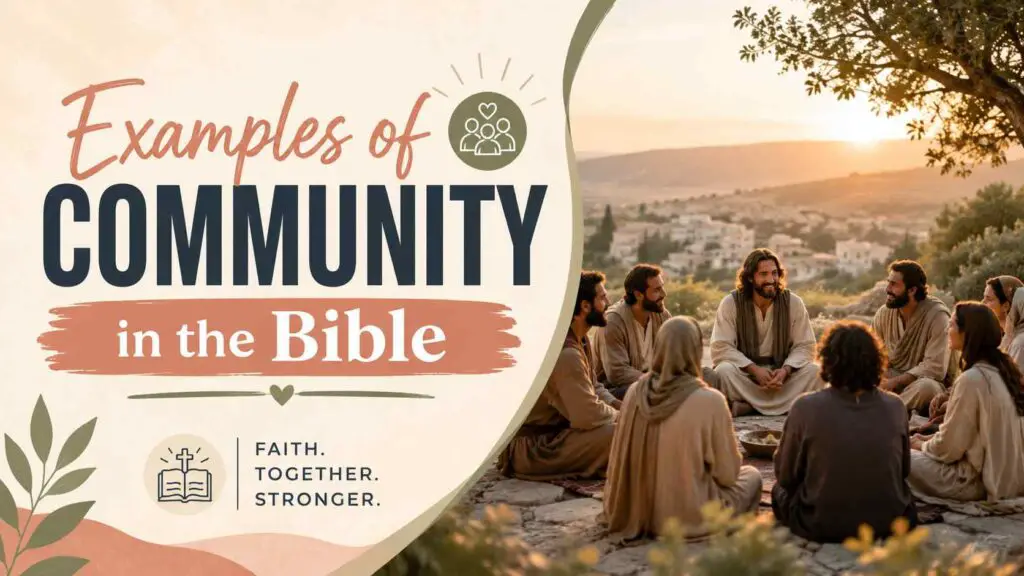
Biblical community is a central theme throughout Scripture, showing that faith was never meant to be lived in isolation. From Israel’s journey in the wilderness to the early Christian church, people of God consistently lived in shared responsibility, worship, and mutual care. These communities were formed through covenant, teaching, and daily dependence on God. They supported one another in practical needs, spiritual growth, and life challenges. Understanding these examples helps modern readers see what real community looks like beyond theory. It is not just gathering together, but living with purpose, unity, and active care for others in everyday life and.
Examples of Community in the Bible
#1. The Early Church in Jerusalem
The early church in Jerusalem is one of the clearest examples of biblical community life. Believers gathered daily in the temple and in homes, devoting themselves to teaching, fellowship, breaking of bread, and prayer. They shared their possessions so that no one was in need, creating a system of voluntary generosity and mutual care. Life was centered on worship and relationship, not individual survival. This community also practiced consistent encouragement and accountability. Their unity attracted others to the faith. It shows how shared belief naturally forms practical systems of support, where spiritual conviction turns into visible care for people’s real needs daily.
#2. The Israelites in the Wilderness
The Israelites in the wilderness demonstrate how a large community survives through shared dependence on God and collective identity. After leaving Egypt, they traveled together under Moses’ leadership, guided by God’s presence in the cloud and fire. Daily provision came through manna, teaching reliance and discipline. The law given at Sinai created structure for justice, worship, and relationships. Despite repeated complaints and struggles, they remained bound as one nation under a covenant. Their journey shows how community is shaped through shared hardship, obedience, and direction. Even in instability, they functioned as a unified people learning trust and responsibility together in real time.
#3. Jesus and His Disciples
Jesus and His disciples form a close community built on shared mission, teaching, and daily life. Jesus called ordinary men to follow Him, and they left their professions to learn through experience. They traveled together, witnessed miracles, and received correction and instruction directly from Him. Meals, conversations, and challenges created deep relational formation. Jesus modeled leadership through service, washing their feet and teaching humility. Even when they misunderstood Him, He continued guiding them patiently. This community shows that transformation happens through proximity, correction, and shared purpose. Discipleship is not abstract learning but life shared with guidance, accountability, and active participation together.
#4. David and His Mighty Men
David’s community of mighty men shows how loyalty and identity are formed through hardship and shared struggle. Before becoming king, David gathered men who were distressed and in debt, and they became his loyal fighters. They lived in hiding, faced danger, and fought battles together. Trust developed not through comfort but through survival and shared risk. David’s leadership shaped them into disciplined and courageous warriors. They supported him even when circumstances were uncertain. This community reveals how strong bonds are created under pressure, where shared challenges build trust, commitment, and a sense of belonging rooted in purpose rather than status.
#5. Ruth and Naomi
Ruth and Naomi demonstrate a community built on loyalty, care, and family commitment beyond blood relations. After losing their husbands, Ruth chose to stay with Naomi instead of returning to her own people. She worked in the fields to provide food and supported Naomi through poverty and uncertainty. Their relationship became a new family structure based on devotion and responsibility. Naomi guided Ruth toward security and restoration through Boaz. This story shows how community can form through love and sacrifice in difficult seasons. It reflects how commitment and care can rebuild broken lives and create stability through mutual support and shared survival.
#6. The Temple Worship Community
The temple worship community in Israel provided a structured center for national and spiritual unity. People gathered regularly for sacrifices, festivals, and prayer, connecting daily life with worship. Priests acted as mediators, maintaining order and guiding worship practices. Major feasts like Passover brought families together in remembrance of God’s deliverance. This created shared identity across tribes and regions. Worship was not private but communal, reinforcing obedience and reverence. The temple system shaped moral behavior and cultural unity. It shows how structured worship strengthens community life by giving people shared rituals, values, and a consistent rhythm of devotion centered on God.
#7. The Church in Corinth
The church in Corinth reflects a real and imperfect Christian community dealing with division, spiritual gifts, and moral struggles. Paul wrote letters to address conflict, confusion, and misuse of spiritual freedom. Despite issues, the church was gifted and active, showing strong potential. Members came from different social and cultural backgrounds, which created both richness and tension. Paul emphasized love, unity, and order in worship to guide them toward maturity. He corrected behavior while affirming their identity in Christ. This community shows that growth involves correction and learning how to live together with patience, structure, and love despite real human differences.
#8. The Fellowship in Antioch
The fellowship in Antioch was one of the first multicultural Christian communities, where Jewish and Gentile believers worshiped together. Leaders like Barnabas and Paul taught and strengthened the church, shaping it into a center for mission work. It was here that believers were first called Christians. The community practiced teaching, fasting, and worship regularly. It also became a sending church for missionary journeys, spreading the gospel beyond its local setting. Antioch shows how diverse groups can become unified through shared faith and purpose. It reflects how community can grow into global influence when rooted in teaching, worship, and active mission together.
#9. Friends Who Helped the Paralyzed Man
The friends who brought a paralyzed man to Jesus show a powerful example of practical community action. When they could not reach Jesus because of the crowd, they carried the man to a roof, created an opening, and lowered him down. Their persistence demonstrated faith and determination on behalf of someone in need. Jesus responded by healing the man and forgiving his sins, recognizing their collective faith. This story highlights how community steps in where individuals cannot act alone. It shows teamwork, sacrifice, and problem-solving driven by compassion, proving that faith becomes visible through action that helps others overcome barriers.
#10. The Early Christian Fellowship Beyond Jerusalem
The early Christian fellowship that spread beyond Jerusalem shows how community expands through mission and shared belief. As believers scattered due to persecution, they formed new gatherings in different regions while maintaining unity in teaching and faith. These communities shared leadership, encouraged one another, and continued the apostles’ teachings. They met in homes and supported missionary efforts across regions. Letters from leaders like Paul helped maintain connection and doctrine across distances. This example shows that biblical community is not limited to one location but continues through shared belief, communication, and cooperation, even when physically separated across different regions and cultures.
Closing Thoughts
Biblical examples of community show that faith was always meant to be lived together, not alone. Across different times and cultures, God’s people shared worship, resources, leadership, and daily life. These communities were not perfect, but they were united by purpose, obedience, and care for one another. From Jerusalem to Antioch, from wilderness journeys to small households, community shaped how people experienced God and each other. Today, these examples remind readers that real community requires presence, responsibility, and commitment. It is built through shared life, not just shared belief, forming a space where faith becomes visible through action and relationships.