
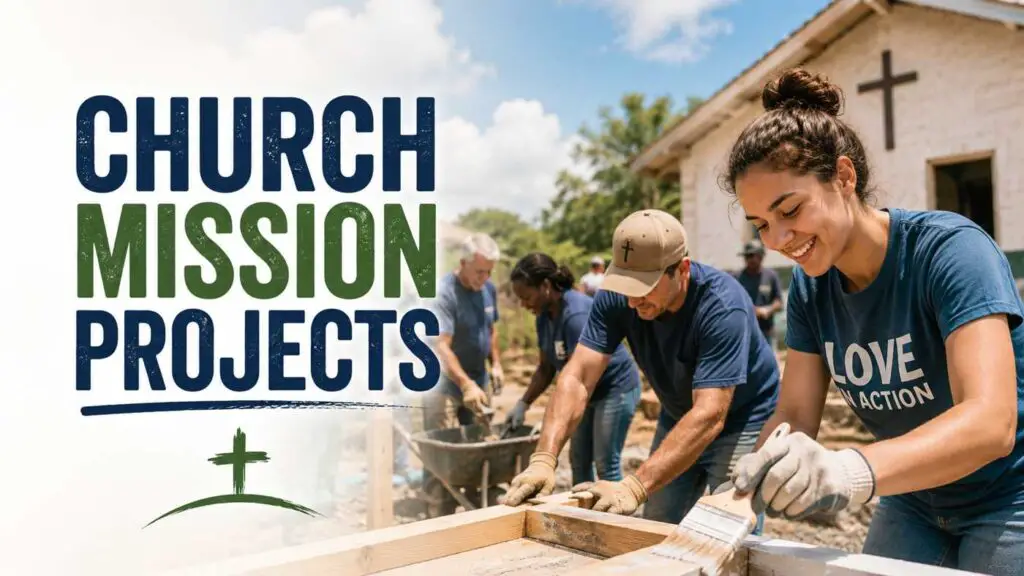
Churches play a vital role in strengthening communities, supporting families, and spreading compassion through meaningful outreach programs. From local food drives to international humanitarian work, church mission projects help congregations live out their faith while creating lasting change. Whether a church is large or small, organizing impactful mission initiatives can inspire members, serve vulnerable populations, and build stronger connections within the community.
Successful church mission projects require thoughtful planning, volunteer coordination, budgeting, and long-term commitment. When implemented effectively, these programs not only meet practical needs but also create opportunities for spiritual growth, relationship building, and community transformation. The following church mission project ideas include practical guidance to help churches launch and sustain meaningful outreach efforts.
Church Mission Projects
#1. Community Food Pantry & Meal Program
A community food pantry and meal program is one of the most practical and sustainable church mission projects because food insecurity affects families in nearly every community. Churches can begin by identifying local needs through conversations with schools, social workers, shelters, and nonprofit organizations. This research helps determine whether the community would benefit more from weekly grocery distribution, prepared meals, emergency food boxes, or a combination of services.
To launch the program, churches should create a dedicated volunteer team responsible for food collection, storage, organization, and distribution. Many churches start by placing donation bins inside the church and encouraging members to contribute canned goods, pasta, rice, baby formula, and nonperishable items. Partnering with local grocery stores, bakeries, restaurants, and farms can significantly increase available resources while reducing food waste.
Churches should also establish a regular distribution schedule so families know when assistance is available. Some churches operate weekly food pantries, while others focus on monthly community meal events. Volunteers may help package groceries, prepare meals, greet guests, and assist with cleanup.
For long-term success, churches should maintain inventory systems, establish food safety procedures, and create a welcoming environment that preserves dignity and respect for recipients. Additional services such as prayer support, financial counseling, or referrals to local assistance programs can further strengthen the impact of this mission project.
#2. Youth Mentorship & After-School Program
Youth mentorship and after-school programs provide children and teenagers with academic support, emotional encouragement, and positive role models. Churches interested in starting this type of mission project should first identify the needs of local students by speaking with parents, teachers, and school administrators.
A successful youth mentorship program usually includes tutoring sessions, homework assistance, recreational activities, leadership development, and life skills training. Churches can recruit volunteers with backgrounds in education, counseling, sports, music, or youth ministry to help create a well-rounded experience for students.
To establish the program, churches should designate safe meeting spaces with adequate seating, study materials, internet access, and recreational equipment. Developing a structured schedule helps maintain consistency and allows parents to plan accordingly. For example, a typical after-school program may include snack time, tutoring, group activities, mentorship discussions, and devotional lessons.
Churches should also implement volunteer screening procedures and child safety policies to ensure a secure environment for participants. Transportation assistance may be necessary for families who lack reliable access to the church location.
As the program grows, churches can introduce college preparation workshops, career exploration opportunities, scholarship assistance, and mentorship pairings between adults and students. These additions help create long-term relationships that positively influence young people throughout their lives.
#3. Homeless Outreach Ministry
A homeless outreach ministry allows churches to provide direct support for individuals experiencing homelessness while building relationships based on compassion and dignity. Churches can begin this project by learning about local homelessness challenges and connecting with shelters, soup kitchens, and community outreach organizations already serving vulnerable populations.
One of the easiest ways to launch the ministry is by assembling care packages that include hygiene products, socks, blankets, bottled water, snacks, and weather-appropriate clothing. Volunteers can distribute these items during organized outreach events in areas where unhoused individuals gather.
In addition to physical supplies, churches should focus on personal interaction and emotional support. Volunteers can spend time listening to people’s stories, offering encouragement, and praying with individuals who desire spiritual support. Training volunteers in compassionate communication is important to ensure respectful interactions.
Churches may also expand the ministry by offering mobile showers, laundry assistance, temporary shelter partnerships, or meal programs. Collaborating with local agencies can help connect individuals to mental health services, addiction recovery programs, job placement resources, and housing assistance.
To sustain the outreach effort, churches should maintain donation drives, recruit consistent volunteers, and establish partnerships with businesses willing to contribute supplies or funding. Long-term relationship building often has the greatest impact within homeless outreach ministries.
#4. Church-Sponsored Medical Mission
Church-sponsored medical missions help provide healthcare services to underserved individuals who may not have access to affordable treatment. Churches with healthcare professionals in their congregation can organize local medical clinics that offer basic health screenings, blood pressure checks, vision testing, dental care, and wellness education.
The first step in launching a medical mission project is identifying qualified volunteers such as doctors, nurses, dentists, pharmacists, counselors, and administrative staff. Churches should also ensure compliance with local healthcare regulations, licensing requirements, and liability protections.
Medical mission events can take place inside church facilities, community centers, schools, or mobile clinics. Churches should prepare intake forms, privacy procedures, patient flow systems, and designated treatment areas to maintain organization and professionalism.
In addition to treatment services, churches can provide educational workshops covering nutrition, diabetes prevention, maternal health, mental wellness, and preventive care practices. Distributing hygiene supplies, prescription assistance information, and referral lists for local healthcare providers can extend the impact of the mission.
Some churches also organize international medical mission trips where volunteers travel to underserved regions to provide healthcare services and medical supplies. These trips require additional planning, fundraising, travel coordination, and partnerships with trusted organizations already working in those communities.
#5. Disaster Relief & Emergency Response Team
Disaster relief ministries allow churches to respond quickly when natural disasters or emergencies affect local communities. Floods, storms, fires, and other crises often leave families displaced and in urgent need of assistance. Churches can prepare in advance by creating an organized disaster response team with clearly assigned responsibilities.
The ministry should begin with volunteer recruitment and emergency preparedness training. Volunteers may specialize in food distribution, shelter support, debris cleanup, transportation, communication, logistics, or counseling services. Churches can also stockpile emergency supplies such as bottled water, blankets, generators, flashlights, hygiene kits, and first aid materials.
Developing partnerships with local emergency management agencies, nonprofits, and neighboring churches helps improve coordination during crises. Churches should create communication systems that allow leaders to quickly mobilize volunteers and share updates with the congregation.
Fundraising plays a critical role in disaster response. Churches may establish emergency relief funds that can be activated immediately when disasters occur. Social media campaigns, donation drives, and benefit events can help generate financial support for affected families.
Long-term recovery efforts are equally important. In many cases, communities need assistance months after a disaster has passed. Churches can organize rebuilding projects, counseling services, furniture donations, and ongoing support for displaced families during the recovery process.
#6. Senior Care & Visitation Ministry
Senior care ministries focus on reducing loneliness and improving quality of life for elderly individuals within the church and surrounding community. Many seniors experience social isolation, transportation challenges, and health-related limitations that prevent regular interaction with others.
Churches can begin this ministry by identifying seniors who may benefit from regular visitation, meal assistance, or transportation services. Volunteers can be organized into teams responsible for weekly home visits, phone calls, grocery delivery, and transportation to medical appointments or church services.
A successful senior ministry often includes social events such as game nights, fellowship lunches, exercise classes, and holiday gatherings specifically designed for older adults. These activities help seniors maintain meaningful relationships and remain active within the community.
Churches should also consider practical support services including minor home repairs, yard maintenance, technology assistance, and meal preparation. Many seniors appreciate help navigating smartphones, online banking, or telehealth appointments.
Volunteer training is important because some seniors may face memory loss, grief, or chronic health conditions. Churches can invite healthcare professionals or counselors to educate volunteers about effective caregiving and communication strategies.
Long-term consistency is essential for building trust and emotional connection within senior care ministries. Even simple acts of companionship can significantly improve emotional well-being for elderly individuals.
#7. Clean Water & Sanitation Project
Clean water and sanitation projects provide life-changing support to communities lacking safe drinking water and proper hygiene infrastructure. Churches interested in this mission project should first research reputable organizations already involved in water development and sanitation efforts.
The project may involve fundraising to sponsor wells, rainwater collection systems, filtration equipment, or sanitation facilities in underserved communities. Churches can organize donation campaigns, charity events, sponsored walks, and mission offerings to raise financial support for construction efforts.
Education is an important component of water-related mission work. Churches can help fund hygiene education programs that teach communities about handwashing, water purification, and disease prevention practices. These educational efforts improve long-term public health outcomes.
Some churches choose to send mission teams to assist with well construction, infrastructure maintenance, or community training programs. Before organizing international trips, churches should partner with experienced organizations that understand local regulations, cultural dynamics, and long-term sustainability requirements.
To maintain transparency and donor confidence, churches should regularly share updates, photos, and testimonies demonstrating the impact of the project. Clean water initiatives often produce measurable improvements in health, education, and economic stability within underserved communities.
#8. Prison & Rehabilitation Ministry
Prison and rehabilitation ministries focus on supporting incarcerated individuals and helping former inmates successfully reintegrate into society. Churches can begin this mission project by contacting local correctional facilities to learn about volunteer opportunities, visitation policies, and approved ministry programs.
Many prison ministries include Bible studies, mentorship programs, counseling sessions, addiction recovery support, and life skills training. Volunteers should receive proper training regarding facility regulations, communication guidelines, and safety procedures before participating in prison outreach activities.
In addition to serving incarcerated individuals, churches can support families affected by incarceration through counseling, childcare assistance, financial support, and transportation services for prison visitation.
Reentry support is another critical aspect of rehabilitation ministry. Former inmates often struggle to find employment, housing, and community acceptance after release. Churches can assist by offering resume workshops, interview coaching, job referrals, clothing assistance, and mentorship relationships.
Partnering with local employers, rehabilitation programs, and counseling organizations can improve long-term outcomes for individuals rebuilding their lives after incarceration. Churches that prioritize compassion, accountability, and restoration often create meaningful opportunities for personal transformation.
#9. School Supply & Scholarship Initiative
Educational support programs help students overcome financial barriers that may prevent academic success. Churches can begin school supply initiatives by identifying the needs of local schools and families through direct communication with educators and community leaders.
A basic school supply drive may include backpacks, notebooks, pencils, calculators, uniforms, shoes, and hygiene products. Churches can organize donation campaigns several months before the school year begins and invite local businesses to sponsor specific items or student groups.
Distribution events can become major community outreach opportunities. Churches may host back-to-school festivals that include haircuts, free meals, medical screenings, and family resource booths in addition to school supply giveaways.
Scholarship programs require additional planning and financial oversight. Churches should establish clear eligibility criteria, application procedures, fundraising goals, and scholarship selection committees. Scholarships may support college tuition, vocational training, ministry education, or trade school enrollment.
Mentorship and tutoring services can further strengthen the initiative by providing students with ongoing academic and emotional support throughout the school year. Churches that invest consistently in education often create lasting opportunities for long-term community development.
#10. Missionary Outreach & Evangelism Campaign
Missionary outreach and evangelism campaigns allow churches to expand their ministry efforts both locally and internationally. Churches can begin by identifying communities or regions where outreach opportunities align with their mission and available resources.
Local evangelism efforts may include neighborhood outreach events, prayer walks, community festivals, free service projects, and small group ministries designed to build relationships with residents. Churches should focus on meeting practical needs while creating opportunities for spiritual conversations and discipleship.
International mission projects often involve partnerships with missionaries, church planters, orphanages, schools, or humanitarian organizations serving abroad. Churches can support these efforts through fundraising, volunteer mission trips, supply donations, and ongoing prayer initiatives.
Training is essential for volunteers participating in outreach programs. Churches should prepare team members in cultural sensitivity, communication skills, safety procedures, and ministry expectations before launching outreach activities.
Consistent follow-up is one of the most important elements of evangelism ministry. Churches should create systems for maintaining relationships with individuals reached through outreach events by offering Bible studies, counseling, small groups, and mentorship opportunities.
Strong missionary outreach programs emphasize both spiritual growth and practical service, helping churches create lasting connections with the communities they serve.
#11. Community Skills & Job Training Center
Community skills and job training centers help individuals develop practical abilities needed for financial stability and career advancement. Churches can start this project by identifying common employment challenges within the local community, such as limited computer literacy, lack of resume experience, or insufficient vocational training opportunities.
The ministry may offer workshops covering resume writing, interview preparation, budgeting, job searching, entrepreneurship, financial planning, and workplace communication skills. Churches with members experienced in business, education, technology, or skilled trades can recruit those individuals as volunteer instructors.
To establish the training center, churches should designate classrooms or computer labs equipped with internet access, printers, and educational materials. Scheduling evening or weekend classes may improve accessibility for working adults and parents.
Partnerships with local businesses, staffing agencies, and vocational schools can help create internship opportunities, apprenticeship programs, and direct employment pathways for participants. Churches may also organize job fairs that connect employers with individuals seeking work.
Providing childcare, transportation assistance, or free meals during training sessions can increase participation among low-income families. Churches should also track participant outcomes to evaluate program effectiveness and identify areas for improvement.
By equipping individuals with practical skills and career support, churches can help families achieve greater economic stability while strengthening the broader community.
Closing Thoughts
Church mission projects provide powerful opportunities for congregations to serve others, strengthen communities, and make a meaningful difference in people’s lives. Whether focused on food assistance, healthcare, education, disaster relief, or spiritual outreach, these initiatives allow churches to turn compassion into practical action.
Successful mission projects require planning, volunteer commitment, community partnerships, and long-term consistency. Churches that carefully identify local needs, train volunteers effectively, and maintain sustainable outreach strategies often create the greatest impact over time.
No matter the size of the congregation, every church has the ability to make a difference through meaningful outreach efforts. By investing in well-organized church mission projects, congregations can build stronger communities, inspire generosity, and create lasting change for individuals and families in need.