
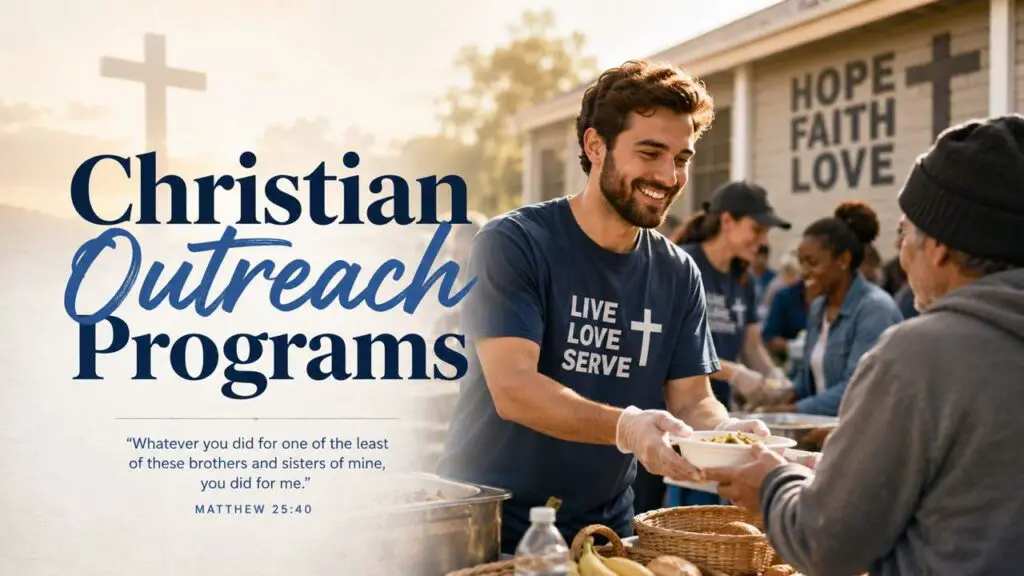
Christian outreach programs play a vital role in strengthening communities, supporting those in need, and sharing faith through service and compassion. Churches and faith-based organizations around the world use outreach ministries to provide food, shelter, counseling, education, and spiritual encouragement to people from all walks of life. These programs not only help individuals facing hardships but also create opportunities for churches to connect with their local communities in meaningful and lasting ways.
Whether focused on evangelism, humanitarian aid, youth development, or family support, Christian outreach programs are designed to reflect biblical values through practical action. Below are some of the most impactful and widely used outreach ministry ideas churches can implement to serve others and grow their community presence.
Christian Outreach Programs
#1. Community Food Pantry Program
A community food pantry is one of the most practical and effective Christian outreach programs because it directly addresses food insecurity within the local community. Churches can begin by designating a storage area for food donations and organizing volunteers to manage inventory, packing, and distribution days. Nonperishable items such as canned vegetables, rice, pasta, cereal, peanut butter, and hygiene products are commonly distributed.
To successfully operate a food pantry, churches should create a regular distribution schedule, such as weekly or monthly pickup days. Partnering with local grocery stores, restaurants, food banks, and farms can help maintain a consistent supply of food. Many churches also encourage congregation members to participate through ongoing donation drives.
For greater impact, churches can include prayer teams, resource counseling, or informational materials during distribution events. Volunteers should be trained to treat every visitor with dignity and compassion. Offering delivery services for elderly or disabled individuals can also expand the ministry’s reach.
#2. Homeless Shelter Outreach
Homeless shelter outreach programs provide immediate assistance and long-term support for individuals experiencing homelessness. Churches can start by offering temporary overnight shelter during cold weather or by partnering with existing local shelters. Essential services may include meals, showers, clean clothing, blankets, hygiene kits, and safe sleeping arrangements.
A successful homeless outreach ministry often goes beyond temporary aid by helping individuals rebuild stability. Churches can organize job readiness workshops, resume assistance, transportation support, and connections to local housing programs. Volunteers with counseling or social work experience can provide emotional support and guidance.
Consistency is important in building trust with homeless individuals. Outreach teams can regularly visit parks, shelters, and urban areas to distribute care packages and establish relationships. Churches may also host weekly community meals where guests are welcomed into a safe and supportive environment.
#3. Prison Ministry Program
Prison ministry programs focus on supporting incarcerated individuals spiritually, emotionally, and practically. Churches can begin by contacting local correctional facilities to learn about volunteer opportunities and visitation policies. Volunteers may lead Bible studies, prayer groups, worship services, or mentoring sessions within the prison system.
An effective prison ministry also prepares inmates for life after release. Churches can create reentry support programs that assist with housing, job placement, transportation, and accountability partnerships. Mentorship plays a major role in helping former inmates successfully transition back into society.
Volunteers should receive training on prison protocols, communication skills, and confidentiality. Churches can also support inmates through letter-writing programs, care packages, and family assistance initiatives that help maintain healthy relationships during incarceration.
#4. Youth Mentorship and After-School Program
Youth mentorship and after-school programs provide children and teenagers with a safe place to learn, grow, and build positive relationships. Churches can use classrooms, fellowship halls, or gym spaces to host tutoring sessions, recreational activities, leadership workshops, and Bible studies.
To launch the program, churches should recruit screened volunteers who enjoy working with youth and can serve as mentors or tutors. Programs may operate several afternoons each week and include homework assistance, snacks, games, music, sports, and character development lessons.
Churches can also partner with local schools to identify students who would benefit from additional support. Including guest speakers, career exploration workshops, and life skills training can further enhance the ministry’s impact. Consistent mentorship often helps young people build confidence, improve academic performance, and develop healthy decision-making habits.
#5. International Mission Trips
International mission trips allow churches to serve communities around the world while building relationships with local ministries. Churches can organize mission teams to support projects such as school construction, medical clinics, clean water initiatives, orphan care, or church planting efforts.
Planning is essential for successful mission trips. Churches should partner with trusted local organizations in the destination country and clearly define the trip’s goals, budget, schedule, and volunteer responsibilities. Participants may need fundraising support, travel documentation, vaccinations, and cultural training before departure.
Mission teams should prioritize serving alongside local leaders rather than imposing outside solutions. Long-term partnerships are often more effective than one-time visits because they create sustainable support systems for communities in need.
#6. Hospital and Nursing Home Visitation Ministry
Hospital and nursing home visitation ministries provide emotional and spiritual encouragement to patients, seniors, and caregivers. Churches can organize teams of compassionate volunteers who regularly visit hospitals, rehabilitation centers, assisted living facilities, and nursing homes.
Volunteers may pray with residents, read scripture, sing hymns, provide companionship, or simply listen to people who feel lonely or isolated. Small care packages with devotionals, blankets, snacks, or handmade cards can also brighten someone’s day.
Churches should coordinate with facility administrators to understand visitation rules and patient privacy requirements. Training volunteers in empathy, active listening, and sensitivity to grief or illness helps ensure meaningful and respectful interactions.
#7. Addiction Recovery Support Groups
Addiction recovery ministries help individuals struggling with substance abuse, alcoholism, gambling, or other destructive habits. Churches can host weekly support group meetings that combine biblical teaching, accountability, counseling, and peer encouragement.
Programs often include testimonies, group discussions, recovery lessons, and prayer sessions. Churches may use established Christian recovery models or create customized programs tailored to their community’s needs. Providing childcare and transportation assistance can improve attendance and accessibility.
Recovery ministries work best when participants feel safe from judgment. Volunteers should receive training in confidentiality, crisis response, and compassionate communication. Churches can also partner with licensed counselors, rehabilitation centers, and healthcare providers to offer additional support services.
#8. Disaster Relief and Emergency Aid Ministry
Disaster relief ministries respond to emergencies such as hurricanes, floods, fires, tornadoes, and other crises. Churches can prepare in advance by organizing emergency response teams, gathering supplies, and developing partnerships with local relief organizations.
Essential disaster relief items may include bottled water, nonperishable food, hygiene products, blankets, clothing, generators, and first aid supplies. Volunteers can assist with debris removal, temporary housing, meal preparation, and emotional support for affected families.
Churches should create communication plans and emergency contact systems before disasters occur. Fundraising campaigns and donation drives can help sustain long-term recovery efforts after the initial emergency response phase has ended.
#9. Street Evangelism Outreach
Street evangelism outreach programs focus on sharing faith and building relationships in public spaces. Churches can organize small outreach teams to visit parks, festivals, downtown areas, campuses, or neighborhoods where people naturally gather.
Outreach activities may include prayer stations, live worship music, free bottled water distribution, care packages, or simple conversations about faith and life challenges. Some churches use creative methods such as art, drama, or community events to engage people in nonthreatening ways.
Volunteers should be trained to communicate respectfully, listen actively, and avoid confrontational approaches. The goal of street outreach is often relationship-building and encouragement rather than forcing conversations or debates.
#10. Clothing and Winter Coat Drives
Clothing outreach ministries collect and distribute clothes, shoes, blankets, coats, and hygiene products to individuals and families in need. Churches can organize seasonal donation drives and invite community members to contribute gently used or new items.
Sorting donations by size, age group, and category helps create a more organized distribution process. Many churches set up free shopping-style events where guests can browse clothing with dignity instead of simply receiving random items.
Partnering with schools, shelters, and community organizations can help identify families most in need of assistance. Winter coat drives are especially impactful in colder climates where proper clothing can be life-saving.
#11. Single Parent Support Ministry
Single parent support ministries provide practical assistance and emotional encouragement for parents raising children alone. Churches can host support groups, parenting classes, financial workshops, and family fellowship events designed specifically for single-parent households.
Offering childcare during church services, meetings, or community events can significantly reduce stress for parents. Some ministries also provide meal trains, transportation assistance, tutoring support, or emergency financial aid during difficult seasons.
Mentorship programs that connect experienced families with single parents can help create long-term support networks. Churches should focus on building welcoming environments where parents feel valued, supported, and understood.
#12. Vacation Bible School (VBS) Community Outreach
Vacation Bible School programs are powerful outreach opportunities that help churches connect with children and families in their community. Churches typically host VBS during summer breaks and include Bible lessons, music, games, crafts, snacks, and themed activities.
Successful VBS programs require advance planning, volunteer recruitment, registration systems, and promotional efforts. Churches can advertise through schools, social media, flyers, and local events to encourage participation from families outside the congregation.
Safety procedures are essential, including volunteer background checks, check-in systems, and emergency protocols. Many churches also use VBS as an opportunity to invite families to future church events and ongoing children’s ministries.
#13. Free Community Counseling and Prayer Services
Community counseling and prayer ministries provide emotional, spiritual, and relational support for individuals facing personal challenges. Churches can offer scheduled counseling sessions, walk-in prayer support, marriage mentoring, grief recovery groups, or financial guidance workshops.
Some churches partner with licensed Christian counselors who volunteer their services or offer reduced-cost sessions for community members. Prayer teams can also be available after church services or during designated ministry hours throughout the week.
Creating private, welcoming spaces for conversations helps individuals feel safe and respected. Churches should establish clear confidentiality guidelines and referral systems for situations requiring professional mental health or emergency intervention services.
Closing Thoughts
Christian outreach programs are powerful tools for serving communities, sharing faith, and meeting real-world needs through compassion and action. From food pantries and homeless shelters to youth mentorship and disaster relief, these ministries allow churches to make a meaningful difference in people’s lives.
By investing in outreach initiatives, churches can strengthen relationships within their communities, provide hope to those facing hardships, and reflect the love and teachings of Christ in practical ways. Whether large or small, every outreach effort has the potential to create lasting spiritual and social impact.