
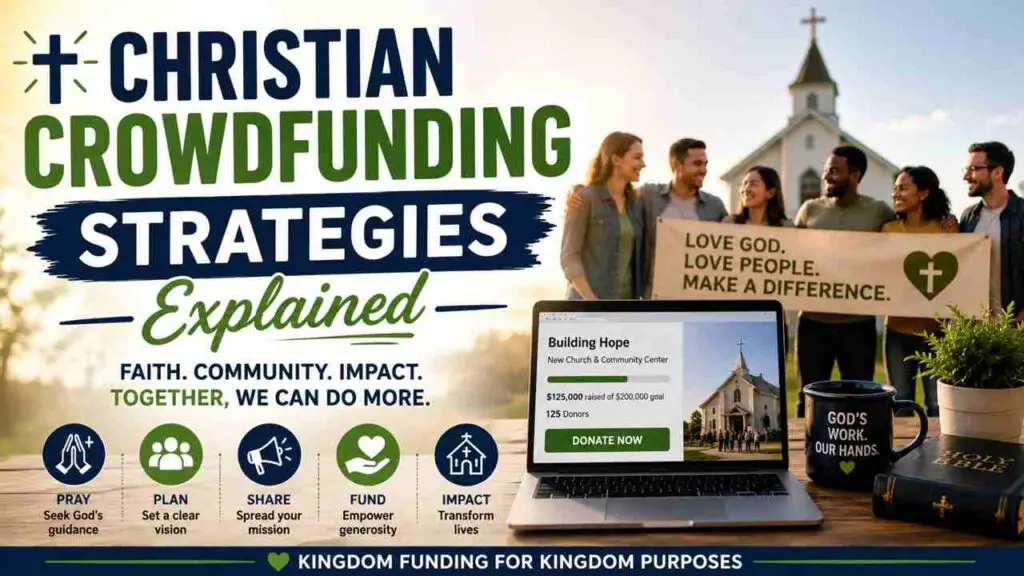
Christian crowdfunding has transformed the way churches, ministries, missionaries, and Christian families raise support online. Instead of depending entirely on fundraising dinners, church offerings, or a few major donors, Christian crowdfunding allows believers from around the world to contribute financially toward meaningful faith-based causes.
Today, crowdfunding campaigns are being used to support mission trips, church planting efforts, outreach programs, medical emergencies, Christian schools, worship projects, and even faith-based businesses. With the growth of social media and online giving, it has become easier than ever to connect with supporters who believe in a shared spiritual mission.
However, launching a campaign is not enough.
Many Christian crowdfunding campaigns fail because they lack preparation, clear communication, donor trust, or ongoing promotion. Others struggle because they focus too heavily on asking for money without building emotional connection or spiritual purpose.
The good news is that successful campaigns often follow similar patterns.
They communicate a compelling mission, tell authentic stories, engage supporters consistently, and build trust through transparency and faith-centered leadership.
In this guide, we’ll explore proven Christian crowdfunding strategies that can help ministries, churches, and individuals create stronger campaigns, attract more supporters, and raise funds more effectively.
What Is Christian Crowdfunding?
Christian crowdfunding is a method of online fundraising where believers donate money to support faith-based causes, ministries, projects, or individuals in need. These campaigns are usually hosted on online fundraising platforms that allow organizers to share their story, fundraising goal, updates, and donation links.
Unlike secular fundraising campaigns, Christian crowdfunding often emphasizes spiritual impact alongside financial support. Donors are not simply contributing money. They are partnering in ministry, outreach, compassion, and kingdom-focused work.
For many Christians, giving becomes part of their faith expression and commitment to helping others.
How Christian Crowdfunding Works
Most Christian crowdfunding campaigns follow a straightforward process, but successful campaigns usually involve much more planning behind the scenes.
The process generally includes:
- Choosing a crowdfunding platform
- Creating a campaign page
- Explaining the mission or need
- Setting a fundraising goal
- Adding videos and photos
- Promoting the campaign online
- Engaging supporters regularly
- Providing updates and results
While the process looks simple, effective campaigns invest significant effort into communication and relationship-building.
For example, a missionary raising support for overseas ministry may spend weeks gathering testimonials, preparing videos, organizing church support, and building email lists before launching publicly.
The preparation phase often determines whether a campaign gains momentum or struggles to attract attention.
Who Uses Christian Crowdfunding?
Christian crowdfunding is used by many different groups and organizations.
Churches
Churches frequently use crowdfunding for:
- Building projects
- Renovations
- Community outreach programs
- Youth ministry initiatives
- Mission trips
- Disaster relief efforts
Smaller churches especially benefit from crowdfunding because it allows them to reach supporters beyond their local congregation.
Missionaries
Missionaries often rely on crowdfunding to raise support for:
- Travel expenses
- Living costs
- Ministry materials
- Evangelism projects
- Humanitarian outreach
Because missions involve storytelling and visible impact, they often perform well in crowdfunding environments.
Christian Nonprofits
Faith-based nonprofits use crowdfunding to support causes such as:
- Feeding programs
- Homeless outreach
- Crisis response
- Orphan care
- Education initiatives
- International aid
Crowdfunding helps nonprofits connect directly with supporters emotionally invested in their mission.
Christian Families and Individuals
Families facing medical emergencies, financial hardship, or unexpected crises sometimes turn to Christian crowdfunding communities for support and prayer.
In these cases, campaigns often succeed because supporters feel personally connected to the story and want to help carry one another’s burdens.
Why Some Christian Crowdfunding Campaigns Fail
Not every Christian crowdfunding campaign reaches its goal. Some campaigns gain immediate traction and exceed expectations, while others struggle to attract attention or donations.
Understanding why campaigns fail is important because many problems can be prevented with proper preparation and strategy.
Weak Mission Communication
One of the most common reasons campaigns fail is because the mission is unclear or poorly explained.
Many organizers assume supporters already understand the need, but online donors usually need immediate clarity before deciding to contribute. If visitors cannot quickly understand:
- What the campaign is about
- Why the cause matters
- Who will benefit
- How funds will be used
they often leave without donating.
For example, saying:
“Supporting ministry outreach opportunities.”
is far less compelling than saying:
“Providing food, Bibles, and school supplies to children in underserved communities.”
Specific communication creates emotional connection.
Strong campaigns usually answer donor questions immediately and avoid vague or overly broad language. They also explain both the practical and spiritual impact of donations.
Lack of Trust and Transparency
Trust is one of the biggest factors in online fundraising success.
People are naturally cautious about giving money online, especially when they do not personally know the organizer. If a campaign lacks transparency, supporters may hesitate to contribute.
Common trust issues include:
- No detailed explanation of expenses
- Missing organizer information
- No photos or videos
- No church or ministry affiliation
- Unrealistic fundraising goals
- Poorly written campaign pages
Successful campaigns build trust by being open and transparent from the beginning.
They often include:
- Budget breakdowns
- Personal testimonies
- Ministry photos
- Pastor endorsements
- Team introductions
- Frequent updates
Transparency reassures donors that their money will be used responsibly.
Poor Promotion Strategy
Many people believe crowdfunding success happens automatically after publishing a campaign page. In reality, most campaigns fail because they are not promoted consistently.
Even meaningful causes will struggle if few people see them.
Successful campaigns usually involve:
- Daily social media sharing
- Email outreach
- Church announcements
- Personal messages to supporters
- Community partnerships
- Video updates
Crowdfunding is heavily dependent on visibility.
Without active promotion, campaigns often stall after receiving donations from immediate family and friends.
Strong organizers treat crowdfunding like an ongoing communication effort rather than a one-time announcement.
Unrealistic Financial Goals
Fundraising goals strongly influence donor behavior.
Goals that are unrealistically high can discourage supporters because the campaign may appear impossible to achieve. On the other hand, goals that are too low may fail to cover actual ministry needs.
Successful campaigns carefully calculate expenses and explain them clearly.
For example:
- $1,200 for transportation
- $800 for outreach supplies
- $500 for housing
- $300 for food distribution
Detailed goals increase donor confidence because supporters understand exactly where their money is going.
Large goals can also be broken into smaller milestones, making progress feel more achievable.
Inconsistent Engagement With Supporters
Many campaigns lose momentum because organizers stop communicating after launch.
Supporters want to feel involved throughout the journey. When campaigns become inactive, donors may assume the project is no longer important or progressing slowly.
Successful organizers regularly post:
- Fundraising progress updates
- Prayer requests
- Ministry photos
- Testimonies
- Milestone celebrations
- Gratitude messages
Frequent engagement keeps supporters emotionally connected and encourages continued sharing.
People are far more likely to donate to active campaigns that demonstrate energy, momentum, and accountability.
Proven Christian Crowdfunding Strategies Explained
Build a Clear Faith-Based Mission
A strong mission is the foundation of every successful Christian crowdfunding campaign.
Supporters should immediately understand:
- The purpose of the campaign
- The people being helped
- The spiritual significance of the mission
- The expected impact of donations
Many campaigns fail because they try to communicate too many ideas at once. Instead of focusing on one clear mission, they overwhelm donors with excessive information.
Strong campaigns remain focused and specific.
For example, instead of saying:
“Helping support our ministry efforts.”
say:
“Providing clean water systems and Bible resources to rural villages.”
Specific missions are easier to understand, remember, and share.
Faith-based campaigns should also explain how the project aligns with Christian values such as compassion, service, discipleship, evangelism, or community care.
Tell a Powerful Personal Story
Storytelling is one of the most effective fundraising tools available.
People give to people, not just projects.
Supporters want to understand:
- Why the mission matters
- What inspired the campaign
- Who will be impacted
- What challenges exist
- How donations can create change
The best stories are honest and emotionally authentic.
For example, a missionary sharing personal experiences from previous outreach trips creates far more connection than simply listing ministry goals.
Strong storytelling often includes:
- Personal testimonies
- Emotional experiences
- Real-life struggles
- Transformation stories
- Human-centered details
Instead of sounding overly corporate or polished, successful Christian campaigns feel personal and sincere.
Authenticity builds trust.
Create Strong Campaign Goals
Successful crowdfunding campaigns use goals strategically.
A fundraising target should feel:
- Realistic
- Achievable
- Well-planned
- Clearly explained
Donors are more willing to contribute when they understand how funds will be used.
Detailed breakdowns increase credibility and reduce skepticism.
For example:
| Expense | Estimated Cost |
|---|---|
| Travel Expenses | $1,500 |
| Ministry Supplies | $700 |
| Community Outreach | $800 |
| Housing and Meals | $1,000 |
This level of detail reassures donors that planning has already taken place.
Strong campaigns also create emotional momentum by celebrating milestones.
Instead of focusing only on the final goal, organizers may celebrate:
- First 25% funded
- Halfway point reached
- First 100 donors
- Major outreach milestone
Momentum encourages additional giving.
Use Scripture Naturally and Meaningfully
Bible verses can strengthen Christian crowdfunding campaigns when used appropriately.
Scripture reminds supporters that generosity and compassion are deeply connected to Christian faith.
However, many campaigns make the mistake of overloading their pages with too many verses or using scripture without context.
Effective campaigns use scripture sparingly and strategically.
For example:
- A missions campaign may use the Great Commission
- A compassion campaign may reference caring for the poor
- A church project may emphasize community and service
The goal is not to preach excessively but to reinforce the spiritual purpose behind the campaign.
When scripture aligns naturally with the mission, it creates stronger emotional and spiritual connection with supporters.
Choose the Right Christian Crowdfunding Platform
Not all crowdfunding platforms work equally well for faith-based campaigns.
Some platforms specialize in Christian causes, while others serve broader audiences.
Choosing the right platform affects:
- Donor trust
- Campaign visibility
- Transaction fees
- Sharing tools
- Mobile usability
- Payment processing
Christian-focused platforms may provide audiences already interested in supporting ministry work.
General crowdfunding websites may offer larger audiences and stronger technology features.
Before choosing a platform, organizers should evaluate:
- Platform reputation
- Ease of use
- Customer support
- Withdrawal flexibility
- Social media integration
- Fee structures
A poorly designed platform can hurt donor confidence and reduce conversions.
Use Video and Images to Build Trust
Visual content dramatically improves crowdfunding performance.
Campaigns with photos and videos usually appear more trustworthy, personal, and emotionally engaging than text-only pages.
Videos help supporters:
- Hear the organizer’s passion
- Understand the mission visually
- Feel emotionally connected
- Trust the campaign more easily
Effective videos do not need professional production quality.
Simple, authentic videos often perform best because they feel genuine.
Strong visual content may include:
- Ministry outreach footage
- Personal introductions
- Church activities
- Testimonies
- Before-and-after impact stories
- Community interaction photos
Visual storytelling helps supporters see the real-world impact of their donations.
Conclusion
Christian crowdfunding can be an incredibly powerful way to fund ministry, support outreach, help families in crisis, and advance faith-based missions. However, successful campaigns require much more than simply posting a donation link online.
The strongest campaigns communicate a clear mission, tell compelling stories, build trust through transparency, engage supporters consistently, and remain grounded in faith throughout the process.
When churches, ministries, missionaries, and Christian families combine preparation with authentic communication, crowdfunding becomes more than a fundraising strategy. It becomes a way to unite believers around a shared purpose and inspire generosity through meaningful impact.
By applying these proven Christian crowdfunding strategies, organizers can create campaigns that not only raise funds but also strengthen community, encourage prayer, and advance kingdom-focused work in lasting ways.