
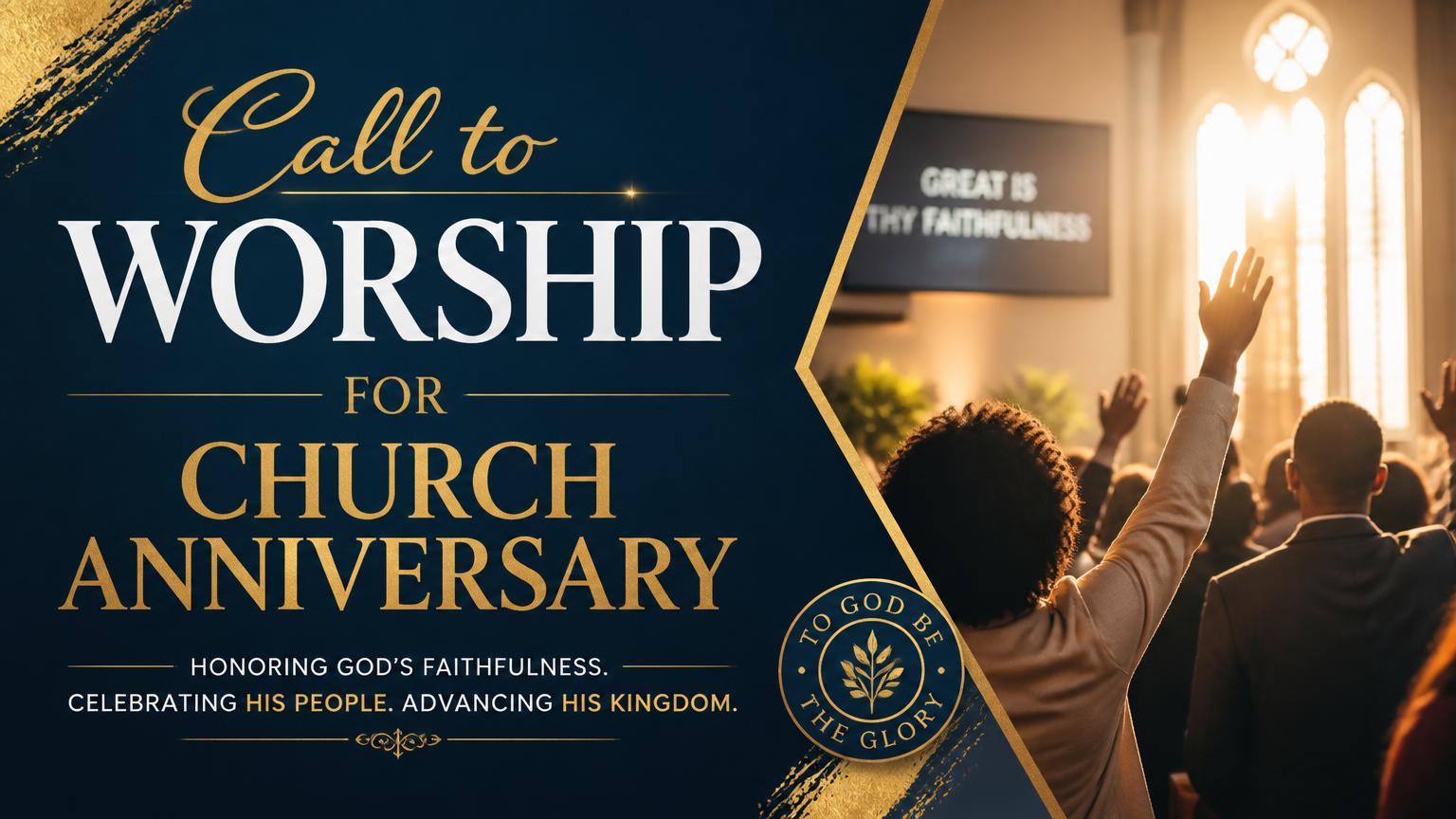
A call to worship for a church anniversary should invite the congregation to praise God for his faithfulness, remember the church’s history with gratitude, and recommit its life and ministry to him. The anniversary is not primarily a celebration of an institution’s achievements; it is an opportunity to honor the God who has sustained his people across generations.
Call to Worship for Church Anniversary
A Ready-to-Use Responsive Call to Worship
Leader: From generation to generation, the Lord has been our dwelling place.
Congregation: We gather today to remember God’s faithfulness and give him thanks.
Leader: Through seasons of joy and times of difficulty, God has guided and sustained this church.
Congregation: We praise the Lord for every grace, every answered prayer, and every life touched through this congregation.
Leader: The work of the church has never depended on human strength alone. The Lord has established, corrected, encouraged, and carried us.
Congregation: To God alone belongs the glory.
Leader: As we celebrate this anniversary, let us worship with thankful hearts and renewed commitment.
Congregation: We will proclaim the goodness of the Lord and seek his will for the years ahead.
All: Great is God’s faithfulness. Let us worship the Lord with joy, reverence, and gratitude.
This wording can be adapted for any anniversary year. The leader may mention a specific milestone, such as “our twenty-fifth anniversary,” but the central focus should remain on God rather than on the age, programs, buildings, or accomplishments of the congregation.
A Short Call to Worship
Leader: We have gathered to celebrate the faithfulness of God throughout the history of this church.
Congregation: We give thanks for his grace in the past, his presence with us today, and his guidance for the future.
Leader: Let us remember the Lord’s works and praise him for his steadfast love.
Congregation: With grateful hearts, we worship God together.
A Call to Worship Based on Psalm 100
Leader: Make a joyful noise to the Lord, all the earth.
Congregation: We will serve the Lord with gladness and come into his presence with singing.
Leader: We remember that the Lord is God. He made us, and we belong to him.
Congregation: We are his people and the sheep of his pasture.
Leader: We enter his gates with thanksgiving and his courts with praise.
Congregation: We give thanks to him and bless his name.
All: For the Lord is good; his steadfast love endures forever, and his faithfulness continues through every generation.
This version works especially well when the service theme emphasizes joy, gratitude, and the continuity of God’s faithfulness.
A Call to Worship for a Formal Anniversary Service
Leader: On this anniversary, we gather as one body in Christ to honor the Lord who has sustained this congregation.
Congregation: We remember his mercies, celebrate his faithfulness, and give thanks for his presence among us.
Leader: The Lord has been our help in every season. He has worked through faithful members, devoted leaders, generous servants, and generations of worshipers.
Congregation: We acknowledge that every good gift has come from God.
Leader: Let us not look backward with pride in human achievement, but with gratitude for divine grace.
Congregation: Let us not look forward in self-confidence, but in dependence upon the Lord.
All: We dedicate ourselves again to worship, witness, service, and obedience. Let us worship God together.
Biblical Themes for an Anniversary Call to Worship
A strong anniversary call usually brings together three movements: remembering the past, giving thanks in the present, and entrusting the future to God.
Remember God’s Faithfulness
Psalm 90:1 describes God as the dwelling place of his people “throughout all generations.” This makes it especially appropriate for a church anniversary because the congregation’s history is placed within God’s larger faithfulness. The church has changed over time, but God remains its refuge and foundation.
A call based on this theme might say:
Lord, you have been our dwelling place through every generation. As we remember the years behind us, teach us to number our days wisely and establish the work of our hands for your glory.
The point is not merely to recall dates and events. Christian remembrance asks how God provided, corrected, comforted, and led his people through those events.
Give Thanks for God’s Mercy
Lamentations 3:22–23 connects God’s continuing mercy with his great faithfulness. These verses can speak powerfully to a congregation that has experienced both celebration and hardship.
An anniversary service should leave room for honest gratitude. Some members may be remembering loved ones who have died, difficult transitions, conflict, or seasons when the church struggled. Celebrating an anniversary does not require pretending that every year was easy. It means confessing that God’s mercy sustained the congregation through every kind of year.
Proclaim God’s Works
First Chronicles 16:8–12 calls God’s people to give thanks, make his deeds known, sing to him, and remember his marvelous works. This theme helps an anniversary service move beyond nostalgia. The congregation is not simply recalling its own history; it is proclaiming what God has done.
This is also a natural place to connect the anniversary with mission. God’s past works encourage the church to continue bearing witness, serving neighbors, teaching the faith, and inviting others to worship.
Entrust the Future to God
Philippians 1:3–6 provides language for giving thanks for a congregation’s partnership in the gospel while trusting God to continue his work. The passage does not promise that every future plan will succeed exactly as expected. Rather, it directs confidence toward God, who began the good work and remains faithful to his purposes.
A suitable prayerful emphasis is:
We thank God for the work he has begun among us, and we ask him to make us faithful in the work still before us.
What an Anniversary Call to Worship Should Emphasize
God Is the Main Subject
The opening should direct attention to God’s character and actions: his faithfulness, mercy, holiness, patience, guidance, and saving grace. The church’s history matters because it reveals God’s care and provides opportunities for faithful service.
This does not mean ignoring the contributions of former pastors, members, volunteers, or ministry leaders. Their service can be acknowledged, but it should be described as a response to God’s grace rather than as a substitute for it.
Gratitude Should Lead to Recommitment
An anniversary is more than a look backward. Gratitude naturally raises a question: How should the congregation respond now?
The call to worship can invite members to renew their commitment to:
- worshiping God faithfully;
- loving one another as the body of Christ;
- serving people in practical need;
- teaching and preserving the Christian faith;
- welcoming future generations;
- sharing the gospel with the wider community.
This keeps the service from becoming merely sentimental. The congregation remembers the past so that it can live faithfully in the present and serve God in the future.
The Language Should Include the Whole Congregation
A church anniversary often brings together longtime members, newer attendees, children, visitors, former members, and guests from other congregations. Use language that welcomes the whole assembly without making newcomers feel like outsiders.
“Together we remember God’s faithfulness” is usually more appropriate than language suggesting that only those who have been present for many years truly belong in the celebration.
Common Mistakes to Avoid
A call to worship should not become a lengthy church history, a list of accomplishments, or an announcement about the anniversary schedule. Those details may belong elsewhere in the service. The call itself should remain focused and worshipful.
Avoid language that suggests the church has been preserved solely by human wisdom or effort. Even when the congregation has achieved meaningful things, Christian worship attributes ultimate praise to God.
It is also wise to avoid claiming that the church’s future is guaranteed simply because God has blessed its past. Faithfulness does not mean assuming that every plan will prosper. It means seeking God’s direction, remaining obedient to Scripture, and trusting him amid uncertainty.
Finally, do not use an anniversary call to ignore painful parts of the congregation’s history. A brief acknowledgment of God’s mercy through difficult seasons is more truthful and spiritually mature than exaggerated celebration.
How to Choose the Right Scripture
The best passage depends on the purpose and tone of the service.
- Psalm 100 suits a joyful service centered on thanksgiving and praise.
- Psalm 90:1–2, 12, 17 emphasizes generations, human limitations, wisdom, and God’s enduring work.
- Lamentations 3:22–24 is appropriate when the congregation wants to highlight mercy and faithfulness through hardship.
- First Chronicles 16:8–12 emphasizes remembering and proclaiming God’s works.
- Philippians 1:3–6 connects thanksgiving with partnership in the gospel and confidence in God’s continuing work.
- Hebrews 13:8 focuses on the unchanging nature of Jesus Christ amid changing circumstances.
Read the passage in context and use it for more than decoration. The Scripture should shape the words of the call and clarify why the congregation has gathered.
A church anniversary call to worship should therefore do three things: remember God’s work, invite present praise, and prepare the congregation for renewed faithfulness. When it points away from institutional pride and toward God’s grace, it gives the anniversary its proper Christian meaning.