
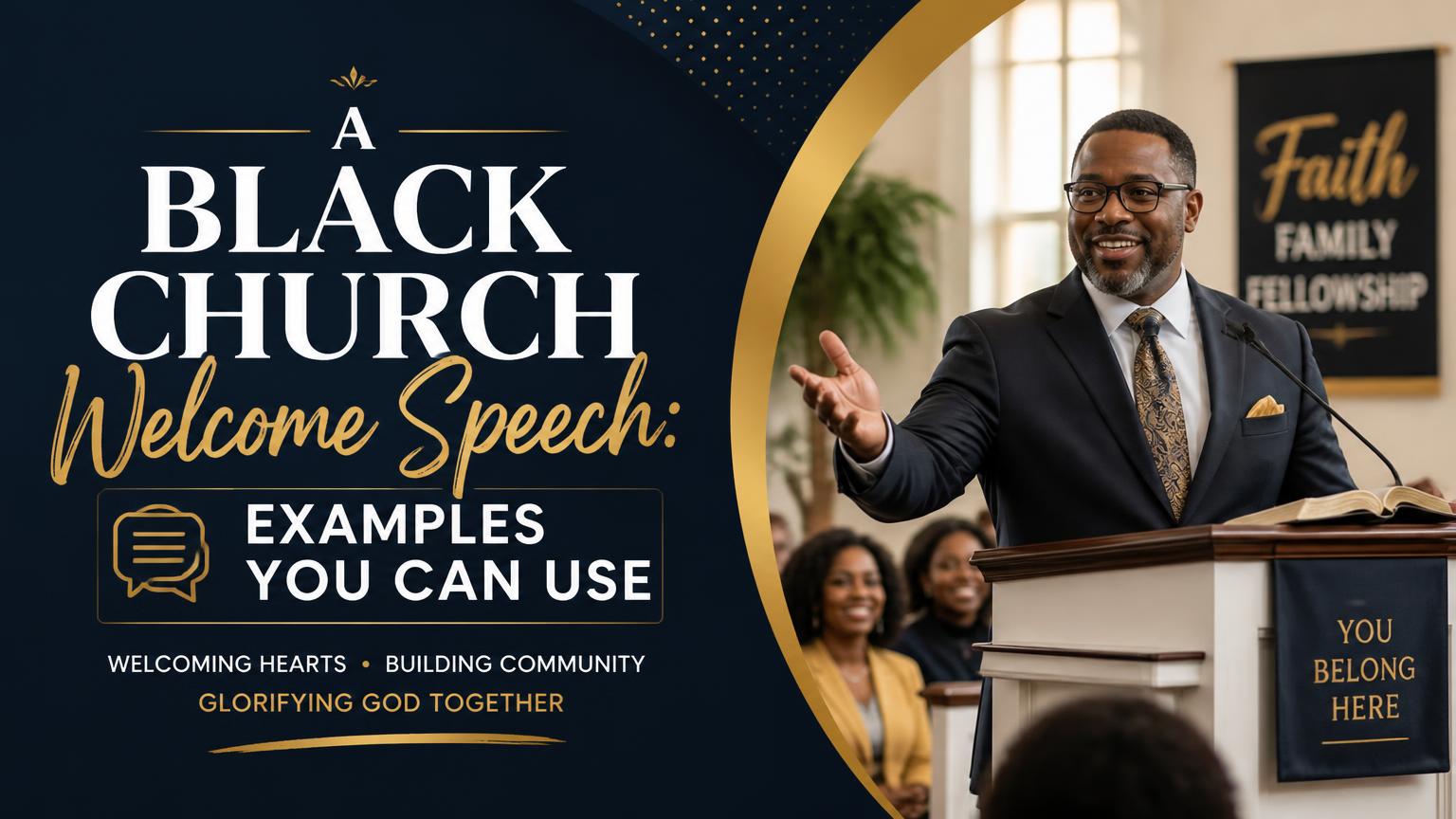
A strong Black church welcome speech should do three things quickly: honor God, recognize the church family, and make visitors feel genuinely received. The best welcomes are warm without being performative, rooted in the congregation’s traditions, and brief enough to lead naturally into worship. They may include a Scripture, a communal response, or a reference to the church’s history, but they should sound like the congregation—not a borrowed script.
Black Church Welcome Speech
Ready-to-Use Black Church Welcome Speech
Good morning, church family, and welcome to everyone worshiping with us today. We give God thanks for allowing us to gather in this place, and we are grateful for the opportunity to lift our voices, encourage one another, and celebrate His goodness.
To our members, we are glad to see you. To our guests and first-time visitors, we want you to know that you are welcome here. You are not among strangers; you are among people who believe in the love, grace, and power of God.
Whether you came with joy in your heart, carrying a burden, seeking prayer, or simply looking for a church home, we are thankful that you are with us. We pray that today’s worship will strengthen your faith, renew your spirit, and remind you that God is near.
As we begin, let us worship with open hearts and expect God to meet us here. Once again, welcome to [Church Name]. We are blessed to have you with us, and we pray that you will feel the love of Christ through this entire service. May God bless you.
This version works for a regular Sunday service because it welcomes members and visitors, explains the congregation’s posture, and points everyone toward worship without becoming a sermon.
Short Welcome Speech for Sunday Service
Good morning, and welcome to [Church Name]. We thank God for bringing us together and for giving us another opportunity to worship, fellowship, and grow in faith.
To our members, welcome home. To our guests, we are grateful that you chose to worship with us today. We pray that you experience God’s presence, receive encouragement, and feel genuinely welcomed among us.
Let us prepare our hearts for worship. We are glad you are here, and we pray that God blesses you throughout this service.
A short welcome is often more effective than a lengthy one. It leaves room for the opening hymn, prayer, praise team, or other elements of the service.
Welcome Speech for First-Time Visitors
Good morning, church family. We are especially pleased to welcome our first-time visitors today. Thank you for choosing to spend part of your Sunday with us at [Church Name].
We understand that visiting a church for the first time can feel unfamiliar, so we want you to know that you are welcome here. You do not have to have everything figured out, and you do not have to be anything other than who you are.
Our prayer is that you find warmth in this congregation, encouragement in the Word of God, and peace in this worship experience. If you have questions or need assistance, members of our welcome ministry will be happy to help you.
We are grateful for your presence, and we hope you will worship with us again. May God bless you and keep you.
This wording offers hospitality without pressuring visitors to introduce themselves publicly, join immediately, or make a commitment before they are ready.
Welcome for a Special Service
Welcome to [Church Name] as we gather for this special service of [homecoming/communion/celebration/ordination]. We honor God for His faithfulness and give thanks for the people, prayers, and sacrifices that have helped sustain this congregation.
We welcome our members, visiting churches, community guests, family members, and friends. Your presence adds joy to this occasion. As we worship, remember the generations who have prayed, served, taught, and carried the work of the church forward.
May this service strengthen our fellowship, deepen our gratitude, and draw us closer to God and to one another. Thank you for being with us. We pray that you are blessed by the worship, the Word, and the fellowship we share today.
For a homecoming or anniversary, the speech can acknowledge the congregation’s history. For communion, it should remain reverent and avoid turning the welcome into a celebration unrelated to the purpose of the service.
Essential Elements of a Black Church Welcome Speech
A welcome speech does not need to contain every possible church announcement. Its central purpose is to establish belonging and prepare people to worship.
Begin With Gratitude to God
Many Black church traditions place worship, testimony, prayer, and gratitude at the center of congregational life. Opening with “We thank God,” “We give God praise,” or a comparable expression can immediately place the gathering in its spiritual context.
The wording should fit the congregation’s theology and worship style. Some churches may use a formal liturgical opening, while others may prefer an energetic greeting such as, “This is the day that the Lord has made; let us rejoice and be glad in it” (Psalm 118:24). The Scripture should support the welcome rather than replace it.
Welcome Members and Visitors Directly
A useful speech distinguishes between the church family and guests while affirming both. Phrases such as “welcome home” may resonate with returning members, while “we are grateful you chose to worship with us” speaks directly to visitors.
Avoid treating visitors as an audience to be recruited. A welcome should communicate hospitality, not pressure. Do not assume that every guest is looking for a church, shares the congregation’s beliefs, or wants to speak publicly.
Name the Needs People May Bring
People arrive at worship with different circumstances. Some may be celebrating; others may be grieving, uncertain, lonely, or seeking direction. Briefly acknowledging those realities can make the welcome feel pastoral rather than ceremonial.
For example:
Whether you came with a testimony, a question, a burden, or a thankful heart, we pray that you find encouragement and peace in God’s presence today.
This statement does not promise that one service will solve every problem. It simply assures people that they do not have to hide their humanity in order to belong.
Point the Congregation Toward Worship
The welcome should lead somewhere. Conclude by inviting people to participate in worship, listen to the Word, join in prayer, or fellowship with one another.
A call-and-response line may be appropriate in a congregation that regularly uses it:
If you are glad to be in the house of the Lord, say amen.
However, call-and-response should reflect the church’s established practice. Forced enthusiasm, exaggerated volume, or borrowed expressions can make a speech sound artificial.
How to Write a Welcome Speech for Your Church
Identify the Occasion
A regular Sunday welcome differs from a welcome for a revival, youth service, funeral, watch night, homecoming, or church anniversary. Begin by asking what people need to understand about this particular gathering.
For example:
- A regular service needs warmth and orientation.
- A homecoming may acknowledge history and returning members.
- A youth service may use simpler, more energetic language.
- A funeral requires compassion, restraint, and respect for grieving families.
- A communion service should emphasize reverence and reflection.
Use the Church’s Natural Voice
Listen to how the pastor, ushers, worship leaders, and members normally speak. A formal congregation may prefer “We are delighted to welcome you,” while another may naturally say, “We are glad you are here.” Neither style is inherently more authentic.
The goal is not to imitate every Black church tradition. Black churches include many denominations, regions, generations, and worship styles. A congregation’s identity may be shaped by Baptist, Methodist, Pentecostal, Episcopal, nondenominational, or other traditions. Use language that belongs to the specific church.
Include Practical Information Only When Necessary
A welcome speech may briefly tell visitors where to find restrooms, childcare, fellowship refreshments, or a welcome table. Give only information that helps people participate comfortably.
Do not bury the spiritual welcome beneath a long list of announcements. Those details usually belong later in the service.
Keep the Speech Focused
For most Sunday services, one to two minutes is sufficient. A useful structure is:
- Greet the congregation.
- Give thanks to God.
- Welcome members and visitors.
- Acknowledge the purpose or occasion.
- Invite everyone into worship.
- Offer a brief blessing or transition.
A speaker who has more to say should coordinate with the service leader rather than turning the welcome into an unscheduled sermon.
Delivery Tips for the Person Giving the Welcome
A well-written speech can lose its warmth if it is rushed or read without connection. Speak slowly enough for visitors and older members to follow, and look up from the page regularly.
Pronounce names, church ministries, and visiting congregations correctly. If visitors are being recognized, confirm beforehand whether they want to be named publicly. Some guests may prefer a general welcome rather than being asked to stand.
Let the congregation’s energy guide the delivery. A celebratory service may invite a stronger response, while a service following a death or community tragedy calls for gentleness. Authentic warmth matters more than volume.
If the welcome includes a Scripture, read it accurately and connect it briefly to the gathering. For example, Hebrews 13:2 encourages believers to show hospitality, but the welcome should demonstrate that hospitality rather than merely quote the verse.
Common Mistakes to Avoid
A welcome speech becomes less effective when it:
- lasts so long that it competes with the sermon or worship;
- assumes every visitor is a Christian or wants to join the church;
- pressures guests to stand, speak, give money, or make an immediate decision;
- uses unfamiliar church language without explanation;
- turns announcements into the main message;
- relies on stereotypes, forced slang, or exaggerated performance;
- promises that visitors will receive a specific healing, answer, or outcome;
- ignores people worshiping online when virtual participation is part of the congregation’s practice.
The most respectful approach combines spiritual confidence with personal humility. A church can clearly proclaim its faith while treating every visitor with dignity and freedom.
A Black church welcome speech is most effective when it sounds like a genuine invitation into worship: grateful to God, mindful of the congregation’s heritage, attentive to visitors, and open to people carrying different experiences. The strongest version is not necessarily the most energetic or elaborate. It is the one that helps people feel seen, gives them a clear sense of what is happening, and prepares them to participate in the life of the church.