
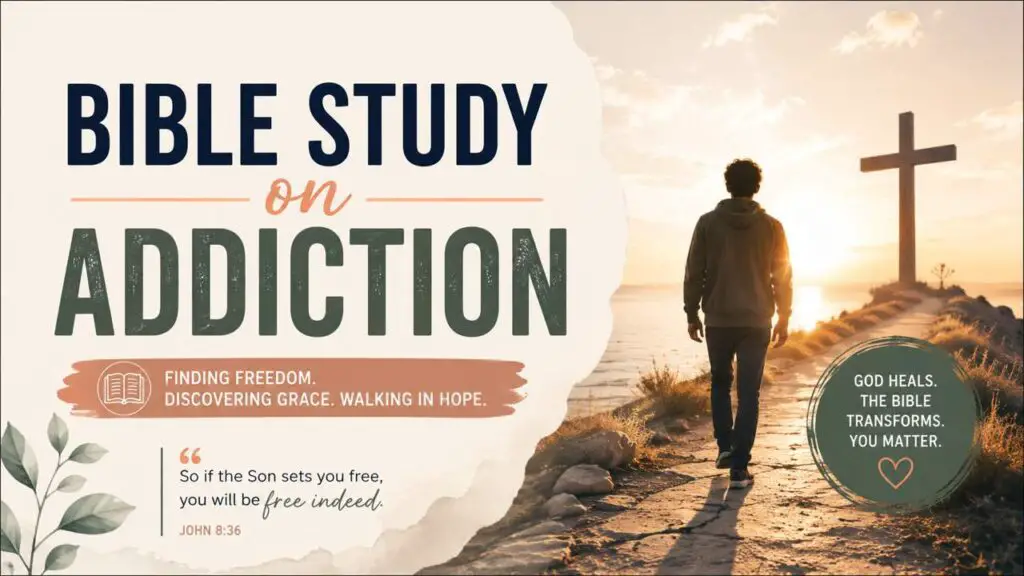
Addiction affects millions of people across the world, and it often reaches far beyond substances alone. You may struggle with alcohol, drugs, pornography, gambling, unhealthy relationships, social media, or other habits that slowly take control of your thoughts and choices. Studies continue to show that addiction impacts emotional health, relationships, finances, and spiritual well-being. Over time, addiction can create feelings of shame, isolation, hopelessness, and exhaustion.
One difficult truth about addiction is that it rarely begins with the intention to destroy your life. Many addictions start as coping mechanisms for pain, loneliness, stress, trauma, or emotional wounds. Psychologically, repeated behaviors can slowly reshape your thinking patterns until you feel trapped in cycles that seem impossible to break. You may even find yourself wanting freedom while repeatedly falling into the same struggle.
This Bible study guide is designed to help you understand addiction through God’s Word and discover how faith can lead you toward healing, strength, and restoration. No matter how long you have struggled or how many times you have failed, God’s grace is still available to you. Through Scripture, prayer, and surrender to Him, you can find hope and begin walking toward lasting freedom.
What You Will Learn from This Bible Study Guide on Addiction
- You will understand what the Bible teaches about addiction and destructive strongholds.
- You will learn how addiction affects your spiritual, emotional, and relational life.
- You will discover biblical examples of people who struggled with weakness and temptation.
- You will see how God offers strength, forgiveness, and restoration to those who seek Him.
- You will learn practical biblical ways to resist temptation and pursue healing.
- You will understand the importance of accountability, prayer, and renewing your mind.
- You will be encouraged that your identity is not defined by your addiction but by God’s love for you.
Before beginning this Bible study, take a moment to ask God for wisdom, understanding, and an open heart.
Short Prayer for Guidance
Heavenly Father,
Please help me understand Your truth as I study Your Word about addiction. Give me wisdom to recognize areas of weakness in my life and strength to apply Your teachings daily. Help me receive Your grace, guidance, and healing as I seek freedom through You. Thank You for Your love and faithfulness.
Amen
What Does the Bible Say About Addiction?
The Bible speaks clearly about self-control, temptation, spiritual bondage, and the importance of surrendering your life to God. While the word “addiction” may not always appear directly in Scripture, the Bible repeatedly addresses behaviors and desires that enslave people.
“I have the right to do anything,” you say—but not everything is beneficial. “I have the right to do anything”—but I will not be mastered by anything. — 1 Corinthians 6:12
This verse reminds you that anything controlling your life more than God can become harmful. Addiction often begins when something good, pleasurable, or comforting slowly gains mastery over your mind and actions.
“No temptation has overtaken you except what is common to mankind. And God is faithful; he will not let you be tempted beyond what you can bear.” — 1 Corinthians 10:13
God acknowledges that temptation is real and difficult, but He also promises that you are never alone in the struggle. He always provides a path toward endurance and escape.
“Do not get drunk on wine, which leads to debauchery. Instead, be filled with the Spirit.” — Ephesians 5:18
This verse contrasts being controlled by substances with being led by the Holy Spirit. God desires your heart, mind, and actions to be guided by His Spirit rather than unhealthy cravings.
“So if the Son sets you free, you will be free indeed.” — John 8:36
Jesus offers true freedom that goes beyond temporary relief. Through Him, you can experience spiritual healing, transformation, and release from bondage.
“Therefore confess your sins to each other and pray for each other so that you may be healed.” — James 5:16
Addiction often grows in secrecy and isolation. God encourages honesty, accountability, and prayer as part of the healing process.
The Bible teaches that addiction is a form of bondage that can damage your relationship with God, yourself, and others. What does the Bible say about addiction? The Bible says that while addiction can enslave you, God offers freedom, strength, forgiveness, and restoration through Jesus Christ.
Biblical Characters who Experienced Addiction
#1. Samson — Judges 16
Context
Samson was chosen by God and blessed with extraordinary strength, yet he repeatedly struggled with impulsive desires and unhealthy attachments. His relationship with Delilah revealed how deeply his uncontrolled passions influenced his decisions. Even though God had called him for a special purpose, Samson continually placed himself in spiritually dangerous situations.
Over time, Samson became blinded by temptation and emotional weakness. His inability to exercise self-control eventually led to betrayal, humiliation, and captivity. His story demonstrates how repeated compromise can slowly weaken even the strongest person spiritually and emotionally.
Addiction’s Resolve
Although Samson experienced devastating consequences, his story did not end in complete defeat. In his lowest moment, after losing his strength and freedom, Samson turned back to God in humility. He recognized his dependence on God rather than his own abilities.
Samson’s final prayer showed repentance and surrender. God answered him one last time and restored his strength for a greater purpose. His life reminds you that even after repeated failures, God’s mercy can still meet you when you sincerely seek Him.
What Can We Learn from Samson’s Example
- Uncontrolled desires can slowly weaken your spiritual life.
- Repeated compromise often leads to painful consequences.
- Pride can blind you to dangerous patterns.
- God’s grace is still available when you genuinely repent.
#2. The Prodigal Son — Luke 15:11–32
Context
The prodigal son demanded his inheritance early and pursued reckless living far from his father’s guidance. He wasted his resources on destructive choices and temporary pleasures. His lifestyle eventually left him broken, desperate, and empty.
The deeper tragedy was not just financial ruin but spiritual separation. The son believed fulfillment could be found apart from his father, yet his choices led him into misery and isolation. Addiction often creates a similar cycle of temporary satisfaction followed by deeper emptiness.
Addiction’s Resolve
The turning point came when the prodigal son “came to his senses.” He recognized his condition honestly and decided to return home. Instead of rejecting him, his father welcomed him with compassion, forgiveness, and restoration.
This story beautifully reflects God’s heart toward you. No matter how far addiction has taken you, God is ready to receive you when you return to Him sincerely. His grace is greater than your failures.
What Can We Learn from the Prodigal Son’s Example
- Addiction can create spiritual and emotional emptiness.
- Honest self-awareness is necessary for healing.
- God welcomes repentance with grace and compassion.
- Restoration is possible even after serious mistakes.
#3. King Solomon — Ecclesiastes 2
Context
Solomon possessed wisdom, wealth, influence, and pleasure beyond imagination. Yet he pursued fulfillment through possessions, entertainment, relationships, and indulgence. Despite having everything the world could offer, he eventually recognized the emptiness of living apart from God.
His writings in Ecclesiastes reveal the disappointment that comes from seeking satisfaction in temporary things. Addiction often develops when people continually search for meaning through experiences that never truly satisfy the soul.
Addiction’s Resolve
Solomon eventually acknowledged that true fulfillment comes from fearing God and obeying Him. After experiencing the emptiness of worldly pursuits, he realized that lasting peace cannot be found through endless pleasure or self-indulgence.
His story reminds you that addiction is not only about substances but also about misplaced desires. Only God can fully satisfy the deepest needs of your heart.
What Can We Learn from Solomon’s Example
- Temporary pleasures cannot satisfy spiritual emptiness.
- Success and wealth do not protect you from destructive habits.
- Chasing fulfillment outside God leads to frustration.
- True peace is found in a relationship with God.
How Does Addiction Affect Us?
#1. Addiction Weakens Your Relationship with God
“Your iniquities have separated you from your God.” — Isaiah 59:2
Addiction often pulls your attention, time, and devotion away from God. You may begin neglecting prayer, worship, Scripture, and spiritual accountability because shame and guilt make you feel distant from Him.
Over time, addiction can numb your spiritual sensitivity. You may start rationalizing sinful behaviors or feel spiritually exhausted. Yet God continually invites you back into relationship with Him through repentance and grace.
#2. Addiction Damages Your Mind and Emotions
“For God has not given us a spirit of fear, but of power and of love and of a sound mind.” — 2 Timothy 1:7
Addiction can create emotional instability, anxiety, depression, guilt, and hopelessness. What may begin as temporary relief often becomes a deeper source of emotional pain and mental exhaustion.
You may feel trapped between wanting change and feeling powerless to stop unhealthy patterns. God desires to renew your mind and restore emotional stability through His truth and presence.
#3. Addiction Hurts Relationships
“A perverse person stirs up conflict, and a gossip separates close friends.” — Proverbs 16:28
Addiction rarely affects only one person. It can damage trust, communication, intimacy, and emotional connection with family, friends, and loved ones.
People struggling with addiction often isolate themselves or become dishonest to protect their behavior. Healing usually requires rebuilding trust through honesty, accountability, and consistent change.
#4. Addiction Creates Spiritual Bondage
“For whatever overcomes a person, to that he is enslaved.” — 2 Peter 2:19
Addiction can slowly become a controlling force in your life. What once felt voluntary may begin to feel impossible to resist. This loss of control often creates feelings of shame and defeat.
The Bible describes this condition as bondage or slavery. God’s desire is not for you to live controlled by destructive habits but to experience freedom through Christ.
#5. Addiction Distorts Your Identity
“Therefore, if anyone is in Christ, he is a new creation.” — 2 Corinthians 5:17
Addiction may cause you to label yourself by your failures instead of by God’s truth. You may begin believing you are hopeless, broken, or permanently damaged.
But your identity is not found in your addiction. Through Christ, God sees you as redeemable, valuable, and capable of transformation.
#6. Addiction Can Lead to Destructive Consequences
“The wages of sin is death, but the gift of God is eternal life in Christ Jesus our Lord.” — Romans 6:23
Addiction can affect your physical health, finances, career, relationships, and spiritual life. Left unchecked, destructive behaviors often grow more harmful over time.
While consequences are real, God’s grace is also real. He offers forgiveness, healing, and a new beginning when you surrender your life to Him.
How We Can Biblically Deal With Addiction
#1. Admit Your Struggle Honestly
Healing begins when you stop hiding your struggle from God and yourself. Addiction often grows stronger in secrecy, denial, and isolation. When you honestly acknowledge your weakness, you create space for God’s healing power to work in your life. Confession is not about shame but about surrender and truth. “If we confess our sins, he is faithful and just and will forgive us our sins.” — 1 John 1:9 You do not need to pretend you are strong enough to overcome addiction alone. God already knows your struggle and invites you to bring it before Him openly. Honest confession also allows trusted believers to encourage and support you in your recovery journey.
#2. Depend on God’s Strength Daily
Addiction can make you feel powerless, but God never intended for you to fight spiritual battles alone. Every day, you need His strength, wisdom, and guidance. Instead of relying only on willpower, learn to depend on God through prayer, Scripture, and surrender. “I can do all things through Christ who strengthens me.” — Philippians 4:13 God’s strength becomes especially important during moments of temptation and weakness. Spending consistent time with Him renews your perspective and reminds you that victory is possible. Daily dependence on God helps shift your focus from temporary cravings to eternal truth and lasting transformation.
#3. Renew Your Mind with Scripture
Addiction often reshapes your thinking patterns over time. That is why renewing your mind with God’s Word is essential for healing. Scripture replaces lies with truth and helps you recognize unhealthy thought patterns before they become destructive actions. “Do not conform to the pattern of this world, but be transformed by the renewing of your mind.” — Romans 12:2 When temptation comes, biblical truth gives you spiritual direction and encouragement. Memorizing verses, meditating on Scripture, and regularly studying the Bible can strengthen your faith and help you resist harmful habits. God’s Word gradually transforms your heart, desires, and decisions from the inside out.
#4. Build Accountability with Other Believers
You were never meant to struggle alone. Addiction thrives in secrecy, but healing often grows through honest community and accountability. Trusted Christian friends, mentors, pastors, or support groups can help encourage you during difficult moments. “Carry each other’s burdens, and in this way you will fulfill the law of Christ.” — Galatians 6:2 Accountability provides support, correction, prayer, and encouragement when you feel weak or discouraged. Opening up may feel uncomfortable at first, but vulnerability creates opportunities for healing and growth. God often works through relationships to strengthen you and remind you that you are not alone in your battle.
#5. Remove Sources of Temptation
One important step in overcoming addiction is identifying and removing triggers that lead you toward unhealthy behavior. This may involve changing habits, environments, relationships, or routines that encourage temptation. “Flee from sexual immorality.” — 1 Corinthians 6:18 The Bible often teaches believers to flee temptation rather than assume they are strong enough to resist every situation. Wisdom means recognizing your weaknesses and creating boundaries that protect your spiritual health. Removing temptation is not weakness; it is a practical expression of spiritual maturity. God honors your intentional effort to pursue holiness and freedom.
#6. Replace Harmful Habits with Godly Practices
Freedom from addiction involves more than stopping destructive behavior; it also requires building healthy spiritual habits. Prayer, worship, serving others, exercise, fellowship, and studying Scripture can help redirect your focus and energy toward life-giving activities. “Do not be overcome by evil, but overcome evil with good.” — Romans 12:21 When your life becomes centered on God’s purposes, unhealthy habits gradually lose their power over you. Filling your mind and schedule with positive, God-honoring practices strengthens your spiritual resilience. Lasting change often comes through consistent daily choices guided by faith and discipline.
#7. Remember Your Identity in Christ
Addiction may try to define you by your failures, but God defines you by His grace and redemption. When you place your faith in Christ, your identity changes. You are no longer condemned, abandoned, or hopeless. “Therefore, there is now no condemnation for those who are in Christ Jesus.” — Romans 8:1 Remembering your identity in Christ helps you resist shame and discouragement during recovery. You may still struggle at times, but your failures do not erase God’s love for you. Holding onto your identity as God’s child gives you strength to keep pursuing healing and transformation.
#8. Persevere Even After Setbacks
Recovery is often a process rather than an instant transformation. You may experience setbacks, discouragement, or moments of weakness along the way. However, failure does not mean God has abandoned you. “Though the righteous fall seven times, they rise again.” — Proverbs 24:16 The enemy wants you to believe that repeated struggles make change impossible, but God calls you to continue seeking Him faithfully. Perseverance involves getting back up, learning from mistakes, and continuing to trust God’s grace. Every step toward healing matters, and God can continue working in your life even during imperfect progress.
Group Discussion Questions
- What are some common forms of addiction people struggle with today?
- Why do you think addiction often grows in secrecy and isolation?
- Which Bible verse in this study spoke most personally to you and why?
- How does addiction affect a person spiritually and emotionally?
- What role does accountability play in overcoming addiction?
- How can renewing your mind with Scripture help break unhealthy patterns?
- What practical boundaries can help someone avoid temptation?
- Why is understanding your identity in Christ important during recovery?
- How can the church better support people struggling with addiction?
- What gives you hope when facing repeated struggles or setbacks?
Prayer to Help Us Deal with Addiction
Dear God,
Thank You for loving me even in my weakness and struggles. You see every burden, temptation, fear, and failure that I carry, and yet Your grace remains available to me. Please help me break free from the grip of addiction and every unhealthy pattern that controls my life. Give me strength when I feel weak, wisdom when I feel confused, and peace when I feel overwhelmed. Renew my mind and help me desire what is good, pure, and pleasing to You. Surround me with people who will encourage me, pray for me, and guide me toward healing. Help me remember that my identity is found in You and not in my mistakes. Teach me to depend on Your Spirit daily and trust Your power to transform my life completely. Thank You for Your mercy, forgiveness, and unfailing love.
Amen
Closing Remarks
Addiction can make you feel trapped, discouraged, and alone, but God’s Word continually reminds you that freedom and restoration are possible through Him. No matter how long you have struggled or how many setbacks you have faced, God’s grace is greater than your weakness. This Bible study guide encourages you to continue seeking God daily, trusting that He can renew your mind, strengthen your heart, and lead you toward healing one step at a time.
As you continue growing in faith, spend time exploring more of what the Bible teaches about freedom, self-control, repentance, and spiritual renewal. You can begin studying Romans 12:1–2, Galatians 5:16–25, Psalm 51, and John 8:31–36 to deepen your understanding of God’s power to transform lives. Your journey toward freedom may not happen overnight, but with God, every step forward matters.