
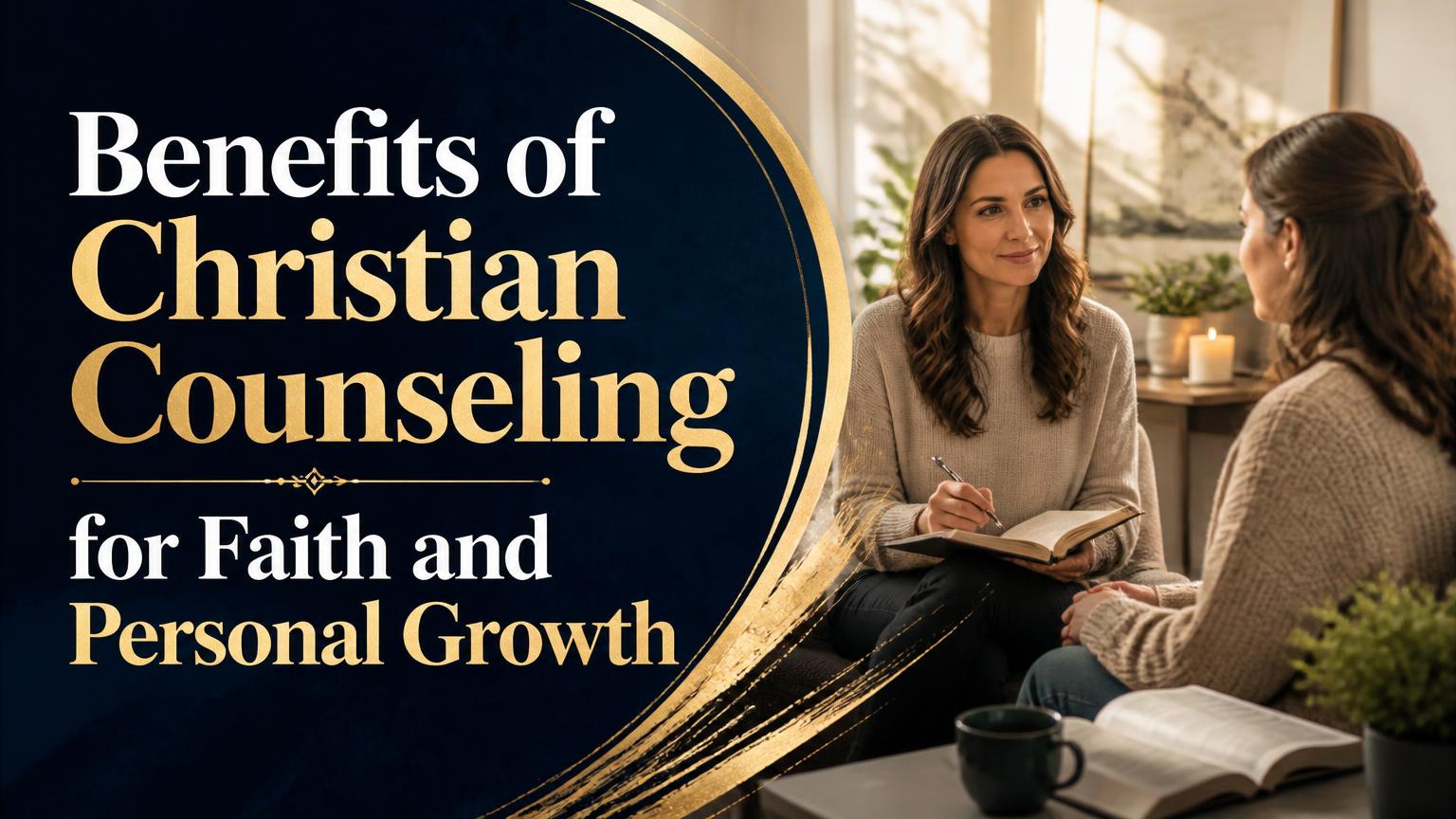
Christian counseling combines professional counseling practices with a Christian understanding of God, human dignity, sin, suffering, grace, relationships, and spiritual growth. Its benefits may include clearer self-understanding, healthier emotional patterns, stronger relationships, wise decision-making, and a deeper, more honest faith. Effective Christian counseling does not treat prayer and Scripture as substitutes for competent mental-health care. Instead, it seeks to address the whole person while respecting clinical knowledge, personal responsibility, and the counselor’s limits.
Benefits of Christian Counseling
Christian counseling can help people connect psychological insight with biblical hope and practical change. Its value depends on the counselor’s training, the client’s needs, the quality of the therapeutic relationship, and the approach used. It should never promise instant healing or suggest that emotional distress results simply from weak faith.
Integrating Faith With Emotional and Mental Health
One major benefit is the opportunity to discuss faith openly during counseling. A Christian client may want to consider prayer, Scripture, forgiveness, calling, guilt, suffering, or spiritual doubt alongside anxiety, depression, grief, trauma, family conflict, or unhealthy behavior. In secular counseling, these subjects may receive limited attention; in Christian counseling, they can be treated as meaningful parts of the person’s life.
Integration does not mean attaching a Bible verse to every problem. It means asking how a person’s beliefs shape interpretation, hope, choices, identity, and relationships. A counselor may help distinguish genuine conviction from destructive shame, biblical responsibility from excessive self-blame, and wise forgiveness from tolerating abuse.
Developing a Safe Place for Honest Self-Understanding
Counseling provides a structured relationship in which a person can examine thoughts, emotions, memories, and behaviors without needing to maintain a public image. This is especially valuable for Christians who feel pressure to appear spiritually strong or fear that admitting distress will disappoint God or other believers.
A trustworthy counselor listens carefully, maintains appropriate confidentiality, and helps clients identify patterns rather than merely reacting to isolated events. The process can reveal how past experiences, family systems, loss, fear, perfectionism, or distorted beliefs influence present behavior. Christian counseling can then place this self-understanding within a framework of truth, grace, repentance, and responsible action.
Scripture presents mutual care rather than isolated self-sufficiency as part of Christian life:
“Bear one another’s burdens, and so fulfill the law of Christ.” — Galatians 6:2 (WEBU)
Professional counseling is not the only way believers bear burdens, but it offers specialized help when problems are persistent, complex, or beyond what ordinary friendship can safely address.
Supporting Healing From Grief, Trauma, and Emotional Pain
Christian counseling may help people process grief, abuse, betrayal, neglect, shame, or other painful experiences. Healing does not require pretending that suffering was acceptable or quickly moving past it. A counselor can help the client name what happened, understand its effects, establish safety, grieve honestly, and develop healthier responses.
Faith can provide a language of lament, compassion, hope, and meaning, but it should not be used to silence pain. The Bible recognizes that emotional suffering is real:
“Yahweh is near to those who have a broken heart, and saves those who have a crushed spirit.” — Psalm 34:18 (WEBU)
This does not guarantee that distress will disappear immediately. It does affirm that brokenness does not place a person beyond God’s concern. Counseling can translate that theological hope into practical work involving emotional regulation, boundaries, supportive relationships, and appropriate treatment.
Encouraging Wise Choices and Lasting Personal Growth
Christian counseling can help clients move from insight to action. A person may understand that anger, avoidance, compulsive behavior, or people-pleasing is harmful yet still lack the skills to respond differently. Counseling can provide concrete methods for recognizing triggers, challenging distorted thoughts, communicating clearly, setting boundaries, and practicing new habits.
Personal growth also involves moral and spiritual discernment. The counselor may help a client examine motives, responsibilities, desires, and consequences without reducing every decision to a simplistic rule. Biblical transformation includes a renewed way of thinking:
“Don’t be conformed to this world, but be transformed by the renewing of your mind, so that you may prove what is the good, well-pleasing, and perfect will of God.” — Romans 12:2 (WEBU)
In counseling, this renewal can involve both spiritual reflection and evidence-based psychological skills. Growth is usually gradual. Setbacks do not automatically mean that counseling has failed; they can identify areas requiring further understanding and practice.
Strengthening Relationships and Communication
Many people seek Christian counseling because conflict at home, church, work, or within a dating or marriage relationship has become difficult to manage. Counseling can teach listening, emotional honesty, conflict resolution, accountability, empathy, and boundary-setting. It can also clarify when reconciliation is appropriate and when distance or protection is necessary.
Christian teaching values truthful communication shaped by love:
“but, speaking truth in love, we may grow up in all things into him who is the head, Christ” — Ephesians 4:15 (WEBU)
That principle does not mean saying everything bluntly or remaining in a dangerous relationship. Truth and love together require honesty, compassion, justice, and wisdom. In situations involving violence, coercive control, or ongoing abuse, safety takes priority, and reconciliation should never be used to pressure a victim to remain exposed to harm.
Connecting Spiritual Care With Appropriate Clinical Help
Christian counselors may help clients recognize when a concern requires additional professional support. Depression, severe anxiety, trauma symptoms, substance dependence, eating disorders, suicidal thoughts, psychosis, and some medical conditions may require coordinated care involving a physician, psychiatrist, specialized therapist, crisis service, or treatment program.
This is a benefit rather than a weakness. Christian counseling is responsible when it acknowledges the difference between spiritual encouragement and clinical treatment. Prayer may accompany medical or psychological care, but it should not replace urgent intervention. A counselor who recommends consultation, medication evaluation, or a higher level of care is not necessarily demonstrating a lack of faith; the recommendation may reflect sound judgment and care for the client.
What Christian Counseling Is—and Is Not
Christian counseling is professional or pastoral helping that takes Christian beliefs seriously while addressing emotional, relational, behavioral, and sometimes spiritual concerns. The field includes different models. Some counselors primarily use established psychological approaches while incorporating a Christian worldview. Others emphasize biblical counseling, discipleship, or pastoral care. Their training, credentials, methods, and limits may differ substantially.
It is useful to distinguish Christian counseling from ordinary encouragement by a friend or church member. A pastor or mature believer may provide valuable prayer, wisdom, and companionship, but a licensed mental-health professional generally has more specialized preparation for diagnosis, trauma treatment, risk assessment, and structured therapy. The labels alone do not guarantee quality. Readers should ask what training the counselor has, what methods are used, how Scripture is integrated, and how emergencies or referrals are handled.
Christian counseling also should not imply that mental illness is always caused by personal sin or that a faithful Christian cannot experience depression, anxiety, grief, or trauma. Human suffering has physical, psychological, relational, social, and spiritual dimensions. A careful counselor resists one-size-fits-all explanations and examines the person’s actual circumstances.
How to Choose a Christian Counselor
Examine Training, Credentials, and Experience
Look for a counselor whose professional preparation matches the problem being addressed. Relevant credentials vary by location, but training in counseling, psychology, social work, marriage and family therapy, or pastoral counseling should be clearly explained. Ask whether the counselor has experience with concerns such as trauma, marriage conflict, addiction, grief, or anxiety.
It is also reasonable to ask how the counselor combines Christian faith with clinical practice. A responsible answer should describe specific methods and boundaries rather than relying only on general claims about being “Christian.”
Ask About Biblical Integration and Personal Fit
Christian clients differ in denomination, theology, spiritual history, and comfort with prayer or direct use of Scripture. Discuss whether faith will be integrated through prayer, biblical reflection, spiritual disciplines, values clarification, or another approach. The counselor should respect conscience and avoid manipulating clients into religious practices they do not understand or freely accept.
Personal fit matters because effective counseling requires trust and honest communication. A counselor may be qualified yet still be a poor match for a particular client. Feeling challenged is not automatically a problem, but persistent shame, pressure, dismissal, or boundary violations are serious warning signs.
Check Safety, Confidentiality, and Referral Practices
Before beginning, clarify confidentiality and its legal or ethical limits, especially regarding imminent danger, abuse, or threats to another person. Ask how the counselor handles suicidal thoughts, emergencies, medication questions, and needs outside the counselor’s expertise.
A sound counselor welcomes collaboration with other qualified professionals when appropriate. Christian counseling should broaden responsible care, not isolate a person from medical treatment, protective services, or competent mental-health support.
Limitations and Safeguards
Christian counseling cannot guarantee restored relationships, immediate emotional relief, or a particular spiritual outcome. Progress may be affected by the severity and duration of the problem, ongoing stress, physical health, support systems, readiness for change, and access to appropriate care. Counseling is also not a substitute for repentance where repentance is needed, nor does it excuse another person’s harmful behavior.
Clients should be cautious of counselors who promise certainty, blame every symptom on sin, discourage medical treatment, demand unquestioning loyalty, misuse Scripture to control decisions, or minimize abuse. Biblical language can be used either to offer hope or to intensify shame, depending on how it is handled. Healthy counseling holds grace and responsibility together: it acknowledges wrongdoing without defining a person only by failure, and it offers compassion without denying the need for change.
Christian faith can provide a strong basis for comfort and endurance. Paul describes God as the source of comfort that equips believers to comfort others:
“the Father of mercies and God of all comfort, who comforts us in all our affliction, that we may be able to comfort those who are in any affliction, through the comfort with which we ourselves are comforted by God.” — 2 Corinthians 1:3-4 (WEBU)
That passage supports compassionate care, but it does not remove the need for skill, patience, assessment, or practical help.
Conclusion
The benefits of Christian counseling arise from bringing professional care and Christian faith into a thoughtful, responsible relationship. It can help people understand themselves, process suffering, change destructive patterns, strengthen relationships, make wise decisions, and pursue spiritual growth without denying psychological or medical realities. Its effectiveness depends on competent counseling, honest participation, appropriate boundaries, and a sound understanding of Scripture.
The best Christian counseling does not use faith to avoid painful truth. It uses truth, grace, wisdom, and practical help to face that truth safely. For some concerns, counseling alone may be sufficient; for others, it should be coordinated with medical care, pastoral support, crisis intervention, or specialized treatment.