
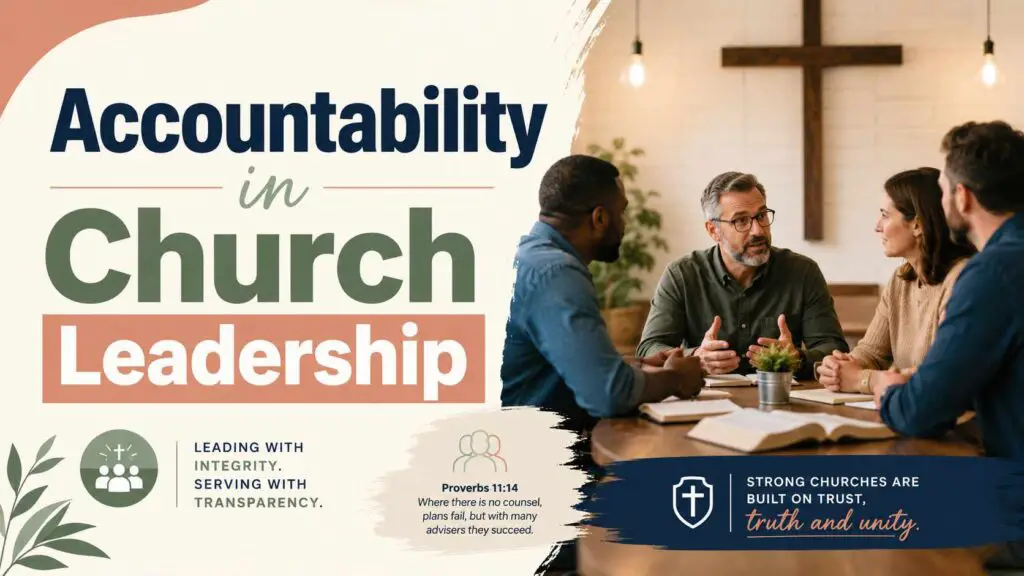
Accountability in church leadership is essential for maintaining trust, integrity, and spiritual health within a congregation. Over the years, I have learned that effective leadership is not about authority alone but about faithfully stewarding the responsibilities God has entrusted to us. Church leaders face unique challenges, including managing people, handling resources, teaching God’s Word, and setting a godly example. Without accountability, even sincere leaders can drift into unhealthy habits or poor decisions. Biblical accountability provides protection, encouragement, and correction when needed. It helps leaders remain faithful to God, serve others effectively, and build ministries that honor Christ and strengthen the church.
Accountability in Church Leadership
#1. Accountability to God
The foundation of all church leadership accountability begins with God. Every leader, whether a pastor, elder, deacon, or ministry volunteer, will ultimately answer to Him for how they served His people. This truth shapes daily decisions, attitudes, and priorities. When I prepare a sermon, counsel a struggling member, or lead a ministry meeting, I remind myself that God sees not only my actions but also my motives.
Practical accountability to God requires consistent prayer, Bible study, and self-examination. Many leaders become busy serving others while neglecting their personal walk with Christ. I have found that setting aside dedicated time each morning for Scripture and prayer helps keep my heart aligned with God’s will. Leaders who remain accountable to God are less likely to seek personal recognition and more likely to lead with humility and faithfulness.
#2. Accountability to Scripture
Church leaders must submit themselves to the authority of God’s Word. Personal opinions, cultural trends, and popular teachings should never replace biblical truth. Accountability to Scripture ensures that leaders teach sound doctrine and make decisions that align with God’s commands rather than personal preferences.
In practical ministry, this means carefully studying the Bible before teaching and being willing to adjust beliefs when Scripture reveals a different truth. I have learned that faithful leadership requires constant learning and humility. Many churches benefit from sermon reviews, leadership discussions, and theological training that help leaders remain biblically grounded. When Scripture becomes the standard, leaders avoid misleading people and instead help believers grow in their faith and understanding of God.
#3. Accountability to Fellow Church Leaders
One of the greatest mistakes a church leader can make is attempting to lead alone. God designed leadership to function within community. Fellow pastors, elders, and ministry leaders provide wisdom, encouragement, and correction that help prevent blind spots from becoming serious problems.
In my ministry experience, regular meetings with trusted leaders have often revealed concerns I would have otherwise overlooked. Healthy leadership teams discuss challenges openly, pray together, and evaluate decisions honestly. These conversations may sometimes feel uncomfortable, but they protect both leaders and congregations. Accountability among leaders creates transparency and helps maintain unity within the church. It also demonstrates humility, showing the congregation that no leader is above correction or wise counsel.
#4. Accountability for Personal Integrity
People watch church leaders closely. They observe how leaders speak, treat others, manage responsibilities, and respond to difficulties. Personal integrity is not built through public appearances but through consistent character in everyday life.
I have seen ministries damaged when leaders neglected private integrity while maintaining a strong public image. Accountability in this area involves honesty, faithfulness, purity, and consistency. Practical safeguards include having trusted accountability partners, maintaining healthy boundaries, and being transparent about struggles. Integrity means doing the right thing even when nobody is watching. Leaders who protect their character earn trust and create a ministry environment where people feel safe following their guidance.
#5. Accountability in Financial Stewardship
Handling church finances requires exceptional responsibility. Congregation members give sacrificially, trusting leaders to manage resources wisely. Financial accountability protects the church from misuse of funds and builds confidence among members.
Effective financial accountability includes maintaining accurate records, conducting regular audits, and ensuring multiple people oversee financial transactions. Throughout my years in ministry, I have observed that transparent financial systems prevent misunderstandings and strengthen trust. Leaders should avoid handling finances alone and provide regular reports to appropriate church committees or boards. Wise stewardship demonstrates respect for God’s provision and ensures that church resources are used effectively to advance ministry goals and support kingdom work.
#6. Accountability in Teaching and Preaching
Teaching God’s Word is one of the most serious responsibilities in church leadership. People rely on leaders to explain Scripture accurately and help them apply biblical truth to everyday life. Accountability in teaching protects both the congregation and the leader.
Before teaching, I spend significant time studying Scripture, consulting trusted resources, and praying for wisdom. I also value feedback from mature believers who can identify areas needing clarification or improvement. Leaders should remain teachable and willing to correct mistakes when necessary. Sound teaching helps believers grow spiritually, while careless teaching can create confusion and doctrinal error. Accountability ensures that leaders handle God’s Word faithfully and responsibly.
#7. Accountability in Relationships
Church leaders interact with people from various backgrounds, personalities, and life situations. Accountability in relationships helps leaders maintain healthy boundaries and treat people with fairness and respect.
Over the years, I have learned the importance of avoiding favoritism and ensuring that decisions are based on biblical principles rather than personal preferences. Leaders should be approachable, willing to listen, and quick to resolve conflicts when they arise. Having trusted individuals who can observe relationship patterns and offer feedback is valuable. Healthy relationships contribute to church unity and create an environment where members feel valued and cared for. Accountability helps leaders build trust while avoiding situations that could damage their credibility.
#8. Accountability for Spiritual Growth
Church leaders cannot effectively guide others if their own spiritual lives are stagnant. Personal growth is not optional; it is essential for long-term ministry effectiveness. Leaders must continually deepen their relationship with God and pursue spiritual maturity.
I regularly evaluate my prayer life, Bible reading habits, and spiritual disciplines. Some seasons reveal areas where growth is needed, and accountability partners often help identify these gaps. Attending conferences, reading Christian books, and seeking mentorship can also encourage growth. Leaders who invest in their spiritual development are better equipped to teach, counsel, and serve others. Ongoing accountability ensures that leaders continue growing rather than relying solely on past experiences or accomplishments.
#9. Accountability for Church Vision and Mission
Every church exists to fulfill God’s mission. Leaders are responsible for ensuring that ministries, programs, and resources support that mission rather than becoming distractions. Accountability helps leaders stay focused on the church’s biblical purpose.
In practical terms, this involves regularly evaluating ministry effectiveness and asking whether programs are producing spiritual fruit. I have participated in leadership meetings where difficult decisions were made because certain activities no longer aligned with the church’s mission. Accountability encourages leaders to prioritize disciple-making, evangelism, worship, and community outreach. When leaders remain focused on God’s vision, the church can use its resources more effectively and make a greater impact in people’s lives.
#10. Accountability to the Congregation
Church leaders serve the people God has entrusted to their care. While leaders are called to guide and shepherd, they should also remain transparent and responsive to the congregation. Accountability to members builds trust and strengthens church relationships.
Throughout my ministry experience, I have found that open communication prevents many misunderstandings. Leaders should provide updates about important decisions, listen respectfully to concerns, and explain ministry directions clearly. This does not mean allowing every opinion to dictate leadership decisions, but it does mean valuing the voices of church members. When leaders remain accountable to the congregation, they demonstrate servant leadership and foster an environment of trust, unity, and mutual respect.
Closing Thoughts
Accountability in church leadership is not a burden but a blessing. It protects leaders from spiritual drift, strengthens ministry effectiveness, and builds trust within the congregation. Through years of serving in ministry, I have learned that accountability creates healthier leaders and healthier churches. Whether accountability comes from God, Scripture, fellow leaders, or the congregation, each layer serves an important purpose. Leaders who embrace accountability demonstrate humility, wisdom, and a genuine desire to honor Christ. As churches continue to navigate challenges and opportunities, accountability remains one of the most important foundations for faithful leadership and long-term spiritual impact.