
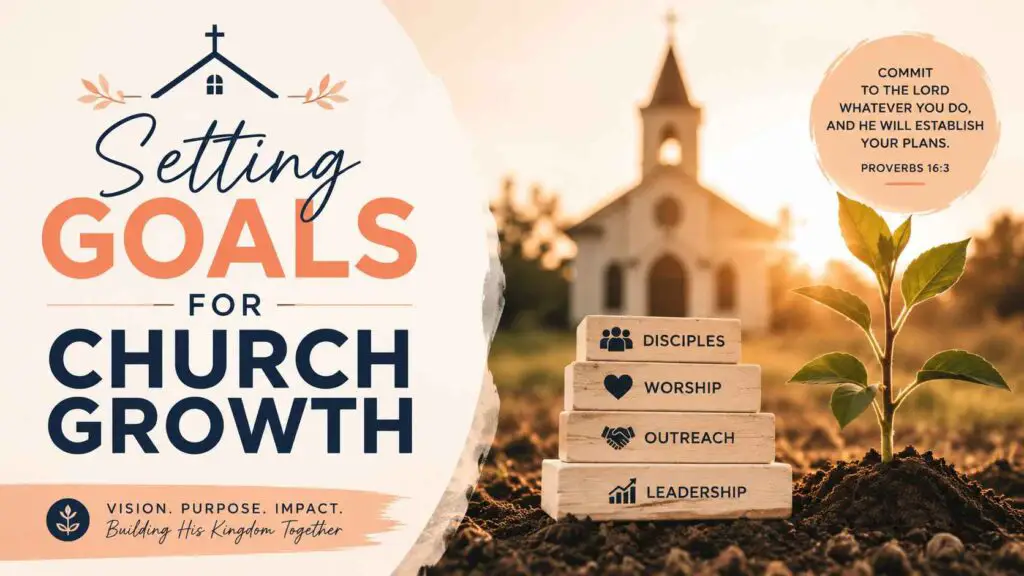
Church growth does not happen by accident. Healthy churches grow because leaders prayerfully seek God’s direction and create clear goals that align with His mission. While spiritual growth remains the foundation, practical planning helps churches reach more people, disciple believers effectively, and strengthen ministry impact. As Christian leaders, we must balance faith with faithful stewardship. Setting measurable church growth goals provides direction for pastors, ministry teams, and volunteers while ensuring resources are used wisely. Whether your church is small or large, the right goals can help create momentum, strengthen discipleship, and expand outreach. The following goals can help churches pursue meaningful and sustainable growth rooted in biblical principles.
Setting Goals for Church Growth
#1. Increase Weekly Worship Attendance
One of the most common church growth goals is increasing weekly worship attendance. However, the focus should not be on numbers alone but on reaching people who need Christ and helping believers remain connected to the church family. Leaders should track attendance trends monthly and identify seasons when attendance typically rises or declines.
Practical steps include encouraging members to invite friends, improving visitor experiences, promoting services through social media, and maintaining consistent follow-up. For example, a church averaging 150 attendees might set a goal of reaching 180 within one year. Leaders should regularly evaluate attendance data and discuss strategies during ministry meetings. Growth often happens when churches intentionally create welcoming environments where people feel valued, connected, and spiritually nourished.
#2. Improve New Visitor Follow-Up
Many churches receive visitors but struggle to retain them because follow-up systems are weak or inconsistent. A clear goal should be established to contact every first-time guest within 24 to 48 hours after their visit. This simple step demonstrates genuine care and increases the likelihood of return visits.
Effective follow-up may include phone calls, personalized emails, handwritten notes, or home visits when appropriate. Leaders should create a visitor tracking process and assign responsibility to a hospitality team. After years of ministry, many pastors have seen visitors become committed members simply because someone took the time to welcome them personally. Consistent follow-up helps transform first-time guests into active participants in the life of the church.
#3. Expand Small Group Participation
Small groups provide opportunities for deeper discipleship, accountability, and relationship building. A church growth goal may involve increasing small group participation by a specific percentage over the next year. Many believers grow spiritually faster when they study Scripture and pray with others regularly.
Leaders should identify potential group leaders, provide training, and launch groups that meet various needs and schedules. For example, churches may offer men’s groups, women’s groups, young adult groups, and family-focused groups. Regular promotion from the pulpit and testimonies from participants can encourage involvement. Strong small group ministries often lead to stronger church retention because members develop meaningful relationships beyond Sunday services.
#4. Increase Baptisms and New Believers
Baptisms are one of the clearest indicators of evangelistic effectiveness and spiritual growth. Churches should establish goals that focus on sharing the gospel and helping people take the next step in their faith journey. Growth becomes meaningful when lives are genuinely transformed through Christ.
Practical actions include hosting evangelistic events, providing baptism classes, encouraging personal witnessing, and creating clear pathways for new believers. Leaders can track decisions for Christ and baptism participation throughout the year. Churches that celebrate testimonies publicly often inspire others to pursue faith. Baptisms remind congregations that church growth is ultimately about changed lives rather than organizational success.
#5. Strengthen Prayer Ministry Participation
Every lasting church growth effort begins with prayer. Churches should establish goals that increase participation in corporate prayer meetings, prayer groups, and prayer initiatives. Leaders who have spent years seeking God’s guidance understand that strategies alone cannot produce spiritual fruit.
Practical goals may include launching weekly prayer gatherings, organizing quarterly prayer and fasting events, or creating prayer partner ministries. Pastors should teach on the importance of prayer and regularly share answered prayers with the congregation. When people witness God’s faithfulness, prayer becomes a natural priority. Churches grounded in prayer often experience stronger unity, deeper spiritual maturity, and greater ministry effectiveness.
#6. Increase Volunteer Involvement
Healthy churches depend on members who actively serve. A useful growth goal is increasing the percentage of attendees involved in ministry roles. Many churches discover that a small group of volunteers carries most responsibilities while others remain uninvolved.
Leaders should identify ministry needs and create simple pathways for members to serve. Volunteer fairs, ministry interest forms, and orientation classes can help connect people with opportunities. Whether serving in hospitality, worship, children’s ministry, media, or outreach, volunteers develop stronger ownership of the church’s mission. Increased involvement also reduces burnout among ministry leaders and creates a culture where everyone contributes according to their gifts.
#7. Develop Future Church Leaders
Church growth requires leadership multiplication. Churches should intentionally identify and train future ministry leaders who can support expanding programs and ministries. Without leadership development, growth often reaches a plateau because too few people carry too much responsibility.
Practical strategies include mentorship programs, leadership classes, ministry internships, and regular coaching sessions. Experienced leaders should invest personally in emerging leaders by meeting regularly for prayer, Bible study, and ministry discussions. Many successful churches maintain leadership pipelines that prepare volunteers for increasing responsibility. Developing leaders ensures long-term ministry health and creates opportunities for more people to use their God-given gifts.
#8. Expand Community Outreach Efforts
Churches that impact their communities often experience healthy growth because they demonstrate Christ’s love in practical ways. Outreach goals should focus on serving local needs while creating opportunities for gospel conversations. Effective outreach helps churches become known as valuable community partners.
Examples include food distributions, school supply drives, community clean-up projects, free health screenings, and support programs for families. Leaders should assess local needs before planning events. Outreach initiatives become more effective when church members actively participate and build relationships with community residents. Consistent service opens doors for meaningful ministry and often leads people to explore the church further.
#9. Improve Biblical Discipleship Programs
Attendance growth without discipleship creates spiritually immature congregations. Churches should establish goals that strengthen Bible study participation, spiritual mentoring, and Christian education. Every believer needs opportunities to grow in knowledge and application of God’s Word.
Leaders can create discipleship pathways that guide members from new believer classes to advanced leadership training. Churches should offer practical studies covering prayer, evangelism, stewardship, marriage, and biblical doctrine. Regular evaluations help ensure programs remain effective. Strong discipleship ministries equip believers to handle life’s challenges while developing a deeper relationship with Christ.
#10. Grow Online Ministry and Digital Outreach
Modern church growth includes reaching people through digital platforms. Churches should establish goals related to online engagement, livestream participation, website effectiveness, and social media outreach. Many people now encounter a church online before attending in person.
Practical goals may include increasing weekly livestream viewers, publishing devotional content, improving website resources, or expanding social media engagement. Leaders should ensure online content remains biblically sound and professionally presented. Testimonies, sermon clips, prayer resources, and ministry updates often attract new audiences. Digital outreach extends a church’s influence beyond physical walls and creates opportunities to minister to people who may never enter a church building initially.
#11. Strengthen Member Retention
Church growth is not only about attracting new people but also helping current members remain connected and engaged. Churches should establish retention goals that address common reasons members become inactive. Strong relationships and consistent discipleship often play a major role in retention.
Leaders should monitor attendance patterns and reach out when members begin missing services regularly. Small groups, mentoring relationships, ministry involvement, and pastoral care all contribute to stronger retention. Churches that intentionally care for members during difficult seasons often see greater long-term faithfulness. Retaining members helps maintain ministry momentum and strengthens congregational unity.
#12. Increase Youth and Children’s Ministry Engagement
The future of every church depends on effectively discipling the next generation. Churches should establish growth goals related to youth attendance, children’s ministry participation, volunteer recruitment, and family engagement. Young people need environments where they can build strong biblical foundations.
Practical strategies include creating age-appropriate discipleship programs, organizing youth events, training volunteers, and involving parents in spiritual development. Churches should regularly evaluate curriculum quality and ministry effectiveness. Young people who develop strong faith during childhood and adolescence are more likely to remain committed believers as adults. Investing in the next generation is one of the most important long-term church growth strategies.
Closing Thoughts
Setting goals for church growth provides direction, accountability, and purpose for ministry efforts. The most effective goals are rooted in prayer, aligned with Scripture, and focused on making disciples rather than simply increasing attendance. As Christian leaders, we must remember that God ultimately gives the increase, but He also calls us to steward our ministries faithfully. Whether the goal involves evangelism, discipleship, leadership development, outreach, or member care, every objective should point people toward a deeper relationship with Jesus Christ. By setting clear goals and consistently evaluating progress, churches can pursue healthy growth that honors God and transforms lives for His glory.