
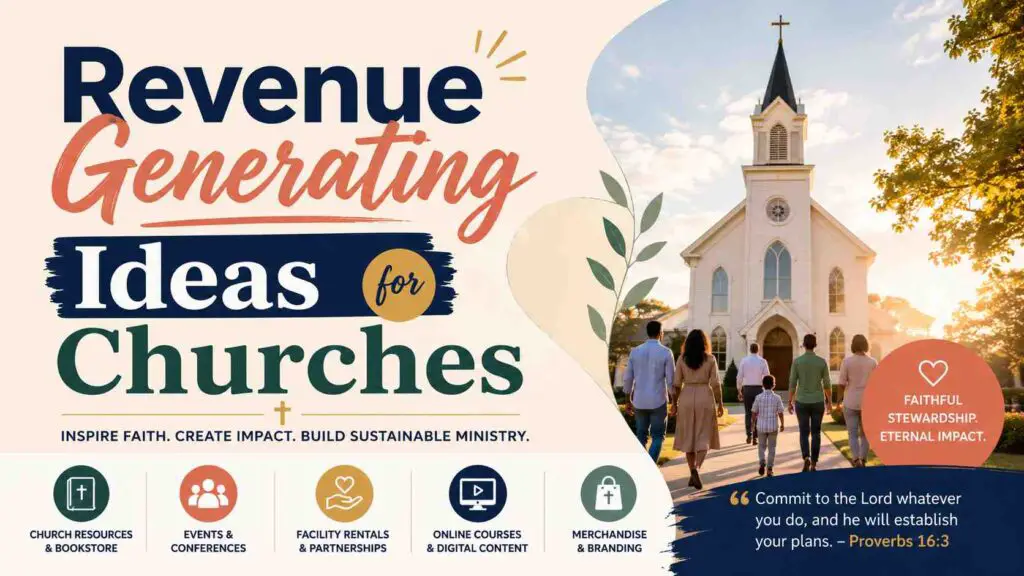
Many churches desire to expand their ministry impact, support missions, maintain facilities, and serve their communities more effectively. While tithes and offerings remain the primary source of church funding, many congregations are exploring ethical and practical ways to generate additional revenue. The goal is not to replace faith-based giving but to create sustainable income streams that support ministry objectives. Over the years, experienced Christian leaders have discovered that well-planned revenue-generating activities can strengthen community relationships while providing financial stability. The key is choosing opportunities that align with the church’s mission, values, and resources. The following ideas offer practical ways churches can generate income while continuing to serve God and their communities faithfully.
Revenue Generating Ideas for Churches
#1. Rent Out Church Facilities for Weddings and Special Events
Many churches have beautiful sanctuaries, fellowship halls, kitchens, and outdoor spaces that sit unused during weekdays. Renting these facilities for weddings, anniversaries, conferences, and community gatherings can create a reliable income stream. Establish clear rental policies, pricing structures, and guidelines that align with the church’s values. Consider offering different packages that include facility use, setup assistance, and cleaning services.
As church leaders, we have seen this model work well when managed professionally. Create a dedicated team to handle inquiries, contracts, scheduling, and event coordination. For example, a church fellowship hall can be rented for family reunions or graduation celebrations on weekends. The income generated can help fund missions, youth programs, or building maintenance while introducing new people to the church environment.
#2. Launch a Church-Owned Coffee Shop
A church coffee shop can serve both ministry and financial purposes. Many churches have unused lobby space that can be transformed into a welcoming café. Offer coffee, tea, pastries, and light snacks before and after services and throughout the week. This creates a gathering place where members and visitors can build relationships.
Start with basic equipment, volunteer baristas, and simple menu options. Over time, the coffee shop can become a popular community destination. Some churches partner with local coffee suppliers to reduce startup costs. Revenue generated can support outreach ministries while providing employment opportunities for church members. More importantly, it creates an environment where meaningful conversations about faith can happen naturally.
#3. Operate a Church Bookstore and Resource Center
Many believers seek trusted Christian resources but prefer recommendations from church leaders rather than online retailers. A church bookstore can offer Bibles, devotionals, Bible study materials, children’s resources, worship music, and gifts. Carefully select products that align with the church’s doctrine and ministry goals.
From experience, resource centers become especially valuable during sermon series and discipleship programs. For example, if the church is teaching on prayer, stock books and study guides related to prayer. Display featured resources near high-traffic areas and promote them during announcements. Besides generating income, the bookstore supports spiritual growth and equips members to continue learning throughout the week.
#4. Create Paid Christian Leadership Workshops
Church leaders often possess valuable knowledge in discipleship, leadership, marriage ministry, counseling, and church administration. Hosting paid workshops allows churches to share this expertise while generating revenue. Invite pastors, ministry leaders, and community members to attend practical training events.
Structure workshops around specific topics such as volunteer management, small group leadership, conflict resolution, or family ministry. Provide workbooks, certificates, and practical tools participants can immediately apply. Charge a reasonable registration fee that covers materials and speaker costs. These workshops can strengthen other ministries while creating an additional funding source for church initiatives.
#5. Start a Church Thrift Store
A thrift store allows churches to generate revenue while meeting practical community needs. Members can donate gently used clothing, furniture, household items, and books. These items are then sold at affordable prices to families in the area. The ministry aspect remains strong because people receive quality items at reduced costs.
Choose a dedicated space, recruit volunteers, and implement organized inventory systems. Many successful church thrift stores allocate a percentage of profits to benevolence ministries. This creates a cycle where donated items help generate funds that support people facing financial hardships. It also provides regular opportunities to engage with community members who may never attend a church service.
#6. Offer Professional Counseling Services
Many churches have licensed counselors, therapists, or trained pastoral counselors within their congregation. Establishing a counseling center can provide valuable support to individuals, couples, and families while generating income. Services may include marriage counseling, grief support, family therapy, and personal development coaching.
Ensure all counselors meet professional and legal requirements in your area. Design private counseling spaces that promote comfort and confidentiality. Churches can offer both faith-based and general counseling services depending on community needs. This ministry addresses real-life struggles while creating a sustainable source of revenue that directly serves people during difficult seasons.
#7. Host Annual Christian Conferences
Conferences attract attendees from outside the local congregation and create significant revenue opportunities. Topics may include marriage enrichment, leadership development, youth ministry, discipleship, evangelism, or prayer. Registration fees, sponsorships, resource sales, and vendor booths can contribute to overall income.
Successful conferences require detailed planning. Secure experienced speakers, create a professional registration system, and market the event well in advance. Many church leaders have found that annual conferences not only generate revenue but also increase the church’s visibility and influence within the broader Christian community. They become strategic opportunities for both ministry impact and financial support.
#8. Develop an Online Course Platform
Many churches now reach audiences beyond their local communities through digital ministry. Creating online courses allows churches to package valuable teaching into structured learning programs. Courses can cover Bible study methods, Christian leadership, marriage enrichment, parenting, discipleship, or spiritual growth.
Record high-quality video lessons, provide downloadable resources, and offer discussion groups for participants. Charge a reasonable enrollment fee while ensuring the content remains accessible. Churches with strong teaching ministries often discover that online courses create passive income while extending their ministry influence globally. This approach allows one teaching effort to continue producing impact for years.
#9. Operate a Childcare or Preschool Program
Parents are constantly searching for safe and trustworthy childcare options. Churches often have classrooms, playgrounds, and facilities already suited for educational programs. Establishing a childcare center or preschool creates a meaningful ministry while generating recurring revenue.
Ensure compliance with local regulations, staffing requirements, and safety standards. Incorporate biblical values into the curriculum while maintaining high educational quality. Many families first connect with a church through childcare programs. Over time, these relationships often lead to deeper community involvement and participation in church life.
#10. Rent Church Property to Local Organizations
Many churches own classrooms, offices, meeting rooms, or outdoor spaces that remain unused during much of the week. These facilities can be rented to nonprofits, community groups, educational programs, and businesses whose activities align with church values. Long-term rental agreements often provide stable monthly income.
Create clear rental policies and establish expectations regarding property use. For example, a church classroom may be rented to a tutoring center during weekdays. Meeting rooms can host nonprofit board meetings or community workshops. This approach maximizes existing resources without requiring major startup investments and helps ensure church facilities remain active throughout the week.
#11. Launch a Church Merchandise Store
Church merchandise can strengthen community identity while generating revenue. Offer branded apparel, mugs, journals, tote bags, water bottles, and other practical items featuring church logos, mission statements, or Scripture verses. Members often enjoy supporting their church through merchandise purchases.
Work with reliable vendors and focus on quality products people will actually use. Merchandise sales tend to increase during conferences, outreach events, and special church celebrations. In addition to revenue generation, these products help create visibility within the community and encourage members to proudly represent their church outside the building.
#12. Organize Seasonal Community Festivals
Seasonal events such as Christmas festivals, fall harvest celebrations, Easter family days, and summer community fairs can generate revenue through vendor fees, sponsorships, food sales, and activity tickets. These events also create valuable outreach opportunities.
As church leaders, we have found that festivals often attract families who would not normally attend church services. Include activities such as games, live music, food booths, craft vendors, and family entertainment. Charge modest fees for certain activities while keeping the event welcoming and accessible. The result is a powerful combination of community engagement, evangelism opportunities, and financial support for ministry programs.
Closing Thoughts
Churches can pursue revenue-generating opportunities without compromising their spiritual mission. The most successful initiatives are those that align with biblical values, meet genuine community needs, and support the church’s ministry goals. Whether through facility rentals, educational programs, childcare services, conferences, or community events, churches can create sustainable income streams that strengthen their ability to serve others. Wise stewardship involves using God-given resources effectively while maintaining a clear focus on discipleship and outreach. As you consider these ideas, pray for wisdom, seek counsel from trusted leaders, and choose opportunities that best fit your congregation’s gifts, facilities, and calling. Through faithful stewardship, additional revenue can become a powerful tool for advancing God’s kingdom.