
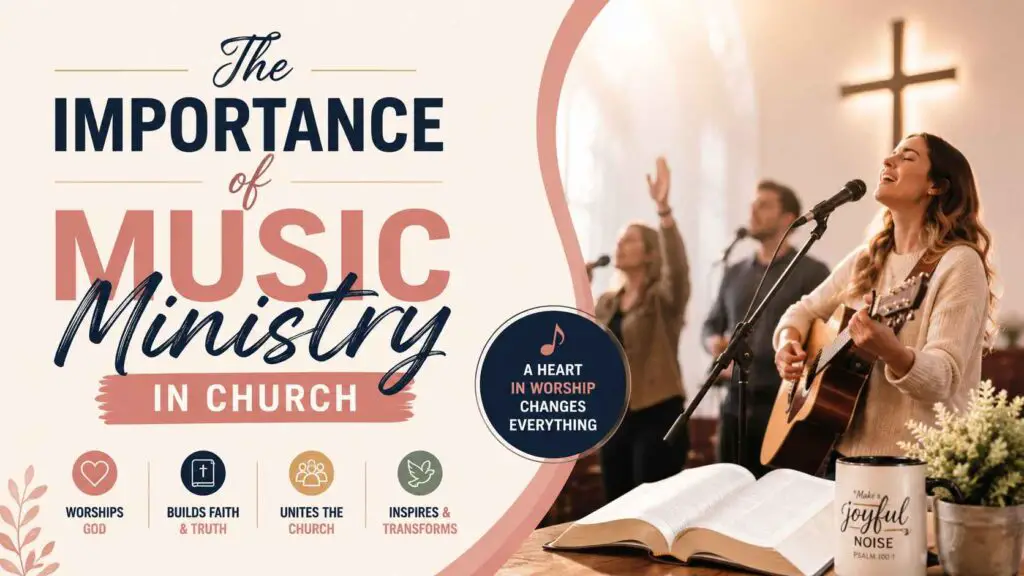
Music ministry plays a central role in shaping how a church experiences worship, teaching, and community life. It is not just about singing songs during a service but about guiding people into a deeper awareness of God’s presence. Through carefully chosen lyrics, melodies, and arrangements, music becomes a bridge between doctrine and daily life. It helps believers express faith when words fall short and prepares hearts to receive biblical teaching. In many churches, music ministry also strengthens unity and spiritual sensitivity. Understanding its importance helps churches build healthier worship environments that are both spiritually grounded and deeply engaging for all ages.
The Importance of Music Ministry in Church
#1. Establishes a Focused Worship Environment
Music ministry sets the tone for the entire church service by intentionally shifting attention away from distractions and into a worship mindset. When worship begins with structured songs, it helps people transition mentally from everyday life into spiritual focus. This is a practical function of sequencing songs that move from celebration to reflection to surrender.
A well-prepared worship set can include upbeat praise songs that engage the body, followed by slower, reflective songs that guide the heart inward. For example, a song focused on gratitude may prepare the congregation for confession or prayer. This flow helps reduce restlessness and creates an environment where the message of the Holy Bible can be received with openness.
Without this structure, services often feel fragmented. Music ministry ensures continuity, helping the congregation enter a unified spiritual posture instead of scattered attention.
#2. Strengthens Congregational Engagement
Music ministry turns a passive audience into active participants. Instead of merely listening, people are invited to sing, respond, and express their faith collectively. This shared participation builds emotional and spiritual connection among members.
Practical tools like lyric projection, simple melodies, and repeated chorus lines ensure accessibility for everyone, including first-time visitors. Even those unfamiliar with church traditions can quickly join in without feeling excluded.
Worship leaders often use call-and-response patterns or short refrains to increase interaction. This creates participation rather than performance. Over time, regular engagement helps believers grow confidence in public worship and strengthens their sense of belonging in the church community.
#3. Teaches and Reinforces Biblical Truth
Music ministry functions as an informal but powerful teaching system. Worship songs often summarize core biblical doctrines in simple, repeatable language. Instead of complex theological explanations, truth is embedded into melody and rhythm, making it easier to retain.
For example, songs about grace, salvation, or the cross often reflect verses from scripture. When sung repeatedly, these truths become internalized and resurface during daily life situations.
This is especially effective for discipling new believers and children. While sermons explain doctrine explicitly, worship music reinforces it continuously, ensuring that key biblical principles remain active in memory and practice.
#4. Supports Spiritual Formation Through Repetition
Repetition in worship music plays a strategic role in shaping spiritual habits. Singing the same truths consistently helps align thoughts, emotions, and responses toward God-centered living.
When a congregation repeatedly sings about trust, surrender, or God’s faithfulness, these ideas begin influencing decision-making outside church settings. A worship line remembered during stress can shift perspective and calm emotional reactions.
This repetition also builds spiritual memory. Instead of relying only on sermons, believers carry worship phrases into daily routines. Over time, this creates a steady rhythm of reflection that strengthens identity in Christ.
#5. Builds Unity Across the Church Body
Music ministry brings together people who may otherwise have little in common. Age, background, social status, and culture become less visible when a congregation sings together.
This unity is experienced in real time as different generations sing the same chorus in one voice. It creates shared spiritual ground that strengthens relationships beyond formal church interactions.
Some churches intentionally use blended musical styles or multilingual songs to include more members. These practices help reduce divisions and build a stronger sense of belonging within the church body.
#6. Enhances Prayer and Spiritual Reflection
Music ministry supports deeper prayer by creating an atmosphere of calm and focus. Soft instrumental backgrounds or slow worship songs help silence mental distractions, making it easier to concentrate during prayer.
During altar calls, music provides emotional support that helps individuals respond without pressure. It creates space for reflection during conviction, gratitude, or repentance.
In personal devotion, worship music is often used to maintain focus. Many believers rely on it during prayer times to stay centered, especially when dealing with anxiety or emotional heaviness.
#7. Strengthens Evangelism and Church Outreach
Music ministry is one of the most effective outreach tools in the church. People who might hesitate to attend a sermon often feel comfortable attending a worship night or musical event.
Worship gatherings and gospel concerts communicate spiritual messages through lyrics and atmosphere. This lowers barriers for non-believers who may not yet understand doctrine but can connect emotionally with the message.
A visitor may be drawn in by a song about hope or forgiveness, which can lead to deeper conversations and spiritual interest. Music becomes an entry point into discipleship and church involvement.
#8. Develops Leadership and Spiritual Discipline
Serving in music ministry requires preparation, discipline, and teamwork. Members attend rehearsals, learn arrangements, and coordinate with sound teams and worship leaders.
This environment builds responsibility and consistency. Worship leaders learn how to guide transitions, manage flow, and support a congregation in real-time service situations.
Musicians also learn humility by focusing on unity rather than performance. These experiences often develop leadership skills that extend into other church roles and ministries.
#9. Expresses Theology Through Sound and Emotion
Music carries theology in a form that combines truth with emotion. While sermons explain doctrine, worship songs express it in a way that is felt and remembered.
Lyrics about God’s holiness, mercy, and redemption reinforce what is taught from scripture. When aligned properly, worship music strengthens doctrinal understanding across the congregation.
For example, songs about the cross reinforce salvation teachings, while songs about faithfulness reinforce trust in God’s provision. This ensures consistency between what is sung and what is preached.
#10. Provides Comfort, Healing, and Spiritual Renewal
Music ministry becomes a source of emotional and spiritual healing for many believers. Worship songs give language to emotions that are difficult to express.
During grief, songs about God’s presence bring reassurance. During anxiety, lyrics about peace help calm the mind and restore balance.
Many believers return to specific worship songs during difficult seasons because they associate them with moments of renewal. Over time, music becomes part of their healing and restoration process, strengthening resilience in faith.
Closing Thoughts
Music ministry is more than a supportive element in church services; it is a powerful spiritual tool that shapes worship, teaching, unity, and outreach. When grounded in scripture and led with intention, it helps believers engage God in deeper and more meaningful ways. It strengthens church identity, builds community, and supports emotional and spiritual restoration in practical ways. Far from being decorative, it is functional and formative. Churches that invest in strong music ministry often see more engaged congregations and healthier spiritual growth. Ultimately, it becomes a living expression of faith that extends beyond Sunday gatherings into daily Christian living.