
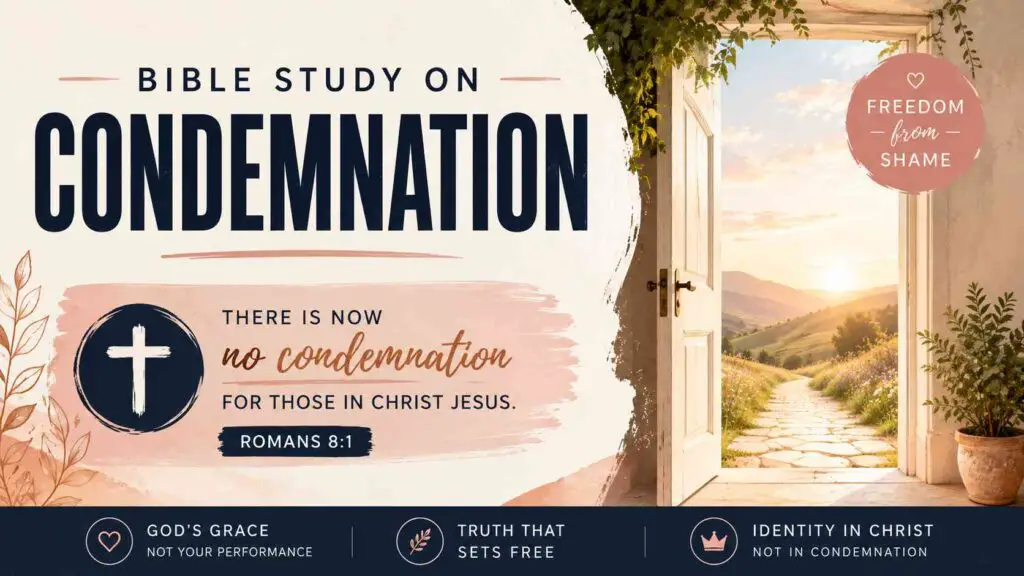
Condemnation is something many people quietly carry in their hearts. It often appears after failure, sin, disappointment, or painful memories from the past. Studies on emotional health consistently show that guilt and shame can deeply affect a person’s mental, emotional, and spiritual well-being. When condemnation takes root in your heart, it can damage your confidence, weaken your faith, isolate you from others, and make you feel distant from God.
Many believers struggle with the difference between conviction and condemnation. Conviction from the Holy Spirit leads you toward repentance and restoration, while condemnation pushes you toward hopelessness, fear, and spiritual defeat. You may know God’s promises in your mind, yet still battle feelings of unworthiness in your heart.
This Bible study guide will help you understand what God says about condemnation, how it affects your life, and how you can overcome it through faith in Jesus Christ. No matter what you have done or how long you have struggled, there is hope, forgiveness, freedom, and restoration available for you through God’s grace.
What You Will Learn from This Bible Study Guide on Condemnation
- You will understand the difference between godly conviction and destructive condemnation.
- You will discover what Scripture teaches about guilt, shame, and forgiveness.
- You will learn how condemnation can affect your spiritual growth and relationship with God.
- You will study biblical examples of people who struggled with condemnation.
- You will see how Jesus offers freedom from shame and spiritual defeat.
- You will learn practical biblical ways to renew your mind and walk in God’s grace.
- You will gain encouragement to live confidently in God’s love and forgiveness.
- You will understand how faith and repentance bring restoration instead of hopelessness.
Before beginning this Bible study, take a moment to ask God for wisdom and understanding.
Short Prayer for Guidance
Heavenly Father,
Please help me understand Your truth about condemnation and freedom through Your Word. Open my heart and mind so I may apply these lessons to my life and grow closer to You. Teach me to walk in Your grace, forgiveness, and peace each day. Thank You for Your love and guidance.
Amen
What Does the Bible Say About Condemnation?
The Bible clearly teaches that condemnation is removed through Jesus Christ. While sin separates people from God, His grace provides forgiveness, restoration, and freedom for those who trust in Him.
“There is therefore now no condemnation for those who are in Christ Jesus.” — Romans 8:1
This verse reminds you that when you belong to Christ, your past sins no longer define your standing before God. Jesus took the punishment for sin so that you could walk in freedom rather than shame.
“For God did not send His Son into the world to condemn the world, but to save the world through Him.” — John 3:17
Jesus came to rescue and restore people, not to leave them trapped in guilt. God’s desire is redemption, not destruction. His grace invites you into a renewed relationship with Him.
“If we confess our sins, He is faithful and just and will forgive us our sins and purify us from all unrighteousness.” — 1 John 1:9
God promises forgiveness when you sincerely repent. Condemnation tells you that you are beyond hope, but Scripture teaches that God willingly cleanses and restores those who come to Him.
“As far as the east is from the west, so far has He removed our transgressions from us.” — Psalm 103:12
God does not hold forgiven sin over your life forever. His mercy completely removes the guilt of confessed sin, allowing you to move forward in peace and freedom.
“Come to me, all you who are weary and burdened, and I will give you rest.” — Matthew 11:28
Jesus invites those weighed down by guilt, shame, and spiritual exhaustion to find rest in Him. You do not have to carry condemnation alone.
The Bible teaches that condemnation is not God’s final word over your life. What does the Bible say about condemnation? It says that through Jesus Christ, you can receive forgiveness, freedom, restoration, and peace instead of shame and spiritual defeat.
Biblical Characters who Experienced Condemnation
#1. Peter — Matthew 26:69–75
Context
Peter was one of Jesus’ closest disciples and boldly declared that he would never deny Christ. However, during Jesus’ arrest and trial, fear overtook him. Three times Peter denied even knowing Jesus. Immediately after the third denial, the rooster crowed just as Jesus had predicted.
Peter was overwhelmed with sorrow and shame. Scripture says he went out and wept bitterly. He likely felt deep condemnation because he had failed publicly after confidently proclaiming his loyalty. The weight of guilt could have permanently destroyed his faith and calling.
Condemnation’s Resolve
Although Peter failed, Jesus did not abandon him. After the resurrection, Jesus personally restored Peter by asking him three times, “Do you love Me?” This restoration mirrored Peter’s three denials and demonstrated Christ’s mercy and forgiveness.
Peter eventually became a bold leader in the early church. Instead of remaining trapped in condemnation, he allowed God’s grace to transform his failure into testimony and spiritual maturity. God used Peter powerfully despite his mistakes.
What Can We Learn from Peter’s Example
- Failure does not disqualify you from God’s purpose.
- Jesus offers restoration even after serious mistakes.
- Condemnation should lead you toward repentance, not hopelessness.
- God can still use your life powerfully after failure.
#2. David — Psalm 51
Context
King David committed adultery with Bathsheba and arranged the death of her husband, Uriah. When the prophet Nathan confronted him, David became deeply aware of his sin and guilt before God.
David experienced the heavy burden of spiritual conviction. His actions brought personal sorrow, brokenness, and painful consequences to his family and kingdom. Yet instead of hiding from God permanently, David turned back to Him in repentance.
Condemnation’s Resolve
Psalm 51 reveals David’s sincere repentance. He cried out for mercy, cleansing, and restoration. David acknowledged his sin honestly and sought God’s forgiveness with humility.
Rather than remaining trapped in shame, David trusted God’s compassion. Though consequences remained, God forgave him and continued to work through his life. David’s story demonstrates that God’s mercy is greater than human failure.
What Can We Learn from David’s Example
- Honest repentance opens the door to restoration.
- God values a humble and contrite heart.
- Sin has consequences, but forgiveness is still available.
- God’s grace is greater than your past mistakes.
#3. The Woman Caught in Adultery — John 8:1–11
Context
Religious leaders brought a woman caught in adultery before Jesus, hoping to trap Him. The crowd was prepared to condemn and stone her according to the law.
The woman stood publicly exposed, humiliated, and likely overwhelmed with fear and shame. She represented someone burdened by condemnation from both society and personal guilt.
Condemnation’s Resolve
Jesus responded with wisdom and mercy. He said, “Let any one of you who is without sin be the first to throw a stone at her.” One by one, the accusers left.
Jesus then told the woman, “Neither do I condemn you. Go now and leave your life of sin.” Christ did not ignore sin, but He also did not leave her trapped in condemnation. He offered forgiveness alongside a call to transformation.
What Can We Learn from the Woman’s Example
- Jesus responds to brokenness with mercy and truth.
- God offers forgiveness without approving sinful behavior.
- Condemnation from others does not define your identity.
- Christ invites you into a changed and restored life.
How Does Condemnation Affect Us?
#1. It Creates Distance Between You and God
“Your iniquities have separated you from your God.” — Isaiah 59:2
Condemnation often makes you feel unworthy to pray, worship, or seek God. You may begin avoiding spiritual disciplines because shame convinces you that God no longer wants you near Him.
Over time, this distance weakens your faith and spiritual confidence. Instead of running toward God for healing, condemnation pushes you away from the very One who can restore you.
#2. It Damages Your Identity
“For you are all children of God through faith in Christ Jesus.” — Galatians 3:26
Condemnation attacks your identity by constantly reminding you of your failures rather than God’s grace. You may begin defining yourself by your worst mistakes instead of your relationship with Christ.
When this happens, insecurity, fear, and spiritual discouragement can grow stronger. God wants you to remember that your identity is rooted in His love and redemption.
#3. It Produces Fear and Anxiety
“For God has not given us a spirit of fear, but of power and of love and of a sound mind.” — 2 Timothy 1:7
Condemnation often produces constant fear about judgment, rejection, or failure. You may feel trapped in anxiety over your past or uncertain about your future.
These fears can affect your emotional health, relationships, and spiritual peace. God desires for you to live with confidence in His grace rather than fear of rejection.
#4. It Leads to Spiritual Defeat
“The thief comes only to steal and kill and destroy.” — John 10:10
When condemnation dominates your thoughts, it can rob you of joy, motivation, and hope. You may feel spiritually defeated and powerless to change.
This mindset can keep you stuck in unhealthy patterns because hopelessness discourages growth. Jesus came to bring abundant life, freedom, and restoration.
#5. It Affects Your Relationships
“Be kind and compassionate to one another, forgiving each other, just as in Christ God forgave you.” — Ephesians 4:32
People burdened by condemnation often struggle to accept love, trust others, or extend forgiveness. Shame can cause emotional walls and isolation.
As condemnation grows, relationships may become strained because unresolved guilt affects how you see yourself and others. God’s forgiveness helps you build healthier and more grace-filled relationships.
#6. It Weakens Your Confidence in Prayer
“This is the confidence we have in approaching God.” — 1 John 5:14
Condemnation can make you hesitant to pray boldly. You may feel that God is disappointed with you or unwilling to listen.
This uncertainty weakens intimacy with God and creates spiritual discouragement. Through Christ, however, you are invited to approach God with confidence, honesty, and faith.
How We Can Biblically Deal With Condemnation
#1. Remember God’s Promise of Forgiveness
When condemnation overwhelms you, return to God’s promises instead of your emotions. Feelings can change daily, but Scripture remains true. God promises complete forgiveness to those who repent sincerely and trust in Christ.
“If we confess our sins, He is faithful and just and will forgive us our sins.” — 1 John 1:9
Meditating on God’s promises helps renew your mind and silence lies of shame. Instead of replaying past failures repeatedly, remind yourself that Jesus already paid the price for your sins. Walking in forgiveness means accepting God’s grace even when you still feel imperfect. His mercy is greater than your mistakes.
#2. Separate Conviction from Condemnation
The Holy Spirit convicts you to lead you toward repentance and growth, while condemnation pushes you into despair and hopelessness. Learning this difference is essential for spiritual maturity.
“Godly sorrow brings repentance that leads to salvation.” — 2 Corinthians 7:10
Conviction points you toward restoration. Condemnation tells you there is no hope. When you recognize unhealthy guilt pulling you away from God, pause and examine whether the message aligns with Scripture. God corrects His children with love, not with crushing hopelessness. Let conviction lead you closer to God rather than further from Him.
#3. Renew Your Mind with Scripture
Condemnation often grows through repeated negative thoughts. The best way to fight these lies is by consistently filling your mind with God’s truth.
“Be transformed by the renewing of your mind.” — Romans 12:2
Spend time reading, memorizing, and meditating on verses about grace, forgiveness, and identity in Christ. As your thoughts align more closely with God’s Word, destructive shame begins losing its influence. Renewing your mind is not a one-time action but a daily process of replacing fear and guilt with biblical truth.
#4. Pray Honestly Before God
You do not need to hide your struggles from God. He already knows your heart completely. Honest prayer allows you to release guilt, fear, and shame into His hands.
“Cast all your anxiety on Him because He cares for you.” — 1 Peter 5:7
When condemnation grows stronger, spend intentional time talking openly with God. Share your fears, failures, and doubts honestly. Prayer reminds you that God’s love is not based on perfection but on His grace. Through prayer, your heart gradually finds peace, healing, and renewed confidence.
#5. Accept God’s Grace Daily
Many believers intellectually understand grace but emotionally struggle to accept it personally. Condemnation keeps reminding you of your past, but grace reminds you of Christ’s finished work.
“My grace is sufficient for you.” — 2 Corinthians 12:9
Receiving grace means trusting that God’s forgiveness truly applies to you. It means refusing to define yourself solely by previous failures. God’s mercy is not limited by your weakness. Every day, choose to believe that His grace is enough to sustain, heal, and restore your life.
#6. Surround Yourself with Godly Community
Isolation often strengthens condemnation. God created believers to encourage, support, and pray for one another through difficult seasons.
“Encourage one another and build each other up.” — 1 Thessalonians 5:11
Trusted Christian friends, mentors, or church leaders can remind you of biblical truth when your thoughts become overwhelmed by shame. Healthy community provides accountability, wisdom, encouragement, and prayer. Walking with other believers helps you remember that you are not alone in your struggles.
#7. Focus on Your Identity in Christ
Condemnation tries to label you by your failures, but God defines you by your relationship with Jesus Christ.
“If anyone is in Christ, the new creation has come.” — 2 Corinthians 5:17
Your identity is no longer rooted in shame, guilt, addiction, or mistakes. Through Christ, you are forgiven, loved, redeemed, and spiritually renewed. Continually remind yourself of who God says you are. Living from your identity in Christ produces confidence, peace, and spiritual freedom.
#8. Practice Repentance Without Self-Hatred
Biblical repentance involves turning away from sin and returning to God, not endlessly punishing yourself emotionally. Some people mistake self-condemnation for humility, but God desires transformation rather than ongoing shame.
“Create in me a pure heart, O God.” — Psalm 51:10
True repentance acknowledges sin honestly while trusting God’s forgiveness completely. Instead of remaining trapped in guilt, allow repentance to produce spiritual growth and renewed obedience. God’s desire is restoration, not emotional destruction.
Group Discussion Questions
- What is the difference between conviction and condemnation?
- Why do many believers struggle with guilt even after receiving forgiveness?
- Which Bible verse in this study encouraged you the most and why?
- How did Peter respond after failing Jesus?
- What lessons can you learn from David’s repentance in Psalm 51?
- How does condemnation affect a person emotionally and spiritually?
- Why is understanding your identity in Christ important?
- What practical steps can help someone overcome condemnation?
- How can Christian community help people struggling with shame and guilt?
- What does Romans 8:1 personally mean to you?
Prayer to Help Us Deal with Condemnation
Dear God,
Thank You for Your mercy, grace, and unconditional love. So many times I allow guilt, shame, and fear to control my thoughts and separate me from Your peace. Please help me remember that through Jesus Christ I am forgiven and no longer condemned. Teach me to trust Your promises more than my emotions and to walk confidently in the freedom You provide.
Lord, renew my mind with Your truth and help me reject every lie that tells me I am beyond redemption. Give me strength to repent sincerely, grow spiritually, and draw closer to You each day. Help me forgive myself as You have forgiven me. Surround me with wise and encouraging people who will strengthen my faith and remind me of Your grace.
Thank You for never abandoning me and for continually restoring my heart.
Amen
Closing Remarks
Condemnation can feel heavy and overwhelming, but God never intended for you to live trapped in shame and hopelessness. Through Jesus Christ, you have access to forgiveness, restoration, peace, and spiritual freedom. As you continue growing in faith, remember that God’s grace is greater than your failures. He sees your heart, knows your struggles, and lovingly invites you closer to Him instead of pushing you away.
Continue studying God’s Word and deepening your understanding of His grace and mercy. You can begin exploring more through Romans 8, Psalm 51, John 8:1–11, 1 John 1:9, and Ephesians 2:1–10. As you meditate on these Scriptures, you will discover more fully how God transforms condemnation into hope, healing, and renewed purpose for your life.