
Conflict is a natural part of life. Whether it happens in families, friendships, workplaces, churches, or even within your own heart, you will eventually face situations where opinions, emotions, and desires clash. Studies have shown that unresolved conflict can lead to stress, anxiety, broken relationships, and emotional exhaustion. Many people carry wounds from arguments, misunderstandings, or betrayal for years because conflict was never handled in a healthy way.
When conflict is left unresolved, it can create bitterness, division, anger, and isolation. It affects your peace of mind, your spiritual growth, and your relationship with others. Often, people either avoid conflict completely or react with hurtful words and actions that only make things worse. Human emotions can quickly overpower wisdom when tensions rise.
You may have experienced moments where conflict left you feeling misunderstood, rejected, or emotionally drained. Perhaps you struggled with forgiving someone, controlling your anger, or finding the right words during a difficult situation. These experiences are deeply personal and can leave lasting effects on your heart.
The good news is that God does not leave you without guidance. Scripture provides wisdom, examples, and encouragement to help you navigate conflict with grace, humility, truth, and love. Through this Bible study guide, you will discover how God teaches you to respond to conflict in ways that promote healing, reconciliation, wisdom, and spiritual growth.
What You Will Learn from This Bible Study Guide on Conflict
- You will learn what the Bible teaches about handling conflict wisely and peacefully.
- You will understand how conflict can affect your heart, relationships, and spiritual life.
- You will discover biblical examples of people who experienced conflict and how they responded.
- You will learn practical ways to resolve disagreements with humility and love.
- You will understand the importance of forgiveness and reconciliation.
- You will learn how God can use conflict to strengthen your character and faith.
- You will discover how to guard your words and emotions during difficult situations.
- You will learn how to pursue peace while still standing for truth.
Before beginning this Bible study guide, take a moment to ask God for wisdom and understanding.
Short Prayer for Guidance
Heavenly Father,
Please help me understand Your truth about conflict and teach me how to apply Your wisdom in my life. Give me a humble heart, peaceful spirit, and the courage to respond in ways that honor You. Help me grow in love, patience, forgiveness, and understanding through this study. Thank You for Your guidance and grace.
Amen
What Does the Bible Say About Conflict?
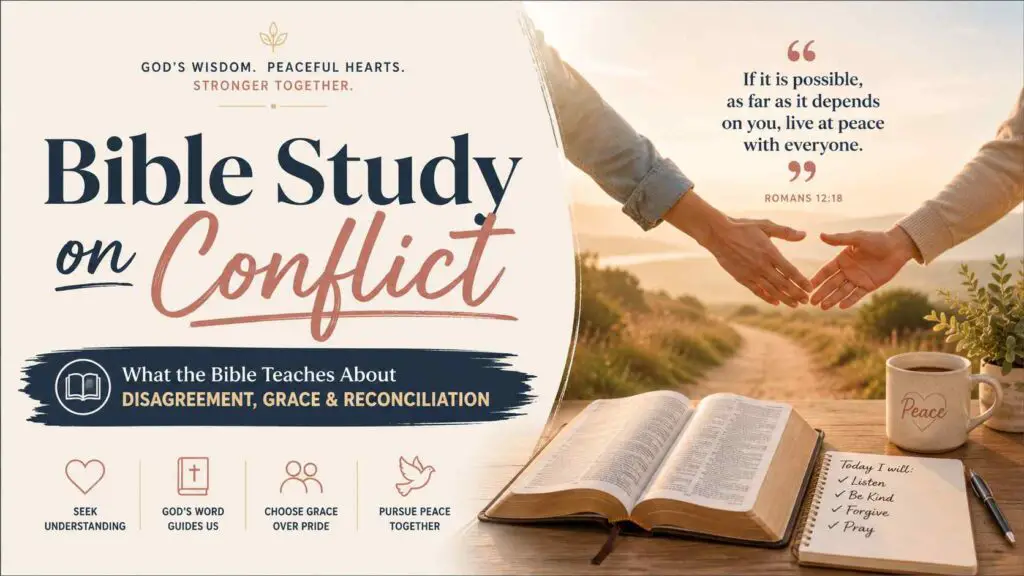
“If it is possible, as far as it depends on you, live at peace with everyone.” — Romans 12:18
This verse reminds you that God values peace and reconciliation. While you cannot always control the actions of others, you are responsible for pursuing peace in your own behavior, attitudes, and responses during conflict.
“A gentle answer turns away wrath, but a harsh word stirs up anger.” — Proverbs 15:1
The Bible teaches that your words have power. During conflict, harsh responses often escalate tension, while gentle and wise speech can calm difficult situations and open the door for healing.
“Blessed are the peacemakers, for they will be called children of God.” — Matthew 5:9
Jesus honors those who actively pursue peace. Being a peacemaker does not mean avoiding truth or ignoring problems. It means seeking resolution with humility, wisdom, and love.
“Get rid of all bitterness, rage and anger, brawling and slander, along with every form of malice.” — Ephesians 4:31
Conflict can easily produce bitterness and resentment if left unchecked. God calls you to release destructive attitudes and instead choose forgiveness, kindness, and compassion.
“My dear brothers and sisters, take note of this: Everyone should be quick to listen, slow to speak and slow to become angry.” — James 1:19
This verse teaches the importance of patience and self-control. Listening carefully before reacting can prevent misunderstandings and help you respond wisely during moments of tension.
The Bible makes it clear that conflict is a reality of human life, but God provides guidance for handling it with wisdom, humility, forgiveness, and peace. What does the Bible say about conflict? The Bible teaches that conflict should be handled with love, patience, truth, forgiveness, and a sincere desire for reconciliation that honors God.
Biblical Characters who Experienced Conflict
#1. David and Saul — 1 Samuel 18–24
Context
David’s conflict with King Saul began after David defeated Goliath and gained favor among the people of Israel. Saul became jealous when he heard others praising David’s success. What started as insecurity in Saul’s heart quickly developed into anger, fear, and hostility. Saul repeatedly attempted to kill David, even though David had faithfully served him.
David found himself unfairly hunted and rejected despite his loyalty. He was forced to flee, hide in caves, and live as a fugitive. The conflict deeply affected David emotionally, spiritually, and physically. He experienced betrayal from someone he respected and served faithfully.
Conflict’s Resolve
Although David had opportunities to harm Saul and end the conflict himself, he chose restraint and trusted God’s timing. David refused to take revenge because he respected Saul as the Lord’s anointed king. Instead of responding with violence and bitterness, David allowed God to handle justice.
David demonstrated humility and wisdom throughout the conflict. He grieved over Saul’s hatred instead of celebrating it. Even while suffering injustice, David sought God continually through prayer and worship. His response showed that trusting God is greater than seeking personal revenge.
What Can We Learn from David’s Example
- You can choose self-control even when others treat you unfairly.
- Trusting God’s justice is better than seeking revenge.
- Humility can protect your heart during conflict.
- God can strengthen your character through difficult relationships.
#2. Paul and Barnabas — Acts 15:36–41
Context
Paul and Barnabas were close ministry partners who worked together spreading the Gospel. However, disagreement arose concerning John Mark joining them on another missionary journey. Paul doubted John Mark’s reliability because he had previously left them during ministry work, while Barnabas wanted to give him another opportunity.
The disagreement became so intense that Paul and Barnabas decided to separate. This conflict involved strong opinions, emotions, and ministry decisions. It demonstrates that even faithful believers can experience serious disagreements.
Conflict’s Resolve
Although Paul and Barnabas parted ways, God continued to use both men for ministry. Their separation did not stop the spread of the Gospel. Later in Scripture, Paul eventually recognized John Mark’s value and usefulness in ministry, showing evidence of reconciliation and growth.
This situation teaches that conflict does not always destroy God’s plans. Sometimes God can still work through imperfect situations while helping people mature spiritually over time. Humility and grace allow relationships to heal gradually.
What Can We Learn from Paul and Barnabas’s Example
- Even strong believers can experience disagreements.
- Conflict should not stop your commitment to God’s work.
- People can grow and change over time.
- Reconciliation is possible after disagreement.
#3. Jacob and Esau — Genesis 25–33
Context
Jacob and Esau experienced deep family conflict beginning with rivalry between brothers. Jacob deceived their father Isaac in order to receive Esau’s blessing and inheritance. This betrayal created intense anger and division within the family, causing Jacob to flee for many years.
The conflict affected multiple relationships and created fear, separation, and emotional pain. Jacob lived with anxiety about eventually facing Esau again, unsure whether forgiveness would ever happen.
Conflict’s Resolve
Years later, Jacob prepared carefully before meeting Esau again. He approached his brother with humility and repentance rather than pride. To Jacob’s surprise, Esau welcomed him peacefully instead of attacking him. Their reunion became a powerful picture of forgiveness and reconciliation.
Jacob’s experience shows that humility and repentance can help restore broken relationships. It also demonstrates God’s ability to soften hearts and bring healing after years of pain.
What Can We Learn from Jacob’s Example
- Dishonesty often creates painful conflict.
- Humility is important when seeking reconciliation.
- God can heal long-standing relational wounds.
- Forgiveness can restore broken relationships.
How Does Conflict Affect Us?
#1. Conflict Can Damage Relationships
“A perverse person stirs up conflict, and a gossip separates close friends.” — Proverbs 16:28
Conflict can weaken trust and create emotional distance between people. Hurtful words, unresolved anger, and misunderstandings often damage friendships, marriages, and family relationships. When pride takes control, reconciliation becomes more difficult.
If conflict is ignored for too long, resentment can grow deeply within your heart. Relationships that were once healthy and joyful may become strained or broken. God calls you to pursue honesty, forgiveness, and peace before division grows worse.
#2. Conflict Can Disturb Your Peace
“Better a dry crust with peace and quiet than a house full of feasting, with strife.” — Proverbs 17:1
Ongoing conflict can rob you of emotional and spiritual peace. Anxiety, stress, frustration, and fear often increase when tension remains unresolved. Even your physical health may suffer when you constantly carry anger or emotional burdens.
God desires for you to experience peace through trusting Him and handling conflict wisely. Learning to surrender difficult situations to God can protect your heart from becoming consumed by stress and negativity.
#3. Conflict Can Lead to Sinful Behavior
“In your anger do not sin.” — Ephesians 4:26
Conflict can tempt you to respond with sinful attitudes and actions such as anger, pride, revenge, gossip, or unforgiveness. Emotional reactions often lead people to say things they later regret.
Without God’s wisdom and self-control, conflict can easily become destructive. Scripture teaches you to guard your heart, your speech, and your actions even during emotionally difficult situations.
#4. Conflict Can Affect Your Spiritual Growth
“Anyone who claims to be in the light but hates a brother or sister is still in the darkness.” — 1 John 2:9
Unresolved conflict can interfere with your spiritual relationship with God. Bitterness and unforgiveness harden the heart and make it difficult to grow spiritually. Anger can slowly replace compassion, humility, and peace.
God desires for your heart to remain tender and teachable. Choosing forgiveness and reconciliation allows you to continue growing in love, obedience, and spiritual maturity.
#5. Conflict Can Influence Others Around You
“Do everything without grumbling or arguing.” — Philippians 2:14
Conflict does not only affect the people directly involved. Family members, children, coworkers, church communities, and friends can also feel the emotional impact of ongoing tension and division.
Your response during conflict can either encourage peace or spread negativity. When you choose patience, humility, and wisdom, you become an example of Christ-like character to others around you.
#6. Conflict Can Become an Opportunity for Growth
“Consider it pure joy, my brothers and sisters, whenever you face trials of many kinds.” — James 1:2
Although conflict is painful, God can use it to strengthen your character and faith. Difficult situations often reveal areas where you need spiritual growth, humility, patience, or deeper trust in God.
When handled biblically, conflict can teach valuable lessons about forgiveness, communication, compassion, and dependence on God. Through challenges, God shapes your heart to become more like Christ.
How We Can Biblically Deal With Conflict
#1. Pray Before You React
When conflict arises, your first response should be prayer rather than emotional reaction. Prayer helps calm your heart and allows you to seek God’s wisdom before speaking or acting. Many conflicts become worse because people respond impulsively out of anger or frustration. Taking time to pray gives you clarity and self-control.
Jesus often withdrew to pray during difficult situations, showing the importance of depending on God. “If any of you lacks wisdom, you should ask God.” — James 1:5 Prayer reminds you that God sees the situation fully and can guide your response. Through prayer, your perspective shifts from pride and emotion toward humility, peace, and wisdom.
#2. Listen Carefully Before Speaking
Many conflicts grow because people focus more on defending themselves than truly listening. Scripture encourages you to listen patiently and seek understanding before responding. Misunderstandings often happen when assumptions replace honest communication.
“Everyone should be quick to listen, slow to speak and slow to become angry.” — James 1:19 Careful listening demonstrates respect and love even during disagreement. It also helps prevent unnecessary arguments caused by confusion or emotional reactions. Listening well does not mean you must agree with everything said, but it shows maturity and wisdom. When you listen with humility, you create opportunities for healing and better understanding.
#3. Speak With Gentleness and Truth
Your words carry tremendous power during conflict. Harsh speech can intensify anger, while gentle communication can calm difficult situations. God calls you to speak truthfully but also lovingly and respectfully.
“A gentle answer turns away wrath, but a harsh word stirs up anger.” — Proverbs 15:1 Gentleness is not weakness; it is controlled strength guided by wisdom. Even when addressing serious issues, your tone and attitude matter greatly. Honest communication combined with kindness can open doors to reconciliation and healing. God desires for your speech to reflect patience, grace, and self-control in every difficult conversation.
#4. Choose Forgiveness
Forgiveness is one of the most important biblical responses to conflict. Holding onto bitterness damages your heart and keeps wounds open. Forgiveness does not excuse wrongdoing, but it frees you from being controlled by anger and resentment.
“Bear with each other and forgive one another.” — Colossians 3:13 God has forgiven you generously through Christ, and He calls you to extend that same grace to others. Forgiveness may take time, especially after deep hurt, but it is a necessary step toward healing and peace. Choosing forgiveness allows God to work in your heart and restore emotional freedom.
#5. Pursue Peace and Reconciliation
God desires for you to actively seek peace whenever possible. Reconciliation often requires humility, honesty, patience, and willingness from both sides. Avoiding conflict completely may allow problems to grow deeper over time.
“Blessed are the peacemakers.” — Matthew 5:9 Pursuing peace means addressing issues with wisdom rather than ignoring them. It involves seeking healing instead of revenge. While reconciliation may not always be fully possible, you are called to make sincere efforts toward peace. God honors those who work toward unity and restoration in relationships.
#6. Let Go of Pride
Pride is often at the center of many conflicts. The desire to always be right, defend yourself, or control situations can prevent healing and understanding. Humility allows you to admit mistakes, apologize sincerely, and value others above yourself.
“Pride leads to conflict.” — Proverbs 13:10 Humility creates room for grace, patience, and reconciliation. When you surrender pride, you become more teachable and compassionate. God gives grace to the humble and helps them navigate difficult relationships with wisdom and maturity.
#7. Set Healthy Boundaries
While forgiveness is important, wisdom also requires healthy boundaries in harmful situations. Some conflicts involve repeated unhealthy behavior, manipulation, or abuse. Biblical love includes wisdom and discernment.
Jesus Himself sometimes withdrew from hostile crowds and unhealthy situations. Setting boundaries does not mean you hate someone; it means you are protecting your emotional, spiritual, and physical well-being. Healthy boundaries can create space for healing, accountability, and wise decision-making while still maintaining a heart of forgiveness and compassion.
#8. Seek Wise Counsel
Some conflicts are too complicated to handle alone. Seeking guidance from mature believers, pastors, or wise counselors can provide clarity and support. God often uses wise counsel to help you navigate emotionally difficult situations.
“Plans fail for lack of counsel, but with many advisers they succeed.” — Proverbs 15:22 Wise counsel can help you recognize blind spots, manage emotions, and pursue biblical solutions. Seeking help is not weakness; it is wisdom. God often works through trusted spiritual guidance to bring peace and understanding.
#9. Trust God With the Outcome
Not every conflict will resolve exactly as you hope. Sometimes people refuse reconciliation or continue hurtful behavior despite your best efforts. In those moments, you must trust God with the outcome.
“Do not take revenge… but leave room for God’s wrath.” — Romans 12:19 Trusting God means releasing control and believing that He is just, wise, and faithful. You are responsible for your obedience, attitudes, and actions, but you cannot control another person’s heart. God sees every situation clearly and will guide you faithfully through every challenge.
Group Discussion Questions
- Why do you think conflict is such a common part of human relationships?
- Which Bible verse in this study spoke to you the most and why?
- How do you usually respond during conflict?
- What role does pride play in disagreements?
- Why is forgiveness often difficult during conflict?
- How can prayer help you handle difficult situations more wisely?
- What can you learn from David’s response to Saul?
- How does unresolved conflict affect your spiritual life?
- What practical steps can you take toward reconciliation in broken relationships?
- How can you become a peacemaker in your home, workplace, or church?
Prayer to Help Us Deal with Conflict
Dear God,
Thank You for Your wisdom, love, and patience in every difficult situation I face. Please help me respond to conflict with humility, grace, and self-control instead of anger, pride, or bitterness. Teach me to listen carefully, speak kindly, forgive sincerely, and pursue peace whenever possible. Heal any hurt, resentment, or division in my heart and relationships. Give me courage to seek reconciliation and wisdom to know when to set healthy boundaries. Help me trust You with situations I cannot control and remind me that Your peace is greater than any conflict I experience. Shape my heart to become more like Jesus so that my words and actions reflect Your love and truth. Thank You for always guiding me and giving me strength through every challenge.
Amen
Closing Remarks
Conflict is something you will encounter throughout life, but it does not have to control your heart, damage your faith, or destroy your relationships. God’s Word provides wisdom, guidance, and hope for every difficult situation you face. As you apply biblical principles such as humility, forgiveness, patience, prayer, and peace-making, you can grow stronger spiritually and emotionally even during challenging relationships.
Remember that God can use conflict to shape your character, deepen your faith, and teach you to reflect Christ more fully. Continue exploring Scripture to strengthen your understanding of peace, forgiveness, and reconciliation through passages like Romans 12, Ephesians 4, Matthew 5, and James 1. As You continue seeking God’s wisdom, You will discover that His guidance can bring healing, peace, and restoration even in the middle of conflict.