
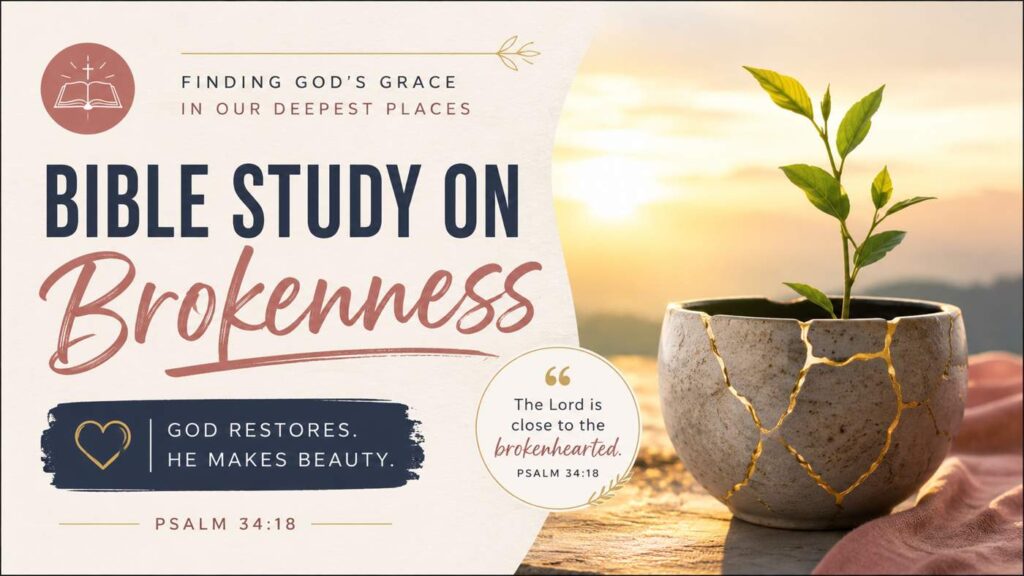
Brokenness is something every person experiences at some point in life. Whether it comes through failure, grief, betrayal, disappointment, guilt, loneliness, or suffering, you know what it feels like to carry wounds that seem too heavy to bear. Studies on emotional health continue to show that unresolved pain can affect your relationships, your mental well-being, and even your physical health. When brokenness is ignored, it often leads to hopelessness, isolation, fear, and spiritual exhaustion.
Yet brokenness is not just an emotional condition—it is also a spiritual reality. The Bible repeatedly shows how human weakness exposes our need for God. Many people try to hide their pain, pretend they are strong, or search for healing in temporary solutions, only to discover that nothing truly satisfies the aching soul apart from God’s presence. You may have moments where you feel exhausted from carrying burdens no one else fully understands.
Still, there is hope. This Bible study guide on Brokenness will help you understand how God meets you in your weakest moments, restores wounded hearts, and transforms pain into spiritual growth. Through Scripture, prayer, and biblical examples, you will discover that God does not reject broken people—He draws near to them with mercy, healing, and purpose.
What You Will Learn from This Bible Study Guide on Brokenness
- You will understand what the Bible teaches about brokenness and suffering.
- You will learn how God responds to people who are hurting and spiritually weary.
- You will discover biblical examples of individuals who experienced deep brokenness.
- You will recognize how brokenness can affect your emotions, faith, and relationships.
- You will learn practical biblical ways to surrender your pain to God.
- You will understand how God can use broken seasons for spiritual growth.
- You will be encouraged to trust God even when life feels overwhelming.
- You will learn how prayer, Scripture, and faith bring healing and restoration.
Before exploring this Bible study further, take a moment to ask God for wisdom and understanding.
Short Prayer for Guidance
Heavenly Father,
Please open my heart and mind as I study Your Word today. Help me understand what You want to teach me about brokenness and show me how to apply these truths to my life. Give me wisdom, healing, strength, and faith as I grow closer to You through this study. Thank You for Your love, mercy, and guidance.
Amen
What Does the Bible Say About Brokenness?
The Bible speaks honestly and compassionately about brokenness. God never ignores human pain, sorrow, or weakness. Instead, Scripture repeatedly shows that He is close to those who are hurting and ready to restore those who trust Him.
“The Lord is close to the brokenhearted and saves those who are crushed in spirit.” — Psalm 34:18 (NIV)
This verse reminds you that God does not abandon you in painful moments. When your heart feels shattered, His presence becomes even nearer. Your brokenness does not push God away; it draws Him closer to you.
“He heals the brokenhearted and binds up their wounds.” — Psalm 147:3 (NIV)
God is described as a healer of emotional and spiritual wounds. He does not merely observe your suffering—He actively works to restore and comfort you through His love and grace.
“My sacrifice, O God, is a broken spirit; a broken and contrite heart you, God, will not despise.” — Psalm 51:17 (NIV)
This verse shows that humility and repentance matter deeply to God. A broken heart that turns sincerely toward Him is precious in His sight. God values honesty and surrender more than outward appearances.
“Come to me, all you who are weary and burdened, and I will give you rest.” — Matthew 11:28 (NIV)
Jesus personally invites weary and burdened people to come to Him. Brokenness often leaves you emotionally exhausted, but Christ offers peace, comfort, and rest for your soul.
“And He said to me, ‘My grace is sufficient for you, for my power is made perfect in weakness.’” — 2 Corinthians 12:9 (NIV)
Paul learned that weakness can become a place where God’s power is revealed most clearly. Your brokenness does not disqualify you from God’s purpose—it can become the very place where His strength shines.
The Bible teaches that brokenness is not the end of your story. God sees your pain, understands your struggles, and offers healing, grace, and restoration through His presence. What does the Bible say about Brokenness? It says that God draws near to the brokenhearted, heals wounded souls, and uses brokenness to reveal His grace and power.
Biblical Characters who Experienced Brokenness
#1. David — Psalm 51
Context
David experienced deep brokenness after his sin involving Bathsheba and the death of Uriah. Though he was a king chosen by God, David fell into temptation, deception, and guilt. When the prophet Nathan confronted him, David became overwhelmed with sorrow and repentance. His brokenness was not only emotional—it was spiritual because he realized how deeply he had sinned against God.
Psalm 51 reveals David’s raw honesty before the Lord. Instead of hiding his failures or defending himself, he confessed openly and sought God’s mercy. His pain became the beginning of restoration because he humbled himself before God rather than resisting correction.
Brokenness’s Resolve
David dealt with his brokenness through repentance and surrender. He cried out to God for cleansing, mercy, and renewal. Rather than depending on religious rituals, he recognized that God desired a transformed heart. David understood that true healing begins when you stop pretending and honestly bring your brokenness before God.
Even after facing consequences for his actions, David continued seeking the Lord. His life demonstrates that failure does not have to define your future. God restored David spiritually and continued to use him for His purposes despite his painful mistakes.
What Can We Learn from David’s Example
- You should honestly confess your sins and struggles to God.
- Genuine repentance opens the door to restoration.
- God’s mercy is greater than your failures.
- Brokenness can lead to spiritual renewal and humility.
#2. Job — Job 1–42
Context
Job experienced devastating brokenness through the loss of his children, wealth, health, and security. In a short period of time, nearly everything he valued was taken away. Job struggled emotionally and spiritually as he tried to understand why suffering had entered his life despite his faithfulness to God.
His friends wrongly assumed that his suffering must have been punishment for sin, which only increased his pain. Job wrestled with grief, confusion, and despair, yet he continued bringing his questions honestly before God instead of abandoning his faith completely.
Brokenness’s Resolve
Job dealt with his brokenness by continuing to seek God even when he did not understand his circumstances. Though he experienced moments of frustration and sorrow, he never fully turned away from God. His perseverance teaches you that faith does not require pretending to have all the answers.
Eventually, God spoke to Job and reminded him of His sovereignty and wisdom. Job’s perspective changed as he encountered God more deeply. In the end, God restored him and blessed him abundantly. Job’s story shows that God can bring purpose and restoration even through seasons of intense suffering.
What Can We Learn from Job’s Example
- You can remain faithful even during deep suffering.
- God’s wisdom is greater than human understanding.
- Honest prayers and questions are welcomed by God.
- God can restore and strengthen you after painful seasons.
#3. Peter — Luke 22:54–62
Context
Peter experienced brokenness after denying Jesus three times during Christ’s trial. Earlier, Peter confidently declared that he would never abandon Jesus. However, fear overcame him when pressure and danger arose. After denying Jesus, Peter realized what he had done and was overwhelmed with sorrow.
The moment deeply affected Peter because he loved Jesus sincerely, yet he failed in a moment of weakness. His brokenness came from shame, guilt, and disappointment in himself.
Brokenness’s Resolve
Peter responded to his brokenness with repentance. Though he failed badly, he did not permanently walk away from Jesus. After Christ’s resurrection, Jesus lovingly restored Peter and gave him renewed purpose. Peter later became a bold leader in the early church.
His story reminds you that failure is not final when you turn back to God. Jesus restores those who repent and continue trusting Him. Peter’s weakness became part of his testimony and spiritual growth.
What Can We Learn from Peter’s Example
- Fear can lead to spiritual failure if you rely on yourself.
- Jesus offers forgiveness and restoration after failure.
- Your mistakes do not cancel God’s purpose for your life.
- God can use broken people to accomplish great things.
How Does Brokenness Affect Us?
#1. Brokenness Can Lead to Emotional Exhaustion
“Come to me, all you who are weary and burdened, and I will give you rest.” — Matthew 11:28
Brokenness often leaves you emotionally drained. Pain, disappointment, grief, and stress can slowly wear down your heart and mind. You may struggle to find motivation, joy, or peace when life feels overwhelming. Emotional exhaustion can also affect your relationships and decision-making.
When emotional burdens remain unresolved, you may become discouraged or isolated. God understands this weariness and invites you to bring your burdens to Him. His presence provides strength when your own strength runs out.
#2. Brokenness Can Damage Relationships
“Be kind and compassionate to one another, forgiving each other, just as in Christ God forgave you.” — Ephesians 4:32
Brokenness can create anger, bitterness, mistrust, and emotional walls. When pain is not healed properly, it may affect the way you treat family, friends, or even yourself. Hurt people often struggle to trust others fully.
God calls you toward forgiveness, compassion, and healing. Through His grace, relationships damaged by brokenness can begin to recover. Healing often starts when you allow God to soften your heart.
#3. Brokenness Can Produce Feelings of Hopelessness
“Why, my soul, are you downcast? Why so disturbed within me? Put your hope in God.” — Psalm 42:11
Painful experiences can make you feel trapped or hopeless. Brokenness sometimes convinces you that your situation will never improve. You may begin doubting your value, your future, or even God’s care for you.
The Bible reminds you to place your hope in God rather than your circumstances. Even during dark seasons, God remains faithful and able to restore what feels impossible.
#4. Brokenness Can Reveal Spiritual Weakness
“My grace is sufficient for you, for my power is made perfect in weakness.” — 2 Corinthians 12:9
Brokenness often exposes areas where you have depended on your own strength instead of God. Difficult seasons reveal fears, insecurities, pride, and limitations you may not have recognized before.
Although painful, this process can lead to spiritual growth. Weakness creates opportunities for God’s power and grace to become more visible in your life. Through brokenness, you learn deeper dependence on Him.
#5. Brokenness Can Lead to Isolation
“Carry each other’s burdens, and in this way you will fulfill the law of Christ.” — Galatians 6:2
Many people withdraw from others when they are hurting. Brokenness can make you feel misunderstood or ashamed, causing you to isolate yourself emotionally and spiritually. Isolation often increases loneliness and discouragement.
God designed believers to support and encourage one another. Healing frequently happens through honest community, prayer, and mutual encouragement. You do not have to carry your burdens alone.
#6. Brokenness Can Draw You Closer to God
“The Lord is close to the brokenhearted and saves those who are crushed in spirit.” — Psalm 34:18
While brokenness is painful, it can also deepen your relationship with God. Difficult seasons often lead you to seek Him more sincerely and depend on Him more fully. In weakness, you become more aware of your need for His grace.
Many believers discover God’s comfort, faithfulness, and love most clearly during broken seasons. Your pain can become a pathway toward spiritual maturity and renewed faith.
How We Can Biblically Deal With Brokenness
#1. Bring Your Pain Honestly Before God
God already knows your struggles, fears, and wounds, so you do not need to hide them from Him. Prayer becomes powerful when you speak honestly about your brokenness instead of pretending everything is fine. Throughout Scripture, many believers poured out their grief and confusion before God with sincerity. David openly confessed his sorrow in the Psalms, and God met him with mercy and restoration.
When you bring your pain honestly to God, healing can begin. Suppressed emotions often grow heavier over time, but surrendering them to God allows Him to comfort and guide you. “Cast all your anxiety on Him because He cares for you.” — 1 Peter 5:7 Your brokenness does not make you weak in God’s eyes; it creates space for His grace to work deeply within your heart.
#2. Spend Time Meditating on Scripture
God’s Word provides wisdom, comfort, and hope during seasons of brokenness. When painful thoughts and discouragement overwhelm you, Scripture reminds you of God’s promises and faithfulness. Reading the Bible consistently renews your perspective and strengthens your faith even when circumstances remain difficult.
Meditating on Scripture helps you replace fear, shame, and hopelessness with truth. Verses about God’s love, mercy, and restoration can steady your heart during uncertain times. “Your word is a lamp for my feet, a light on my path.” — Psalm 119:105 Instead of allowing pain to define your identity, allow God’s truth to shape how you see yourself and your future. Spiritual healing grows as you consistently fill your mind with God’s Word.
#3. Accept God’s Grace Instead of Living in Shame
Brokenness often produces shame and self-condemnation. You may replay past mistakes repeatedly or believe that God is disappointed in you. However, the gospel teaches that God’s grace is greater than your failures. Through Christ, forgiveness and restoration are available to everyone who sincerely turns to Him.
Accepting God’s grace does not mean ignoring sin or pain; it means trusting that Christ’s sacrifice is enough to cleanse and restore you. “There is now no condemnation for those who are in Christ Jesus.” — Romans 8:1 When you continue living in shame, you resist the freedom God desires for you. His grace allows you to move forward with humility, hope, and renewed purpose instead of remaining trapped by guilt.
#4. Stay Connected to Godly Community
Healing rarely happens in complete isolation. God created believers to support, encourage, and pray for one another. During seasons of brokenness, you may feel tempted to withdraw from people, but healthy spiritual relationships can help strengthen your faith and provide comfort.
A godly community reminds you that you are not alone in your struggles. Trusted believers can encourage you with Scripture, wisdom, accountability, and prayer. “Carry each other’s burdens, and in this way you will fulfill the law of Christ.” — Galatians 6:2 Opening your heart to mature believers may feel difficult, but God often works through supportive relationships to bring healing and restoration into your life.
#5. Practice Daily Surrender to God
Brokenness often teaches you that you cannot control everything. Daily surrender means trusting God even when circumstances remain uncertain or painful. Instead of relying entirely on your own strength or understanding, you choose to place your fears, plans, and burdens into God’s hands.
Surrender is not weakness—it is an act of faith. As you trust God daily, He gives peace and wisdom that go beyond human understanding. “Trust in the Lord with all your heart and lean not on your own understanding.” — Proverbs 3:5 God may not remove every hardship immediately, but He promises to guide and strengthen you as you walk through difficult seasons with Him.
#6. Forgive Those Who Hurt You
One of the hardest parts of healing from brokenness is forgiving people who caused pain in your life. Unforgiveness often leads to bitterness, anger, and emotional bondage. While forgiveness does not excuse harmful behavior, it frees your heart from carrying the burden of resentment.
Jesus taught believers to forgive because they themselves have received God’s forgiveness. “Be kind and compassionate to one another, forgiving each other, just as in Christ God forgave you.” — Ephesians 4:32 Forgiveness is often a process rather than a single moment, but with God’s help, your heart can gradually heal. Choosing forgiveness allows God to restore peace within you and prevents bitterness from controlling your life.
#7. Remember That God Can Use Your Pain for Purpose
Broken seasons can make life feel meaningless, but God is able to bring purpose even from suffering. Many biblical figures experienced hardship before God used them powerfully. Your pain may eventually become part of the testimony that encourages and strengthens others.
God can use brokenness to deepen your compassion, strengthen your faith, and refine your character. “And we know that in all things God works for the good of those who love Him.” — Romans 8:28 Even when you cannot fully understand your situation, you can trust that God is still working behind the scenes. He is able to transform painful experiences into opportunities for growth, ministry, and spiritual maturity.
#8. Continue Praying Even When Healing Feels Slow
Healing from brokenness is often a gradual process. Some wounds take time to heal emotionally, spiritually, and mentally. During these seasons, you may feel discouraged or impatient. However, persistent prayer keeps your heart connected to God while you wait for healing and restoration.
Prayer reminds you that God hears your cries even when answers seem delayed. Faith grows as you continue trusting Him through uncertainty. “Pray continually.” — 1 Thessalonians 5:17 God’s timing may not always match your expectations, but His love and faithfulness remain constant. Continue seeking Him daily, believing that He is still working within your life even when progress feels slow.
Group Discussion Questions
- What does brokenness mean to you personally?
- Which Bible passage in this study spoke most deeply to your heart and why?
- How have you experienced God’s presence during painful seasons?
- Why do you think God often works through human weakness?
- Which biblical character’s story of brokenness encouraged you the most?
- How can brokenness lead to spiritual growth?
- What are some unhealthy ways people try to cope with emotional pain?
- Why is community important during seasons of brokenness?
- What practical step can you take this week toward healing and restoration?
- How can you encourage someone else who is experiencing brokenness?
Prayer to Help Us Deal with Brokenness
Dear God,
Thank You for loving me even in my weakest and most broken moments. You see every burden, every fear, every disappointment, and every wound that I carry in my heart. Please help me trust You completely during difficult seasons of life. Heal the pain that I cannot fix on my own and restore the areas of my life that feel damaged and weary. Give me strength when I feel weak, peace when I feel overwhelmed, and hope when discouragement tries to take over my heart.
Teach me to depend on Your grace instead of my own strength. Help me forgive others, release bitterness, and walk in faith each day. Surround me with wise and encouraging people who will help me grow spiritually. Thank You for staying near to me through every struggle and for promising never to leave me alone.
Amen
Closing Remarks
Brokenness is not something you have to face alone. Throughout Scripture, God continually demonstrates His compassion toward wounded, weary, and struggling people. Your pain may feel overwhelming at times, but God is able to bring healing, restoration, wisdom, and spiritual growth even through life’s hardest seasons. As you continue seeking Him, you will discover that His grace is greater than your failures, fears, and disappointments.
Keep spending time in God’s Word and allow His truth to shape your heart daily. If you want to continue learning more about healing, restoration, and God’s faithfulness, begin exploring passages like Psalm 34, Isaiah 61, Matthew 11:28-30, Romans 8, and 2 Corinthians 12. As you draw closer to God, you will find that even in brokenness, He is still working for your good and leading you toward hope and renewal.