
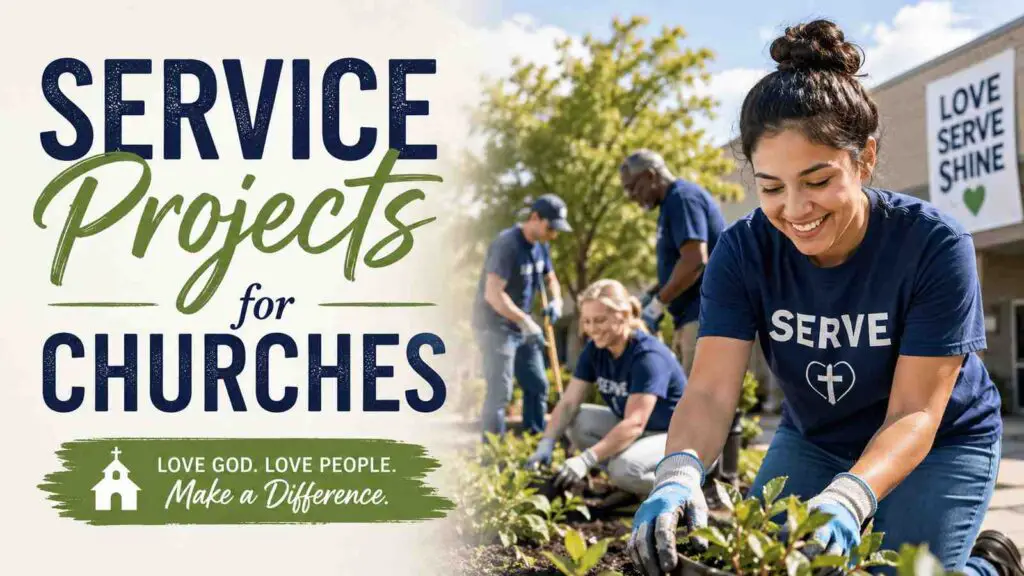
Churches play an important role in supporting communities through compassion, volunteer work, and meaningful outreach programs. Service projects allow congregations to live out their faith in practical ways while building stronger relationships with people in need. Whether helping families facing financial hardship, supporting local schools, or caring for senior citizens, church outreach programs can create lasting positive change.
The most effective service projects for churches are organized, sustainable, and focused on solving real community problems. With proper planning and volunteer coordination, even small churches can launch impactful ministries that strengthen both the congregation and the surrounding community.
Service Projects for Churches
#1. Community Food Pantry
A community food pantry is one of the most practical and sustainable church service projects because it addresses an ongoing need that affects many families. Churches can operate a pantry directly from their building or partner with local nonprofits and grocery stores to distribute food regularly.
To start a food pantry, church leaders should first identify available storage space and determine how often food distribution will occur. Weekly or monthly distributions are common for smaller churches. Volunteers can then organize donation drives for canned goods, pasta, rice, cereal, peanut butter, baby formula, and hygiene products.
Creating partnerships with local grocery stores, restaurants, farms, and food banks can significantly increase the amount of food available for distribution. Many businesses are willing to donate surplus food that would otherwise go unused.
Churches should also establish a volunteer schedule that includes:
- Sorting and organizing donations
- Packing food boxes
- Greeting visitors
- Managing inventory
- Delivering food to homebound individuals
Promoting the pantry through social media, local schools, and community centers helps families learn about available resources. Churches may also choose to provide prayer support, budgeting classes, or employment assistance alongside food distribution to create a more holistic ministry.
#2. Homeless Outreach Program
Homeless outreach ministries provide churches with opportunities to serve vulnerable individuals with compassion and dignity. This type of outreach can begin with simple care package distributions and expand into long-term partnerships with shelters and recovery programs.
To organize a homeless outreach project, churches should first determine the specific needs within their local area. Speaking with shelters, social workers, and outreach organizations can help identify what supplies are most needed.
Care packages often include:
- Toothbrushes and toothpaste
- Soap and shampoo
- Socks and gloves
- Bottled water
- Granola bars or snacks
- Blankets
- First aid supplies
- Resource cards listing local shelters and services
Churches can schedule monthly outreach events where volunteers distribute supplies in designated areas or work directly with local shelters. Safety guidelines should be established for volunteers, including serving in teams and coordinating with local organizations familiar with the community.
Some churches also expand their homeless ministries by offering:
- Mobile shower units
- Laundry assistance
- Resume-writing help
- Free haircuts
- Temporary emergency shelter during severe weather
Consistent outreach builds trust over time and allows churches to form meaningful relationships with people experiencing homelessness.
#3. Senior Citizen Assistance Ministry
Senior citizen ministries are highly valuable because many elderly individuals struggle with transportation, household tasks, mobility limitations, and social isolation. Churches can create organized support systems that help seniors remain safe, connected, and cared for.
The first step is identifying elderly individuals within both the church and surrounding community who may need assistance. Churches can create intake forms where seniors request specific types of help.
Volunteer teams can then assist with:
- Grocery shopping
- Lawn care
- Minor home repairs
- Transportation to doctor appointments
- Prescription pickup
- Meal preparation
- Technology assistance
- Regular companionship visits
Churches should create a scheduling system so volunteers can sign up for tasks based on their availability and skills. Background checks may also be appropriate for volunteers working closely with vulnerable individuals.
Monthly fellowship events specifically for seniors can provide additional emotional and spiritual support. These gatherings may include meals, games, Bible studies, health seminars, or transportation services for those unable to drive.
This ministry works especially well because it allows volunteers of all ages to participate while building meaningful intergenerational relationships within the church.
#4. School Supply Drive
School supply drives are effective church outreach projects because they directly support students, parents, and teachers preparing for the academic year. Rising education costs often place financial pressure on families, and churches can help reduce that burden through organized donation efforts.
To launch a successful school supply drive, churches should first contact local schools to learn which items are most needed. Common supplies include:
- Backpacks
- Notebooks
- Pencils and pens
- Crayons and markers
- Calculators
- Folders and binders
- Glue sticks
- Headphones
- Tissues and disinfecting wipes
Churches can set up donation bins throughout the building and promote the drive during services, online, and through community flyers. Assigning volunteers to organize supplies by age group or grade level helps streamline distribution.
Many churches host back-to-school events where families receive supplies while also enjoying free meals, games, prayer stations, and family activities. Some ministries even partner with local barbers or hairstylists to provide free haircuts before school begins.
Teachers can also benefit from classroom supply donations, as many educators personally purchase materials for students throughout the year.
#5. Neighborhood Cleanup Initiative
Neighborhood cleanup projects are simple to organize yet highly visible within the community. These events demonstrate that churches care about the well-being of the neighborhoods they serve while creating opportunities for fellowship and teamwork.
To organize a cleanup initiative, church leaders should contact local government offices or community associations to identify areas needing attention. Common projects include:
- Picking up litter
- Cleaning parks
- Painting over graffiti
- Planting flowers or trees
- Removing weeds
- Beautifying playgrounds
- Repairing community spaces
Volunteers should be provided with gloves, trash bags, safety vests, water, and basic cleanup tools. Churches may also arrange dumpsters or recycling services if large amounts of waste are expected.
Scheduling cleanup events quarterly or monthly helps maintain long-term community impact. Churches can also invite local residents to participate, which encourages relationship-building and creates stronger community connections.
Sharing before-and-after photos online can inspire additional volunteers while highlighting the church’s commitment to serving the area.
#6. Free Community Meal Nights
Community meal nights create welcoming environments where individuals and families can gather for food, conversation, and encouragement. These events are especially impactful for people facing financial hardship, loneliness, or social isolation.
Churches can host meals weekly, monthly, or seasonally depending on available volunteers and resources. Planning begins with selecting a meal format, such as:
- Buffet dinners
- Pancake breakfasts
- Soup nights
- Holiday meals
- Outdoor cookouts
Volunteer teams should be assigned responsibilities including cooking, setup, serving, greeting guests, and cleanup. Churches may also partner with local restaurants or grocery stores for food donations.
Creating a warm and respectful environment is essential. Volunteers should focus on hospitality and conversation rather than simply serving food quickly. Table hosts can engage guests, offer prayer if requested, and connect individuals with additional resources if needed.
Some churches also incorporate:
- Live music
- Children’s activities
- Clothing giveaways
- Health screenings
- Financial counseling
- Job resource tables
Community meals often become one of the most relational and impactful outreach ministries within a church because they foster genuine human connection.
#7. Crisis Relief and Emergency Support
Crisis relief ministries allow churches to respond quickly when individuals or families face emergencies such as natural disasters, medical crises, house fires, job loss, or financial hardship.
To create an effective crisis relief ministry, churches should establish a dedicated response team responsible for assessing needs and coordinating assistance. Creating an emergency fund through regular offerings or donations can help the church respond immediately when situations arise.
Support may include:
- Emergency food assistance
- Temporary hotel stays
- Utility bill assistance
- Clothing and hygiene supplies
- Transportation support
- Disaster cleanup teams
- Childcare assistance
- Prayer and counseling services
Churches should also build partnerships with local organizations, shelters, and government agencies so referrals and additional support services are easily accessible during emergencies.
For disaster response projects, volunteers may need training in safety procedures, debris removal, or emergency coordination. Maintaining a database of volunteers with specialized skills such as construction, counseling, or medical experience can strengthen the ministry’s effectiveness.
A well-organized crisis relief ministry positions the church as a trusted source of stability and support during difficult times.
Closing Thoughts
Service projects for churches create opportunities to strengthen communities while demonstrating compassion through meaningful action. Whether organizing food pantries, supporting students, serving senior citizens, or responding to emergencies, churches can make a lasting impact when outreach efforts are intentional and consistent.
The most successful church service projects are built on strong volunteer coordination, clear goals, and a genuine desire to meet practical needs within the community. By starting with manageable initiatives and gradually expanding outreach efforts, churches of any size can develop ministries that transform lives and build stronger relationships both inside and outside the congregation.