
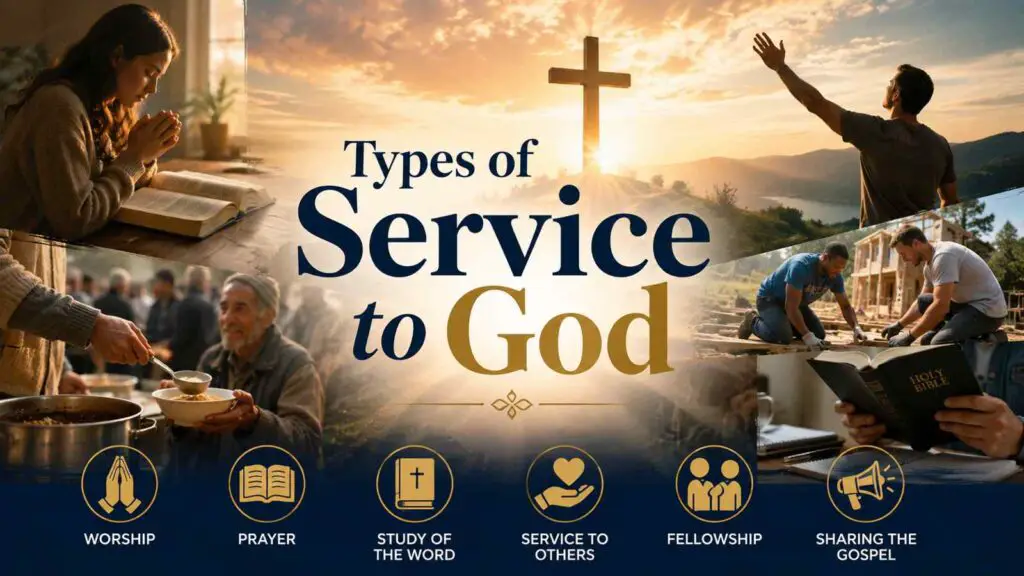
Service to God is a central principle found in many religions and spiritual traditions around the world. For believers, serving God is not limited to worship alone—it also includes living with compassion, integrity, humility, and purpose. Whether through prayer, helping others, or fulfilling daily responsibilities with sincerity, service to God can shape every aspect of life.
Many people seek ways to deepen their spiritual connection and honor God through meaningful actions. Understanding the different types of service to God can help individuals grow spiritually while positively impacting their communities and personal lives.
Types of Service to God
#1. Worship and Prayer
Worship is one of the most recognized forms of service to God. This includes prayer, praise, singing hymns, meditation, reading devotional material, and participating in religious ceremonies. Worship allows believers to express gratitude, seek guidance, and strengthen their relationship with God.
To apply this form of service in daily life, create a consistent spiritual routine. Set aside time each morning or evening for prayer or meditation. Even a few minutes of focused reflection can help build spiritual discipline and inner peace. Attending religious gatherings regularly and participating actively can also deepen spiritual understanding and create a stronger sense of connection with others who share the same faith.
Another practical step is keeping a gratitude journal. Writing down blessings, answered prayers, or spiritual lessons each day helps maintain a mindset of thankfulness and awareness of God’s presence in everyday life.
#2. Serving Others
Helping people in need is widely viewed as serving God directly. Acts of kindness such as feeding the hungry, visiting the sick, mentoring young people, supporting struggling families, or volunteering in the community demonstrate compassion and love.
One of the easiest ways to apply this principle is by looking for small opportunities to help others consistently. This may involve donating food, offering emotional support to a friend, helping elderly neighbors, or volunteering at local charities. Service does not always require money—time, encouragement, and kindness are equally valuable.
To make this practice sustainable, choose one regular act of service each week. For example, volunteer once a month, prepare meals for someone in need, or dedicate time to mentoring or community outreach. Consistent service develops empathy and shifts focus away from self-centered living.
#3. Living a Moral and Ethical Life
Living according to moral values is another important type of service to God. Honesty, humility, patience, forgiveness, integrity, and self-control reflect spiritual maturity and respect for divine teachings.
Applying ethical living begins with self-awareness. Evaluate daily habits, speech, relationships, and decisions to identify areas needing improvement. For example, practice honesty even in uncomfortable situations, respond calmly during conflict, and avoid gossip or harmful behavior.
Building strong moral character also requires accountability. Many people benefit from regular self-reflection, prayer, or discussions with spiritual mentors who can offer guidance and encouragement. Ethical living becomes easier when surrounded by positive influences and supportive communities.
Another practical method is setting personal values that guide decision-making. When choices align with spiritual principles, individuals often experience greater peace and confidence.
#4. Studying Sacred Texts
Reading and studying holy scriptures allows believers to understand God’s teachings more deeply. Sacred texts provide wisdom, direction, encouragement, and practical guidance for handling life’s challenges.
To apply this type of service effectively, establish a regular study habit. Start with short daily readings and focus on understanding how spiritual lessons apply to real situations. Instead of reading quickly, take time to reflect on the meaning and practical implications of the teachings.
Keeping notes during study sessions can improve understanding and retention. Writing key lessons, questions, or personal insights helps transform spiritual reading into practical growth. Many people also benefit from joining study groups where ideas and interpretations can be discussed openly.
Applying scripture is equally important. For example, if a passage teaches forgiveness, actively work on resolving resentment or conflict in relationships. Spiritual study becomes meaningful when it leads to action and personal transformation.
#5. Teaching and Sharing Faith
Teaching others about spiritual principles and sharing messages of hope can also be a form of service to God. Religious leaders, teachers, parents, mentors, and volunteers often help others grow spiritually through guidance and encouragement.
Sharing faith does not always require formal teaching. It can begin through simple conversations, positive behavior, or offering encouragement during difficult times. Living as a positive example is often one of the most effective ways to influence others spiritually.
To apply this principle, focus on listening with compassion and speaking respectfully. Avoid forcing beliefs on others. Instead, share experiences and lessons naturally when opportunities arise. Many people become more open to spiritual discussions when they see sincerity and kindness in action.
You can also serve by supporting educational programs, mentoring younger individuals, leading small study groups, or participating in community outreach activities.
#6. Participating in Religious Communities
Supporting a faith community is another meaningful way to serve God. Religious communities provide encouragement, accountability, friendship, and opportunities for collective worship and service.
Applying this principle involves becoming actively involved rather than remaining a passive observer. Volunteer during events, help organize community programs, assist newcomers, or contribute skills that support the group’s mission.
Building strong relationships within spiritual communities also creates emotional and spiritual support systems during difficult times. Participating regularly in gatherings, study groups, or service projects helps strengthen both personal faith and community unity.
Another practical way to contribute is by offering professional skills to support community needs. For example, individuals may help with administration, teaching, music, technology, counseling, or maintenance.
#7. Practicing Selfless Service
Selfless service involves helping others without expecting praise, recognition, or rewards. In many spiritual traditions, this is considered one of the purest forms of devotion because it reflects humility and genuine compassion.
Applying selfless service starts with changing motivation. Instead of asking, “What will I gain?” focus on “How can I help?” This mindset can transform everyday interactions and relationships.
Simple acts such as helping coworkers without seeking credit, supporting someone anonymously, or assisting during emergencies can become powerful expressions of spiritual growth. Performing quiet acts of kindness develops humility and reduces pride.
One practical approach is dedicating a certain amount of time each month specifically to service activities that offer no personal benefit. This strengthens discipline and reinforces a servant-hearted attitude.
#8. Using Personal Talents for Good
Every person possesses unique abilities that can be used to honor God and benefit others. Artists, musicians, teachers, healthcare professionals, business leaders, writers, and skilled workers all have opportunities to use their talents for meaningful purposes.
Applying this principle begins with identifying personal strengths and considering how they can positively impact others. A musician may contribute to worship services, a teacher may mentor struggling students, and a business owner may support charitable initiatives or create ethical workplaces.
Rather than viewing work as separate from spirituality, many believers see careers and talents as opportunities for service. Performing work with excellence, honesty, and compassion can become an act of devotion.
To strengthen this practice, regularly ask how personal skills can solve problems, encourage people, or improve communities. Purpose-driven work often leads to greater fulfillment and motivation.
#9. Caring for Creation
Many religious traditions teach that the world is a sacred creation that should be respected and protected. Caring for the environment, animals, and natural resources can therefore be viewed as service to God.
Applying environmental stewardship can begin with simple lifestyle changes. Reducing waste, conserving water and energy, recycling responsibly, and supporting sustainable practices all contribute to caring for creation.
Community involvement can also make a larger impact. Participating in clean-up projects, planting trees, supporting conservation efforts, or educating others about environmental responsibility are practical ways to serve both humanity and the planet.
This type of service encourages gratitude and reminds believers to treat the natural world with respect rather than exploitation.
#10. Practicing Obedience and Faithfulness
Obedience to God’s teachings is often considered a foundational form of spiritual service. This includes remaining faithful during challenges, following spiritual principles consistently, and trusting God’s guidance even when circumstances are difficult.
Applying faithfulness requires discipline and persistence. One effective method is setting spiritual goals such as consistent prayer, regular study, or improved character habits. Tracking progress can help maintain motivation and accountability.
Faithfulness is especially important during hardship. Instead of abandoning spiritual practices during stressful periods, continue seeking guidance, support, and wisdom through prayer and community.
Another practical step is making decisions based on values rather than temporary emotions or social pressure. Over time, consistent obedience strengthens spiritual confidence and personal integrity.
The Importance of Serving God
Serving God can provide meaning, direction, and inner fulfillment. It encourages individuals to live beyond selfish desires and focus on compassion, purpose, and spiritual growth. Through service, many people develop stronger relationships, healthier communities, and a deeper sense of peace.
Spiritual service also helps cultivate gratitude and humility. Whether through simple acts of kindness or lifelong dedication to faith, serving God can transform both individuals and society.
Closing Thoughts
The different types of service to God go far beyond religious rituals alone. True spiritual service often combines worship, moral living, compassion, selflessness, and dedication to helping others. Every act performed with sincerity, love, and faith can become a meaningful expression of devotion.
By understanding and practicing these forms of service, individuals can deepen their spiritual journey while making a positive difference in the lives of others. Ultimately, serving God is not only about belief—it is about living those beliefs through daily actions and purposeful living.