
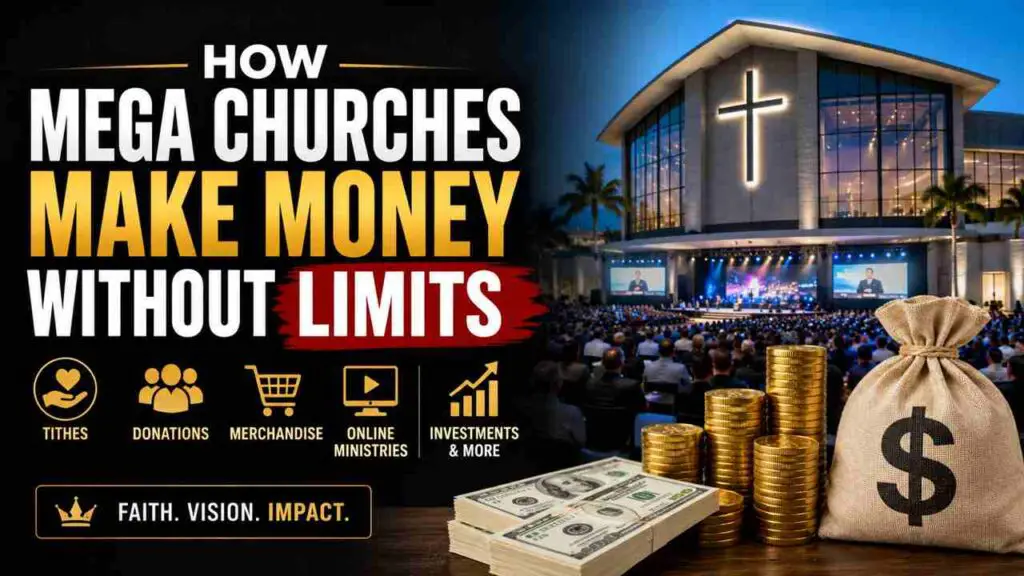
Mega churches are some of the most financially powerful religious organizations in the world. With thousands of members attending weekly services, massive online audiences, and global brand recognition, many mega churches generate millions of dollars every year. Their influence often extends far beyond Sunday worship services into publishing, music, media, education, and even real estate.
For some people, this financial success is inspiring. For others, it raises serious questions about money, faith, and the role of churches in modern society. Regardless of where someone stands, there is no denying that mega churches have developed highly effective systems for generating revenue and expanding their influence.
This article explores how mega churches make money, the business models behind their growth, and the various income streams that allow some of them to operate on an enormous scale.
What Defines a Mega Church?
A mega church is generally defined as a Protestant church with more than 2,000 weekly attendees. Many mega churches attract far larger crowds, with some drawing tens of thousands of people across multiple campuses and online platforms.
Mega churches are especially common in the United States, but they are also growing rapidly in places like South Korea, Nigeria, Brazil, and parts of Europe. These churches often feature large auditoriums, professional worship teams, advanced media production, and extensive community programs.
Some well-known mega churches have become global brands with millions of followers online. Their pastors may appear on television, publish bestselling books, or lead international conferences attended by people from around the world.
Unlike smaller local churches, mega churches usually operate with large staffs, corporate-style leadership structures, and sophisticated financial systems that support continued growth.
The Business Model Behind Mega Churches
Mega churches often function much like large organizations or corporations. While their mission is spiritual, many use business principles to scale their operations and increase their reach.
These churches typically focus heavily on branding, leadership development, marketing, and audience engagement. They create polished experiences designed to attract and retain members both in person and online.
Most mega churches are built around a central leadership figure, often a charismatic pastor with strong communication skills and a recognizable public image. The church brand frequently becomes tied to the pastor’s personality, teachings, and media presence.
Scale is one of the most important factors in the mega church model. A church with 20,000 attendees can generate enormous income even if individual members contribute modest amounts. As attendance grows, revenue often increases much faster than expenses.
Many mega churches also diversify their income streams, allowing them to generate revenue from multiple sources beyond weekly donations.
How Do Mega Churches Make Money?
Tithes and Offerings as the Financial Foundation
The primary source of income for most mega churches is tithes and offerings. Members are often encouraged to donate regularly, with many churches teaching the biblical principle of giving 10% of one’s income.
When thousands of people contribute every week, the total can become staggering. A mega church with 10,000 members giving regularly may collect millions of dollars annually through donations alone.
Many churches now make giving easier through digital platforms. Members can donate through mobile apps, websites, text messaging, and automatic recurring payments.
Special fundraising campaigns also play a major role. Churches may raise money for building projects, missions, expansion efforts, media production, or community outreach programs.
Online Donations and Digital Giving Platforms
The internet has dramatically increased the earning potential of mega churches. Livestream services allow churches to reach global audiences who may never physically attend in person but still donate online.
Most mega churches now have professionally designed websites and apps that make digital giving simple and convenient. Some even encourage recurring subscription-style donations that create stable monthly income.
Online giving has expanded the donor base far beyond local communities. A pastor with a strong online following may receive donations from supporters around the world.
Digital platforms also allow churches to fundraise quickly during emergencies, special campaigns, or major events.
Book Sales and Publishing Empires
Many mega church pastors are bestselling authors. Books have become one of the most profitable extensions of modern church branding.
Pastors often publish books about faith, leadership, relationships, personal growth, and spirituality. Successful books can generate significant income through sales, speaking opportunities, and licensing deals.
Some churches create entire publishing divisions that produce devotionals, Bible studies, journals, and educational materials.
As a pastor’s popularity grows, book sales often become part of a larger media ecosystem that reinforces both influence and revenue.
Conferences, Events, and Paid Experiences
Mega churches frequently organize conferences and special events that generate substantial income.
Leadership conferences, youth events, worship nights, marriage seminars, and spiritual retreats often charge admission fees. Some attract attendees from across the country or even internationally.
Premium ticket options, VIP seating, exclusive meet-and-greets, and special training sessions can increase profitability even further.
These events also strengthen the church brand while expanding its audience and influence.
Merchandise and Church-Branded Products
Many mega churches sell branded merchandise as part of their ministry and marketing strategy.
Products may include:
- Clothing and apparel
- Hats and accessories
- Journals and devotionals
- Coffee mugs and water bottles
- Church-branded Bibles
- Worship music albums
Some churches intentionally create lifestyle brands that appeal to younger audiences. Their branding often resembles modern fashion or entertainment companies more than traditional churches.
Merchandise sales can become a consistent secondary revenue stream while also promoting the church’s identity.
Music Ministries and Streaming Revenue
Worship music has become a major industry connected to mega churches.
Many churches produce professional-quality music that is streamed on platforms like Spotify, Apple Music, and YouTube. Some worship bands tour internationally and perform concerts attended by thousands of fans.
Churches may also earn money through:
- Album sales
- Streaming royalties
- Concert tickets
- Licensing agreements
- Songwriting royalties
Some worship songs written by mega church music teams are sung in churches around the world, creating ongoing revenue for years.
Real Estate and Property Wealth
Mega churches often own enormous amounts of property. Their campuses may include auditoriums, schools, gyms, bookstores, cafes, recording studios, and office spaces.
As churches expand into multiple campuses, their real estate holdings can become extremely valuable.
Some churches also rent out their facilities for weddings, conferences, concerts, and community events, creating additional income streams.
Over time, rising property values may significantly increase the overall wealth of the organization.
Television, YouTube, and Media Networks
Media has played a massive role in the growth of mega churches.
Many churches operate television ministries, podcasts, YouTube channels, and social media platforms with millions of followers.
These media channels may generate revenue through:
- Advertising
- Sponsorships
- Donations from viewers
- Subscription services
- Content licensing
YouTube alone can become highly profitable for churches with large online audiences and consistently viewed content.
Professional media production also helps churches expand their influence far beyond local communities.
Church Schools, Colleges, and Training Programs
Some mega churches operate schools, Bible colleges, leadership academies, or ministry training programs.
These institutions often charge tuition and fees while also strengthening the church’s long-term influence.
Online education has further expanded this opportunity. Churches may offer paid courses, certifications, leadership coaching, or digital discipleship programs.
Education programs can become major financial assets while also producing future church leaders and loyal supporters.
Tax Exemptions and Financial Advantages
In many countries, churches receive tax advantages that significantly reduce operating costs.
In the United States, for example, churches are generally exempt from federal income taxes and often avoid property taxes as well.
Donors may also receive tax deductions for charitable contributions, which can encourage higher levels of giving.
Critics argue that these financial advantages allow mega churches to accumulate wealth more easily than ordinary businesses.
Supporters, however, believe tax exemptions help churches invest more money into ministry, charity, and community outreach.
Volunteer Labor and Cost Reduction
One of the most overlooked advantages of mega churches is their reliance on volunteers.
Thousands of volunteers may help run services, operate media equipment, greet attendees, organize events, provide childcare, clean facilities, and manage logistics.
This dramatically reduces labor costs that would otherwise be enormous for organizations of similar size.
Volunteer-driven operations allow mega churches to scale rapidly while keeping expenses relatively low compared to their income.
Celebrity Pastors and Personal Branding
Some mega church pastors have become celebrities with massive social media followings and global influence.
These pastors often monetize their personal brands through:
- Speaking engagements
- Sponsorships
- Book deals
- Podcasts
- Online content
- Partnerships
The stronger the pastor’s public image becomes, the more visibility and revenue the church often gains as well.
In many cases, the pastor effectively becomes the face of a powerful religious media brand.
Franchising Through Multi-Campus Expansion
Many mega churches expand using a multi-campus model. Instead of building one giant location, they create multiple campuses in different cities or regions.
Some campuses stream sermons from the main pastor while local teams manage day-to-day operations.
This approach allows churches to grow quickly without fully duplicating leadership structures.
Multi-campus expansion creates more attendees, more donations, and broader brand recognition while maintaining centralized control.
For some mega churches, expansion operates similarly to franchising models used by large corporations.
Conclusion
Mega churches make money through a wide variety of revenue streams, including donations, digital giving, books, conferences, merchandise, music, media, education, and real estate. Their ability to combine spiritual influence with modern branding and large-scale operations allows some of them to generate enormous wealth.
While opinions differ on whether churches should operate this way, mega churches have undeniably transformed the relationship between religion, media, and business in the modern world.
As technology continues to expand global audiences and digital giving becomes even more common, the financial power of mega churches may continue to grow for years to come.