
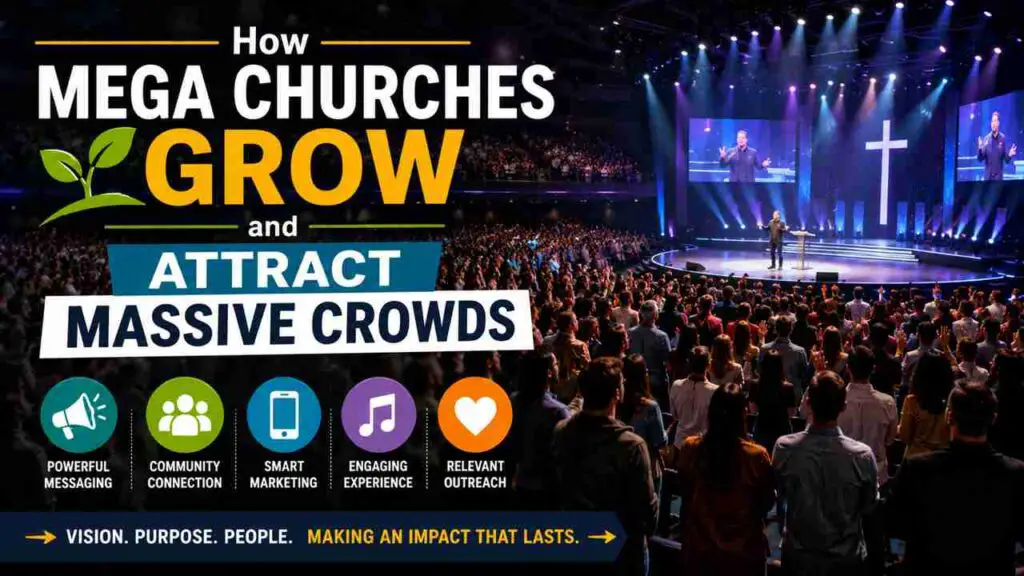
Mega churches have become one of the most influential movements in modern Christianity. Across the world, thousands of churches attract massive weekly attendance numbers, fill enormous auditoriums, and expand into multiple campuses. Many people wonder how mega churches grow so quickly and what allows them to attract such large crowds consistently.
The growth of mega churches is rarely accidental. Most successful mega churches combine strong leadership, strategic outreach, modern technology, engaging worship services, and a clear mission. They create environments where people feel welcomed, connected, and inspired to return.
In this article, we’ll explore how mega churches grow and the key strategies they use to attract and retain large congregations.
What Is a Megachurch?
A megachurch is typically defined as a Protestant Christian church with an average weekly attendance of more than 2,000 people. While most mega churches are located in the United States, the phenomenon has spread globally, with large churches appearing in Africa, Asia, South America, and Europe.
Mega churches often share several common characteristics, including:
- Large worship facilities
- Multiple ministries and programs
- Professional leadership structures
- Strong media presence
- Contemporary worship styles
- Extensive community outreach
Unlike smaller traditional churches, mega churches usually operate more like large organizations with specialized staff, advanced technology, and broad community engagement.
How Do Mega Churches Grow?
Strong Visionary Leadership
One of the biggest reasons mega churches grow is strong leadership. Many successful mega churches are built around pastors who communicate a clear vision and inspire people through dynamic preaching.
Visionary leaders often:
- Communicate clear goals for the church
- Inspire members to participate in the mission
- Create a strong sense of direction
- Build effective leadership teams
Charismatic communication also plays a major role. Pastors who speak clearly, connect emotionally, and address real-life struggles often attract large audiences.
In many mega churches, leadership extends beyond one individual. Executive pastors, ministry directors, and volunteer leaders help organize operations and support long-term growth.
Creating Powerful Worship Experiences
Mega churches often place significant emphasis on creating engaging worship experiences. The goal is to make church services emotionally impactful, spiritually uplifting, and memorable.
This usually includes:
- Contemporary worship music
- High-quality sound systems
- Professional lighting and stage design
- Large worship teams
- Engaging sermons
Many attendees appreciate the energy and atmosphere created during these services. Modern worship environments can make visitors feel excited, inspired, and connected.
Mega churches also focus heavily on hospitality. Friendly greeters, organized parking, welcoming environments, and comfortable seating help visitors feel at ease from the moment they arrive.
Building Strong Community Outreach Programs
Community outreach is another major factor behind mega church growth. Many large churches actively serve their local communities through charitable programs and social support initiatives.
These outreach efforts may include:
- Food banks
- Homeless ministries
- Addiction recovery programs
- Counseling services
- Disaster relief efforts
- Community events
When churches meet practical needs within their communities, they often build trust and strengthen their reputation. People are more likely to visit a church that actively serves others.
Outreach programs also provide opportunities for church members to become involved and develop a deeper connection to the church’s mission.
Using Media and Technology Effectively
Mega churches are often highly skilled at using technology to expand their reach. In today’s digital world, churches are no longer limited to physical attendance.
Many mega churches use:
- Livestreamed services
- YouTube sermons
- Podcasts
- Mobile apps
- Social media platforms
- Email newsletters
Online content allows churches to reach people far beyond their local communities. Someone may discover a church online, watch sermons regularly, and eventually attend in person.
Social media also helps churches stay visible and engage with younger audiences. Churches that consistently post encouraging content, sermon clips, and event updates often experience increased growth and engagement.
Developing Small Groups and Fellowship Networks
Although mega churches attract massive crowds, many understand the importance of personal relationships. Large churches can feel overwhelming if members do not form meaningful connections.
To solve this problem, mega churches often create:
- Small group ministries
- Home Bible studies
- Fellowship groups
- Volunteer teams
- Mentorship programs
Small groups help people build friendships and develop a sense of belonging. They also create opportunities for spiritual growth outside of large Sunday services.
Many people stay committed to a church because of the relationships they build within these smaller communities.
Focusing on Families and Young People
Mega churches often invest heavily in ministries designed for children, teenagers, and young adults. Families are more likely to attend churches that provide safe, engaging, and organized programs for every age group.
These ministries may include:
- Children’s church programs
- Youth worship nights
- Vacation Bible schools
- Young adult gatherings
- Parenting classes
- Marriage ministries
Modern families often look for churches that support every stage of life. Churches that provide strong family-oriented ministries are more likely to retain members over the long term.
Youth ministries are especially important because they help churches connect with younger generations and build future leadership.
Providing Convenient Locations and Facilities
Convenience also contributes significantly to church growth. Many mega churches are located in easily accessible areas with large parking facilities and modern amenities.
Successful churches often provide:
- Spacious parking lots
- Comfortable seating
- Clean facilities
- Coffee shops or gathering spaces
- Childcare services
- Multiple campuses
Some mega churches expand by creating multi-campus models. Instead of building one enormous location, they establish several campuses in different cities or neighborhoods.
This approach allows churches to reach more people while maintaining consistent teaching and branding across locations.
Encouraging Invitation and Word-of-Mouth Growth
Personal invitations remain one of the most powerful growth tools for churches. Mega churches often encourage members to invite friends, relatives, coworkers, and neighbors to services and events.
Special events can increase attendance significantly, including:
- Holiday services
- Concerts
- Conferences
- Guest speakers
- Community festivals
When attendees have positive experiences, they naturally share those experiences with others. Over time, word-of-mouth recommendations can contribute to substantial church growth.
A strong public reputation also helps attract visitors who are searching for a church community.
Investing in Marketing and Branding
Many mega churches use professional branding and marketing strategies to increase visibility. Their websites, logos, social media pages, and promotional materials are often polished and professionally designed.
Effective church branding helps communicate:
- The church’s mission
- Its values
- Its culture
- Its target audience
Marketing efforts may include:
- Social media advertising
- Search engine optimization (SEO)
- Local radio or TV ads
- Event promotions
- Online sermon distribution
A strong online presence helps churches reach people searching for spiritual guidance or a church home.
Expanding Through Financial Resources
Financial strength allows mega churches to expand their ministries, facilities, and outreach programs. Large congregations often generate significant donations that can be reinvested into church growth.
Financial resources may support:
- New campuses
- Additional staff
- Technology upgrades
- Community programs
- Mission projects
- Building expansions
Many mega churches also benefit from volunteer participation, which allows them to operate large programs efficiently.
Strong financial management and strategic planning often play an important role in sustaining long-term growth.
Conclusion
Mega churches grow and attract massive crowds through a combination of visionary leadership, engaging worship experiences, strategic outreach, modern technology, and strong community connections. Their ability to create welcoming environments while meeting both spiritual and practical needs helps them attract thousands of attendees.
While every church is different, many mega churches succeed because they combine organization, communication, and mission-driven ministry effectively. They understand how to connect with modern audiences while building strong relationships within their congregations.
As technology continues to evolve and communities change, mega churches will likely continue adapting their strategies to reach even larger audiences in the future.