
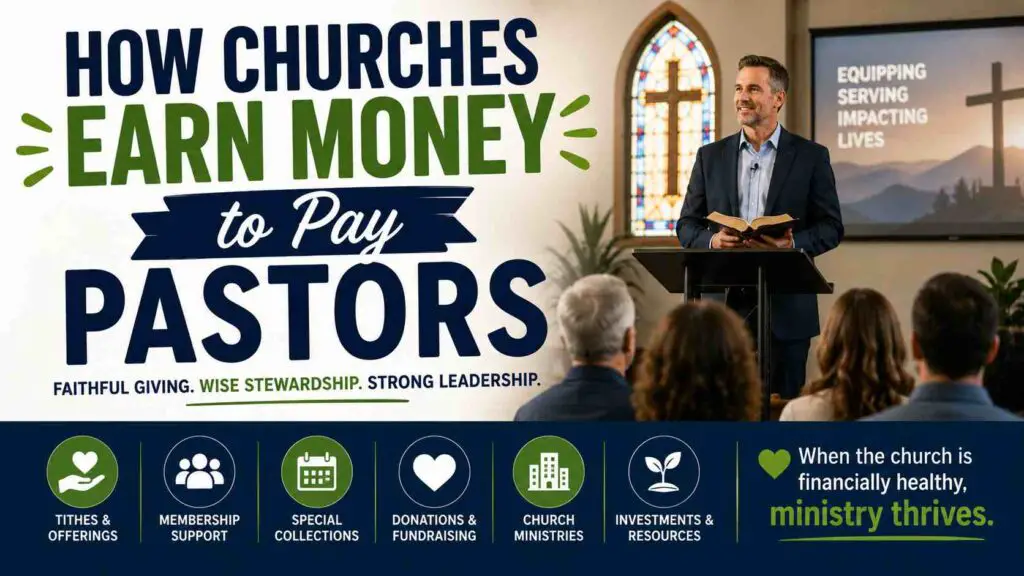
Churches play an important role in the spiritual and social lives of many communities. Beyond worship services, churches often provide counseling, outreach programs, missions, youth ministries, food assistance, and community support. To carry out these responsibilities effectively, churches need financial resources, including funds to support pastors and ministry staff.
Many people wonder how churches generate enough income to pay pastors while also maintaining church operations. The answer varies depending on the size, denomination, and structure of the church. Some churches rely heavily on weekly giving, while others diversify their income through events, property rentals, grants, and digital giving platforms.
Understanding how churches earn money to pay pastors offers insight into the practical side of ministry and church leadership. Below are some of the most common and effective ways churches generate the financial support needed to sustain pastoral ministry.
How Do Churches Earn Money to Pay Pastors?
#1. Tithes and Weekly Offerings
The primary source of income for most churches is tithes and offerings collected from members during worship services. Tithing traditionally refers to giving ten percent of one’s income, while offerings are additional voluntary contributions.
Churches encourage consistent giving because it creates financial stability. These funds are typically used to pay pastors, maintain church buildings, support ministries, and fund outreach efforts.
Many churches teach biblical stewardship principles to help members understand the spiritual and practical importance of giving. Financial transparency also plays a major role. Churches that regularly communicate how donations are used often build greater trust and encourage more faithful giving.
To strengthen this income source, churches frequently:
- Offer multiple giving methods
- Provide online and mobile donation options
- Share annual financial reports
- Teach stewardship through sermons and classes
- Encourage recurring monthly giving
Consistent giving from committed members remains the financial backbone of many churches worldwide.
#2. Online Giving Platforms
Digital giving has become one of the fastest-growing sources of church income. Many churches now use websites, mobile apps, text-to-give systems, and digital payment platforms to collect donations conveniently.
Online giving helps churches maintain steady cash flow because members can donate even when they cannot attend services physically. Recurring automated donations are especially valuable because they create predictable monthly income.
Churches that successfully use online giving often focus on:
- Creating simple and secure donation pages
- Offering recurring giving options
- Promoting digital giving during services
- Using church apps for easy contributions
- Sending thank-you messages to donors
Smaller churches can also benefit from online giving because digital platforms reduce dependence on physical attendance and cash offerings.
As technology continues to evolve, online giving is becoming an essential financial tool for churches seeking long-term sustainability.
#3. Special Fundraising Campaigns
Churches frequently organize fundraising campaigns for specific financial goals. These campaigns may focus on building projects, missions, renovations, debt reduction, or ministry expansion.
While some campaigns are temporary, they can significantly improve overall church finances and indirectly help support pastoral salaries by reducing other financial pressures.
Successful fundraising campaigns often include:
- Clear financial goals
- Transparent communication
- Testimonies and vision casting
- Regular progress updates
- Community involvement
Some churches also use seasonal fundraising efforts around holidays, conferences, or anniversary celebrations to encourage additional giving.
Fundraising campaigns are most effective when church members clearly understand the purpose behind the financial request and feel connected to the mission.
#4. Denominational Financial Support
Many churches belong to larger denominational organizations that provide financial assistance. This support is especially common for new church plants, small rural congregations, and mission churches.
Denominations may help by:
- Supplementing pastor salaries
- Funding ministry programs
- Covering operational expenses
- Providing grants for outreach
- Assisting during financial hardship
Church planting networks often provide startup funding for several years while the congregation grows financially stable.
This support allows pastors to focus more on ministry development rather than immediate financial survival. It also helps churches in economically challenged communities continue operating effectively.
#5. Rental Income From Church Facilities
Churches often own valuable property that can generate additional income. Many congregations rent their buildings or facilities to outside groups when not in use.
Examples include:
- Weddings
- Conferences
- Concerts
- Daycare programs
- Community meetings
- Schools and tutoring programs
- Fitness or recreation groups
Large churches with gyms, banquet halls, classrooms, or parking lots may generate substantial revenue through rentals.
Facility rental income can help churches offset maintenance costs while providing additional funds for pastoral salaries and ministry operations.
Churches that succeed in this area usually establish:
- Clear rental agreements
- Competitive pricing
- Liability policies
- Dedicated facility management systems
Using church property strategically can create a reliable secondary income stream.
#6. Church Conferences and Events
Many churches organize conferences, retreats, workshops, and special events that generate revenue through registration fees, sponsorships, and product sales.
Examples include:
- Marriage conferences
- Leadership seminars
- Youth camps
- Prayer retreats
- Worship nights
- Christian business conferences
These events not only strengthen ministry impact but also create opportunities for financial growth.
Churches often increase event profitability by:
- Partnering with sponsors
- Selling merchandise
- Offering premium workshops
- Using volunteer teams
- Hosting annual recurring events
Large conferences can become major financial contributors, especially for churches with strong regional or online influence.
#7. Grants and Ministry Partnerships
Some churches receive grants from nonprofit organizations, Christian foundations, or charitable institutions. These grants are often tied to specific community programs or outreach initiatives.
Common grant-supported ministries include:
- Food assistance programs
- Addiction recovery ministries
- Homeless outreach
- Youth mentorship
- Counseling services
- Educational programs
Churches may also partner with businesses or nonprofits that financially support community initiatives.
To secure grants successfully, churches often need:
- Strong leadership structures
- Financial accountability
- Clear ministry objectives
- Measurable community impact
- Organized documentation
Although grants may not directly pay pastor salaries, they can reduce ministry expenses and strengthen the church’s overall financial position.
#8. Bookstores, Cafés, and Media Ministries
Some churches operate businesses or ministry-related services that generate additional revenue. Larger churches especially may run bookstores, cafés, publishing ministries, or online media platforms.
Revenue sources may include:
- Christian books and devotionals
- Sermon series
- Merchandise and apparel
- Coffee shops
- Podcasts and subscriptions
- Online courses
- Streaming memberships
Churches with strong teaching ministries often monetize digital content while expanding their influence beyond the local congregation.
Effective church media ministries usually focus on:
- High-quality teaching content
- Consistent branding
- Online audience engagement
- Strategic product development
These ministries can become substantial financial assets while also supporting evangelism and discipleship efforts.
#9. Endowments and Investments
Some established churches maintain investment funds or endowments created through donations, estate gifts, or long-term financial planning.
These funds may generate income through:
- Interest earnings
- Dividends
- Real estate investments
- Stocks and mutual funds
Investment income can help churches maintain financial stability during difficult economic periods.
Churches using investment strategies often work with financial advisors to ensure:
- Responsible stewardship
- Ethical investing
- Long-term sustainability
- Legal compliance
Well-managed endowments can provide ongoing support for pastors and ministry programs for decades.
#10. Legacy Giving and Estate Donations
Many churches receive financial gifts through wills, trusts, and estate planning. These contributions are often called legacy gifts because they allow donors to support ministry work beyond their lifetime.
Legacy giving may include:
- Cash donations
- Property transfers
- Investment accounts
- Insurance policy benefits
- Land or real estate gifts
Some churches actively teach estate planning and encourage members to consider charitable giving as part of their legacy.
Large estate gifts can dramatically strengthen a church’s finances, support future ministry growth, and create long-term stability for pastoral leadership.
Churches that promote legacy giving often provide:
- Educational seminars
- Estate planning resources
- Partnerships with legal professionals
- Clear donation policies
These gifts can leave a lasting impact on both the church and the surrounding community.
Closing Thoughts
Churches use a wide range of financial strategies to support pastors and sustain ministry operations. While tithes and offerings remain the foundation of church income, many congregations also rely on digital giving, facility rentals, fundraising campaigns, grants, conferences, and long-term investments.
Financial health allows churches to focus more effectively on their mission, outreach, and spiritual leadership. Pastors can dedicate themselves fully to serving their congregations when churches maintain stable and responsible financial systems.
As churches continue adapting to changing economic conditions and technological advancements, diversified income sources are becoming increasingly important. Churches that combine faithful stewardship with strategic planning are often best positioned to support both their pastors and their broader ministry vision for years to come.